










Copper cabinet hardware and why it works best as an accent
Copper sits at the reddest, warmest end of the metal spectrum, brighter and pinker than brass, more saturated than any bronze. It's a finish that asserts itself in a room rather than blending in, which is exactly why most kitchens use it selectively: a run of appliance pulls, a handful of cabinet knobs, rather than every piece of hardware in the room.
Polished, brushed, or weathered
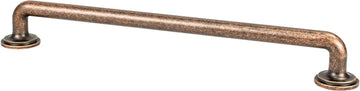
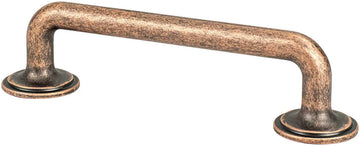
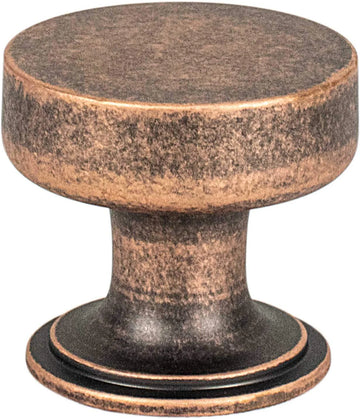
Polished copper reads brightest and shows fingerprints fastest. Brushed and weathered copper, like the pieces in Berenson's Folklore and Domestic Bliss lines, soften the shine and carry darker recesses that read more settled and less new. Weathered finishes are built to look like they've already lived a while, which makes them forgiving of daily handling in a way polished copper isn't.
Where copper pairs cleanly
Rustic, lodge, and warm-traditional kitchens use copper most, alongside cream and terracotta paint, cherry and alder wood, and butcher-block or warm-stone counters. Copper plumbing already in a farmhouse kitchen or bath — visible supply lines, a copper sink — gives copper hardware something to agree with rather than stand alone against. For a less assertive warm metal, compare bronze.
Sourcing it well
Copper takes a specific plating process that fewer brands run compared to nickel or matte black, so the profile selection within copper is narrower than in the bigger finish families. Top Knobs, Hardware Resources, Berenson, and Atlas Homewares each carry a piece of it, and mixing brands within one kitchen is where finish drift shows up fastest, especially between a bright polished piece and a weathered one. Not sure which brand's copper will work for your kitchen? Pick a time on Kayla's calendar; she's spent two decades matching cabinet hardware and curates from maker brands rather than manufacturing her own.
Shop Copper by type: copper cabinet knobs · copper cabinet pulls.
Frequently Asked Questions
How does copper hardware age over time?
Living, unlacquered copper develops a natural brown-to-green patina as it's handled and exposed to air, which is normal and part of the finish's appeal rather than a defect. Lacquered copper is sealed against that process and holds its bright reddish-orange tone instead, so check which type you're ordering if you have a preference.
What pairs well with copper hardware?
Copper's warm, reddish-orange tone works with earthy and warm-neutral palettes, cream, sage, and terracotta walls, as well as natural wood cabinetry. It also holds up against navy, where the contrast between cool cabinet and warm hardware reads as intentional rather than mismatched.
How do I clean copper cabinet hardware?
A soft, damp cloth with mild soap handles routine dust and fingerprints on any copper finish. For living copper you want to keep bright, a dedicated copper cleaner restores the shine; if you'd rather let it age naturally, skip the cleaner and let the patina develop on its own.
What sets weathered copper apart from antique copper?
Weathered copper carries a deliberately uneven, textured surface that mimics natural aging, with darker recesses and lighter high points. Antique copper is smoother and more uniform, with an overall darker cast but less surface variation, closer to a traditional bronze-adjacent look than a raw, aged metal.
What Customers Say
Trusted by thousands of designers, builders, and homeowners
Kayla Malo is the most attentive and super human ever! My experience with this company is stellar!

Love working with Kayla, she is extremely helpful and quick with responding to my questions!
Kayla was GREAT!!!! Super help and fast answers. One of the best I've ever dealt with.