

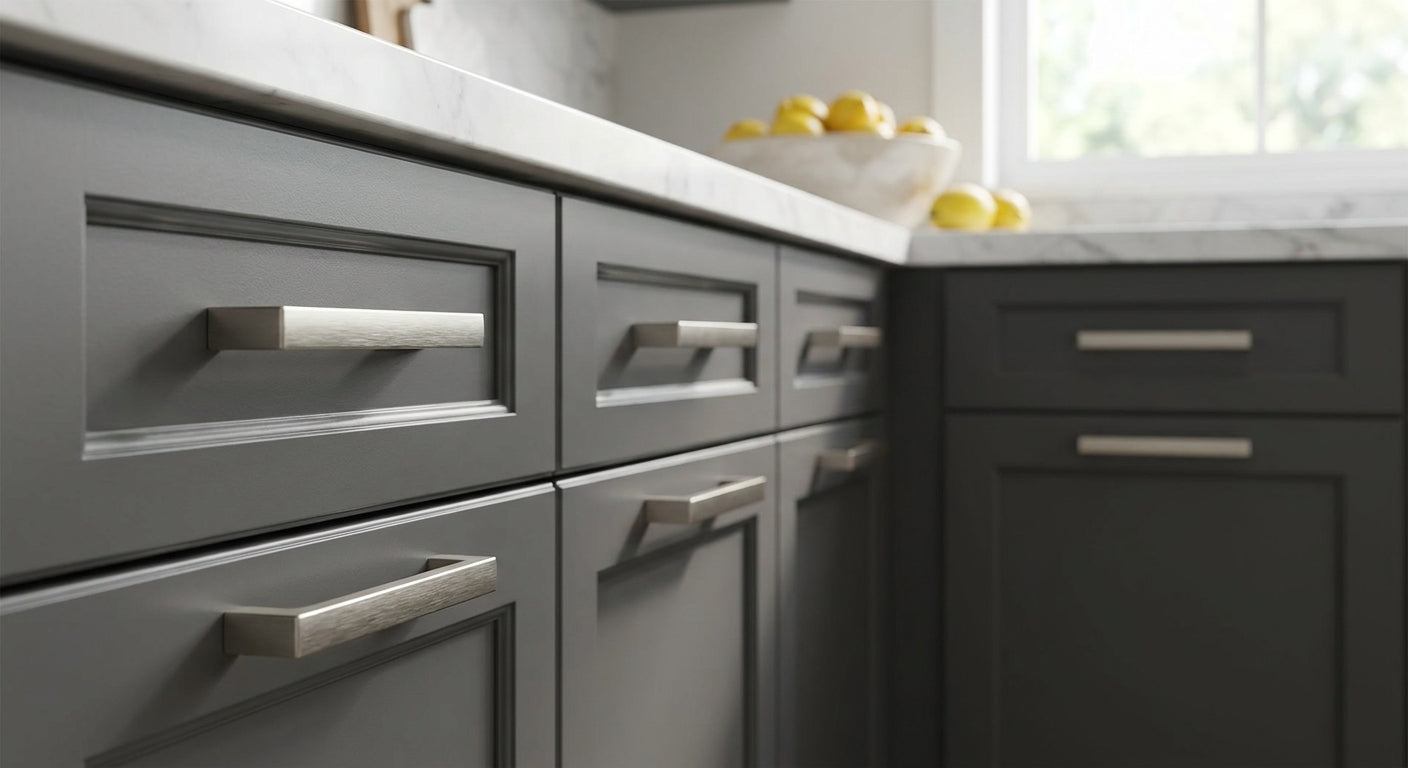
Bar pulls are the default hardware pick for kitchens renovated after the shaker-door boom, and picking the wrong center-to-center spacing or length is the single most common regret homeowners report after installation. This guide breaks down what actually matters when shopping bar pulls kitchen cabinets in 2026, with specific picks and the sizing math that keeps drawers from looking mismatched.
Shop bar pulls
Every bar pull we carry, in one place — filter by size, finish, and brand.
Browse Bar Pulls →- Jeffrey Alexander's 160mm Griffin bar pull is the safe standard for face-frame kitchens in 2026 — Buy.
- Elements' 4-inch Torino bar pull fits small drawers and rental flips on a budget — Consider.
- Skip any bar pull shorter than a third of the drawer front — it reads as an afterthought.
- 305mm bar pulls like the Jeffrey Alexander Ivan belong on oversized pantry doors only, not standard drawers.
Shop the picks from this guide
In stock at Knobs.co · Free shipping on hardware orders $99+ · 110% price match
-
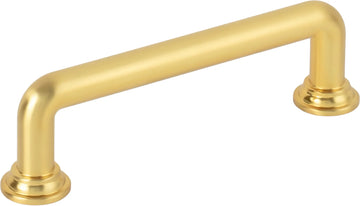 Jeffrey Alexander
Davis 96 mm cc Bar PullBrushed Gold
Jeffrey Alexander
Davis 96 mm cc Bar PullBrushed Gold
$10.98
$12.20 -
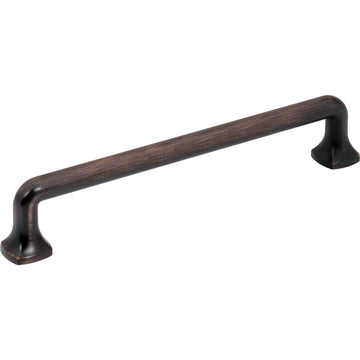 Jeffrey Alexander
Griffin 160 mm cc Bar Pull 663-160DBAC
Jeffrey Alexander
Griffin 160 mm cc Bar Pull 663-160DBAC
$14.42
$16.02 -
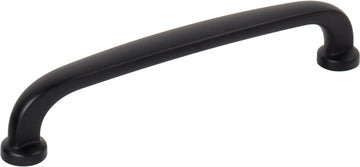 Jeffrey Alexander
Weser 128 mm cc Bar PullMatte Black
Jeffrey Alexander
Weser 128 mm cc Bar PullMatte Black
$11.02
$12.24 -
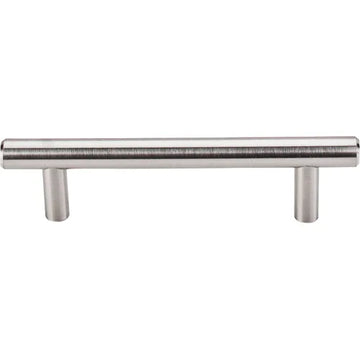 Top Knobs
Bar s Hopewell Bar Pull 3 3/4'' cc M429 Brushed Satin Nickel
Top Knobs
Bar s Hopewell Bar Pull 3 3/4'' cc M429 Brushed Satin Nickel
$9.90
$11.00 -
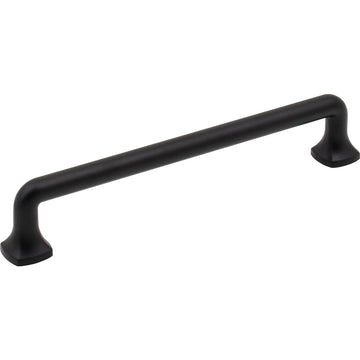 Jeffrey Alexander
Griffin 160 mm cc Bar PullMatte Black
Jeffrey Alexander
Griffin 160 mm cc Bar PullMatte Black
$14.42
$16.02 -
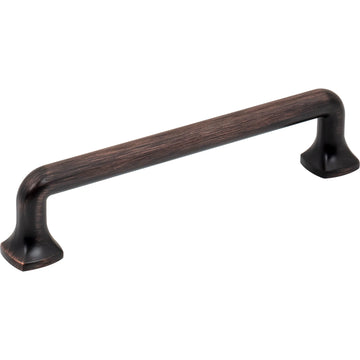 Jeffrey Alexander
Griffin 128 mm cc Bar Pull 663-128DBAC
Jeffrey Alexander
Griffin 128 mm cc Bar Pull 663-128DBAC
$12.03
$13.36
Why This Matters
Bar pulls dominate kitchen hardware because they're grabbable one-handed, they read clean on both shaker and flat-front doors, and they hide fingerprints better than polished knobs. The catch is sizing: a pull that's too short on a wide drawer looks like a stray screw, and a pull that's too long on a narrow one hits the cabinet frame. Get the full bar pull catalog in front of you before you settle on one spec across the whole kitchen — mixing spacings mid-project is the number one installation headache in 2026.
Who This Is For
This guide is for homeowners replacing hardware on face-frame or flat-front cabinets who want one consistent bar pull spec across drawers and doors, plus contractors and designers speccing hardware for a full remodel. If you're restoring antique furniture or working with inset doors that need flush clearance, a bar pull isn't always the right call — check a cup pull or knob guide instead.
What to Look For in Bar Pulls for Kitchen Cabinets
Center-to-Center (CC) Spacing
CC spacing is the distance between the two mounting screws, and it's the number that determines whether a pull fits your existing predrilled holes or whether you're drilling new ones. Standard kitchen drawers land in the 128mm to 160mm range; anything under 96mm starts looking undersized on a 24-inch drawer front. Get this number wrong once and you're patching holes across the whole kitchen.
Pull Length vs. Drawer Width
The rule of thumb professionals use: the pull should span roughly a third to half the width of the drawer front. A 4-inch bar pull on an 18-inch drawer looks proportional; the same pull on a 30-inch drawer looks lost. Measure every drawer front before ordering — kitchens rarely have uniform widths even when they look it.
Finish Durability
Kitchen bar pulls take daily contact from wet or greasy hands, so finish matters more here than in a bathroom or bedroom. Brushed and satin finishes hide fingerprints and light scratching far better than polished chrome or bright brass. If you're pairing warm-toned cabinets, the champagne bronze bar pulls for kitchen cabinets guide covers which finishes hold up against daily kitchen wear.
Projection
Projection is how far the pull sticks out from the door or drawer face. Bar pulls with more than 1.25 inches of projection catch on clothing and pockets in narrow galley kitchens; anything under 1 inch can be hard to grip for anyone with limited hand strength. Check this spec against your cabinet run's clearance, especially near appliances.
Material and Weight
Solid zinc or brass pulls feel substantially different underhand than hollow-cast versions, and that difference shows up after a few years of use — hollow pulls flex and rattle, solid ones don't. Weight is one of the clearest tells of build quality before installation, since a light pull almost always means a hollow core.
Consistent Screw Pattern Across the Kitchen
Once you pick a CC spacing, stick to it for every drawer and door unless a specific cabinet genuinely can't accommodate it. Switching spacings mid-kitchen means drilling new holes on cabinets that already have perfectly good ones, which adds labor cost and risk of visible patching.
Top Picks
The Safe Standard: Jeffrey Alexander Griffin 160mm CC Bar Pull At 160mm center-to-center, this pull fits the most common drawer width range in American kitchens without any custom drilling. It's the spec most contractors default to when a client hasn't specified a preference. Verdict: Buy — see the Jeffrey Alexander Griffin 160mm bar pull for the full listing.
The Budget Pick: Elements Torino 4-Inch CC Bar Pull A 4-inch CC spacing keeps this pull proportional on smaller drawers and vanity-style cabinets, which makes it a strong choice for rental property turnovers where cost per unit matters more than a designer finish. It won't carry a wide pantry door, but for its intended scale it does the job. Verdict: Consider — the Elements Torino bar pull is worth pricing against your unit count.
The Designer Statement: Top Knobs Garrison This is the extra-long option in the Top Knobs Garrison line, built for kitchen islands and oversized pantry doors where a short pull would look undersized against the door's scale. Reserve it for the handful of statement pieces in a kitchen, not the whole run. Verdict: Consider for wide doors, Skip for standard 24-inch drawers.
The Oversized Wildcard: Jeffrey Alexander Ivan 305mm CC Bar Pull At 305mm center-to-center — about 12 inches — this pull is built for wide pantry and appliance-panel doors, not standard drawer fronts. On anything narrower than 30 inches it overwhelms the door. Verdict: Buy for oversized doors only, Skip for standard cabinets.
If your kitchen leans toward smaller CC spacing, the Jeffrey Alexander Belcastel 128mm bar pull sits between the Torino and Griffin specs and is worth a look, though it doesn't need a dedicated writeup here.
“If the pull is shorter than a third of the drawer front, it looks like an afterthought.”
What to Avoid
- Mixed CC spacings across one kitchen. It looks like an afterthought and it's the single most common installation regret in 2026 remodels.
- Hollow pulls marketed as "solid look." Pick one up before buying online if possible — weight is the tell.
- Polished, high-shine finishes on daily-use kitchen drawers. They show fingerprints within days and need constant wiping down.
Verdict Comparison
| Pick | CC Spacing | Best For | Verdict |
|---|---|---|---|
| Jeffrey Alexander Griffin | 160mm | Standard drawers & doors | Buy |
| Elements Torino | 4in (~102mm) | Small drawers, rental flips | Consider |
| Top Knobs Garrison | Extra-long | Wide pantry & island doors | Consider |
| Jeffrey Alexander Ivan | 305mm (~12in) | Oversized pantry doors only | Buy (oversized only) |
FAQ
What's the best bar pull size for kitchen cabinets in 2026?
160mm center-to-center is the most common and versatile spacing for standard 24 to 30-inch drawers in 2026. Smaller drawers under 18 inches do better with a 4-inch CC pull, and pantry or island doors can handle up to 305mm.
How far apart should bar pulls be spaced on a drawer?
Center-to-center spacing should roughly match a third to half the drawer's width. A 24-inch drawer typically takes a 128mm to 160mm pull, while an 18-inch drawer looks better with something closer to 4 inches.
Are bar pulls better than knobs for kitchen cabinets?
Bar pulls grip better one-handed and hide fingerprints more effectively than round knobs, which is why they dominate kitchens built after the shaker-door trend took hold. Knobs still work well on smaller drawers or traditional-style kitchens where a pull would look oversized.
What length bar pull fits a 30-inch drawer?
A 160mm to 224mm CC bar pull fits a 30-inch drawer proportionally in most kitchens. Going smaller than 128mm on a drawer this wide starts to look undersized.
Can I install bar pulls without a jig?
You can, but a jig keeps every pull at the exact same height and CC spacing across the kitchen, which matters more with bar pulls than knobs since any misalignment is more visible on a horizontal line. Free-handing works for a single cabinet but gets risky across a full run.
Do bar pulls work on inset cabinet doors?
Bar pulls work on inset doors as long as projection clearance is checked against the frame, since inset doors sit flush and have less tolerance than overlay doors. Confirm projection specs before ordering if your kitchen uses inset construction.
Should appliance panels match the cabinet bar pulls?
Matching CC spacing and finish between appliance panel pulls and cabinet bar pulls keeps a kitchen looking intentional rather than assembled from different projects. It's not mandatory, but mismatched finishes are one of the more noticeable inconsistencies in a finished kitchen.
One Last Thing
Most hardware regret in 2026 kitchens doesn't come from picking the wrong finish — it comes from picking one CC spacing for the drawers and a different one for the doors without checking how they'd look side by side. Standardize on a single spacing across the whole kitchen before you order anything, even if that means sizing down on a couple of narrow drawers.


