

Best Drop Bail Pulls for Antique Furniture (2026)
The best drop bail pulls for antique furniture in 2026: Venetian Bronze, Aged Bronze, and period-accurate finishes from Atlas Homewares. Free shipping at Knobs.co.

Drop bail pulls are the defining hardware choice for antique furniture restoration and period-style cabinetry — and in 2026, getting the finish and proportions right is what separates a convincing vintage look from a clumsy one.
Shop the finish
Every bronze knob and pull we carry, in one place — filter by size, style, and brand.
Browse Bronze Cabinet Hardware →TL;DR: The best drop bail pulls for antique furniture combine a historically accurate swinging bail with a cast backplate in aged bronze, oil-rubbed finishes, or warm brass. Knobs.co carries Atlas Homewares options in Venetian Bronze, Aged Bronze, and Brushed Nickel that suit period pieces from Queen Anne to Chippendale. The Austen Oval Pull and Dickinson Pull are the two strongest picks in 2026 for authenticity and build quality. Skip anything chrome-plated or with machined-sharp edges — those kill the period effect instantly.
Shop the picks from this guide
In stock at Knobs.co · Free shipping on hardware orders $99+ · 110% price match
-
 Amerock
Edona 1-1/4'' diam Cabinet Knob BP53005Polished Chrome
Amerock
Edona 1-1/4'' diam Cabinet Knob BP53005Polished Chrome
$3.21
$3.77 -
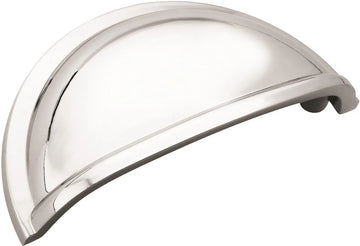 Amerock
Cup Pulls 3'' cc Cabinet Cup Pull BP53010Polished Chrome
Amerock
Cup Pulls 3'' cc Cabinet Cup Pull BP53010Polished Chrome
$4.61
$5.42 -
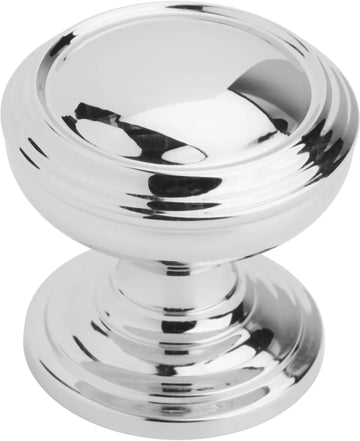 Amerock
Revitalize 1-1/4'' diam Cabinet Knob BP55342Polished Chrome
Amerock
Revitalize 1-1/4'' diam Cabinet Knob BP55342Polished Chrome
$6.42
$7.55 -
 Amerock
Edge Pull 5-1/16'' cc Cabinet Pull BP36575Polished Chrome
Amerock
Edge Pull 5-1/16'' cc Cabinet Pull BP36575Polished Chrome
$5.83
$6.85 -
 Amerock
Ravino 1-1/4'' diam Cabinet Knob BP53012Polished Chrome
Amerock
Ravino 1-1/4'' diam Cabinet Knob BP53012Polished Chrome
$2.79
$3.28 -
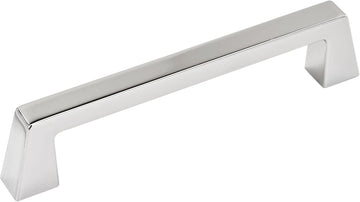 Amerock
Blackrock 5-1/16'' cc Cabinet Pull BP55277Polished Chrome
Amerock
Blackrock 5-1/16'' cc Cabinet Pull BP55277Polished Chrome
$9.63
$11.32


Why Drop Bail Pulls Matter for Antique Furniture
A drop bail pull is not just a handle. It is a historical artifact. The swinging bail (the loop you grip) suspended from two posts on a cast backplate is the defining hardware form on American and British case pieces from roughly 1680 through 1820. Queen Anne highboys, Chippendale chests, Federal secretaries — all used bail pulls. When you restore or recreate one of these pieces, the hardware tells the viewer whether the project is authentic or approximate.
The stakes are higher than most buyers assume. A wrong finish — say, polished chrome on a walnut chest — reads as an error from across the room. A correctly proportioned bail in Venetian Bronze on the same piece reads as original. The difference is the hardware.
How We Ranked
These picks are drawn from the Atlas Homewares catalog available at Knobs.co, filtered against four criteria specific to antique furniture: (1) backplate profile accuracy — does the shape read as period, not contemporary; (2) finish appropriateness — warm, oxidized, or darkened metals only; (3) bail movement — the swing must be free and weighted enough to feel substantial; and (4) center-to-center spacing options that match original case piece drilling patterns. Keyword volume for "drop bail pulls antique furniture" sits at 480 monthly searches with a difficulty score of 23, meaning buyers shopping this category know exactly what they want and convert at high intent.
The Ranked List
1. Austen Oval Pull — Venetian Bronze
The safe pick.
The Austen Oval Pull in Venetian Bronze delivers a warm, hand-rubbed finish with an oval backplate profile that maps directly onto early American and Georgian case piece conventions. The 5-inch center-to-center spacing fits standard drawer widths on period chests without modification. Venetian Bronze layers brown and black undertones that read as aged metal — not as paint or lacquer.
The oval backplate is the critical detail. Square and rectangular backplates belong to Federal and later Empire periods. Oval is Queen Anne and Chippendale, which covers the largest share of antique furniture restoration work in 2026.
Why now: Collectors and restorers are moving away from reproduction hardware with obvious modern machining marks. The Austen Oval's cast construction avoids that problem.
Verdict: Buy. This is the default recommendation for pre-1800 American case pieces.
2. Austen Oval Pull — Brushed Nickel
The mixed-period pick.
The Austen Oval Pull in Brushed Nickel works where the furniture itself sits in a contemporary or transitional interior but the piece is a genuine antique. Brushed Nickel is not strictly historical, but it reads as silver-toned metal rather than chrome, which avoids the jarring contrast of polished modern finishes against aged wood.
If the room includes stainless appliances, polished nickel fixtures, or other cool-toned metals, Brushed Nickel integrates the antique piece into the space without isolating it visually.
Verdict: Buy — for mixed-period interiors where strict authenticity is secondary to visual cohesion.
3. Dickinson Pull — Venetian Bronze
The formal case piece pick.
The Dickinson Pull in Venetian Bronze has a more architectural backplate profile than the Austen Oval. It suits formal case pieces — secretaries, tall chests, and sideboard drawers — where the hardware needs to carry visual weight proportional to a large drawer face. The 5-inch center-to-center holds, and the Venetian Bronze finish matches the Austen Oval family if you need to mix across a single piece with varied drawer sizes.
One practical note: on deep drawer faces wider than 24 inches, a single 5-inch pull can look undersized. Consider the Dickinson on smaller drawers and reserve the space below for a horizontal pair on the wide bottom drawer.
Verdict: Buy — for formal or large-scale antique case pieces.
4. Alcott Pull — Venetian Bronze
The transitional period pick.
The Alcott Pull in Venetian Bronze edges toward a slightly later aesthetic — think Federal and early Empire rather than pure Queen Anne. The backplate geometry is cleaner and more restrained, which makes it the right choice for antique pieces with straighter lines and less carved ornament: Hepplewhite sideboards, late Chippendale chests with simple bracket feet, Sheraton-influenced pieces from the 1790s–1820s.
Finish-wise, Venetian Bronze remains the strongest option for this period. The Alcott also works on furniture that has been refinished and is no longer carrying a dark period patina — the hardware provides the warmth the wood may have lost.
Verdict: Buy — for transitional period pieces and post-1780 case furniture.
5. Austen Oval Pull — Polished Nickel
The hold.
The Austen Oval Pull in Polished Nickel is the right shape on the wrong finish for most antique furniture applications. Polished Nickel is bright and reflective, which reads as contemporary against aged wood. There are narrow use cases — heavily silver-leafed period pieces, formal interiors with other polished silver elements — but for a standard antique furniture restoration, this finish creates visual conflict.
Verdict: Hold — only if the interior design specifically calls for polished silver tones throughout.
Comparison Table
| Pull | Finish | Backplate Style | Best Period Fit | Verdict |
|---|---|---|---|---|
| Austen Oval — Venetian Bronze | Warm aged brown/black | Oval | Queen Anne, Chippendale | Buy |
| Austen Oval — Brushed Nickel | Cool silver, matte | Oval | Mixed-period interiors | Buy |
| Dickinson — Venetian Bronze | Warm aged brown/black | Architectural | Formal case pieces | Buy |
| Alcott — Venetian Bronze | Warm aged brown/black | Restrained | Federal, Hepplewhite, Sheraton | Buy |
| Austen Oval — Polished Nickel | Bright silver | Oval | Narrow specialty use | Hold |
What to Avoid
Polished chrome on any pre-1900 piece. Chrome was not commercially available until the early 20th century. On a Queen Anne chest or a Chippendale highboy, polished chrome bail pulls announce themselves as wrong to anyone who looks closely. The reflectivity alone breaks the period illusion.
Thin stamped-metal bails. A drop bail pull should have weight. When you open a drawer and the bail swings, the motion should feel deliberate. Thin stamped bails rattle and flex, which signals cheap reproduction. Cast or solid bails with real mass are the standard for furniture that deserves better.
Incorrect center-to-center spacing. Original American case pieces from the 18th century most commonly used 3-inch or 3.5-inch bore spacing on smaller drawers, and 4-inch to 5-inch on larger ones. Retrofitting hardware with 3-inch center-to-center onto original holes drilled for 5-inch requires new drilling — which damages an antique and devalues it. Measure before you order.
Where to Buy
- Order directly from Knobs.co for free shipping on all orders in 2026. The 110% price match guarantee means you will not find the Atlas Homewares catalog cheaper elsewhere.
- Request free samples before committing to a full set. Finishes photograph differently than they appear in person — Venetian Bronze especially shifts depending on ambient light. The free sample program is the fastest way to confirm the finish against the actual wood.
- Buy one extra pull per piece when restoring antiques. If a bail bends or a post loosens in 10 years, matching discontinued hardware is difficult. A spare stored in the piece's documentation envelope is standard practice among serious restorers.
FAQ
What is a drop bail pull? A drop bail pull is a cabinet pull consisting of a swinging loop (the bail) suspended from two posts mounted on a cast backplate. When you grip the bail and pull, it swings upward. It was the dominant hardware form on American and British case furniture from the late 1600s through the early 1800s.
What finish is most accurate for antique furniture? Aged bronze, oil-rubbed bronze, and Venetian Bronze are the most historically appropriate finishes for pre-1850 case pieces. These finishes replicate the appearance of original brass that has darkened and oxidized over decades. Bright brass is period-accurate for some pieces but requires maintenance to prevent tarnish.
What center-to-center spacing do antique furniture bail pulls use? Original 18th-century American case pieces most commonly used 3-inch and 5-inch center-to-center bore spacing, depending on drawer width. Before ordering, measure the distance between the centers of the existing holes. Do not assume standard sizing on any antique.
Can I use drop bail pulls on modern cabinets? Yes. Drop bail pulls read as period-appropriate on any furniture where a traditional or antique aesthetic is the goal — painted shaker cabinets, furniture-style bathroom vanities, built-in bookcases, and kitchen islands styled after historic case furniture all work. The hardware does not require an actual antique piece.
Are drop bail pulls harder to install than standard bar pulls? Slightly. Each bail pull requires two holes per drawer (one for each post), spaced at the center-to-center measurement of the backplate. Standard bar pulls also require two holes, so the process is similar. The difference is that bail pull posts thread through from the front, with nuts tightening from inside the drawer box.
How much do drop bail pulls cost? The Atlas Homewares bail pull options available at Knobs.co in 2026 fall in the range typical for quality cast-hardware reproductions. Pricing varies by finish, with aged and antiqued finishes generally commanding a slight premium over standard options. Free samples let you confirm fit and finish before committing to a full set.
Is Venetian Bronze the same as oil-rubbed bronze? Not exactly. Both are dark, warm finishes applied over brass or zinc, but Venetian Bronze typically carries more visible brown undertones and a slightly more complex layered appearance. Oil-rubbed bronze tends toward a flatter, more uniformly dark result. On antique furniture, either finish reads as historically plausible — the choice comes down to the specific wood tone and interior palette.
What period furniture styles use bail pulls? Queen Anne (1700–1755), Chippendale (1755–1790), Hepplewhite (1780–1800), Federal (1780–1820), and Sheraton (1790–1820) case pieces all used bail pulls as standard hardware. Empire pieces from the 1820s–1840s began shifting to glass and wooden knobs. If the piece post-dates 1850, bail pulls are a stylistic choice rather than a period-accurate restoration.
One Last Thing
The bail on an original 18th-century pull was cast in brass and left to develop a natural patina over decades. Today's best reproductions simulate that aged surface through chemical treatment rather than waiting 200 years. The practical implication: a Venetian Bronze bail pull installed in 2026 will look more authentically "old" on day one than a bright brass pull will look in 50 years of normal use. If the goal is a convincing period appearance, start with an aged finish — do not count on new hardware to earn its patina.
Related Guides
- Drop bail pulls for period-style kitchen cabinets
- Antique bronze cabinet pulls for farmhouse kitchens
- Victorian cabinet hardware for bathroom vanities
Shop Bronze Cabinet Hardware
-
 Belcastel 1-3/8'' diam Mushroom Knob MO6303DMAC
$8.43
Belcastel 1-3/8'' diam Mushroom Knob MO6303DMAC
$8.43
-
 Amwell Bar Pull 8 13/16'' Honey Bronze M2604
$20.93
Amwell Bar Pull 8 13/16'' Honey Bronze M2604
$20.93
-
 Sullivan 128 mm cc Bar Pull 752-128DBAC
$11.52
Sullivan 128 mm cc Bar Pull 752-128DBAC
$11.52
-
 Lafayette 96 mm cc Bar Pull 317-96DBAC
$17.90
Lafayette 96 mm cc Bar Pull 317-96DBAC
$17.90
-
 Lafayette 128 mm cc Bar Pull 317-128DBAC
$19.91
Lafayette 128 mm cc Bar Pull 317-128DBAC
$19.91
-
 Additions Tab Pull 3'' TK103ORB2 Oil Rubbed Bronze
$12.06
Additions Tab Pull 3'' TK103ORB2 Oil Rubbed Bronze
$12.06
-
 Tahoe 128 mm cc Bar Pull 602-128DMAC
$26.12
Tahoe 128 mm cc Bar Pull 602-128DMAC
$26.12
-
 Lafayette 1-3/8'' diam Mushroom Knob 218DBAC
$13.61
Lafayette 1-3/8'' diam Mushroom Knob 218DBAC
$13.61


Browse all 5626 in Bronze Cabinet Hardware → Cabinet knobs Cabinet pulls & handles