

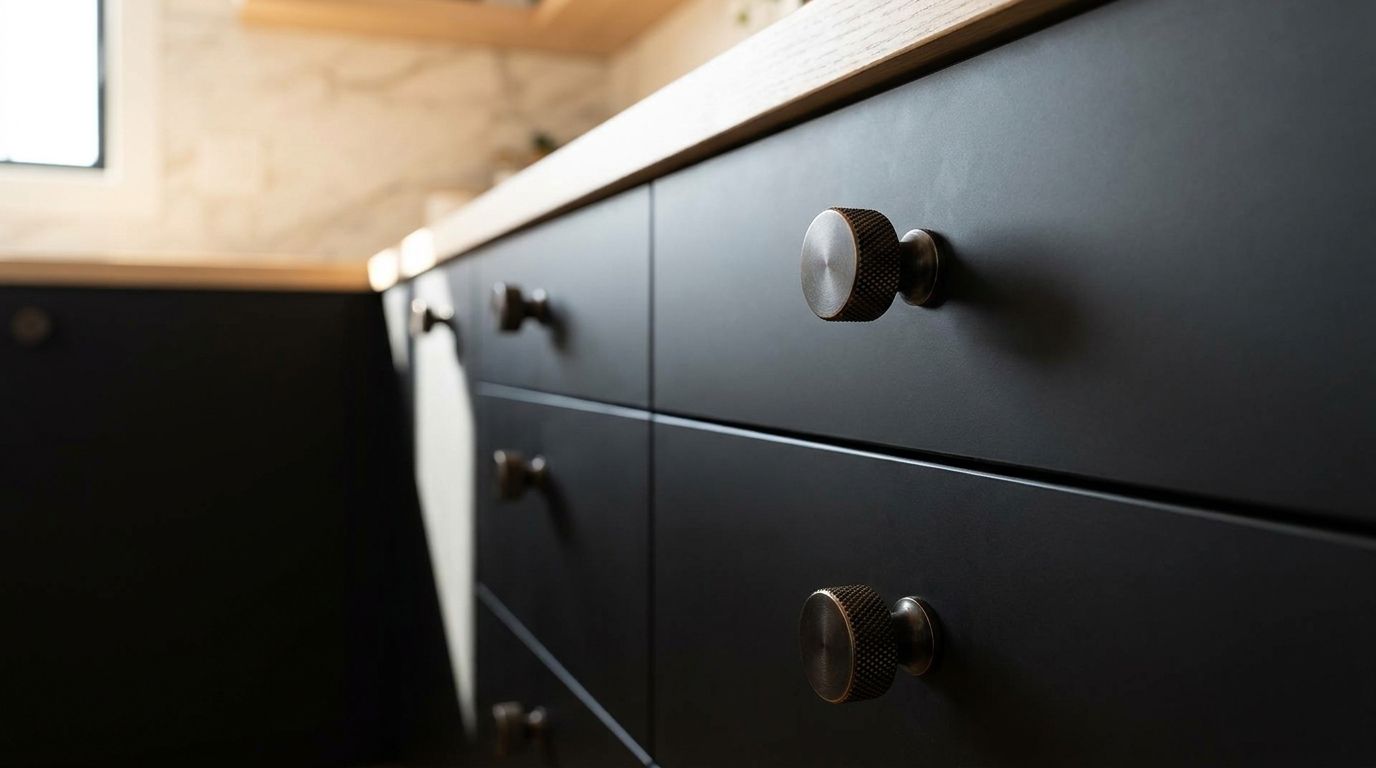
Knurled cabinet knobs bring a machined, ribbed texture to kitchen hardware that reads as intentional and current rather than decorative for decoration's sake — this guide breaks down what actually matters when you're shopping for them in a modern kitchen.
- Knurled cabinet knobs suit modern kitchens with flat-front or slab cabinets — the Alno A2901-3 Vita Bella knurled bar pull is the clearest true-knurl pick and a Buy for 2026 remodels.
- Knurl depth and finish matter more than shape — a shallow knurl on a warm brass finish reads modern, a deep knurl on oil-rubbed bronze reads industrial-vintage.
- Round knobs without texture, like the Top Knobs Nouveau hollow round, pair well with knurled bar pulls when you need a knob-and-pull combo — Consider.
- Skip mixing knurled hardware with heavily ornate backplates — the two textures fight each other visually.
Why this matters
Modern kitchens in 2026 have moved past the all-matte-black moment. Buyers want texture that photographs well and feels intentional under fingertips, and knurling — a machined crosshatch or diamond-cut grip pattern originally borrowed from tool handles and watch crowns — delivers that without going ornate. The catch is that most cabinet hardware catalogs are heavy on smooth bar pulls and light on genuinely knurled pieces, so knowing exactly what you're buying (versus what just looks similar in a thumbnail) saves you a return.
Knobs.co stocks over 50,000 SKUs across dozens of brands, and the knurled category is genuinely small compared to plain knobs and bar pulls. That's normal — knurling is a manufacturing step, not a finish, so fewer manufacturers bother with it. Treat that scarcity as a signal: when you find a real knurled piece, it's usually a considered design choice by the brand, not a catalog filler item.
Who this is for
This guide is for homeowners and designers finishing flat-front, slab, or minimalist shaker kitchens in 2026 who want tactile hardware without going full traditional or rustic. If your cabinets are frameless, painted a neutral, or already leaning into warm metals, knurled cabinet knobs are worth the research. If you're working with heavily traditional raised-panel doors, this texture will look out of place — save it for a different project.
What to look for in knurled cabinet knobs for modern kitchens
Knurl depth and grip feel
Deep, aggressive knurling reads industrial and vintage-machine-shop; shallow, fine knurling reads refined and modern. For a 2026 modern kitchen, shallow knurl patterns pair better with slab cabinets than deep diamond-knurl textures, which tend to pull the eye toward a more rustic or steampunk aesthetic.
Finish over pattern
The knurl pattern itself matters less than the metal finish it's cut into. Warm brass, satin nickel, and matte black knurled pieces all read modern; oil-rubbed bronze and antique pewter knurled pieces read traditional even with an identical knurl pattern. Pick the finish first, then confirm it's available with knurling.
Bar pull vs. round knob
Knurled texture shows up almost exclusively on bar pulls rather than round knobs in most catalogs, because the machining process favors a cylindrical bar shape. If you specifically want a knurled knob rather than a pull, expect a much shorter list of options — and be honest with yourself about whether a knurled bar pull on drawers with a coordinating round knob on doors solves the same design goal.
Size relative to door reveal
A knurled bar pull with a longer body reads more substantial on a large slab door, but on narrow face frames or tight door reveals, an oversized pull can crowd the edge. Measure your stile width before ordering, and check center-to-center spacing against your existing drill holes if you're replacing hardware rather than starting fresh.
Material consistency across the kitchen
If you're mixing knurled bar pulls on drawers with plain round knobs on upper cabinets, keep the base metal finish identical across both. Two different brands' "satin nickel" can run warmer or cooler against each other, and that mismatch is more visible with textured hardware than with plain pieces because the texture catches light differently.
Screw length and backplate compatibility
Knurled bar pulls typically ship with standard screws sized for common cabinet door and drawer thicknesses, but always confirm before ordering in bulk for a full remodel — a mismatched screw length is the single most common return reason across cabinet hardware categories generally.
Top picks for knurled cabinet knobs in a modern kitchen
The true knurl: Alno A2901-3 Vita Bella knurled bar pull. This is the clearest genuinely knurled option in the catalog — a machined bar pull with a fine crosshatch grip rather than a smooth cylinder. The 3-inch designation in the product name points to a compact center-to-center spacing, which makes it workable on narrower drawer fronts as well as full-width doors. If your search is specifically for knurled texture and not just "modern-looking" hardware, this is the piece that actually delivers it. Buy.
The coordinating knob: Top Knobs M2205 Nouveau hollow round knob. Not knurled itself, but a rounded, dimensional knob shape that pairs cleanly with a knurled bar pull when you want texture on drawers and a simpler round profile on doors. Use this when a full-knurl kitchen feels like too much repetition and you want visual variety without clashing shapes. Consider.
The minimalist option: Portobello Road plain knob. A smooth, unadorned knob that works as a deliberate contrast piece — pair it on upper cabinets while the knurled bar pull handles lower drawers, giving the eye a place to rest. It's not a knurled piece, so don't buy it expecting texture; buy it as the calm counterpoint in a mixed-hardware plan. Consider.
The material-contrast pick: White marble cabinet knob. Stone rather than metal, this knob swaps texture for material contrast — useful if your modern kitchen already leans on marble countertops or backsplash and you want the hardware to echo that material instead of adding another metal finish into the mix. Skip this if you're trying to keep every touchpoint metal for a cohesive knurled-hardware look. Consider for material-matched kitchens, Skip if going full-metal.
What to avoid
- Deep, aggressive knurl patterns paired with oil-rubbed bronze or antique finishes — the combination reads as an old machine tool, not a 2026 kitchen accent, even though the knurling itself is technically correct.
- Mixing knurled bar pulls with ornate, scrolled backplates — the two textures compete instead of complementing each other, and the kitchen ends up looking indecisive rather than curated.
- Ordering a single knurled piece as a sample size before confirming your full quantity is in stock — knurled hardware runs in smaller batches than plain knobs across most brands, so availability can shift between your first order and a reorder for a full kitchen.
Verdict comparison
| Product | Texture | Best for | Verdict |
|---|---|---|---|
| Alno A2901-3 Vita Bella | True knurled bar pull | Drawers, main texture piece | Buy |
| Top Knobs M2205 Nouveau | Smooth, rounded | Coordinating door knob | Consider |
| Portobello Road Plain | Smooth | Contrast/minimalist accent | Consider |
| White Marble Knob | Stone, no knurl | Material-matched kitchens | Consider / Skip if all-metal |
FAQ
What is a knurled cabinet knob?
A knurled cabinet knob has a machined crosshatch or diamond-cut grip pattern cut into the metal, originally borrowed from tool handles and watch crowns. It adds grip and texture compared to a smooth knob of the same shape.
Are knurled cabinet knobs still in style for 2026 kitchens?
Yes, knurled texture remains a strong pick for modern and flat-front kitchens in 2026 because it adds tactile interest without going ornate. It pairs especially well with slab cabinets and warm metal finishes.
Is a knurled bar pull better than a knurled knob?
Knurled bar pulls are far more common than knurled knobs because the machining process favors a cylindrical shape. If you want the knurled look on doors specifically, expect fewer knob options and consider pairing a knurled pull on drawers with a plain round knob on doors instead.
Do knurled cabinet knobs work with painted cabinets?
Yes, knurled hardware works with painted cabinets as long as the metal finish contrasts intentionally with the paint color rather than blending into it. Warm brass or matte black knurled pulls both read well against most painted cabinet colors.
Can I mix knurled and smooth cabinet hardware in the same kitchen?
Yes, mixing knurled bar pulls with smooth round knobs is a common and effective way to add texture without overusing the pattern. Keep the metal finish consistent across both pieces so the mix reads intentional rather than mismatched.
How do I clean knurled cabinet hardware?
Knurled hardware collects more grime in its grooves than smooth hardware, so a soft brush with mild soap and water works better than a cloth alone. Dry it fully after cleaning to prevent water spotting in the grooves, especially on unlacquered finishes.
What finish looks best with knurled texture in a modern kitchen?
Warm brass, satin nickel, and matte black knurled pieces read modern, while oil-rubbed bronze and antique pewter push the same knurl pattern toward a traditional or industrial-vintage look. Pick the finish first, then confirm knurled availability in that finish.
Do knurled knobs need different screws than regular cabinet knobs?
Not typically — knurled hardware usually uses the same standard screw sizing as smooth knobs and pulls from the same brand. Always confirm screw length against your door and drawer thickness before ordering in bulk.
One last thing
Most of what gets marketed as "knurled" in kitchen hardware searches is actually just a ribbed or fluted decorative pattern, not true machined knurling. If the texture matters to you specifically, check the product description for the word "knurled" rather than judging from a thumbnail image — the difference is real under your fingers even when it's subtle in a photo.