

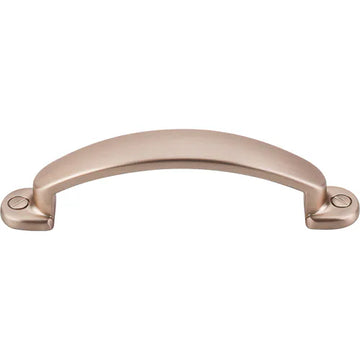
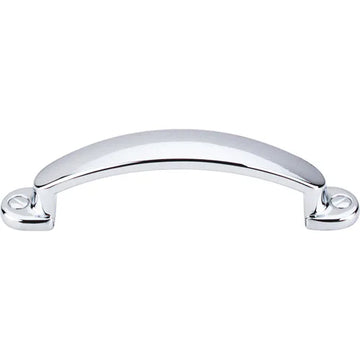
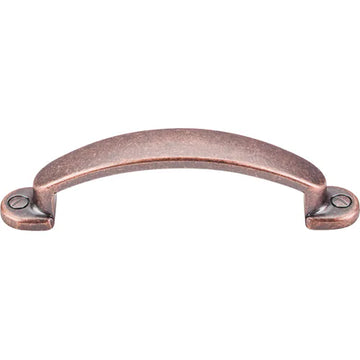
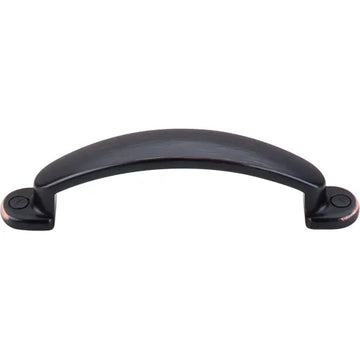
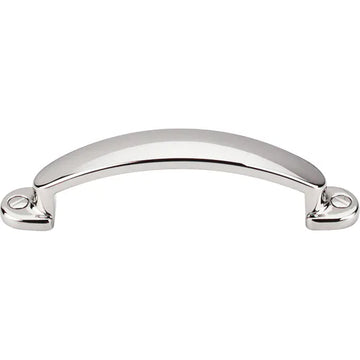
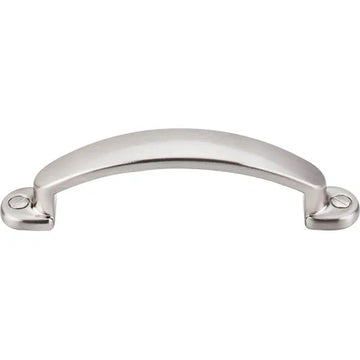
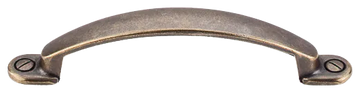
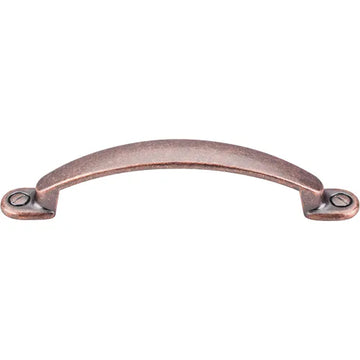
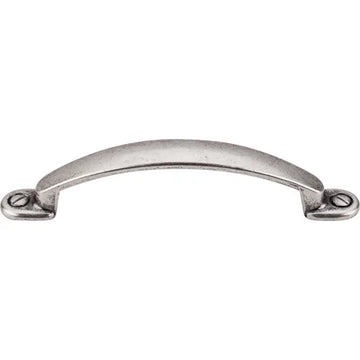
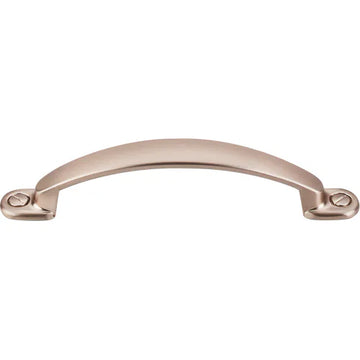
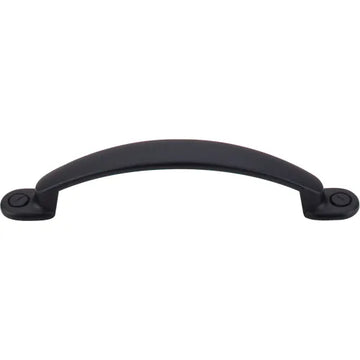
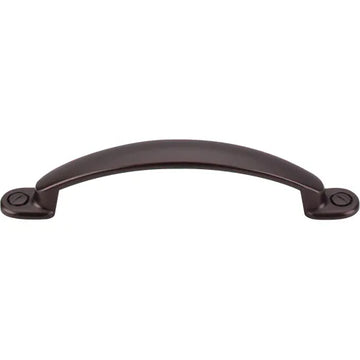



Curved pulls that soften a cabinet face
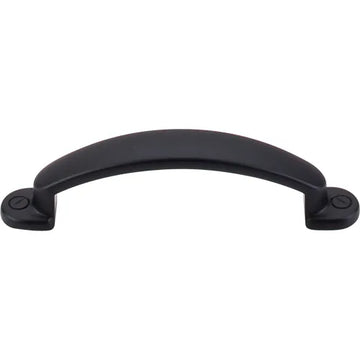
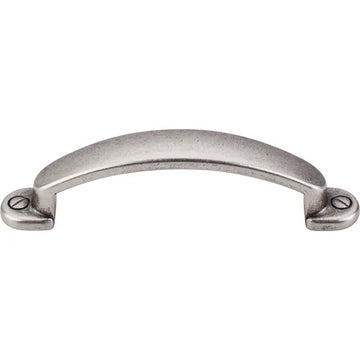
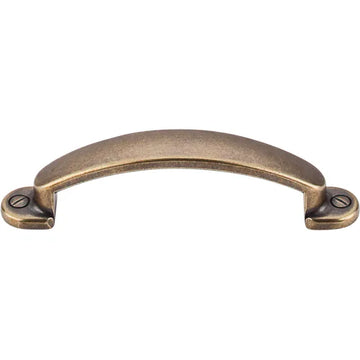
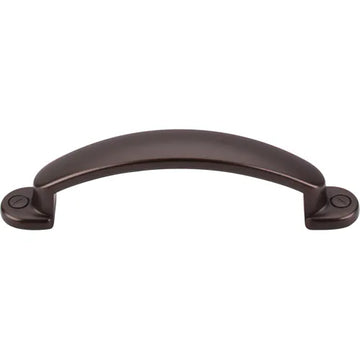
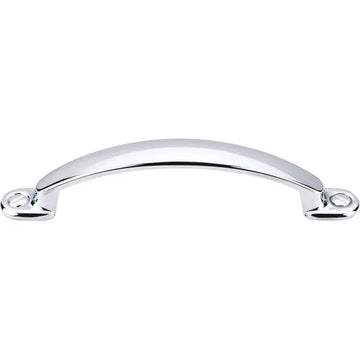
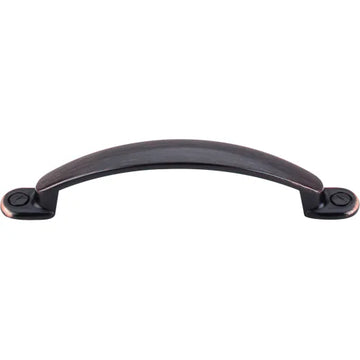
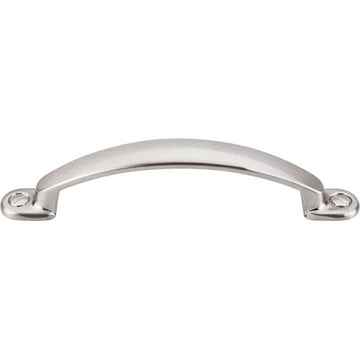
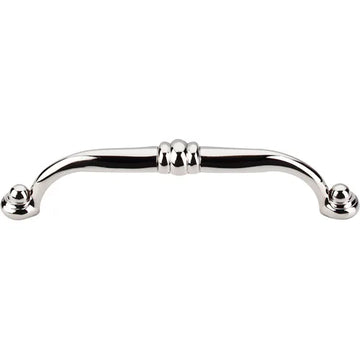
Curved pulls trade the straight horizontal line of a bar pull for a gentle arc between the two mounting points. The arc usually projects outward from the cabinet face, giving the hand a natural finger position and reading softer at the door than a flat bar. The category covers shallow arches, deeper bows, French curves, and classical ogee silhouettes — anywhere the grip is non-linear.
Why curve changes the look
A curve pulls the cabinet visually toward transitional or traditional territory. Shaker doors take curved pulls especially well; the flat-panel face needs something to relieve its strict geometry, and a shallow arch does that without competing for attention. Heavier ogee curves move the cabinet into traditional or French-country styling. Modern flat-front cabinets occasionally use a very shallow curve, but the safer modern call is a straight bar pull instead.
How curved pulls feel in hand
The arc keeps the grip away from the cabinet face, which gives knuckles more clearance than a flat pull. For drawers loaded heavily or pulled often, that clearance translates to less hand fatigue over time. The tradeoff is projection: a deep curve sticks out further than a flat bar and gets bumped more in tight kitchens where the cook moves quickly past base cabinets.
Picking the right curve
For Shaker and transitional kitchens, look at shallow-arch pulls and bow pulls in 3- to 5-inch centers. For traditional and classical work, browse ornate pulls with deeper ogee curves. Inside one kitchen, keep the curve depth consistent across the cabinets so the hardware reads as a set. Mixing a deep bow with a shallow arch reads as a pair of mistakes rather than a coordinated choice.
Frequently Asked Questions
What is a curved pull and how does it differ from a bar pull?
A curved pull replaces the straight horizontal grip of a bar pull with an arc between the two mounting points. That arc projects outward from the cabinet face, positioning the hand more naturally and giving the hardware a softer visual line at the door. Bar pulls are the safer choice for modern flat-front cabinets, while curved pulls suit transitional and traditional cabinetry.
Do curved pulls work on Shaker cabinets?
Shaker cabinets pair especially well with shallow-arch and bow pulls because the flat-panel door benefits from a gentle curve that relieves its strict geometry without competing for visual attention. Deeper ogee curves are better reserved for traditional or French-country styling, where the heavier ornamentation matches the door profile.
How do curved pulls compare to straight bar pulls for everyday use in a busy kitchen?
The outward arc of a curved pull provides more knuckle clearance than a flat bar, which reduces hand fatigue on heavily used drawers. The tradeoff is projection: a deep curve extends further from the cabinet face and is more likely to be bumped in tight kitchens where people move quickly past base cabinets. A straight bar pull sits closer to the surface and is the lower-profile option for compact spaces.
What center-to-center sizes suit curved pulls in a transitional kitchen?
For Shaker and transitional kitchens, pulls with 3- to 5-inch center-to-center spacing in shallow-arch or bow profiles are a practical range. When using curved pulls across multiple cabinets, keeping the curve depth consistent throughout is important so the hardware reads as a coordinated set rather than mismatched pieces.
What Customers Say
Trusted by thousands of designers, builders, and homeowners
Kayla Malo is the most attentive and super human ever! My experience with this company is stellar!

Love working with Kayla, she is extremely helpful and quick with responding to my questions!
Kayla was GREAT!!!! Super help and fast answers. One of the best I've ever dealt with.