

Protect Your Walls with Door Stops
In an ideal layout, every door that opens will have plenty of space to accommodate its swing before it makes contact with a wall, piece of furniture, or bathroom fixture. Unfortunately, however, for many homes this is not the case.
When doors cannot complete their swing before coming into contact with a wall or fixture, it’s usually the doorknob that makes first contact. This can eventually lead to damage on the walls such as dents, chipped paint, and even holes if the door has been opened forcefully enough.
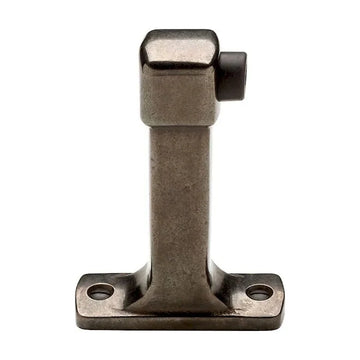
The solution to these issues is to install door stops behind all doors that may make contact with a wall or fixture. Door stops are available that fix either to the wall itself, to the baseboard, or to the floor, where they can prevent the door from opening fully and causing damage.
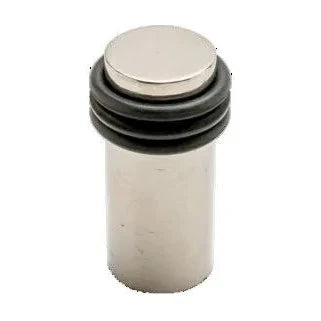
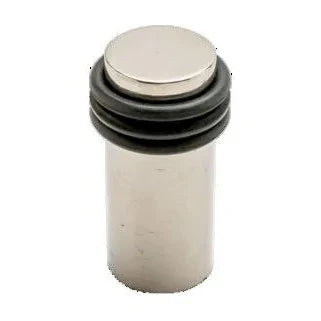
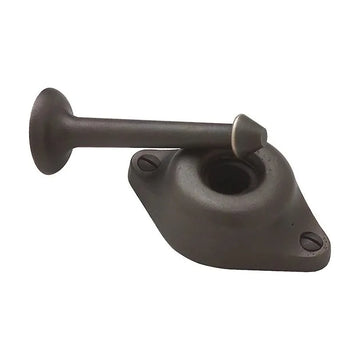
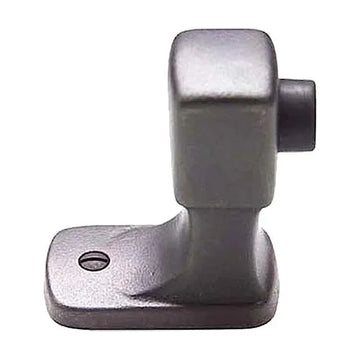
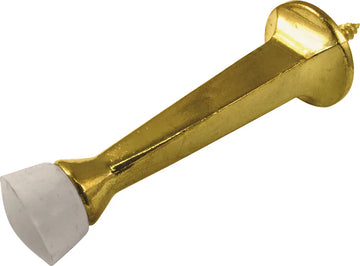
There are essentially three basic types of door stops. Solid doors stops which mount to the wall or baseboard. These metal stops usually have a rubber tip to protect the door, and come in a wide range of metal finishes to complement the rest of the room’s decor.
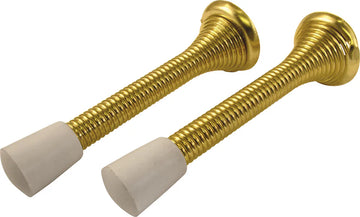
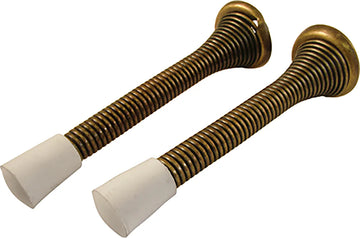
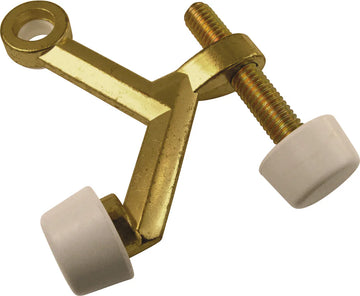
Spring door stops also mount to the wall and have a rubber tip, but instead of being made of solid metal, they are made of a spring that can bend and move with the door. This helps absorb some of the impact if the door in question is usually opened with force.
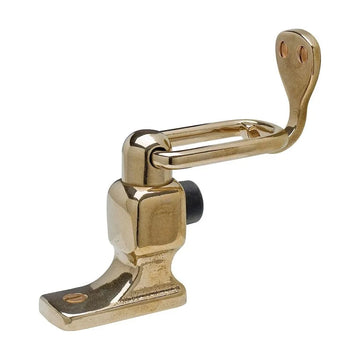
Floor mounted door stops are good choices for small bathrooms and other areas where the door won’t open into a wall, but into a fixture or piece of furniture. They screw to the floor where they stop the door from opening any further.
No matter what door you have to cut the swing down on, be sure to invest in door stops to help protect your walls.
Frequently Asked Questions
What are the main types of door stops and where does each one mount?
There are three basic types: wall or baseboard-mounted solid stops, wall-mounted spring stops, and floor-mounted stops. Solid stops are rigid metal with a rubber tip; spring stops are coiled metal that flexes to absorb impact; floor-mounted stops screw directly into the floor and are designed to block a door before it reaches a fixture or piece of furniture rather than a wall.
What materials and finishes are door stops available in?
Most door stops are made of metal and come in a wide range of metal finishes, allowing them to coordinate with other hardware in the room. Both solid and spring styles typically include a rubber tip on the contact end to protect the door surface from scuffing or denting.
When should a spring door stop be chosen over a solid wall-mount stop?
A spring door stop is the better choice when a door is frequently opened with significant force, because the spring coil bends and flexes to absorb impact rather than taking the full load rigidly. A solid wall or baseboard stop is sufficient for doors that swing gently; it provides a firm, fixed barrier and is generally a simpler, lower-profile installation.
Where are floor-mounted door stops the most practical option?
Floor-mounted door stops are best suited for small bathrooms and tight spaces where the door's swing path ends at a fixture, vanity, or piece of furniture rather than an open wall section. Because they attach to the floor directly in the door's travel path, they stop the door without requiring a usable wall or baseboard surface at the right height.
What Customers Say
Trusted by thousands of designers, builders, and homeowners
Kayla Malo is the most attentive and super human ever! My experience with this company is stellar!

Love working with Kayla, she is extremely helpful and quick with responding to my questions!
Kayla was GREAT!!!! Super help and fast answers. One of the best I've ever dealt with.