










3 1/2'' (89 mm) cabinet hardware and the pre-96mm era
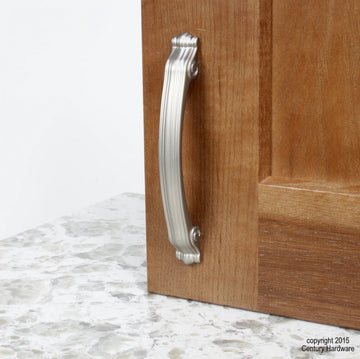
3 1/2'' (89 mm) cabinet hardware is a center-to-center spacing that turns up often in homes built before the 3 3/4'' spacing became the default builder standard nationwide. Cup pulls, traditional bar pulls, and smaller decorative pulls from brands like Alno and Amerock are commonly drilled at this exact distance, particularly on cabinetry from the 1980s and earlier. It's worth measuring for this spacing specifically before assuming a newer pull will simply bolt onto existing holes.
What kind of pulls run at this length
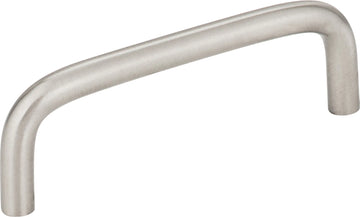
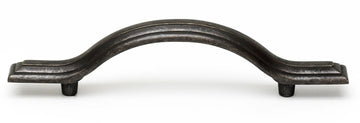
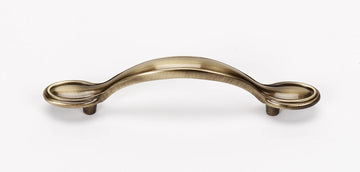
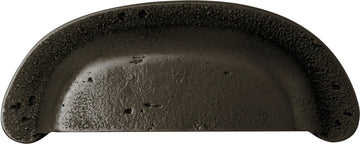
Cup pulls make up a large share of what's built at this size: the classic scooped profile that mounts with two screws set 3.5 inches apart, common on traditional and cottage-style cabinetry across several decades. Straight bar pulls and geometric brass pulls at the same spacing suit a more transitional look instead, so this particular size doesn't lock a kitchen into one narrow style or era.
Checking fit before replacing older hardware
Measure screw to screw, not the visible overall length of the old pull, since decorative ends often extend well past the actual mounting holes underneath. A pull listed at 3 1/2'' (89 mm) should drop into existing holes without new drilling, though it's worth double-checking against neighboring sizes like 3 3/4'' (96 mm), since the two measurements are close enough to confuse at a quick glance. For wider drawers needing more support, 5 1/16'' (128.6 mm) is the next size up.
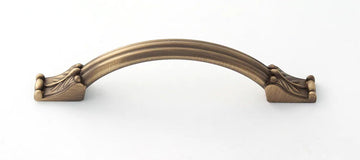
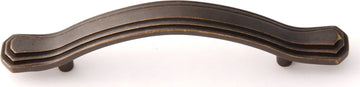
Cup pulls and traditional bar pulls at this spacing are commonly cast in brass, which is worth knowing before mixing new pieces with any original hardware left in place elsewhere in the kitchen. A polished brass replacement will read noticeably brighter than an original piece that's aged and dulled over decades, so matching an entire run of drawers usually works better than replacing just one or two and leaving the rest untouched.
When a full remodel changes the spacing
Some homeowners use a hardware swap as the moment to move off 3 1/2'' entirely and standardize on the more common 3 3/4'' spacing instead, which opens up a wider range of styles down the road. That choice means drilling new holes and either patching the old ones or covering them with a slightly larger backplate, so it's a decision worth making before ordering rather than partway through a project.
What Customers Say
Trusted by thousands of designers, builders, and homeowners
Kayla Malo is the most attentive and super human ever! My experience with this company is stellar!

Love working with Kayla, she is extremely helpful and quick with responding to my questions!
Kayla was GREAT!!!! Super help and fast answers. One of the best I've ever dealt with.