





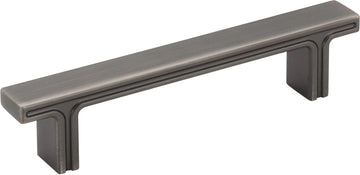
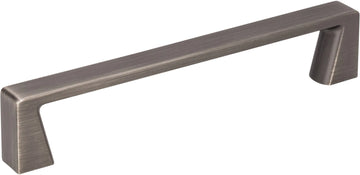
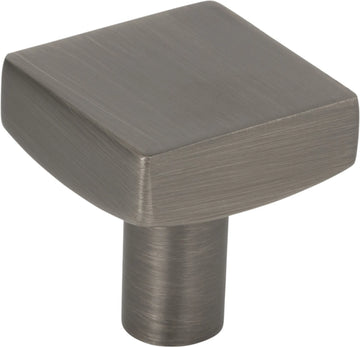
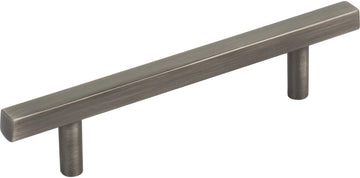
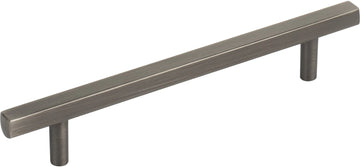
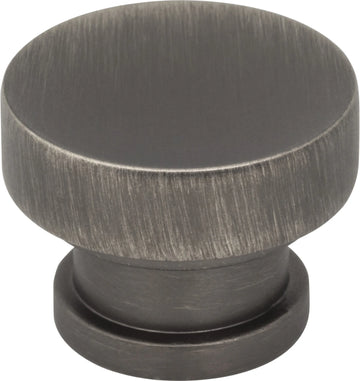
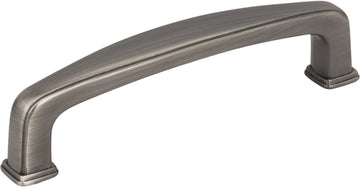
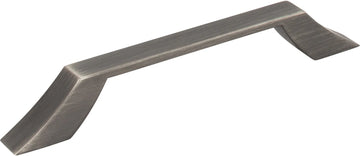
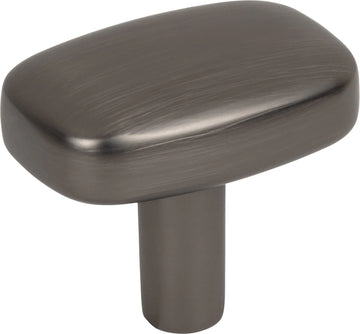
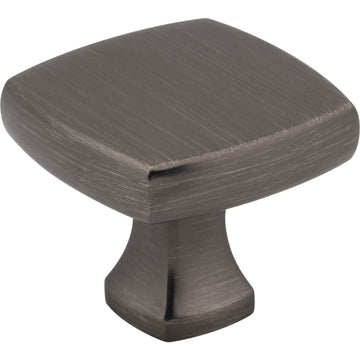


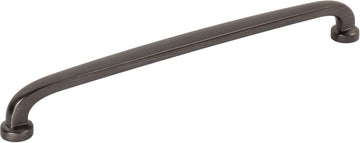
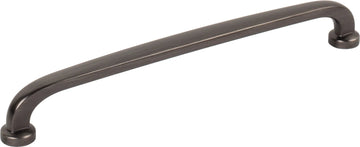
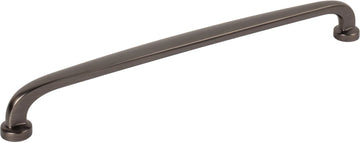
Brushed pewter cabinet hardware for warm-gray kitchens
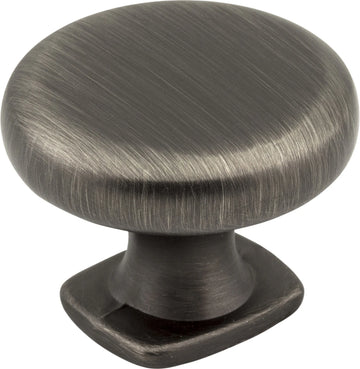
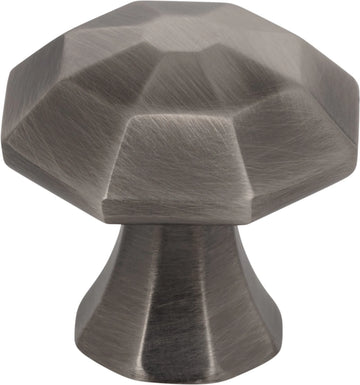
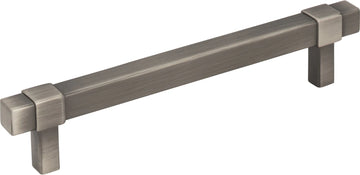
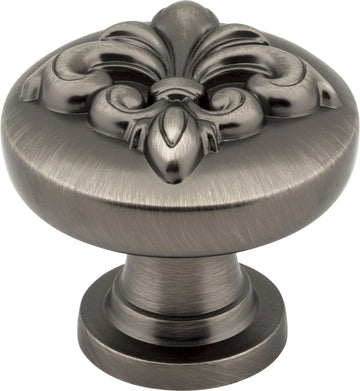
Brushed pewter cabinet hardware reads as a warm mid-gray with directional grain across the surface. The brushing breaks the reflection so the finish stays low-glare even in bright kitchens. It sits warmer than slate and lighter than oil-rubbed bronze. The character is softer than satin nickel because the undertones are gray rather than silver.
What brushed pewter looks like
Under warm light, brushed pewter picks up a slight brown cast in the recesses; under cool daylight it reads closer to true warm gray. The brush grain catches just enough light to give the hardware dimensional character without going metallic-bright. The texture also hides daily fingerprints and water marks more forgivingly than polished finishes in the same tonal range.
Where brushed pewter pairs cleanly
Transitional kitchens with greige, sage, or warm-white cabinetry. Honed stone counters and soapstone read well alongside it. The finish works particularly well in rustic-leaning kitchens that want gray hardware without the cool edge of chrome or nickel — the warm undertone keeps the room from tipping clinical. In bathrooms, brushed pewter pairs with vanities using mixed-metal plumbing. The gray-with-warmth sits next to both nickel and bronze fixtures.
How brushed pewter compares to its neighbors
Against pewter, the brushed version reads more uniform and slightly darker; un-brushed pewter often shows more tonal variation. Against satin nickel, brushed pewter sits warmer and grayer rather than silver. Against oil-rubbed bronze, brushed pewter is the lighter, cooler-leaning option. For dark-pewter alternatives in the same family, see graphite. It sits closer to charcoal with less warmth. The choice between brushed pewter and brushed nickel often comes down to cabinet color. Brushed pewter holds its own against warm wood and cream paint; brushed nickel pulls cleaner against cool whites and grays. Both finishes diffuse light comparably, so neither competes with reflective stone counters.
Frequently Asked Questions
What's the tone difference between brushed pewter and brushed nickel?
Brushed pewter reads as a warm mid-gray, while brushed nickel leans more silver and slightly cooler. Both share the same directional brushing that breaks up reflection and keeps the surface low-glare. Pewter sits closer to slate in warmth, which makes it read softer against wood tones than nickel does.
Brushed pewter or satin nickel: which reads warmer?
Brushed pewter reads warmer, since its gray base carries less silver brightness than satin nickel. Satin nickel keeps a cooler, brighter cast even with its matte surface. If your cabinetry or fixtures already lean warm gray, pewter blends in more quietly than nickel would.
Does brushed pewter hide scratches well?
The directional brushing helps disguise light surface marks better than a smooth or polished finish would, since the texture already breaks up the light. Deeper scratches that cut across the grain still show, especially where they catch light at an angle. It's a practical choice for hardware that gets handled daily.
Brushed pewter works best against which cabinet tones?
Brushed pewter pairs naturally with warm grays, greige, and soft white cabinetry, where its muted gray reads as a quiet accent rather than a contrast. It also sits comfortably next to slate and charcoal countertops. Against very warm wood tones like cherry, the cooler gray can feel slightly mismatched.
From the Knobs.co Journal
What Customers Say
Trusted by thousands of designers, builders, and homeowners
Kayla Malo is the most attentive and super human ever! My experience with this company is stellar!

Love working with Kayla, she is extremely helpful and quick with responding to my questions!
Kayla was GREAT!!!! Super help and fast answers. One of the best I've ever dealt with.