

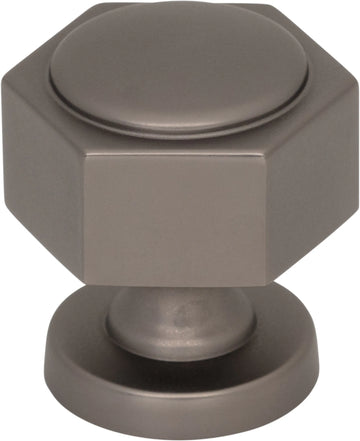
Geometric cabinet hardware: hardware as line and shape
Geometric cabinet hardware covers knobs and pulls built around clear geometric forms — squares, rectangles, circles, hexagons, pyramids, and the angular profiles that read as contemporary on a slab or shaker door. The category sits at the contemporary end of the catalog, where surface ornament is stripped back and the shape itself does the design work. A clean geometric pull reads decisive on cabinet fronts that don't carry their own ornamental detail.
What geometric hardware does well
Two things. First, geometric pulls and knobs reinforce the lines of a modern or transitional kitchen — a square knob on a slab door echoes the door's own rectangular geometry, which holds the visual logic of the room together. Second, the simplicity makes geometric hardware easier to coordinate across mixed installations; a square pull pairs with a square knob from a different collection more easily than two ornamental pieces would.
Where to use geometric hardware
Contemporary and modern kitchens with slab-front cabinets are the obvious home, but geometric hardware also suits transitional kitchens where the buyer wants to push the design read slightly more modern than a shaker door would suggest on its own. The category does not pair cleanly with heavily traditional or period-revival cabinets . the visual languages contradict. For square-specific knobs, see square pyramid knobs; for the linear bar pull, see bar pulls.
Sizing and finish considerations
Geometric pulls come in the full drill-center range typical for cabinet hardware. Match pull length to drawer width and confirm projection clearance for knobs against adjacent trim. Finish family matters as much in geometric hardware as elsewhere . a brushed brass square knob next to matte black handles reads accidental rather than considered.
Frequently Asked Questions
What shapes are considered geometric cabinet hardware?
Geometric cabinet hardware is built around clear, defined forms: squares, rectangles, circles, hexagons, pyramids, and angular profiles. The category is defined by hardware where the shape itself carries the design, with surface ornament stripped away rather than added.
How does geometric hardware differ from traditional ornamental hardware?
Geometric hardware relies on clean, angular or symmetrical forms to create visual interest, while traditional ornamental hardware uses decorative surface detail — scrollwork, florals, or period-specific motifs. Because the visual languages contradict, geometric hardware does not pair cleanly with heavily traditional or period-revival cabinets, making finish and cabinet style the primary compatibility check.
What cabinet styles work best with geometric knobs and pulls?
Contemporary kitchens with slab-front cabinets are the primary use case, since a square or rectangular pull echoes the door's own geometry and holds the room's visual logic together. Geometric hardware also works in transitional kitchens where the goal is to push the design read slightly more modern than a shaker door suggests on its own.
Does finish matter when mixing geometric knobs and pulls from different collections?
Yes. Geometric forms make it easier to coordinate hardware across mixed collections — a square pull and a square knob from separate lines read cohesively in a way that two ornamental pieces would not. However, finish consistency remains critical: pairing a brushed brass knob with matte black pulls reads accidental rather than considered, regardless of how well the shapes align.
What Customers Say
Trusted by thousands of designers, builders, and homeowners
Kayla Malo is the most attentive and super human ever! My experience with this company is stellar!

Love working with Kayla, she is extremely helpful and quick with responding to my questions!
Kayla was GREAT!!!! Super help and fast answers. One of the best I've ever dealt with.