

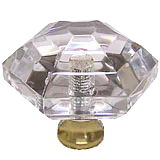


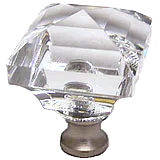
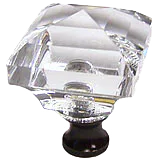
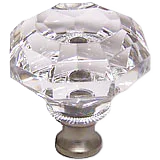

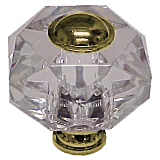
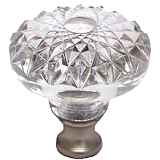
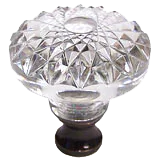
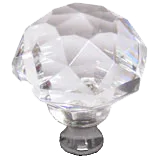
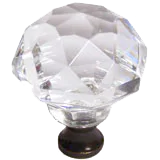

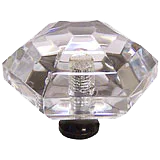
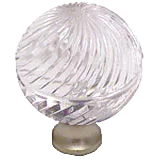

Glass cabinet knobs: vintage character with modern range
Glass cabinet knobs use a glass head mounted on a metal base, with the glass carrying the visual weight and the metal providing the mount. The form descends from late-19th and early-20th-century American hardware, where pressed-glass knobs on porcelain or brass bases were standard equipment on dressers, sideboards, and built-in cabinetry. The contemporary version covers everything from period-faithful crystal-cut reproductions through hand-fused art-glass pieces.
What glass adds to a cabinet
Two things you don't get from solid metal. First, light passes through; a glass knob picks up color from the cabinet behind it and changes appearance with the kitchen's lighting. Second, glass introduces a softer visual element than any metal can — even matte finishes read as solid metal, while glass reads as something between solid and air. The contrast makes glass particularly effective on painted cabinets where the cabinet color is the visual anchor.
Glass types and what they suit
Crystal-cut clear glass reads vintage and pairs with traditional, romantic, and farmhouse kitchens. Smoked and amber glass leans warm and suits stained wood cabinets. Hand-fused art glass — like the pieces from Sietto Reflective or other studio-made lines — brings strong color and works as accent hardware rather than full-kitchen runs. Pressed-glass replicas of original period knobs suit Victorian, Federal, and English country installations.
Pairing and ordering considerations
Glass knobs work best mixed with metal pulls rather than other glass pulls; a kitchen with glass on every cabinet face reads dated, while glass knobs on doors with metal pulls on drawers reads balanced. Pair with cup pulls on drawers for a traditional kitchen, or with bar pulls for a transitional install. Confirm the base finish matches your other hardware exactly.
Frequently Asked Questions
What makes glass cabinet knobs look different from metal knobs under the same lighting?
Glass is translucent, so light passes through the knob and the cabinet color behind it influences how the hardware appears — the same knob can read differently in morning versus evening light. Metal knobs, even in matte finishes, read as a solid opaque surface regardless of lighting conditions. This light-interaction quality makes glass a softer visual element than any metal finish can achieve, and it is particularly effective on painted cabinets where the cabinet color is the dominant visual.
How do glass cabinet knobs compare to solid metal knobs for everyday cabinet use?
The primary difference is visual rather than functional: glass introduces translucency and a quality that reads as somewhere between solid and air, which no metal finish replicates. Solid metal knobs — including matte options — read as opaque and substantial, while glass knobs shift appearance depending on the light source and the color behind them. Glass knobs mount on a metal base that provides the structural connection to the cabinet, so the mounting mechanism is the same as a standard metal knob.
Which glass knob styles suit which kitchen or room types?
Crystal-cut clear glass suits traditional, romantic, and farmhouse kitchens. Smoked and amber glass reads warm and pairs well with stained wood cabinets. Hand-fused art-glass pieces — studio-made lines with strong color — work better as accent hardware on a few cabinets rather than across an entire kitchen run. Pressed-glass reproductions of period knobs are appropriate for Victorian, Federal, and English country installations.
Should glass knobs be paired with glass pulls on drawers, or is a mixed-hardware approach better?
A mixed approach is recommended: glass knobs on cabinet doors paired with metal pulls on drawers reads balanced, while glass hardware across every cabinet face can read dated. For a traditional kitchen, cup pulls on drawers complement glass knobs well; bar pulls work for a transitional installation. When mixing, the base finish of the glass knob should match the finish of the metal pulls exactly.
What Customers Say
Trusted by thousands of designers, builders, and homeowners
Kayla Malo is the most attentive and super human ever! My experience with this company is stellar!

Love working with Kayla, she is extremely helpful and quick with responding to my questions!
Kayla was GREAT!!!! Super help and fast answers. One of the best I've ever dealt with.