







Glass Square Knobs: Faceted Hardware With a Rectilinear Footprint
Materials, Finishes, and the Square Form
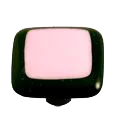
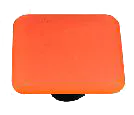
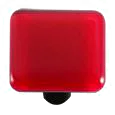
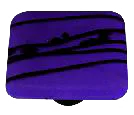
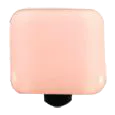
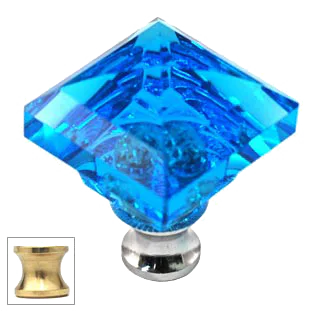
A glass square knob pairs a square-faced glass top with a metal mounting post and base. The face can be clear pressed crystal that catches and refracts light, fused colored glass that reads as a soft solid hue with piece-to-piece variation, frosted or sandblasted glass for a matte surface, or hand-painted ceramic that carries pattern as well as color. Each material delivers a different visual energy from the same footprint: clear crystal brings sparkle, fused glass brings depth and subtle color shifts between pieces, and painted ceramic brings decoration. The square shape is what sets the category apart from round glass knobs. A round knob has no orientation; a square knob has four corners that ask to be aligned with the cabinet's edges, giving the door face a more deliberate, architectural look.
Where Square Glass Knobs Fit
Square glass knobs suit contemporary kitchens, transitional Shaker baths, and powder rooms built around small statement hardware. On Shaker doors, where the panel edges already define a rectangle, the square knob extends that geometry to the hardware and reinforces the door's lines. On raised-panel traditional doors, the square form reads less period-correct than a round equivalent and can compete with the door's traditional vocabulary, so a round glass knob is often the safer choice there. The corners anchor the knob to the cabinet's geometry rather than floating like a round disc. For a round-faced glass option, glass pulls cover a related but distinct category, and plain round knobs serve as a useful baseline shape for comparison.
Coordinate with cabinet pulls and cabinet knobs.
Frequently Asked Questions
What is a glass square knob made of?
A glass square knob consists of a glass face mounted on a metal post and base. The glass face comes in several forms: clear pressed crystal, fused colored glass (where each piece varies slightly due to the hand-fused process), frosted or sandblasted glass, or hand-painted ceramic in a square footprint. The combination of glass face and metal base means the hardware has both a decorative front surface and a durable mounting system.
How does a glass square knob differ from a glass round knob?
The key difference is geometry: a square knob has four corners and a defined orientation, while a round knob has none. On cabinet doors, the corners of a square knob can be aligned with the cabinet's edges, producing a more architectural, rectilinear look. A round glass knob floats visually against the door face without anchoring to its lines, which suits more traditional or organic cabinet styles.
Are glass square knobs a good fit for Shaker-style cabinets?
Glass square knobs work well with Shaker doors because the Shaker panel already establishes a rectangular geometry, and the square knob extends that same logic to the hardware. The alignment of knob corners with cabinet edges reinforces the door's clean, flat-panel lines. On raised-panel traditional doors, however, the square form is generally considered less period-correct than a round knob, which better matches that style's curved vocabulary.
Do fused colored glass square knobs look uniform across a set?
No — hand-fused colored glass is produced in a way that guarantees each piece varies slightly in color and internal pattern. Brands such as Sietto and Aquila use this process, so a full set of fused glass square knobs will read as a cohesive color family while each individual knob has its own subtle variation. Buyers who want strict color uniformity across many doors should consider painted ceramic or clear crystal alternatives instead.
What Customers Say
Trusted by thousands of designers, builders, and homeowners
Kayla Malo is the most attentive and super human ever! My experience with this company is stellar!

Love working with Kayla, she is extremely helpful and quick with responding to my questions!
Kayla was GREAT!!!! Super help and fast answers. One of the best I've ever dealt with.