

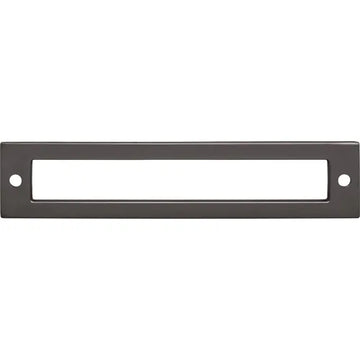
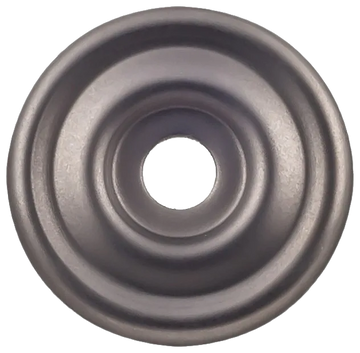
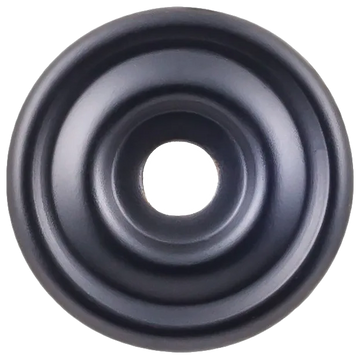
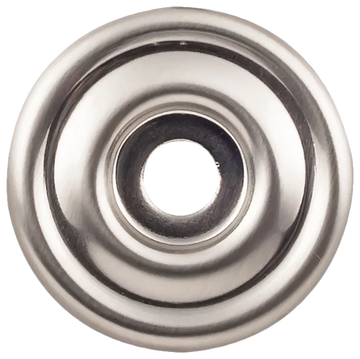
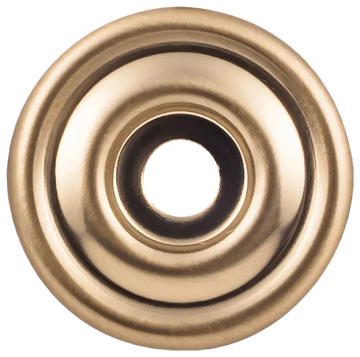
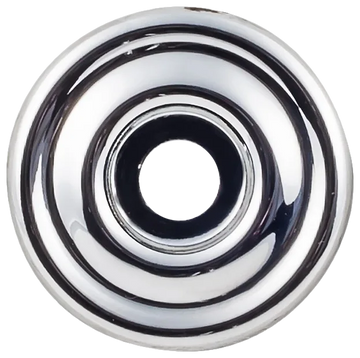
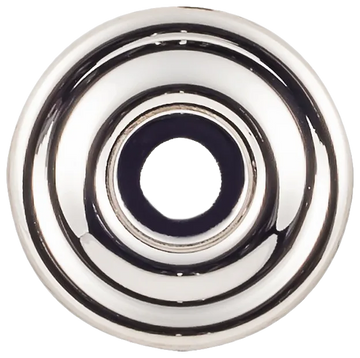
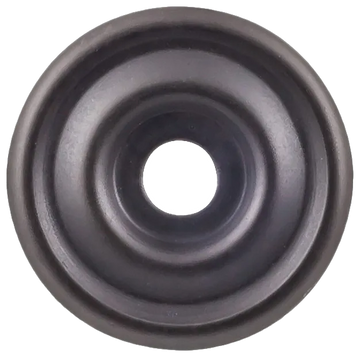
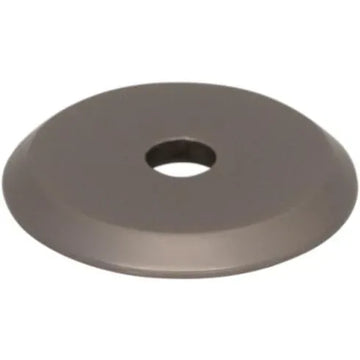
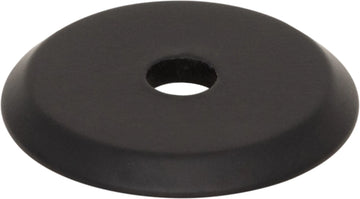
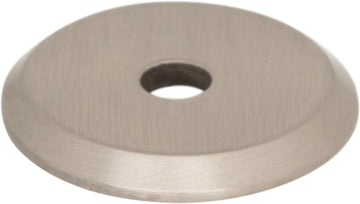
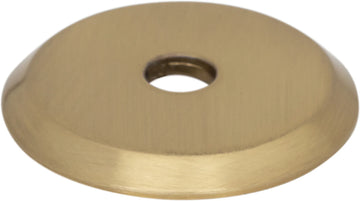
Knob backplates for added presence on a cabinet door
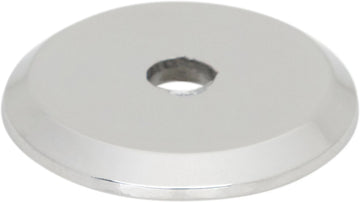
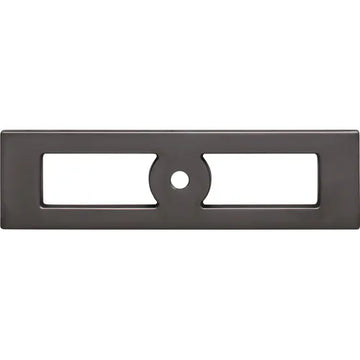
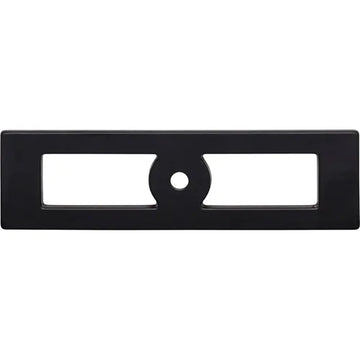
Knob backplates are small round, oval, or rectangular plates mounted between a cabinet knob and the cabinet face. The knob screws through the backplate into the door. The plate sits flush against the wood and frames the knob with a defined edge. Round plates dominate the category because they pair naturally with round knobs, but oval and rectangular plates work for square or shaped knobs that need a matching backing geometry.
What the backplate does for the knob
Two specific jobs. First, the plate covers any existing screw hole or scratch in the cabinet face. This is useful when swapping smaller knobs onto a cabinet drilled for larger hardware, or when refinishing without filling. Second, the plate adds visual weight to a knob installed on a plain cabinet door, where the knob alone might read too small for the surrounding panel. Traditional and period-correct kitchens use this aesthetic effect more than casual kitchens do.
Sizing the plate to the knob
The plate should be sized large enough that the knob sits visibly centered within it, but not so large that it overwhelms the door. Most round knob backplates run 1-1/2 to 3 inches across; oval and rectangular plates run longer to accommodate non-round knobs. Match the brand of the knob and backplate where possible; the finish drift between brands shows up most on small adjacent pieces.
Where they pair best
Traditional, English country, French country, and library kitchens host knob backplates well. They suit doors with raised panels where the panel border already defines a visual frame, and the backplate becomes a smaller echo of that. Pair with round knobs or surface-design round knobs for the cleanest visual stack. For backplates sized to pulls instead, see pull backplates.
Frequently Asked Questions
What does a knob backplate actually do?
A knob backplate serves two practical functions. It covers an existing screw hole or surface scratch on the cabinet face — useful when swapping smaller knobs onto a door drilled for larger hardware, or when refinishing without filling. It also adds visual weight to a knob on a plain cabinet door, where the knob alone might read too small for the surrounding panel.
How do I size a backplate to my cabinet knob?
The plate should be large enough that the knob sits visibly centered within it, but not so large that it overwhelms the door. Most round knob backplates run 1-1/2 to 3 inches across; oval and rectangular plates run longer to suit non-round knobs. Where possible, match the brand of the knob and backplate, since finish drift between brands shows up most on small adjacent pieces.
Are knob backplates and pull backplates interchangeable?
No. Knob backplates — typically round, oval, or small rectangular — are sized for a single cabinet knob. Pull backplates are a separate category sized to fit bar or cup pulls. Mixing the two results in a plate disproportionate to the hardware; see pull backplates for that category.
What door and kitchen styles are best suited to knob backplates?
Knob backplates pair best with traditional, English country, French country, and library-style kitchens. They suit raised-panel doors particularly well, where the panel border already defines a visual frame and the backplate becomes a smaller echo of that detail. Casual or contemporary flat-panel kitchens tend not to use them, as the layered look reads as period-specific rather than neutral.
What Customers Say
Trusted by thousands of designers, builders, and homeowners
Kayla Malo is the most attentive and super human ever! My experience with this company is stellar!

Love working with Kayla, she is extremely helpful and quick with responding to my questions!
Kayla was GREAT!!!! Super help and fast answers. One of the best I've ever dealt with.