

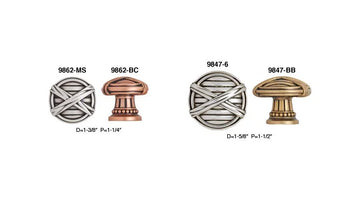
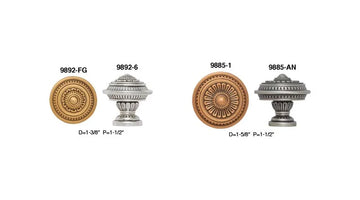
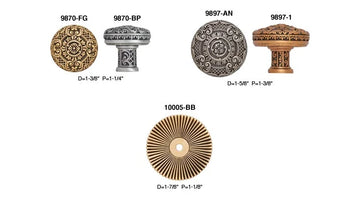
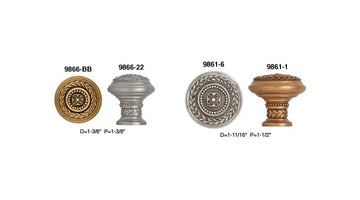
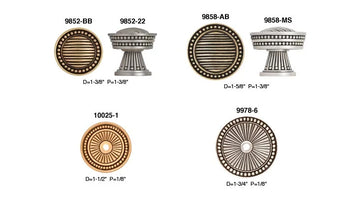
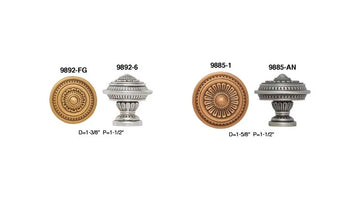
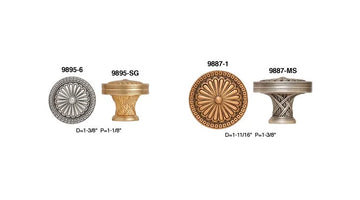
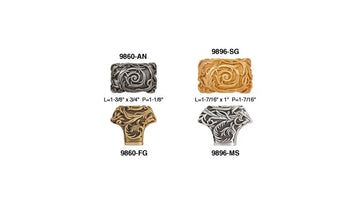

Pewter cabinet hardware: cast figurative and traditional designs
Pewter is a soft, low-melting-point alloy primarily of tin, with smaller amounts of antimony and copper in modern formulations. The metal casts cleanly into highly detailed shapes and has been used in decorative hardware for centuries. It remains the material of choice for figurative cabinet hardware. Anne at Home is the largest single source on knobs.co, with hand-cast solid lead-free pewter pulls produced at a Rhode Island foundry across more than 600 designs.
Why pewter is the figurative-hardware material
Pewter casts at lower temperatures than brass or bronze. That lets foundries use softer molds and capture finer surface detail without losing definition. The low-temperature casting also makes it economical to produce shorter runs. That economics is why pewter dominates the artisan and themed end of the cabinet-hardware market. Animals, vines, sea life, and fairy-tale figures all reproduce more cleanly in cast pewter than in cast brass at the same scale.
How finishes behave on pewter
Pewter accepts hand-applied patinas in a wide range. Anne at Home alone offers 38+ patinas across the catalog, applied by hand piece-by-piece and sealed with protective lacquer. The patinas range from bright pewter through burnished, antique, and deeply oxidized blackened tones. Each pull is technically unique because the finishing is manual. Replacement pieces ordered later will be close but not exact matches. Pewter does not take electroplated finishes the way zinc does, which is why the finish range is patina-driven rather than plated.
Where pewter hardware fits
Themed cottage, lake-house, and garden kitchens; figurative children's rooms; period-revival bathrooms; and any cabinetry meant to read as visibly handmade. The category pairs naturally with painted cabinets in soft historic colors and with stained wood in mid-tones. For related material categories see fine solid pewter, solid pewter, and pewter and brass hardware. For style affinity see Expressions and nature-themed hardware.
Frequently Asked Questions
What is pewter cabinet hardware made of?
Pewter is an alloy composed primarily of tin, with smaller amounts of antimony and copper in modern formulations. This composition gives it a low melting point, which allows foundries to cast highly detailed shapes cleanly and economically. Anne at Home, the largest pewter hardware source on Knobs.co, produces hand-cast solid lead-free pewter pulls at a Rhode Island foundry across more than 600 designs.
Why does pewter dominate figurative and themed cabinet hardware rather than brass or bronze?
Pewter casts at lower temperatures than brass or bronze, which allows foundries to use softer molds and capture finer surface detail without losing definition. This makes it practical to produce shorter runs of intricate designs — animals, vines, sea life, and fairy-tale figures all reproduce more cleanly in cast pewter than in cast brass at the same scale. The combination of detail fidelity and economical short-run production is why pewter dominates the artisan and themed end of the cabinet-hardware market.
How are finishes applied to pewter hardware, and will replacement pieces match exactly?
Pewter does not accept electroplated finishes the way zinc does, so the finish range is patina-driven rather than plated. Patinas are applied by hand, piece by piece, and sealed with protective lacquer — Anne at Home alone offers 38 or more patinas across the catalog, ranging from bright pewter through burnished, antique, and deeply oxidized blackened tones. Because the finishing is manual, each pull is technically unique, meaning replacement pieces ordered later will be close but not exact matches to the originals.
Where does pewter cabinet hardware fit best, and how does it differ from a standard polished or satin metal finish?
Pewter hardware suits themed cottage, lake-house, and garden kitchens; figurative children's rooms; period-revival bathrooms; and cabinetry meant to read as visibly handmade — it pairs naturally with painted cabinets in soft historic colors and with stained wood in mid-tones. By contrast, polished or satin finishes (such as polished nickel or satin brass) are electroplated onto base metals like zinc and deliver a uniform, machine-consistent surface suited to contemporary or transitional cabinetry. Pewter's hand-applied patinas and cast figurative forms occupy a distinct niche focused on artisan character rather than surface uniformity.
What Customers Say
Trusted by thousands of designers, builders, and homeowners
Kayla Malo is the most attentive and super human ever! My experience with this company is stellar!

Love working with Kayla, she is extremely helpful and quick with responding to my questions!
Kayla was GREAT!!!! Super help and fast answers. One of the best I've ever dealt with.