

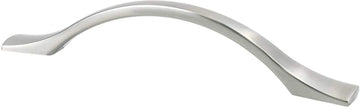
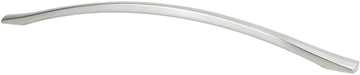
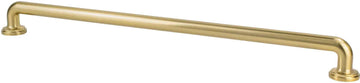
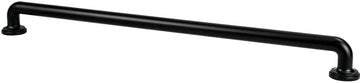
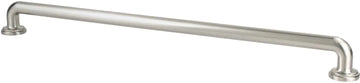


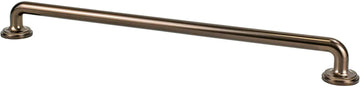
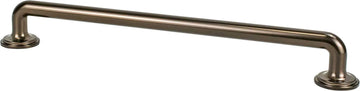
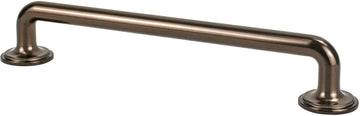
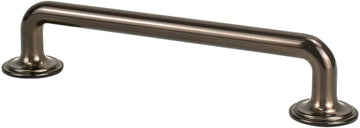

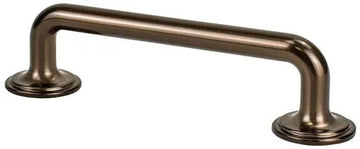
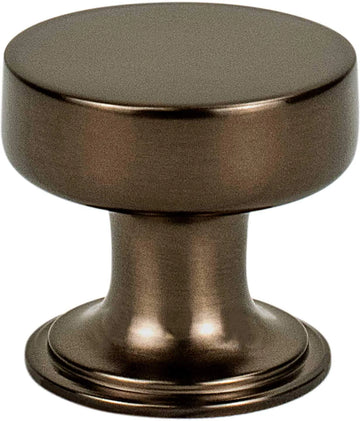


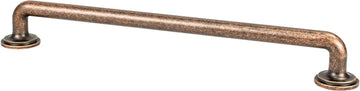



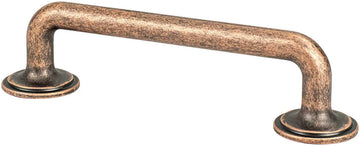
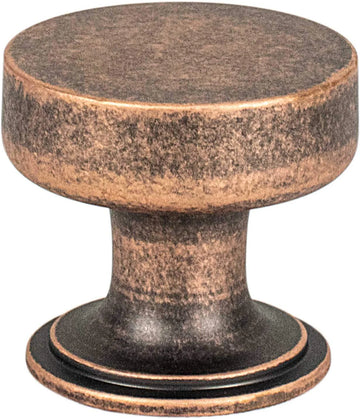
Traditional cabinet hardware with period detail and ornament
Traditional hardware draws from English, Colonial, and early-American cabinet vocabulary. Cup pulls with shaped backplates, knobs with concentric rings or fluted shafts, ring pulls on backplates, and rosette-mounted knobs. The category is unapologetically decorative. Where modern hides the function in clean geometry, traditional puts the function on display with detailed castings.
What defines traditional cabinet hardware
Mounted-on-backplate pulls and knobs. Bin pulls and cup pulls with deep, formed scoops. Knobs cast with fluted bodies, beaded edges, or scalloped rosettes. The proportions tend heavier than modern equivalents because the ornament needs material to register. A traditional cup pull at 3-inch centers carries more visual weight than a 3-inch modern bar pull, and that weight is part of the point.
Where traditional hardware fits
Raised-panel cabinets first. The five-piece raised-panel door is the historic match, and most traditional hardware was designed against that profile. Beaded inset cabinetry, glass-front upper cabinets, and butler's pantries with formal millwork all read well with traditional hardware. Painted cabinets in cream, ivory, soft green, and historic blues are common pairings. Stained cherry, mahogany, and dark walnut cabinetry pair especially well with brass and bronze traditional hardware.
Finishes that pair with traditional
Warm metals dominate. Polished brass is the most historically accurate choice for English and Colonial revival kitchens. Antique brass and oil-rubbed bronze read more lived-in. Pewter and burnished bronze appear in transitional-to-traditional projects. Polished nickel and brushed nickel work but read cooler and less period-correct on the most period-accurate installations. For projects sitting between styles, see transitional hardware, which preserves a softened version of traditional shapes without committing fully to the period vocabulary. Specifying a finish that already appears in the kitchen plumbing fixtures and lighting almost always gives a more cohesive room than introducing a third metal that has to negotiate with both.
Frequently Asked Questions
What defines traditional cabinet hardware?
Traditional cabinet hardware draws from English, Colonial, and early-American cabinet vocabulary and is openly decorative. Defining forms include cup and bin pulls with deep, formed scoops, knobs cast with fluted bodies, beaded edges or scalloped rosettes, ring pulls on backplates, and rosette-mounted knobs. Proportions tend to run heavier than modern equivalents because the ornament needs material to register, so the function is put on display through detailed castings rather than hidden in clean geometry.
What kitchen cabinets and styles does traditional hardware suit best?
Traditional hardware was largely designed against the five-piece raised-panel door, so raised-panel cabinets are the closest historic match. It also reads well with beaded inset cabinetry, glass-front upper cabinets, and butler's pantries with formal millwork. Common cabinet pairings include painted finishes in cream, ivory, soft green, and historic blues, as well as stained cherry, mahogany, and dark walnut.
Which finishes pair best with traditional hardware?
Warm metals dominate traditional installations, with polished brass being the most historically accurate choice for English and Colonial revival kitchens. Antique brass and oil-rubbed bronze read more lived-in, while pewter and burnished bronze appear in transitional-to-traditional projects. Polished nickel and brushed nickel work but read cooler and less period-correct on the most period-accurate installations; choosing a finish that already appears in the room's plumbing and lighting usually gives a more cohesive result than introducing a third metal.
How does traditional hardware differ from transitional hardware?
Traditional hardware commits fully to period vocabulary, featuring backplates, deep scoops, and detailed castings drawn from English, Colonial, and early-American forms. Transitional hardware preserves a softened version of those traditional shapes without committing fully to the period look, making it suited to projects that sit between styles. A traditional cup pull also carries more visual weight than a modern bar pull of the same 3-inch centers, and that added weight is part of the traditional aesthetic.
From the Knobs.co Journal
What Customers Say
Trusted by thousands of designers, builders, and homeowners
Kayla Malo is the most attentive and super human ever! My experience with this company is stellar!

Love working with Kayla, she is extremely helpful and quick with responding to my questions!
Kayla was GREAT!!!! Super help and fast answers. One of the best I've ever dealt with.