






Victorian cabinet hardware: late-1800s ornament and period detail
Victorian hardware draws from the design language of the late nineteenth century, roughly 1860 through 1900. The style is unapologetically decorative: heavily ornamented backplates, scrolled cup pulls, ring pulls hanging from cast rosettes, figurative knob faces, and the deliberately busy ornament that defines the era. Period-restoration projects on Victorian, Queen Anne. Eastlake homes are the natural home for this category, but the look also appears in formal traditional kitchens that want a more elaborate vocabulary than standard traditional hardware provides.
What defines Victorian hardware
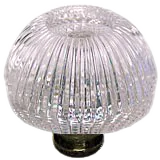
Ornament density and proportion. A Victorian cup pull typically carries a deeply scrolled or shell-shaped backplate that extends well past the pull itself. Knob faces are cast with concentric rings, scalloped edges, beaded borders, or figurative relief (faces, leaves, classical motifs). Ring pulls on shaped rosettes are signature. The proportions tend heavier than transitional or contemporary equivalents because the ornament needs material to register.
Where Victorian hardware fits
Original Victorian-era houses, formal traditional kitchens with raised-panel cabinetry, butler's pantries with leaded-glass uppers, and period-piece built-ins. Painted cabinets in deep historic colors (ivory, sage, oxblood, navy) and stained mahogany, cherry, and walnut cabinetry all pair well. The style is a poor fit for shaker, slab, or any flat-front cabinetry, where the dense ornament reads disconnected from the simple cabinet face. Edgar Berebi's Empress and Renaissance lines and Notting Hill's Classic collection sit closest to Victorian vocabulary in current brand catalogs.
Finishes that pair with Victorian
Warm period metals lead. Polished brass is the most historically accurate finish for English Victorian. Antique brass and oil-rubbed bronze read more aged. Antique pewter works for American Victorian projects. Polished nickel was also period-correct for upper-end Victorian, where electroplated nickel was the prestige metal of the era. For related categories see ornamental and Art Nouveau hardware.
Frequently Asked Questions
What are the defining characteristics of Victorian cabinet hardware?
Victorian cabinet hardware draws from the design language of roughly 1860 through 1900, characterized by high ornament density. Backplates on cup pulls are deeply scrolled or shell-shaped and extend well past the pull itself. Knob faces are cast with concentric rings, scalloped edges, beaded borders, or figurative relief such as faces, leaves, and classical motifs. Ring pulls mounted on shaped rosettes are a signature form of the style.
What types of cabinetry and rooms are best suited to Victorian hardware?
Victorian hardware is best suited to original Victorian-era houses, formal traditional kitchens with raised-panel cabinetry, butler's pantries with leaded-glass uppers, and period-piece built-ins. It pairs well with painted cabinets in deep historic colors such as ivory, sage, oxblood, and navy, as well as stained mahogany, cherry, and walnut cabinetry. The style is a poor fit for shaker, slab, or any flat-front cabinetry, where the dense ornament reads disconnected from a simple cabinet face.
How does Victorian hardware differ from standard traditional hardware?
Victorian hardware departs from standard traditional hardware by adding a far more elaborate ornamental vocabulary. Where traditional hardware provides a serviceable baseline, Victorian adds backplates that extend well past the pull with heavy scrollwork or shell carving, knob faces with figurative relief, and ring pulls on rosettes as a signature form. The proportions also tend heavier than transitional equivalents because the ornament needs material to register. The result suits period-restoration projects and formal traditional kitchens that want maximum ornamental presence — contexts where standard traditional reads insufficiently elaborate.
Which finishes are most historically appropriate for Victorian cabinet hardware?
Warm period metals are the historically grounded choice for Victorian hardware. Polished brass is the most historically accurate finish for English Victorian interiors. Antique brass and oil-rubbed bronze read more aged, while antique pewter works for American Victorian projects. Polished nickel is also period-correct for upper-end Victorian, where electroplated nickel was the prestige metal of the era.
What Customers Say
Trusted by thousands of designers, builders, and homeowners
Kayla Malo is the most attentive and super human ever! My experience with this company is stellar!

Love working with Kayla, she is extremely helpful and quick with responding to my questions!
Kayla was GREAT!!!! Super help and fast answers. One of the best I've ever dealt with.