

T-pulls for drawers that read like knobs
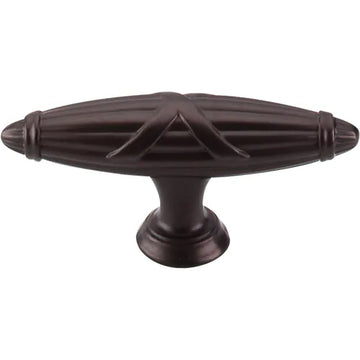
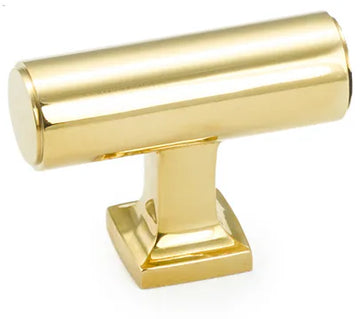
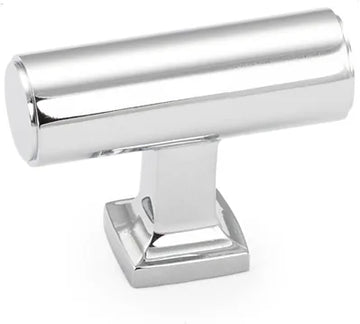
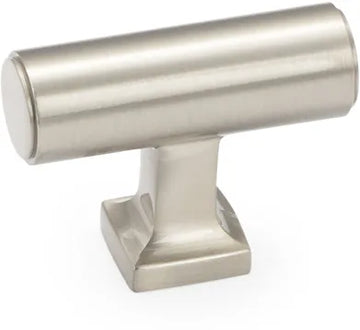
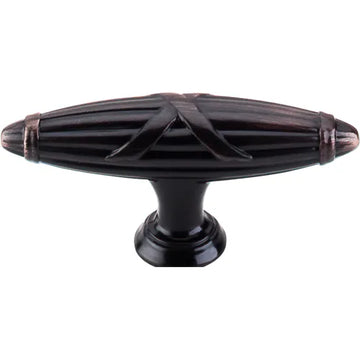
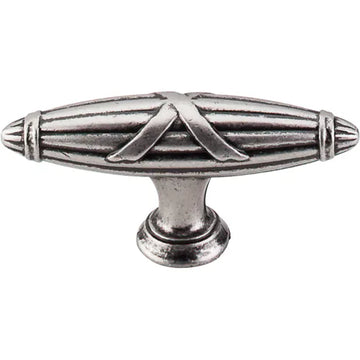
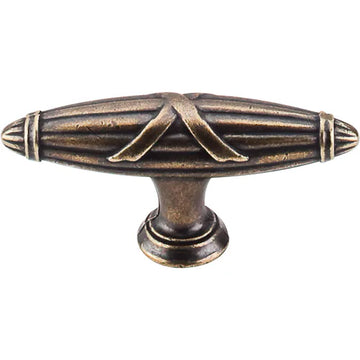
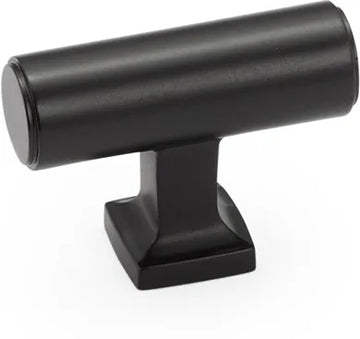
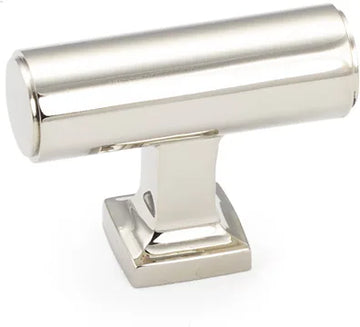
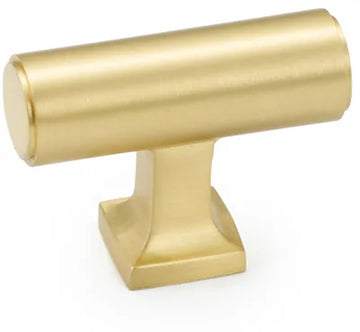
T-pulls are short hybrid pulls shaped like a small letter T. A single vertical post mounts to one screw, with a short horizontal crossbar at the top forming the grip. Some T-pulls take a second screw at the back of the crossbar for stability. Many are single-screw and rotate slightly during install, like a knob. The effect is a pull-shaped grip on a knob-style mount. It suits drawers that don't need a full bar pull but still want a horizontal grip line.
Why T-pulls keep appearing
T-pulls solve a specific design problem: a kitchen using knobs throughout that has a few drawer fronts where a knob feels under-scaled. A T-pull keeps the single-screw simplicity of a knob and gives the user a horizontal grip that's easier on a heavy drawer. They're also a way to add hardware contrast to a kitchen where everything else is a round knob — the small horizontal break in the visual rhythm reads as deliberate.
Where the silhouette suits
Transitional and modern-traditional kitchens benefit most. Strict modern kitchens usually want a longer bar pull; strict traditional kitchens usually want a cup or bow pull. T-pulls sit in between and read most coherent in kitchens that aren't fully committed to either end. They work especially well on Shaker drawer fronts and on inset cabinet doors where the visual proportion needs to read narrow.
What else to look at
For a shape adjacent to T-pulls, round knobs on the same drawer fronts can read more traditional; bar pulls read more modern. T-pulls slot between the two and often pair with one or the other across the same kitchen. The hybrid form is most useful where a strict commitment to either knob or pull would feel forced.
Frequently Asked Questions
What is a T-pull and how does it mount?
A T-pull is a short hybrid pull shaped like a small letter T, with a single vertical post that mounts to one screw and a short horizontal crossbar at the top that forms the grip. Some T-pulls take a second screw at the back of the crossbar for added stability, but many are single-screw and rotate slightly during install, much like a knob. The result is a pull-shaped grip on a knob-style mount.
Where do T-pulls work best in a kitchen?
T-pulls suit drawers that don't need a full bar pull but still want a horizontal grip line. They read most coherent in transitional and modern-traditional kitchens that aren't fully committed to either a strict modern or strict traditional look. They work especially well on Shaker drawer fronts and on inset cabinet doors where the visual proportion needs to read narrow.
What problem do T-pulls solve in a kitchen that uses knobs?
T-pulls address a kitchen using knobs throughout that has a few drawer fronts where a knob feels under-scaled. A T-pull keeps the single-screw simplicity of a knob while giving a horizontal grip that is easier on a heavy drawer. The small horizontal break in a kitchen of round knobs also reads as a deliberate point of hardware contrast.
How do T-pulls compare to round knobs and bar pulls?
On the same drawer fronts, round knobs tend to read more traditional and bar pulls read more modern, while T-pulls slot between the two. Strict modern kitchens usually want a longer bar pull and strict traditional kitchens usually want a cup or bow pull, so T-pulls fit best in between. Because of this hybrid form, T-pulls often pair with either knobs or bar pulls across the same kitchen.
What Customers Say
Trusted by thousands of designers, builders, and homeowners
Kayla Malo is the most attentive and super human ever! My experience with this company is stellar!

Love working with Kayla, she is extremely helpful and quick with responding to my questions!
Kayla was GREAT!!!! Super help and fast answers. One of the best I've ever dealt with.