

Antique Nickel Cabinet Pulls for Bathroom Vanities 2026
The best antique nickel cabinet pulls for bathroom vanities in 2026. Sizing, finish durability, and top picks from Atlas Homewares at Knobs.co.

Antique nickel cabinet pulls hit a specific sweet spot for bathroom vanities: warm enough to read as vintage, cool enough to avoid clashing with chrome faucets, durable enough to handle daily humidity. This guide is for homeowners and trade buyers choosing antique nickel hardware in 2026 who need the right criteria before spending money on 50+ SKUs.
Shop the finish
Every antique nickel knob and pull we carry, in one place — filter by size, style, and brand.
Browse Antique Nickel Cabinet Hardware →TL;DR: Antique nickel cabinet pulls work on bathroom vanities because the finish bridges warm metals and cool metallics simultaneously. In 2026, the top criteria are finish durability in humid conditions, center-to-center sizing (3-inch and 5-inch cover most vanity drawers and doors), projection depth for ergonomic grip, style match to your vanity profile (shaker, traditional, or transitional), and whether you need a coordinating knob. The Atlas Homewares Successi Bridge Pull and the Holloway series from Knobs.co are the picks most designers reach for first.
Shop the picks from this guide
In stock at Knobs.co · Free shipping on hardware orders $99+ · 110% price match
-
 Amerock
Edona 1-1/4'' diam Cabinet Knob BP53005Satin Nickel
Amerock
Edona 1-1/4'' diam Cabinet Knob BP53005Satin Nickel
$3.21
$3.77 -
 Amerock
Everyday Heritage 3'' cc Cabinet Pull BP865Satin Nickel
Amerock
Everyday Heritage 3'' cc Cabinet Pull BP865Satin Nickel
$1.92
$2.25 -
 Amerock
Cup Pulls 3'' cc Cabinet Cup Pull BP53010Satin Nickel
Amerock
Cup Pulls 3'' cc Cabinet Cup Pull BP53010Satin Nickel
$4.61
$5.42 -
 Alno
Alno A1032 1'' Brass Cabinet KnobPolished Nickel
Alno
Alno A1032 1'' Brass Cabinet KnobPolished Nickel
$15.26
$16.95 -
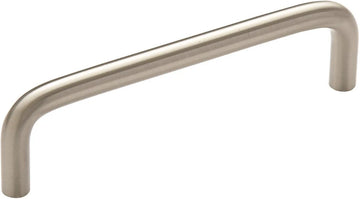 Amerock
Everyday Heritage 4'' cc Cabinet Pull BP76312Satin Nickel
Amerock
Everyday Heritage 4'' cc Cabinet Pull BP76312Satin Nickel
$2.28
$2.68 -
 Amerock
Revitalize 1-1/4'' diam Cabinet Knob BP55342Satin Nickel
Amerock
Revitalize 1-1/4'' diam Cabinet Knob BP55342Satin Nickel
$6.42
$7.55


Why This Matters for Bathroom Vanities
A bathroom vanity sees steam, hand lotion, and cleaning products daily. The finish you pick has to handle all of that without flaking or tarnishing unevenly. Antique nickel is a lacquered or PVD-sealed finish over a zinc or brass base — the quality of that seal determines whether your pulls still look intentional in three years or just look worn. Beyond durability, vanities typically have shallower drawers and smaller door panels than kitchen cabinets, so pull sizing and projection matter more here than almost anywhere else.
Who This Guide Is For
You are remodeling or refreshing a bathroom vanity — single, double, or a freestanding piece — and you want antique nickel pulls that look deliberate, not default. You may be a homeowner matching hardware to brushed nickel faucets or an interior designer specifying consistent hardware across a master bath and two guest baths. Either way, you need specifics: which profiles work, which center-to-center sizes to order, and what to avoid.
What to Look for in Antique Nickel Cabinet Pulls for Bathroom Vanities
### Finish Seal Quality
Antique nickel is not a base metal — it is a surface treatment. Pulls with a PVD (physical vapor deposition) or lacquer top coat resist moisture better than uncoated finishes. In a bathroom, an unsealed antique nickel pull can develop dark spots within 12 months. Knobs.co carries Atlas Homewares pieces, which use a durable lacquer process across their antique nickel line. Check product descriptions for "living finish" language — that signals intentional patina, not a defect, but it is not what most vanity buyers want in 2026.
### Center-to-Center Sizing
Vanity drawers typically use 3-inch (76mm) or 5-inch (128mm) center-to-center pulls. Door panels on single-door vanities usually take a knob or a 3-inch pull. Getting this wrong means drilling new holes. Measure the existing hole spacing before ordering — or, if you are drilling fresh, decide whether the pull reads balanced on the face frame. A 5-inch pull on a 12-inch drawer front looks right; on a 9-inch front it crowds the edges.
### Projection and Grip Depth
Projection is how far the pull stands off the surface. Under 1 inch of projection and the pull feels flat and hard to grip with wet hands. Over 1.5 inches and it catches on towels in a tight vanity space. For bathroom use, aim for 0.875 to 1.25 inches of projection. Bridge pulls — where both ends mount to the surface with the bar spanning between — offer a stable grip with consistent projection regardless of drawer size.
### Profile Compatibility with Vanity Style
Shaker vanities pair best with simple bar pulls or cup pulls. Traditional raised-panel vanities suit oval pulls, rope-detail pulls, or any pull with a slight curve. Transitional vanities — flat-front with minimal molding — work with either, but lean toward cleaner bar profiles in antique nickel to avoid the finish feeling too ornate. The Austen Oval pull in brushed nickel is a reliable transitional option that crosses over easily.
### Coordinating Hardware Availability
If you need both pulls and knobs on the same vanity — pulls for drawers, knobs for doors — confirm the manufacturer offers a matching knob in the same finish. Mixing antique nickel from two different brands almost always produces a visible mismatch; the warm-cool balance in the finish varies by manufacturer. Atlas Homewares covers both form factors across most of their collections.
### Weight and Construction
Solid zinc or solid brass pulls feel substantial and resist bending under daily use. Hollow pulls — usually lighter, cheaper — flex slightly and the lacquer cracks at stress points faster. If a pull feels light in the hand at the same size as a known-solid alternative, it is likely hollow. Knobs.co lists construction details in product specs; verify before ordering in quantity.
Top Picks
The bridge pull for traditional vanities
Atlas Homewares Successi Bridge Pull — 5-inch center-to-center
The Successi Bridge Pull has a double-post mount that locks the pull parallel to the surface with no wobble, which matters on a drawer that gets opened 20 times a day. The 5-inch center-to-center fits standard double-vanity drawers without crowding. The arch profile adds just enough visual interest for a traditional or transitional vanity without requiring ornate cabinet faces to balance it.
Successi Bridge Pull at Knobs.co
Verdict: Buy — the default pick for a traditional or transitional vanity drawer in 2026.
The versatile bar pull for shaker vanities
Atlas Homewares Holloway Pull — 5-inch center-to-center
The Holloway is a straight bar pull with a slightly tapered profile — thicker at center, narrowing toward the posts. That taper gives it visual weight without bulk. It reads as modern enough for a flat-front shaker vanity but not so minimal that it disappears on a raised-panel door. Available in multiple finishes, which means you can match it to brushed nickel faucet trim without the finish fighting the fixture.
Holloway pull in brushed nickel
Verdict: Buy — the safest shaker-vanity pull on the catalog for 2026.
The oval pull for a softer traditional look
Atlas Homewares Austen Oval Pull — 5-inch center-to-center
The Austen Oval uses an elliptical bar rather than a round cross-section, which catches light differently and softens the look of a more formal vanity. The 5-inch version works on drawers; the 3-inch version (also in the catalog) handles smaller door panels or accent drawers. If your vanity has curved legs or a furniture-style profile, this pull completes the look without competing with the case piece itself.
Verdict: Buy — specifically for furniture-style or traditional vanities with decorative details.
The transitional bar pull for a flat-front vanity
Atlas Homewares Holloway Pull — 8-inch center-to-center
For larger drawer banks on a double vanity, the 8-inch Holloway scales up without looking clunky. A 5-inch pull on a wide double-vanity drawer bank looks undersized; the 8-inch version fills the face properly. The same tapered profile as the 5-inch version means it reads as the same hardware family across the whole vanity.
Holloway pull 8-inch in brushed nickel
Verdict: Buy — only when your drawer bank is wider than 18 inches face width.
What to Avoid
- Pulls labeled "antique nickel" without finish details. Some manufacturers use antique nickel as a color name for a painted or powder-coated finish, not a metallic lacquer. In humid conditions, these chip along the edges within a year. Ask for finish process specifications before ordering.
- Pulls with center-to-center sizes that don't match your drill pattern. A 96mm (3.75-inch) pull in European sizing will not align with a standard 3-inch (76mm) US hole pattern. Verify the measurement is center-to-center in inches, not overall length.
- Bridge pulls with visible set screws facing outward. Some bridge pull designs use a visible set screw on the side to lock the bar. This collects soap residue and is difficult to clean on a bathroom vanity. Prefer posts that mount flush from the back.
Comparison Table
| Pull | Style | C-to-C | Projection | Best For | Verdict |
|---|---|---|---|---|---|
| Successi Bridge Pull | Traditional | 5 in. | ~1 in. | Traditional/transitional vanity | Buy |
| Holloway 5-inch | Modern/Shaker | 5 in. | ~0.9 in. | Shaker flat-front vanity | Buy |
| Austen Oval 5-inch | Transitional | 5 in. | ~1 in. | Furniture-style vanity | Buy |
| Holloway 8-inch | Modern/Shaker | 8 in. | ~0.9 in. | Wide drawer banks | Buy |
FAQ
What is antique nickel finish on cabinet pulls? Antique nickel is a surface treatment applied over a brass or zinc base, then lacquered to prevent tarnishing. It produces a slightly warm, muted silver tone — cooler than aged brass, warmer than polished chrome. In 2026, most quality hardware manufacturers use a lacquer or PVD seal to protect the finish in humid environments like bathrooms.
Is antique nickel good for bathroom vanities? Yes, when the finish has a proper lacquer or PVD seal. Antique nickel handles daily humidity better than unlacquered brass and pairs with more faucet finishes than polished chrome. The key is confirming the finish is sealed — unprotected antique nickel will develop uneven dark spots within 12 months of bathroom use.
What center-to-center size should I use for vanity drawer pulls? Most vanity drawers use 3-inch (76mm) or 5-inch (128mm) center-to-center. Measure your existing hole spacing or check your vanity manufacturer's spec sheet. If you are drilling new holes, a 5-inch pull on a standard single-sink vanity drawer reads balanced. For a wide drawer on a double vanity, step up to 8 inches.
Can I mix antique nickel pulls with brushed nickel faucets? Yes, and it is one of the most common combinations in bathroom design in 2026. Antique nickel sits slightly warmer and darker than brushed nickel, which creates intentional contrast rather than an accidental mismatch. Keep everything else in the room consistent — towel bars, toilet paper holder — to make the variation read as deliberate.
How many pulls do I need for a double vanity? A standard 60-inch double vanity typically has 2 door panels and 3 to 5 drawers. You will need one pull per door and one pull per drawer. Order 10 to 15 percent extra for any installation errors or future replacements — hardware finishes are discontinued frequently, and reordering in 18 months may produce a slight color variation.
What is the difference between a bridge pull and a bar pull? A bar pull mounts at two points on the ends of a straight bar. A bridge pull mounts at two points with an arched or elevated bar spanning between them — the bar sits higher off the surface than the mounting posts. Bridge pulls offer more grip clearance and a more traditional silhouette. Bar pulls are cleaner and read more modern.
Do antique nickel pulls work with gray vanities? Yes. Antique nickel's warm undertone prevents it from looking cold against medium or dark gray cabinet faces, which is a common problem with polished chrome or cool brushed nickel. On a light gray shaker vanity, antique nickel reads intentional and slightly vintage without competing with white countertops or chrome plumbing.
How do I clean antique nickel cabinet pulls in a bathroom? Wipe with a damp cloth and mild soap — nothing abrasive. Avoid bathroom cleaners with bleach or ammonia; both degrade lacquer finishes over time. Dry the pulls after cleaning rather than letting water sit on the surface. This routine preserves the finish for 5 to 10 years under normal bathroom use.
One Last Thing
Antique nickel pulls are one of the few hardware finishes that consistently photograph better in person than online. The finish catches directional light from vanity sconces and shows subtle variation that a product photo on a white background cannot reproduce. If you are specifying for a client, order one sample pull before committing to the full quantity — the in-person finish check takes 10 minutes and prevents a costly return on a 20-pull order.
Related Guides
- Brushed nickel cabinet hardware for bathrooms
- Mid-century modern cabinet hardware for bathroom vanities
- Best champagne bronze knobs for bathroom vanities
Shop Chrome Cabinet Hardware
-
 Milan 96 mm cc Bar Pull 1092PC
$11.69
Milan 96 mm cc Bar Pull 1092PC
$11.69
-
 Belcastel 1-3/8'' diam Mushroom Knob MO6303PC
$8.43
Belcastel 1-3/8'' diam Mushroom Knob MO6303PC
$8.43
-
 Sullivan 128 mm cc Bar Pull 752-128PC
$11.52
Sullivan 128 mm cc Bar Pull 752-128PC
$11.52
-
 Wheeler 1-1/4'' Length Geometric Knob 678PC
$7.96
Wheeler 1-1/4'' Length Geometric Knob 678PC
$7.96
-
 Roman 128 mm cc Arch Pull 944-128PC
$11.18
Roman 128 mm cc Arch Pull 944-128PC
$11.18
-
 Hayworth 128 mm cc Bar Pull 885-128PC
$19.10
Hayworth 128 mm cc Bar Pull 885-128PC
$19.10
-
 Merrick 128 mm cc Bar Pull 549-128PC
$10.43
Merrick 128 mm cc Bar Pull 549-128PC
$10.43
-
 Boswell 128 mm cc Bar Pull 177-128PC
$12.17
Boswell 128 mm cc Bar Pull 177-128PC
$12.17


Browse all 4510 in Chrome Cabinet Hardware → Cabinet knobs Cabinet pulls & handles