

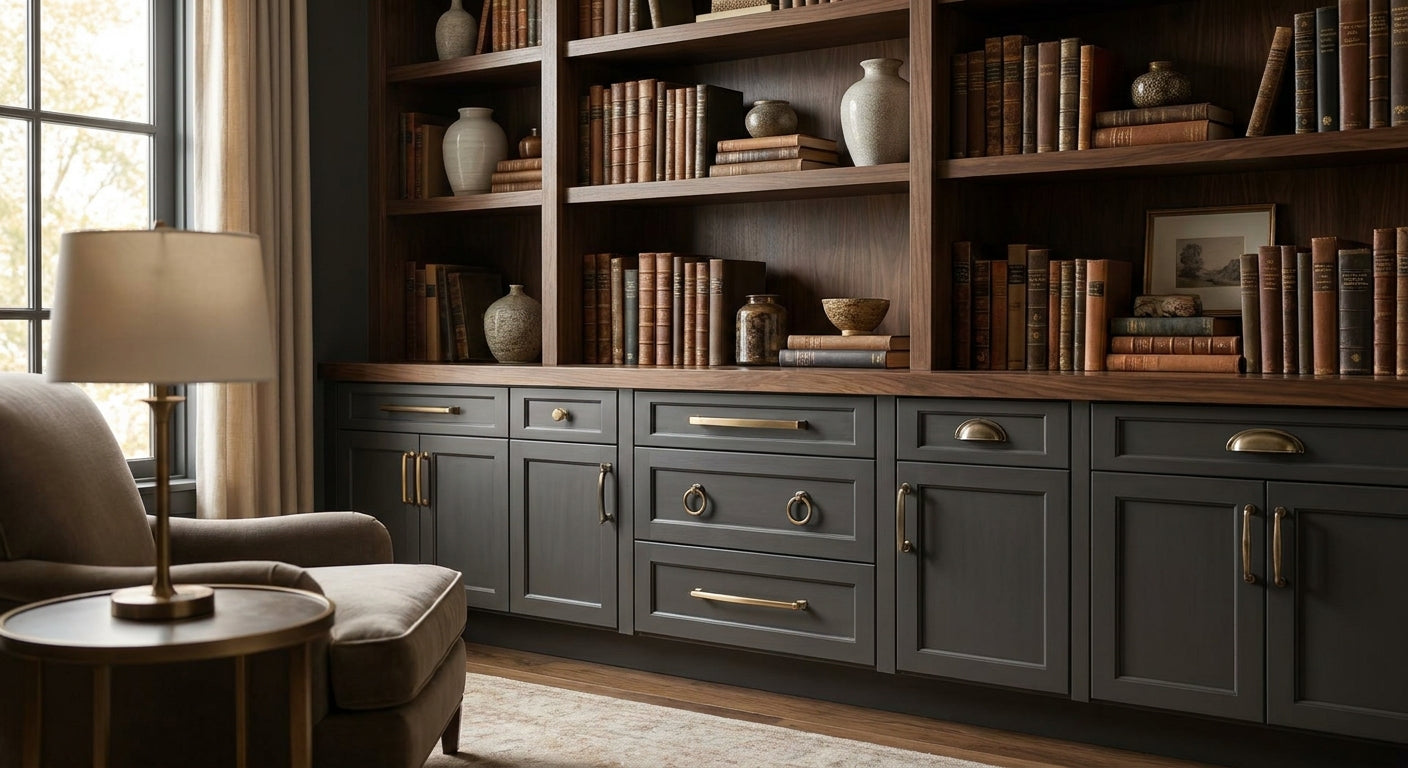
Built-in bookshelf cabinetry mixes open shelves with closed cabinet doors and drawers, and the wrong pull turns a custom millwork piece into something that looks bolted on. This guide narrows the 2026 field down to hardware that reads correctly against exposed shelf edges and holds up to daily grabbing near displayed books and glassware.
- Top Knobs Garrison 7 9/16-inch pull in Honey Bronze wins cabinet pulls for built-in bookshelves wider than 18 inches — Buy.
- Schaub and Company 704-PN round knob is the safe pick for narrow bookshelf drawers under 12 inches wide.
- Berenson Metro matte black pull fits flat-front built-ins in home offices and media walls — Consider.
- Skip pulls under 3 inches of projection near open shelving; knuckles catch on exposed shelf edges in daily use.
Shop the picks from this guide
In stock at Knobs.co · Free shipping on hardware orders $99+ · 110% price match
-
 Amerock
Edona 1-1/4'' diam Cabinet Knob BP53005Polished Chrome
Amerock
Edona 1-1/4'' diam Cabinet Knob BP53005Polished Chrome
$3.21
$3.77 -
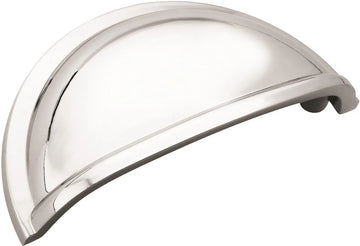 Amerock
Cup Pulls 3'' cc Cabinet Cup Pull BP53010Polished Chrome
Amerock
Cup Pulls 3'' cc Cabinet Cup Pull BP53010Polished Chrome
$4.61
$5.42 -
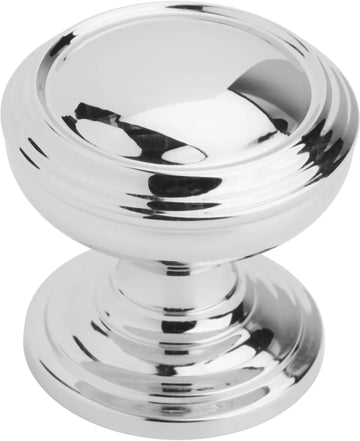 Amerock
Revitalize 1-1/4'' diam Cabinet Knob BP55342Polished Chrome
Amerock
Revitalize 1-1/4'' diam Cabinet Knob BP55342Polished Chrome
$6.42
$7.55 -
 Amerock
Edge Pull 5-1/16'' cc Cabinet Pull BP36575Polished Chrome
Amerock
Edge Pull 5-1/16'' cc Cabinet Pull BP36575Polished Chrome
$5.83
$6.85 -
 Amerock
Ravino 1-1/4'' diam Cabinet Knob BP53012Polished Chrome
Amerock
Ravino 1-1/4'' diam Cabinet Knob BP53012Polished Chrome
$2.79
$3.28 -
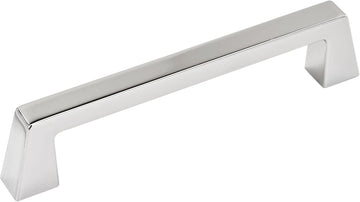 Amerock
Blackrock 5-1/16'' cc Cabinet Pull BP55277Polished Chrome
Amerock
Blackrock 5-1/16'' cc Cabinet Pull BP55277Polished Chrome
$9.63
$11.32


Why this matters
A standalone kitchen island only has to look good next to itself. Built-in bookshelf cabinetry sits inside a wall of open shelving, so every knob and pull competes visually with whatever's displayed above and beside it — books, framed photos, glassware, a turntable.
That changes the math on scale and finish. A 5-inch pull that reads fine on a 30-inch kitchen drawer can look undersized on a built-in that spans 8 feet of wall, and a finish that's perfect under upper cabinets can clash with the wood tone of open shelf boards two feet away.
Most built-ins also carry mixed door and drawer widths in the same run — a 24-inch cabinet door next to a 10-inch drawer next to an open cubby. Cabinet pulls for built-in bookshelves have to work across that range without looking like three different projects, which is the single biggest mistake homeowners make when they order hardware piecemeal.
Who this is for
This guide is built for homeowners finishing custom built-in bookshelves with lower cabinet doors or drawers — media consoles, home libraries, mudroom wall units — plus interior designers speccing hardware for built-in millwork and contractors closing out a finished carpentry job. If you're outfitting a straightforward run of kitchen cabinets instead, the standard cabinet hardware selection at Knobs covers that case better than a bookshelf-specific list.
What to look for in cabinet pulls for built-in bookshelves
Pull length relative to door width
Built-ins routinely mix an 18-inch cabinet door with a 9-inch drawer in the same run, and a single pull length rarely suits both. Size the pull to roughly 60-70% of the door or drawer width so nothing looks stretched or lost, and plan on two hardware sizes if your run spans more than 15 inches of width difference.
Projection clearance from open shelving
Open shelves next to a cabinet door mean hands and forearms pass close to the pull constantly while reaching for books or glassware. A pull with less than 1 inch of projection from the door face is easy to miss and awkward to grip; anything over 1.5 inches on a narrow face frame can snag a sleeve. Aim for 1 to 1.25 inches of projection unless the cabinet sits in a low-traffic corner.
Finish consistency across the whole wall
Built-in bookshelf walls are usually viewed as one composition, not as separate cabinets, so a finish mismatch between the pulls and any exposed hinges, shelf pins, or lighting hardware stands out immediately. Pick one metal tone for every visible fastener on the wall — pulls, hinges, and shelf pin cups — before you order anything.
Knob vs. bar pull for narrow face frames
Built-in face frames are frequently narrower than standard kitchen cabinets, sometimes 1.5 inches or less, which limits how long a bar pull can run without crowding the frame edge. A round knob solves that problem cleanly on drawers under 10 inches wide; save bar pulls for cabinet doors with at least 2 inches of face frame clearance on each side.
Backplate coverage for retrofits
If you're swapping hardware on existing built-ins rather than a new build, old screw holes rarely line up with a knob's single-hole mount. A pull with a longer hole spacing, or a knob paired with a backplate, covers the old holes without patching and refinishing the door face.
Top picks for built-in bookshelf cabinetry
Top Knobs TK3265HB Garrison 7 9/16-inch pull, Honey Bronze — the substantial pick. Its reeded bar profile and honey bronze finish read well against wood-toned open shelving, and the 7.9-inch length suits cabinet doors 18 inches and wider without looking sparse. Verdict: Buy for a built-in with doors over 18 inches wide.
Schaub and Company 704-PN traditional round knob, Polished Nickel, 1.5-inch — the safe pick. A 1.5-inch round knob is the right scale for drawers under 12 inches and stays out of the way of anyone reaching past to an adjacent open shelf. Verdict: Buy for narrow bookshelf drawers or as the companion knob to a larger bar pull elsewhere on the same wall.
Berenson 9858-1055-P Metro 224mm CC matte black pull — the modern pick. The 224mm center-to-center spacing suits flat-front built-ins in home offices and media walls where a cleaner, less ornate line fits the room better than a traditional bar. Verdict: Consider for contemporary built-ins; Skip it on traditional or Shaker-style millwork where the flat profile looks out of place.
Jeffrey Alexander's 663-160DBAC Griffin 160mm bar pull is the budget pick for builders working across a large run of cabinets who need consistent hardware at a lower per-unit cost. Verdict: Buy for volume built-in jobs where every door gets the same pull.
Atlas Homewares' A972-MG stainless Tustin pull at 6.5 inches is the wildcard for glass-front built-in cabinets, since the brushed stainless tone doesn't compete visually with glass panel doors the way a warm bronze finish can. Verdict: Consider only if the built-in has glass-front sections; Skip it on solid wood doors where the cooler tone can feel disconnected from the shelving.
What to avoid
- Oversized appliance pulls borrowed from kitchen islands. A 12-inch appliance pull looks proportionate on a full-height pantry door, not on a 20-inch built-in cabinet door sitting under open shelves — it overwhelms the piece.
- Mixed finishes chosen door by door. Ordering nickel for one section and bronze for another because each looked good in isolation is the fastest way to make a built-in look unplanned once the whole wall is assembled.
- Flimsy die-cast pulls on frequently opened doors. Built-in cabinets under a bar or media console get opened dozens of times a week; a lightweight pull that wobbles after a few months of use undercuts an otherwise well-built piece of carpentry.
Verdict comparison
| Pull | Best for | Projection | Verdict |
|---|---|---|---|
| Top Knobs Garrison 7 9/16in, Honey Bronze | Wide doors, 18in+ | ~1.25 in | Buy |
| Schaub 704-PN round knob, Polished Nickel | Narrow drawers, under 12in | ~1 in | Buy |
| Berenson Metro 224mm, Matte Black | Flat-front, modern built-ins | ~1.1 in | Consider |
| Jeffrey Alexander Griffin 160mm bar pull | Volume builds, consistent runs | ~1.2 in | Buy |
| Atlas Homewares Tustin 6.5in, Stainless | Glass-front sections only | ~1 in | Consider |
FAQ
What's the best cabinet pull length for built-in bookshelf doors?
A pull sized to 60-70% of the door width works for most built-in bookshelf cabinetry in 2026. An 18-inch door pairs well with a 7 to 8-inch pull like the Top Knobs Garrison, while a 10-inch drawer suits a 1.5-inch round knob instead.
Should I use knobs or pulls on a built-in bookshelf cabinet?
Use round knobs on drawers under 10 inches wide and bar pulls on cabinet doors with at least 2 inches of face frame clearance. Narrow built-in face frames often can't accommodate a long bar pull without crowding the edge.
How do I match hardware finish across an entire built-in wall?
Pick one metal tone for every visible fastener before ordering anything, including pulls, hinges, and shelf pin cups. Mixing finishes door by door is the most common reason a finished built-in looks unplanned.
Is matte black or polished nickel better for a modern built-in bookshelf?
Matte black, like the Berenson Metro pull, suits flat-front contemporary built-ins in offices and media walls. Polished nickel, like the Schaub 704-PN knob, reads more traditional and works better against warmer wood-toned shelving.
Can I use appliance pulls on built-in bookshelf cabinetry?
Skip 12-inch appliance pulls on standard 18 to 24-inch built-in cabinet doors since they're proportioned for full-height pantry doors, not bookshelf-scale millwork. A 5 to 8-inch pull keeps the scale correct.
What projection clearance do built-in cabinet pulls need?
Aim for 1 to 1.25 inches of projection on pulls near open shelving so hands and forearms clear the hardware without snagging. Anything under 1 inch is easy to miss when reaching for books on an adjacent shelf.
How many pull sizes do I need for one built-in wall?
Plan on two hardware sizes if door and drawer widths in the same run differ by more than 15 inches. A single pull length rarely looks right on both an 18-inch door and a 9-inch drawer.
Do backplates help when replacing hardware on old built-ins?
A backplate or a longer hole-spacing pull covers mismatched old screw holes without patching and refinishing the door face. This matters most on retrofits where the original hardware spacing doesn't match new pulls.
One last thing
The detail most people skip on built-in bookshelf cabinetry is checking hole spacing against the adjacent cabinet, not just the door in front of you — a 96mm pull on one door next to a 128mm pull on the neighboring door reads as a mistake even when both pulls are individually well-chosen for 2026 built-in projects. Measure the whole run before ordering, not door by door.


