

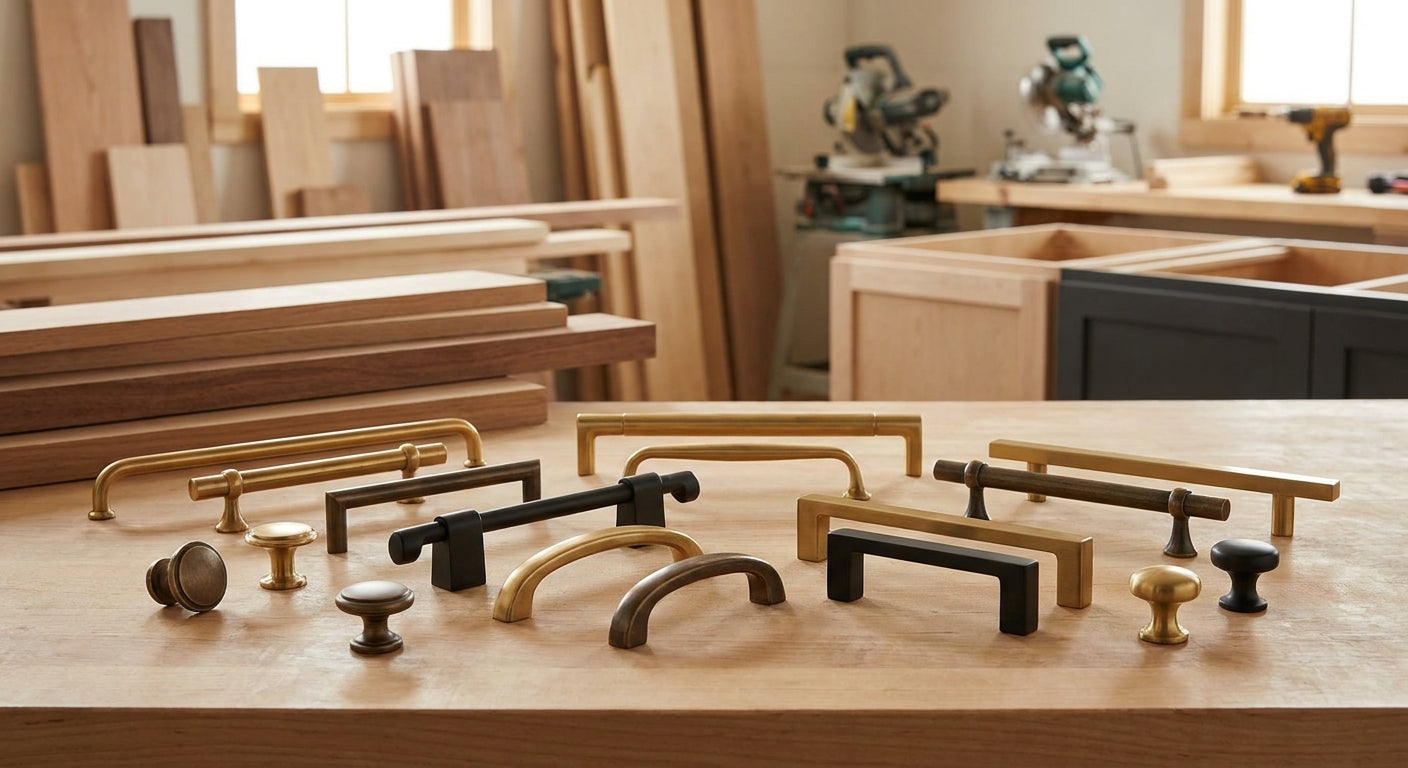
Custom cabinet makers and millwork shops don't shop for cabinet pulls the way a homeowner does — they're specifying hardware for ten kitchens a year, matching finishes across change orders, and answering to clients who will notice a half-millimeter gap in hole spacing. This guide breaks down what actually matters when you're buying cabinet pulls for cabinet makers at volume, not one drawer at a time.
Shop the finish
Every bronze knob and pull we carry, in one place — filter by size, style, and brand.
Browse Bronze Cabinet Hardware →- Top Knobs Morris Florham pull (6.5 in CC) wins for standard kitchen runs in 2026 — buy it for repeat specs.
- Atlas Homewares Tustin pull in stainless holds up on painted, contemporary cabinet lines — buy it for commission work.
- Jeffrey Alexander Griffin 160mm bar pull covers wider island drawers without a custom order — consider it.
- Confirm CC spacing against the manufacturer sheet before cutting holes; mismatched spacing is the #1 callback driver.
- Bulk cabinet hardware for contractors and builders drops per-unit cost once you're past a single kitchen order.
Shop the picks from this guide
In stock at Knobs.co · Free shipping on hardware orders $99+ · 110% price match
-
 Amerock
Edona 1-1/4'' diam Cabinet Knob BP53005Polished Chrome
Amerock
Edona 1-1/4'' diam Cabinet Knob BP53005Polished Chrome
$3.21
$3.77 -
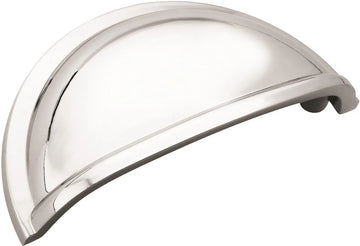 Amerock
Cup Pulls 3'' cc Cabinet Cup Pull BP53010Polished Chrome
Amerock
Cup Pulls 3'' cc Cabinet Cup Pull BP53010Polished Chrome
$4.61
$5.42 -
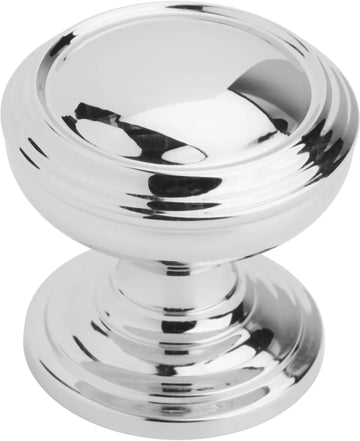 Amerock
Revitalize 1-1/4'' diam Cabinet Knob BP55342Polished Chrome
Amerock
Revitalize 1-1/4'' diam Cabinet Knob BP55342Polished Chrome
$6.42
$7.55 -
 Amerock
Edge Pull 5-1/16'' cc Cabinet Pull BP36575Polished Chrome
Amerock
Edge Pull 5-1/16'' cc Cabinet Pull BP36575Polished Chrome
$5.83
$6.85 -
 Amerock
Ravino 1-1/4'' diam Cabinet Knob BP53012Polished Chrome
Amerock
Ravino 1-1/4'' diam Cabinet Knob BP53012Polished Chrome
$2.79
$3.28 -
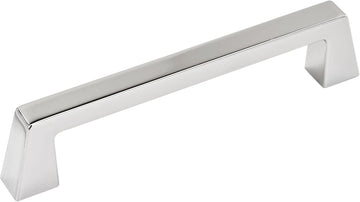 Amerock
Blackrock 5-1/16'' cc Cabinet Pull BP55277Polished Chrome
Amerock
Blackrock 5-1/16'' cc Cabinet Pull BP55277Polished Chrome
$9.63
$11.32


Why this matters
A homeowner buying five knobs for a bathroom vanity can afford to pick on looks alone. A millwork shop spec'ing 40 pulls per kitchen across multiple projects a month can't — one wrong center-to-center measurement means redrilled holes, a delayed install, and a client walkthrough that goes sideways. Cabinet pulls for cabinet makers need to solve for consistency and reorder reliability first, aesthetics second.
Most hardware catalogs are built for single-purchase consumers. Bulk cabinet hardware for contractors and builders works differently — it's about locking a spec that you can reorder in six months without a finish shift or a discontinued SKU killing your timeline.
Who this is for
This is written for custom cabinet makers, millwork shop owners, and trade contractors who spec hardware across multiple kitchens, offices, or built-ins per year — not a single homeowner remodel. If you're ordering 20+ pulls at a time, matching finishes across cabinet runs, and answering to a designer or client on final approval, the criteria below apply directly to your workflow.
What to look for in cabinet pulls for cabinet makers
Consistent center-to-center spacing across the line
The single most common callback in millwork is a pull that doesn't match the hole spacing you drilled on site. Standard CC spacings run 3 inch (76mm) and 4 inch (96mm) for base cabinet drawers, while wider island drawers often need 160mm or 224mm bar pulls. Confirm the exact spec sheet number before you drill — don't eyeball it off a photo.
Finish that survives repeated handling and client walkthroughs
Cabinet makers show the same sample finish to multiple clients over months. A plated finish that scratches after three showroom handlings costs you a reorder and a bad look in front of a paying client. PVD and solid-metal finishes hold color longer under repeat handling than thin-plated alternatives, which matters more here than it does for a one-time homeowner purchase.
Stock depth for reorders and change orders
A finish that's in stock today and backordered in eight weeks is a liability when a client adds a pantry or a second bathroom mid-project. Ask about reorder consistency on any collection you're specifying across multiple jobs in 2026 — not just current availability.
Functional fit for cabinet depth and drawer weight
A cup pull or bin pull reads differently on a 12-inch drawer than a 24-inch pot drawer. Heavier drawers with soft-close slides need a pull with a mounting post rated for repeat pull-force, not a decorative cast piece meant for light-duty vanity doors.
Price breaks at volume
Ordering piece by piece for one kitchen costs more per unit than sourcing a full spec across several projects. Shops running multiple kitchens through 2026 should be pricing hardware as a line-item cost across the whole job, not per-drawer.
Sample access before you lock a client's spec
Photos misrepresent bronze and brass undertones under kitchen lighting more than any other finish category. Pulling a physical cabinet hardware samples before finalizing a client order catches undertone mismatches that render as identical on a screen.
Top picks for cabinet makers and millwork shops
The workhorse pick. The Top Knobs Morris Florham pull runs a 6.5-inch center-to-center spacing in a honey bronze finish that holds its tone across repeat handling — the standard spec most shops reach for on a shaker-style kitchen run. If you're outfitting a full kitchen with 30+ matching drawers, this is the safe, reorderable choice. Buy.
The commercial-grade pick. The Atlas Homewares Tustin pull in stainless steel at 6.5-inch CC holds up against the repeat wipe-downs and handling that come with contemporary, painted cabinet lines. Stainless resists the scratching that plated finishes show after a season of client walkthroughs. Buy for painted and flat-front specs.
The wide-drawer pick. The Jeffrey Alexander Griffin bar pull at 160mm CC covers wider island drawers without forcing a custom-length order — useful when a client's island run doesn't match the standard 3-inch or 4-inch spacing you've stocked for the rest of the kitchen. Consider it when your project has one oversized drawer run that doesn't fit the standard spec.
The appliance-match pick. The Alno Charlie's 8-inch appliance pull extends the same collection language onto ovens and panel-ready fridges, so the hardware reads as one system instead of two mismatched specs. Shops running full-kitchen jobs where the fridge and dishwasher need panel-matching hardware should spec this alongside the drawer pulls, not separately. Consider for full-kitchen jobs with panel-ready appliances.
The budget-volume pick. The Belwith Keeler Fuller Collection pull in stainless at 3.3-inch CC covers small drawers and vanity runs where the client's budget doesn't support a premium finish across every opening. It won't carry a formal dining room, but it holds up fine on a laundry room or rental-grade kitchen. Consider for budget-tier jobs, skip for a client expecting a designer finish throughout.
What to avoid
- Decorative cast pulls with thin mounting posts on high-traffic drawers. They look right in a catalog photo but strip out after repeat client handling on samples or heavy pot drawers.
- Mixing finish collections across a single kitchen run to save on a backorder. A brushed nickel pull next to a satin nickel pull from a different manufacturer reads as a mismatch under kitchen lighting even when the names sound identical.
- Specifying by photo instead of spec sheet. Bronze and brass undertones shift under different lighting more than any other finish family — confirm against a physical sample or the manufacturer's CC diagram, covered in how to measure cabinet pull hole spacing, before you cut a single hole.
“If the CC spacing isn't confirmed against the spec sheet, don't cut the hole yet.”
Verdict comparison
| Pick | CC Spacing | Finish | Best for | Verdict |
|---|---|---|---|---|
| Top Knobs Morris Florham | 6.5 in | Honey bronze | Full kitchen, shaker runs | Buy |
| Atlas Homewares Tustin | 6.5 in | Stainless | Painted, contemporary cabinets | Buy |
| Jeffrey Alexander Griffin | 160mm | Brushed | Wide island drawers | Consider |
| Alno Charlie's appliance pull | 8 in | Multi-finish | Panel-ready appliances | Consider |
| Belwith Keeler Fuller | 3.3 in | Stainless | Budget-tier jobs | Consider |
FAQ
What CC spacing is standard for kitchen cabinet pulls?
3 inch (76mm) and 4 inch (96mm) are the most common center-to-center spacings for standard kitchen drawers in 2026. Wider island drawers often need 160mm or 224mm bar pulls to fit the drawer face proportionally.
Is stainless steel or bronze better for cabinet makers working with wood-tone cabinets?
Stainless finishes work best on painted or contemporary cabinets, while honey bronze or brushed bronze pulls read warmer against stained wood. Match the metal tone to the wood undertone, not the cabinet color alone.
Do cabinet makers need to buy full sets or can they mix knobs and pulls?
Most millwork shops spec pulls on drawers and knobs on doors within a single collection to keep sightlines consistent across a kitchen. Mixing collections across one run is the fastest way to get a client callback about mismatched hardware.
How many pulls does a typical kitchen remodel need?
A standard kitchen with 30 to 40 doors and drawers needs matching pulls for each opening plus appliance pulls for the dishwasher, oven, and any panel-ready fridge. Order roughly 10% extra to cover damaged returns or late change orders.
What's the safest cabinet pull for high-volume production work?
Bar pulls with reinforced, stamped mounting posts hold up better across repeat installs than decorative cast pulls with thin screws. Confirm mounting hardware weight rating before spec'ing for heavy soft-close drawers.
Should cabinet makers order samples before specifying hardware for a client?
Yes. Pulling a physical sample in the exact finish and size you plan to spec catches undertone mismatches that photos miss, especially with bronze and brass finishes under kitchen lighting.
Is bulk cabinet hardware cheaper per unit than ordering individually?
Yes, sourcing pulls in volume for a full kitchen or multiple units typically drops the per-unit price versus piece-by-piece ordering. Knobs.co backs trade orders with a 110% price match guarantee for shops sourcing at scale.
What's the biggest mistake custom cabinet makers make with pulls?
Specifying a pull off a photo without confirming CC spacing against the manufacturer's sheet, which leads to redrilled holes once the doors are on site. Confirm the exact spacing before the truck leaves the shop.
One last thing
The detail that trips up experienced shops in 2026 isn't finish or price — it's mixing two "brushed nickel" pulls from different manufacturers in the same kitchen. The undertone shift between brands is usually visible under normal kitchen lighting even when both boxes say the same finish name. Spec every pull in a single run from one collection, one manufacturer, and confirm the CC spacing on paper before the doors leave the shop.


