

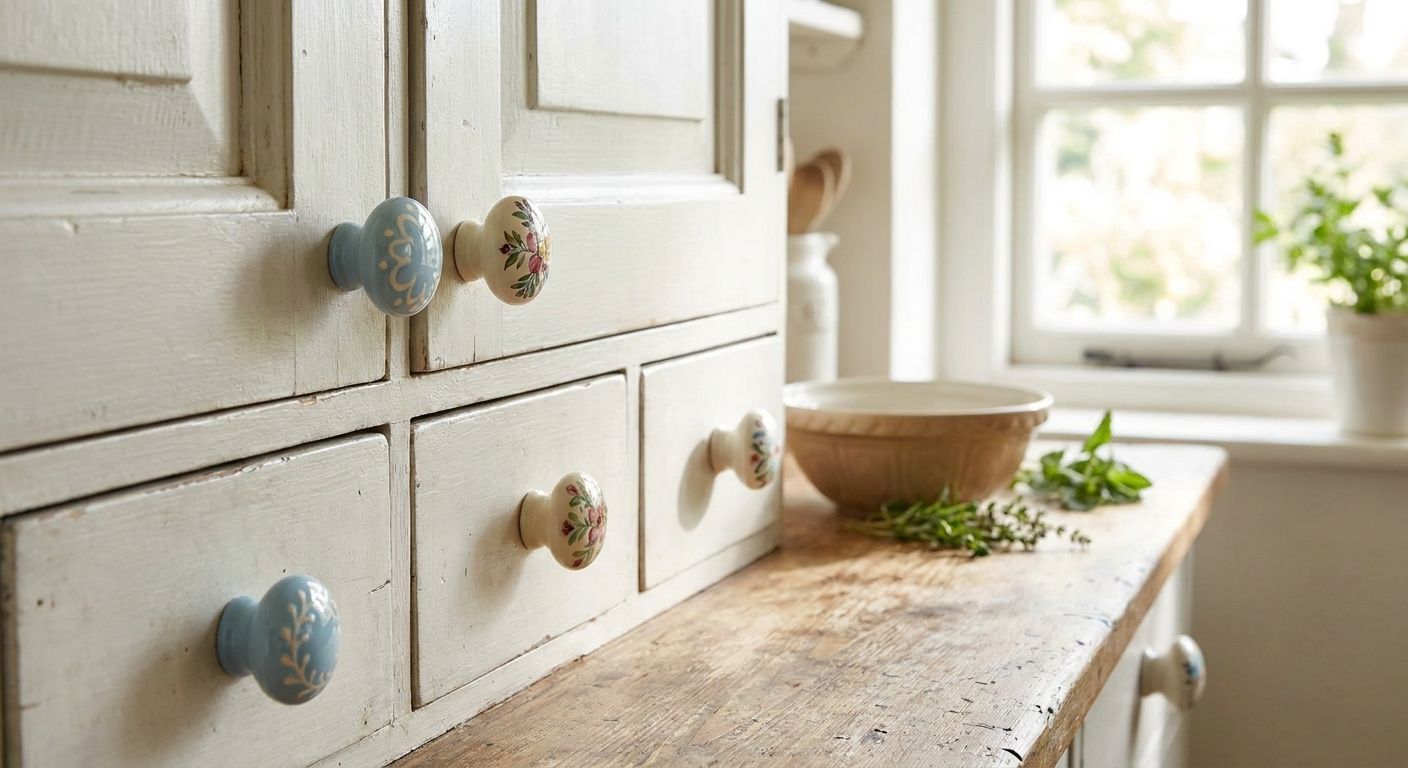
Ceramic cabinet knobs are the fastest way to soften a cottage-style kitchen without touching the cabinets themselves, but the wrong glaze, size, or backplate pairing turns "farmhouse charm" into "mismatched flea market find." This guide breaks down what actually matters when shopping ceramic cabinet knobs for a cottage kitchen in 2026, with real picks from the Knobs.co catalog and a verdict on each.
- Plain-profile knobs like the Portobello Road Knob work across nearly any cottage cabinet color — buy it.
- White Marble Cabinet Knob adds cool veining for a farmhouse island focal point — consider it.
- Britannia Victoria Knob with its 1-1/4in backplate covers worn screw holes on older cottage cabinets — buy it.
- Skip resin knobs painted to fake a ceramic glaze; they chip at the edges within a season of daily use.
- Order samples before committing — cottage kitchens live or die on how a knob reads against your actual cabinet paint.
Why this matters
Cottage kitchens depend on texture more than any other style — beadboard, open shelving, apron sinks, and painted cabinetry all read as "handmade," and hardware either supports that or fights it. A brushed-chrome bar pull on a shaker cottage cabinet looks like it wandered in from a different house. Ceramic and ceramic-adjacent knobs (marble, aged pewter, hand-cast metal) carry the softness the style demands, and picking the right one is a five-minute decision that affects how the whole kitchen reads for years.
Knobs.co stocks over 50,000 SKUs across dozens of hardware brands, and the full cabinet hardware catalog covers cottage-appropriate finishes alongside contemporary and traditional lines. Free samples and a 110% price match guarantee mean you can test a knob against your actual cabinet color before buying a full set — worth doing before any cottage remodel, since paint undertones shift how a glaze or finish reads under kitchen lighting.
Who this is for
This guide is built for the homeowner mid-renovation on a cottage, farmhouse, or coastal-cottage kitchen — painted shaker or beadboard cabinets, an apron sink, open shelving somewhere in the room — who wants hardware that looks collected rather than matched from a single big-box aisle. It's also useful for interior designers pulling samples for a client presentation, since Knobs.co ships free samples for exactly that comparison step.
What to look for in ceramic cabinet knobs for cottage kitchens
Glaze and finish stability
A true ceramic glaze should read consistent under both daylight and warm kitchen lighting — inconsistent glazing is the first sign of a cheap batch. Cottage kitchens rely on warm, slightly imperfect finishes, so minor variation between pieces is normal and even desirable; a glaze that looks plastic-uniform across every knob usually means it's resin, not fired ceramic.
Size for drawers versus doors
Smaller knobs (roughly 1 to 1-1/4 inches) suit drawer fronts where a bulkier knob catches on clothing or towels; cabinet doors can handle a slightly larger knob since they're grabbed less frequently but need more visual presence from across the room. Getting this backwards is the single most common sizing mistake in a full kitchen hardware order.
Backplate compatibility
If you're replacing existing hardware on an older cottage cabinet, check whether the new knob's screw spacing covers old holes. A knob with an integrated backplate, like the Britannia Victoria Knob, hides prior wear without filling and refinishing the cabinet door first — a real time-saver on a house with hardware history.
Pattern and color coordination
Hand-painted or transferware-style ceramic knobs carry a print or motif that needs to sit comfortably next to your cabinet paint, not compete with it. Solid-glaze knobs in cream, sage, or soft blue are the safer starting point if you're not sure the room can support a busy pattern on every drawer.
Durability under daily use
Ceramic is harder than most people expect but it is not impact-proof — a dropped cast-iron pan against a cabinet knob will chip glaze faster than it dents metal. Kitchens with kids or heavy daily traffic do better mixing ceramic knobs on upper cabinets and doors with sturdier metal pulls on the drawers that get yanked open dozens of times a day.
Top picks for cottage-style kitchens
The safe pick: Portobello Road Knob, Plain A rounded, unadorned profile that works whether your cabinets are painted sage, cream, or classic white. It doesn't compete with beadboard trim or open shelving, which is exactly the point in a cottage kitchen where the cabinetry itself should carry the character. Verdict: Buy — this is the knob to default to when you're not sure what else in the room is changing.
The wildcard: White Marble Cabinet Knob Natural stone with real veining instead of a repeating printed pattern — every knob in the batch looks slightly different, which is a feature in a cottage kitchen built around handmade texture. It reads best as an island accent or on a single focal cabinet rather than across every drawer in the room. Verdict: Consider — strong for a kitchen island or a butler's pantry, less necessary on every drawer front.
The traditionalist's choice: Britannia Victoria Knob, 1-1/4in Backplate, Pewter Antique The integrated backplate and aged pewter finish give it real Victorian-cottage detail, and the backplate does double duty covering old screw holes on cabinets that have had hardware before. It's the heavier-looking option of the three, so it suits cabinets with more presence — taller uppers, a pantry door, a hutch. Verdict: Buy — especially for older cottage kitchens being refreshed rather than rebuilt from scratch.
What to avoid
- Resin knobs painted to mimic ceramic — they chip at the edge within months of daily contact and the paint underneath shows through in a color that never matches the glaze on top.
- Oversized contemporary bar pulls on shaker cottage doors — the scale reads industrial, not cottage, even in a soft finish.
- A different glaze finish on every drawer — cottage style tolerates imperfection within a consistent family, not five unrelated patterns fighting for attention on one wall of cabinets.
Verdict comparison
| Pick | Material | Finish vibe | Best use | Verdict |
|---|---|---|---|---|
| Portobello Road Knob, Plain | Cast metal, plain profile | Simple, versatile | Drawers and doors throughout | Buy |
| White Marble Cabinet Knob | Natural marble | Cool-toned veining | Island or single focal cabinet | Consider |
| Britannia Victoria Knob, Pewter Antique | Metal with backplate | Aged Victorian detail | Older cabinets with worn holes | Buy |
FAQ
What's the best material for ceramic cabinet knobs in a cottage kitchen?
Fired ceramic with a consistent glaze reads best against painted shaker or beadboard cabinets in 2026 cottage kitchens. Solid-glaze options in cream or sage are the safest starting point if the rest of the kitchen already has pattern or color.
Are ceramic knobs durable enough for daily kitchen use?
Ceramic knobs hold up fine to normal daily use but chip if struck by a dropped pot or pan. Kitchens with heavy traffic often mix ceramic on cabinet doors with sturdier metal pulls on the drawers that get pulled hardest.
How much do ceramic cabinet knobs cost in 2026?
Pricing varies by glaze complexity, pattern, and brand, with hand-painted styles generally costing more than solid-glaze options. Check current pricing on knobs.co and order samples before buying a full set.
What size knob works best for cottage-style cabinets?
Smaller knobs around 1 to 1-1/4 inches suit drawer fronts, while cabinet doors can carry a slightly larger knob for visual presence. Mixing the two sizes correctly is the most common fix needed on cottage kitchen hardware orders.
Can I mix ceramic knobs with metal pulls in the same kitchen?
Yes, and it's common in cottage kitchens to put ceramic knobs on upper cabinets or doors and metal pulls on drawers. The key is keeping a consistent color family so the mix reads intentional, not accidental.
How do I clean ceramic cabinet knobs without damaging the glaze?
A soft cloth with mild soap and water is enough for daily grease and fingerprints. Avoid abrasive scrubbers or harsh chemical cleaners, which dull the glaze finish over time.
Do ceramic knobs work on drawers as well as cabinet doors?
Yes, ceramic knobs work on both, but drawer knobs should stay on the smaller end since drawers get grabbed more often and a bulky knob catches on hands and towels. Cabinet doors can handle a larger knob since they're opened less frequently.
Is a backplate necessary with ceramic knobs?
A backplate isn't required, but it's useful when replacing existing hardware and the old screw holes don't align with the new knob. The Britannia Victoria Knob's integrated 1-1/4in backplate is built for exactly this situation.
One last thing
Order samples before you order a full set — a glaze that looks warm and creamy on a screen or in a showroom can read cold or too white once it's mounted against your actual cabinet paint under kitchen lighting. Knobs.co ships free samples for this exact reason, and it's the cheapest insurance against a full cottage kitchen hardware order that doesn't match once it's on the door.