

Cabinet Hardware for Craftsman Homes: 2026 Guide
Choose the right cabinet hardware for craftsman homes in 2026 — finishes, profiles, and sizing rules for authentic Arts and Crafts style.

Craftsman homes reward hardware decisions that are consistent with the style's philosophy: natural materials, visible craftsmanship, honest shapes. Get the hardware wrong and even period-accurate millwork looks off. This guide walks you through every decision — finish, form, mounting, and scale — for cabinet hardware for craftsman homes in 2026.
TL;DR: For craftsman-style cabinet hardware in 2026, lead with oil-rubbed bronze, aged bronze, or brushed nickel in flat, angular, or hand-hammered profiles. Mission-style bar pulls (4–5" center-to-center) and square or craftsman knobs are the core vocabulary. Avoid polished chrome, ornate curves, and anything that reads as Victorian or ultra-modern. Atlas Homewares carries dedicated craftsman and Mission lines that hit every criterion here.
Shop the picks from this guide
In stock at Knobs.co · Free shipping on hardware orders $99+ · 110% price match
-
 Amerock
Edona 1-1/4'' diam Cabinet Knob BP53005Polished Chrome
Amerock
Edona 1-1/4'' diam Cabinet Knob BP53005Polished Chrome
$3.21
$3.77 -
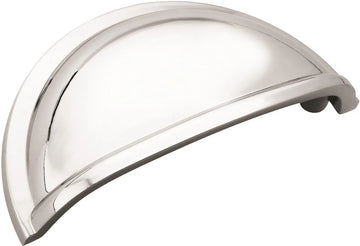 Amerock
Cup Pulls 3'' cc Cabinet Cup Pull BP53010Polished Chrome
Amerock
Cup Pulls 3'' cc Cabinet Cup Pull BP53010Polished Chrome
$4.61
$5.42 -
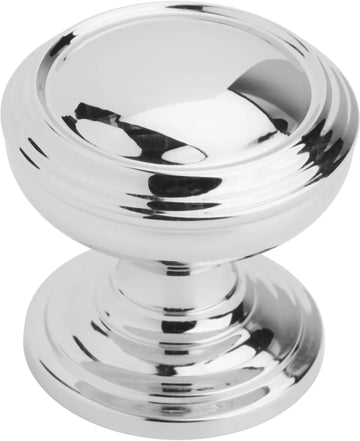 Amerock
Revitalize 1-1/4'' diam Cabinet Knob BP55342Polished Chrome
Amerock
Revitalize 1-1/4'' diam Cabinet Knob BP55342Polished Chrome
$6.42
$7.55 -
 Amerock
Edge Pull 5-1/16'' cc Cabinet Pull BP36575Polished Chrome
Amerock
Edge Pull 5-1/16'' cc Cabinet Pull BP36575Polished Chrome
$5.83
$6.85 -
 Amerock
Ravino 1-1/4'' diam Cabinet Knob BP53012Polished Chrome
Amerock
Ravino 1-1/4'' diam Cabinet Knob BP53012Polished Chrome
$2.79
$3.28 -
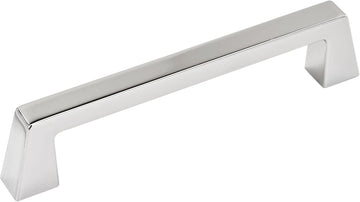 Amerock
Blackrock 5-1/16'' cc Cabinet Pull BP55277Polished Chrome
Amerock
Blackrock 5-1/16'' cc Cabinet Pull BP55277Polished Chrome
$9.63
$11.32


Why hardware matters more in craftsman homes
Craftsman architecture — think Stickley furniture, Greene & Greene details, exposed joinery — is built on the idea that every element earns its place visually. There is no decorative trim to absorb a bad hardware choice. The knob or pull sits on flat-panel or rail-and-stile doors with nothing to soften it. One wrong finish or silhouette breaks the coherence the style works so hard to establish.
In 2026, the craftsman revival is accelerating. Bungalow restorations and new construction that borrows from the Arts and Crafts movement are both driving demand for hardware that reads as intentional, not generic.
What you'll need before you start
- Measurements of existing hole spacing (most standard pulls are 3" or 3-3/4" center-to-center; craftsman pulls often run 3–5")
- Door and drawer dimensions (scale hardware to cabinet size — 1" knobs on large drawer fronts look wrong)
- A finish sample or photo of your cabinet stain color and any exposed wood species
- Clarity on whether you want a strict period-correct look or a craftsman-influenced contemporary kitchen
- Screwdriver, template or jig, and a drill if adding new holes
Step 1: Lock in your finish before anything else
What it accomplishes: Every subsequent decision — form, family, scale — gets filtered through finish. Choosing finish last almost always creates conflicts.
Why it matters for craftsman homes: The style emerged from a rejection of industrial chrome and gilt. Authentic finishes are warm, earthy, and slightly muted. Polished chrome reads as 1980s contemporary and clashes with quartersawn oak, fir, or cherry cabinetry common in craftsman interiors.
The right finishes:
- Oil-rubbed bronze (living finish, darkens at the edges, age-appropriate)
- Aged bronze (similar warmth, slightly more uniform)
- Brushed nickel (acceptable, especially in craftsman-contemporary hybrids where the palette runs cooler)
- Pewter or burnished bronze (excellent for strict period applications)
- Venetian bronze (usable with darker wood stains)
What to avoid: Polished chrome, polished nickel, bright brass, and matte black. Matte black is everywhere in 2026 and works for farmhouse or industrial styles — it does not belong in a craftsman interior unless the home leans hard contemporary.
Common mistake: Choosing brushed nickel because it "goes with everything," then ending up with hardware that feels anonymous rather than period-appropriate. If your cabinets are quartersawn oak or a warm painted color like forest green, aged bronze is the stronger call every time.
Expected outcome: A finish decision that eliminates roughly 80% of the hardware catalog and makes every downstream choice faster.
Step 2: Choose the correct profile — angular, not ornate
What it accomplishes: Form signals period authenticity more than any other single variable.
Why it matters: Craftsman design is angular, geometric, and structurally honest. The Arts and Crafts movement specifically rejected the flourishes of Victorian and Baroque decorative arts. That means no S-curves, no filigree, no floral casting.
The profiles that work:
- Flat bar pulls (the workhorse — clean, readable, strongly period-appropriate)
- Square or rectangular knobs with minimal taper
- Hand-hammered or medallion knobs (textured surface gives an artisanal quality consistent with handcraft values)
- T-knobs and tab pulls (slightly more transitional, work in craftsman-contemporary kitchens)
What to avoid: Ornate cup pulls, rope-detail pulls, anything with scrollwork. Round smooth knobs work on craftsman doors but read generic unless the material or texture adds character.
Specific products to consider from Atlas Homewares' craftsman-aligned lines:
The Craftsman Modern Pull 3" center-to-center in brushed nickel is one of the clearest period-appropriate bar pull options available in 2026 — its name says it plainly. The Craftsman Square Knob in aged bronze pairs directly with this pull and keeps the hardware family unified.
For hand-hammered texture, the Hammered Medallion Knob in aged bronze brings the handcraft quality that defines Arts and Crafts hardware at its most authentic.
Common mistake: Mixing too many profiles. Craftsman interiors reward restraint. One knob family, one pull family, one finish — used consistently across all cabinets in a room.
Expected outcome: A shortlist of 2–3 hardware SKUs that cover the full kitchen or bathroom rather than a mismatched assortment.
Step 3: Get the sizing right
What it accomplishes: Correct sizing makes hardware look intentional; wrong sizing makes cabinets look like an afterthought.
Why it matters: Craftsman cabinetry often features wide stiles and rails — the flat-panel doors are substantial. Hardware that is too small disappears; hardware that is too large overwhelms.
Rules for craftsman hardware sizing in 2026:
- Upper cabinet doors: 1" to 1-1/2" knobs, or a 3" bar pull
- Drawer fronts under 24" wide: 3" to 3-3/4" center-to-center pull
- Drawer fronts 24" and wider: 5" center-to-center pull minimum
- Appliance drawers or large pantry doors: 8"–12" appliance pull
The standard bore hole in North American cabinetry is 32mm (roughly 1-1/4") for knobs. Most craftsman pulls run on 3", 3-3/4", or 5" center-to-center spacing — confirm your existing hole spacing before ordering. Drilling new holes is simple but unnecessary if you match the spacing.
Common mistake: Using the same 3" pull on every single drawer regardless of width. A 42" spice drawer with a 3" pull in the center looks like an oversight, not a design choice.
Expected outcome: Hardware that appears scaled to each cabinet rather than selected from a single-size bulk order.
Step 4: Unify hardware across the whole space
What it accomplishes: A coherent hardware story across all cabinets, drawers, and doors reads as deliberate design — the defining quality of craftsman interiors.
Why it matters: Craftsman design has always prized the integration of parts into a whole. Mixing three different hardware lines in one kitchen violates that principle regardless of how good each piece looks individually.
Practical rules:
- One finish, full stop — do not mix aged bronze upper cabinets with brushed nickel lowers
- Two hardware forms maximum per room: one knob style for doors, one pull style for drawers
- Extend the finish to hinges if they are exposed (face-frame cabinetry common in craftsman homes often shows the hinge)
Common mistake: Treating the bathroom vanity as exempt from the kitchen hardware decision. In open-plan craftsman bungalows or homes with visual sightlines between rooms, mismatched finishes across spaces are jarring. The arts-and-crafts cabinet hardware guide at Knobs.co covers multi-room cohesion for this style in more detail.
Expected outcome: A hardware selection that looks like one person made all the decisions at once, not a series of individual purchases over time.
Step 5: Order samples before committing at scale
What it accomplishes: Eliminates the most common and most expensive cabinet hardware mistake — ordering 40 pulls in a finish that reads completely differently under your kitchen lighting than it did on a monitor.
Why it matters for craftsman homes: Oil-rubbed bronze and aged bronze are living finishes — they have variation. Pewter reads differently under warm incandescent light versus cool LED. A 2" sample knob against your actual cabinet door in your actual kitchen lighting is irreplaceable information.
Knobs.co offers free samples, which means you can test 3–4 hardware candidates against your cabinetry before placing the full order. Use that. One wrong finish decision on 30 drawer pulls is a $200–$600 problem that a free sample would have prevented.
Common mistake: Skipping samples because the finish name sounds right. "Brushed nickel" from one manufacturer can look warm and golden; from another it reads cool and blue. Names are not specifications.
Expected outcome: Confidence in your full order before you spend real money.
Troubleshooting
My aged bronze hardware looks too dark against my dark-stained oak cabinets. Switch to brushed nickel or pewter. Dark finish on dark wood loses contrast and the hardware disappears. Craftsman hardware should be readable, not camouflaged.
My bar pulls feel wobbly after installation. Check that the screw length matches your door thickness. Craftsman doors are often 3/4" thick; standard 1" screws bottom out correctly. Oversized or undersized screws both cause looseness.
I want a craftsman look but my kitchen has white-painted cabinets. White cabinets are not period-correct craftsman, but they are extremely common in craftsman-influenced contemporary kitchens. Oil-rubbed bronze or matte black (in this case only) both work. Avoid chrome — it reads clinical against white rather than warm.
My drawer holes are 3-3/4" apart but I want 5" pulls. You have two options: fill the existing holes with wood filler and drill new ones, or choose a pull with a backplate that covers the old holes. The craftsman aesthetic actually suits backplates well — the additional visual weight is consistent with the style's substantial character.
I ordered hardware that doesn't match my existing hinges. Replace the hinges. In craftsman cabinetry where hinges are visible, mismatched finishes between hinges and pulls is a first thing visitors notice. Matching the hardware family is worth the extra step.
My pulls keep spinning out of alignment. This happens with single-screw pulls. Use a small drop of thread-locking fluid on the screw or choose two-screw pulls — bar pulls and most craftsman-profile pulls use two screws by default and self-align.
Tools and resources
- Measurement tape and a hardware drilling jig (available at any hardware store for $15–$25)
- Free samples from Knobs.co — request before ordering at scale
- Brushed nickel knobs for craftsman homes — Knobs.co's specific guide for the brushed nickel variant of this decision
- Pewter cabinet knobs for craftsman homes — covers the pewter finish option with craftsman-specific context
FAQ
What is the best finish for cabinet hardware in a craftsman home? Oil-rubbed bronze is the most period-authentic choice for craftsman homes in 2026. Aged bronze and brushed nickel are close alternatives depending on how warm or cool your overall palette runs.
Should craftsman cabinet hardware be knobs or pulls? Both. The conventional rule is knobs on doors, pulls on drawers. In craftsman kitchens, flat bar pulls on drawers and square or hand-hammered knobs on doors is the most consistent combination.
What center-to-center spacing is standard for craftsman pulls? Most craftsman bar pulls run 3", 3-3/4", or 5" center-to-center. The 3-3/4" (96mm) spacing is the most common in North American cabinetry and gives you the widest hardware selection.
Is matte black hardware appropriate for craftsman homes? Generally no. Matte black suits farmhouse and industrial styles better. For craftsman homes, the warmer bronze and nickel tones are more authentic. In strictly contemporary craftsman-inspired kitchens, matte black can work with painted cabinets, but it is not the default recommendation.
How many hardware pieces do I need for a typical craftsman kitchen? Count each door and each drawer front, then add 10% for breakage and future replacements. A typical kitchen with 20 doors and 10 drawers needs roughly 33 pieces — 20 knobs and 10 pulls, plus 3 spares.
What hardware profiles work with craftsman-style flat-panel doors? Flat bar pulls, square knobs, T-knobs, and hand-hammered medallion knobs all work well. Avoid ornate cup pulls, rope pulls, and anything with decorative casting.
Can I mix hardware finishes in a craftsman home? No — not within a single room. Craftsman design values cohesion. One finish per room is the rule. If you have a strong reason to introduce a second metal (exposed copper plumbing fixtures, for example), keep it to 1 accent element and let the hardware remain uniform.
How do I know what size knob to order for craftsman cabinet doors? For standard upper cabinet doors, a 1" to 1-1/4" knob is appropriate. For larger doors — pantry-scale or full overlay — go to 1-1/2". The guide to choosing the right cabinet knob size at Knobs.co covers the full sizing logic with diagrams.
One last thing
The original craftsman hardware of the 1900s–1930s was made from copper, iron, and bronze — materials chosen specifically because they age, patina, and develop character over decades. Oil-rubbed bronze finishes today are designed to replicate that quality. If you choose a living finish and it develops slight variation over time, that is not a defect — it is the hardware doing exactly what craftsman designers intended. Buy for the long haul, not for the showroom.
Related guides
- Arts and crafts cabinet hardware for craftsman homes
- Brushed nickel cabinet knobs for craftsman homes
- Best pewter cabinet knobs for craftsman homes
Shop Oil Rubbed Bronze Cabinet Hardware
-
 Additions Tab Pull 3'' TK103ORB2 Oil Rubbed Bronze
$12.06
Additions Tab Pull 3'' TK103ORB2 Oil Rubbed Bronze
$12.06
-
 Echo 12 inch CC Oil Rubbed Bronze Appliance Pull 9151-1ORB-P
$85.17
Echo 12 inch CC Oil Rubbed Bronze Appliance Pull 9151-1ORB-P
$85.17
-
 Echo 224mm CC Oil Rubbed Bronze Pull 9150-1ORB-P
$30.21
Echo 224mm CC Oil Rubbed Bronze Pull 9150-1ORB-P
$30.21
-
 Princetonian Appliance Pull 18'' Oil Rubbed Bronze M2515
$115.47
Princetonian Appliance Pull 18'' Oil Rubbed Bronze M2515
$115.47
-
 Echo 160mm CC Oil Rubbed Bronze Pull 9149-1ORB-P
$18.77
Echo 160mm CC Oil Rubbed Bronze Pull 9149-1ORB-P
$18.77
-
 Echo 128mm CC Oil Rubbed Bronze Pull 9148-1ORB-P
$12.43
Echo 128mm CC Oil Rubbed Bronze Pull 9148-1ORB-P
$12.43
-
 Hopewell Bath Tissue Holder in Oil Rubbed Bronze HOP3ORB
$111.47
Hopewell Bath Tissue Holder in Oil Rubbed Bronze HOP3ORB
$111.47
-
 Edwardian Bath Double Hook Ribbon Backplate in Oil Rubbed Bronze ED2ORBE
$51.35
Edwardian Bath Double Hook Ribbon Backplate in Oil Rubbed Bronze ED2ORBE
$51.35


Browse all 1393 in Oil Rubbed Bronze Cabinet Hardware → Cabinet knobs Cabinet pulls & handles