

Cabinet Hardware for Farmhouse Kitchens (2026 Guide)
Choose cabinet hardware farmhouse kitchen style in 2026: best finishes, shapes, and sizing rules. Oil-rubbed bronze, antique bronze, and warm brass picks from Knobs.co.

Picking cabinet hardware farmhouse kitchen style is one of those decisions that looks simple until you're holding 30 sample bags and second-guessing everything. This guide gives you a clear process: what to decide first, which finishes and shapes fit the farmhouse aesthetic, and how to avoid the mistakes that kill the look.
TL;DR: For a farmhouse kitchen in 2026, lead with an aged or warm metal finish — oil-rubbed bronze, antique bronze, or warm brass — and pair it with hardware that has visible texture or hand-forged character. Bar pulls work on drawers; cup pulls or bin pulls belong on lower cabinets; small round knobs suit upper doors. Avoid anything too polished or too minimalist. Knobs.co carries farmhouse-appropriate cabinet hardware, so you can order samples before committing to a full kitchen.
Shop the picks from this guide
In stock at Knobs.co · Free shipping on hardware orders $99+ · 110% price match
-
 Atlas Homewares
Bronte Pull 5 1/16'' ccWarm Brass
Atlas Homewares
Bronte Pull 5 1/16'' ccWarm Brass
$19.89
$22.10 -
 Atlas Homewares
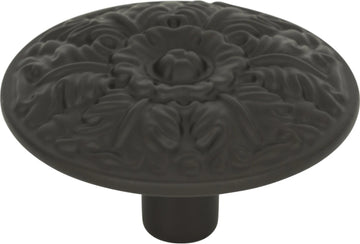
Hammered Medallion Knob 1 1/2''Aged Bronze
Atlas Homewares
Hammered Medallion Knob 1 1/2''Aged Bronze
$12.96
$14.40 -
 Top Knobs
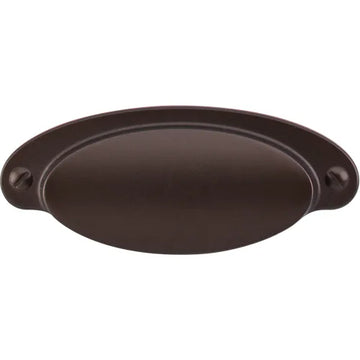
Dakota Cup Pull 2 9/16'' cc M1194 Oil Rubbed Bronze
Top Knobs
Dakota Cup Pull 2 9/16'' cc M1194 Oil Rubbed Bronze
$10.08
$11.20 -
 Top Knobs
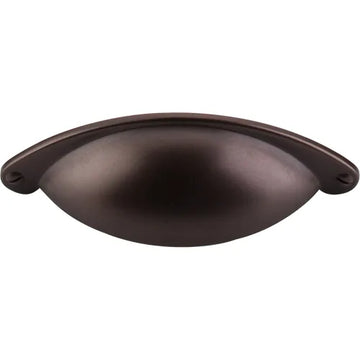
Oil Rubbed Cup Pull 2 1/2'' cc M745
Top Knobs
Oil Rubbed Cup Pull 2 1/2'' cc M745
$10.26
$11.40

Why This Decision Matters More Than You Think
Cabinet hardware is the punctuation of your kitchen. It appears on every surface at eye level and hand height — easily 20 to 40 pieces across a standard kitchen. Get the finish wrong and a full kitchen renovation feels off. Get it right and a budget refresh feels intentional. The farmhouse style has a specific set of visual rules, and hardware that breaks those rules announces itself immediately.
In 2026, the farmhouse kitchen has matured past the shiplap-and-apron-sink cliché. The hardware choices have gotten more precise: warm metals are in, cold chrome is out, and the debate has shifted toward which warm metal and how much visual weight.
What You'll Need Before You Start
- Measurements of your cabinet door and drawer face dimensions
- A count of total doors vs. drawers (determines your knob-to-pull ratio)
- Your existing or planned finish on faucets, light fixtures, and appliances
- At least 2–3 physical samples — Knobs.co sells samples individually, so order a few before you commit
- Knowledge of your cabinet style: inset, overlay, or face-frame shaker
Step 1 — Lock In Your Finish Before Anything Else
What it accomplishes: Every other decision flows from finish. It sets the warmth, age, and formality of your kitchen.
Why it matters: Farmhouse kitchens read as aged and organic. Polished chrome and polished nickel read as contemporary — they reflect light too cleanly. The finishes that work are ones with visual depth: aged bronze, oil-rubbed bronze, antique bronze, warm brass, and venetian bronze.
Specific guidance: If your kitchen has white or off-white cabinets (the most common farmhouse palette), oil-rubbed bronze or antique bronze creates the sharpest contrast without reading as modern. If you have navy, forest green, or black lower cabinets, warm brass or unlacquered brass adds richness without fighting the color. Venetian bronze bridges the two — it works on almost any painted cabinet color in 2026.
Match to your metal fixtures: Your faucet finish is the anchor. Hardware does not need to be an exact match, but it must be in the same warmth family. Pairing a polished chrome faucet with oil-rubbed bronze cabinet hardware creates a visual conflict the farmhouse style cannot absorb.
Expected outcome: A single finish decision that you can apply consistently across 100% of your cabinet hardware.
Common mistake: Buying hardware in two different warm finishes thinking they'll "go together." Venetian bronze and oil-rubbed bronze are close but visibly different under kitchen lighting. Pick one.
Step 2 — Choose the Right Hardware Shape for Each Cabinet Type
What it accomplishes: Assigns the correct hardware form to each function: doors get knobs or small pulls, drawers get bar pulls, lower cabinets get cup pulls.
Why it matters: The farmhouse aesthetic relies on hardware that looks like it belongs in a working kitchen — functional, tactile, slightly utilitarian. Thin bar pulls read as contemporary. Cup pulls, bridge pulls, and round knobs with visible casting texture read as farmhouse.
Doors: Round or oval knobs in the 1" to 1.5" diameter range suit upper cabinet doors well. A hammered surface or a slightly irregular shape (as opposed to a machined-smooth sphere) pushes firmly into farmhouse territory. The Hammered Medallion Knob from Atlas Homewares in aged bronze is a direct example: the hammered face adds handcrafted texture that mass-produced hardware lacks.
Drawers: Bar pulls and bridge pulls are the workhorse choice. A 3" to 5" center-to-center bar pull fits standard drawer fronts; go to 6.5" or longer on wide drawers and pot drawers. The Bronte Pull in warm brass is a solid drawer pull for a farmhouse kitchen — the simple arch profile reads traditional without being ornate.
Lower cabinet doors: Cup pulls (also called bin pulls) are the most authentically farmhouse shape. They have a long history in utility kitchens and read immediately as period-appropriate. If you prefer pulls over cup hardware, a bridge pull with visible mounting posts gives a similar visual weight.
Appliance panels: Panel-ready appliances need appliance pulls — heavier-gauge hardware with a longer center-to-center measurement (typically 8" to 18"). The scale of a farmhouse kitchen supports a prominent appliance pull.
Expected outcome: A clear hardware assignment for every cabinet type before you start counting SKUs.
Common mistake: Using the same bar pull across every surface — doors, drawers, and lower cabinets. It flattens the kitchen visually. Mixing a knob on doors with a pull on drawers creates the layered, worked-in look that makes a farmhouse kitchen feel authentic.
Step 3 — Establish Your Center-to-Center Measurement
What it accomplishes: Determines which pull SKUs physically fit your drawer fronts without drilling new holes.
Why it matters: If you're replacing existing hardware, your current hole spacing is fixed unless you're willing to fill and redrill. The three most common center-to-center measurements are 3", 3.75", and 5". Most modern kitchen cabinets use 3" (76mm) or 5" (128mm). Measure before you order.
How to measure: On an existing pull, measure hole center to hole center in inches. On a door with a single knob, measurement doesn't apply — the knob has one mounting point. Use the how to measure cabinet pull hole spacing guide if you want a visual walkthrough.
Expected outcome: A confirmed center-to-center measurement that narrows your pull selection to compatible SKUs only.
Common mistake: Ordering by visual length rather than center-to-center measurement. A 5" pull and a 5" center-to-center pull are not the same thing. The 5" measurement is hole spacing; the overall length of the pull is longer.
Step 4 — Order Samples Before You Order in Quantity
What it accomplishes: Eliminates the single biggest return driver — finish mismatch under your actual kitchen lighting.
Why it matters: Finish photography varies by monitor calibration. Aged bronze on screen can look like dark brown or like gold depending on the image source. Venetian bronze and oil-rubbed bronze look nearly identical online and very different in person. You cannot make a confident decision for 30+ pieces of hardware from a screen.
Knobs.co sells samples individually, refunded with your full order. For a farmhouse kitchen, request 2–3 finish options in the knob or pull shape you're considering. Hold them against your cabinet door in morning light, afternoon light, and under your kitchen pendants. The finish that reads consistently correct across all three conditions is your answer.
Expected outcome: A confirmed finish-and-shape combination before committing to full quantity.
Common mistake: Ordering one sample, approving it in one light condition, and discovering the batch looks wrong installed. Lighting in kitchens changes dramatically; aged bronze can shift from warm gold to near-black depending on the light angle.
Step 5 — Count Your Hardware and Order With a Buffer
What it accomplishes: Gets you to a final order quantity with room for breakage, future additions, and replacements.
How to count: Walk your kitchen with a notepad. Count every door that needs a knob, every drawer that needs a pull, every lower door that needs a cup pull or pull, and any specialty items (appliance pulls, island drawers). Add 10% to the total for contingency — a dropped knob, a stripped screw hole, or a cabinet you add during the renovation.
Pricing reality: Farmhouse hardware in genuine warm metal finishes — not electroplated shortcuts — costs more per piece than painted look-alikes, but a 30-piece kitchen is still a small number relative to the visual impact. Knobs.co's 110% price match guarantee means you're not overpaying if you find the same SKU cheaper elsewhere in 2026.
Expected outcome: A single order that covers the full kitchen, avoids mid-project shortages, and protects against discontinued SKUs.
Common mistake: Ordering exact count with no buffer. Hardware collections get discontinued. If you need two more knobs six months after your install and the color lot has changed slightly, you'll see the mismatch.
Step 6 — Install Consistently and Check Alignment Before Final Tightening
What it accomplishes: Ensures the hardware reads as intentional, not installed in a hurry.
Why it matters: Farmhouse hardware has more visual presence than minimalist hardware — a misaligned cup pull or a knob drilled 1/8" off-center is immediately visible because the hardware is larger and more textured. Measure twice, drill once.
Positioning standard for 2026: Knobs on upper cabinet doors go in the lower corner of the door, 2" to 2.5" from each edge. Pulls on drawers center vertically and horizontally on the drawer face. Cup pulls on lower cabinet doors go in the upper corner, 2" to 3" from each edge.
Expected outcome: Hardware that looks placed, not installed — part of the kitchen's design rather than an afterthought.
Common mistake: Drilling the first door, installing the knob, then using that door as your template for the rest. If the first one is off, every door compounds the error.
Troubleshooting
The finish looks too dark after installation. Aged bronze and oil-rubbed bronze read darker against light cabinets than they do in sample photography. If you've confirmed the finish is correct in person but it feels heavy, the issue is usually hardware scale — try a slightly smaller knob diameter or a lighter-profile pull shape rather than switching finishes.
The hardware looks too modern. Smooth, machined hardware in a warm finish still reads contemporary. Swap to a hammered, cast, or textured surface. The hand-forged appearance is what separates farmhouse hardware from transitional hardware.
The hardware looks too ornate. Victorian or heavily scrolled hardware crosses from farmhouse into country cottage or antique. Pull back to simpler shapes — a plain round knob, a straightforward bar pull — and let the finish carry the farmhouse signal rather than the silhouette.
Pulls feel loose after installation. Strip a screw hole and the hardware wobbles. Fill the hole with a wooden toothpick and wood glue, let it cure 24 hours, then redrill. Do not use longer screws as a shortcut — they'll push through the cabinet face.
Finish doesn't match the faucet. If you've already committed to hardware, the fastest fix is a faucet swap rather than a full hardware replacement. Alternatively, warm-metal faucets in unlacquered brass or oil-rubbed bronze are widely available and swap easily.
Hardware scratches during installation. Use painter's tape on the cabinet face around the drill point. Farmhouse finishes with texture can catch the drill's edge and leave marks on the paint.
Tools and Resources
- Tape measure (metric and imperial for center-to-center verification)
- Cabinet hardware template or drilling jig — saves time on a 30+ piece install
- Power drill with a sharp 3/16" bit for standard hardware screws
- Painter's tape
- Knobs.co samples (refunded with your full order) — confirm finish in person before ordering full quantity at knobs.co
- Antique bronze cabinet pulls for farmhouse kitchens — specific finish guidance for the most popular farmhouse finish
- Rustic cabinet hardware for farmhouse kitchens — covers the broader category including cup pulls and bin pulls
What to Do Next
Once your cabinet hardware is locked in, the next decision is finish consistency across the rest of the kitchen: light fixtures, faucet, and range hood hardware should sit in the same warm-metal family. The guide on how to pick hardware finish for a whole home remodel covers that coordination in detail.
FAQ
What finish is best for cabinet hardware in a farmhouse kitchen? Oil-rubbed bronze, antique bronze, and warm brass are the three strongest choices in 2026. They have the depth and warmth the farmhouse aesthetic requires. Polished chrome and polished nickel are too contemporary for a true farmhouse kitchen.
Should I use knobs or pulls on farmhouse kitchen cabinets? Both — mixed. Knobs on upper doors, pulls on drawers, and cup pulls or bin pulls on lower cabinet doors. Using only pulls on every surface reads more transitional or contemporary than farmhouse.
How do I choose hardware size for farmhouse cabinets? For knobs, 1" to 1.5" diameter covers most doors. For pulls, match your center-to-center measurement first — 3" or 5" are the most common. On wide drawers (18" or wider), scale up to 6.5" or longer. See the Knobs.co guide on how to choose the right cabinet knob size for a full breakdown.
Is matte black hardware appropriate for a farmhouse kitchen? Yes, with qualifications. Matte black reads as modern farmhouse or industrial farmhouse rather than traditional farmhouse. It works best on white or light-colored cabinets with other black accents (faucet, range, pendant light hardware). For a more classic farmhouse, aged bronze is the stronger choice.
Can I mix two different hardware finishes in a farmhouse kitchen? Mixing is risky and requires precision. If you mix, keep both finishes in the same warmth family (both warm, both muted) and assign one finish to a defined zone — for example, warm brass on upper cabinets, oil-rubbed bronze on lower. Randomizing two finishes across the same cabinet run reads as an error, not a design decision.
What is the standard screw size for cabinet hardware? 8-32 thread is the US standard for most cabinet knobs and pulls. Hardware sold in the US, including all Atlas Homewares products on Knobs.co, ships with the correct screws. Standard cabinet thickness takes a 1" screw; thick doors (inset cabinets with 1" doors) need 1.25" or 1.5".
How much does it cost to hardware an entire farmhouse kitchen? Cost scales with finish quality and piece count: genuine warm-metal hardware runs more per piece than electroplated look-alikes, and hand-forged pieces sit at the top of the range. A typical 30-piece kitchen — roughly 15–20 knobs and 10–15 pulls — is a modest line item next to the rest of a renovation budget. Check current pricing on the product listings, since it changes.
Does farmhouse kitchen hardware need to match bathroom hardware? Not exactly, but it should coordinate. If your kitchen is oil-rubbed bronze, the closest bathroom equivalent is oil-rubbed bronze or venetian bronze — not polished chrome. Finish family consistency across a home is more important than exact match, particularly where the rooms are not directly adjacent.
One Last Thing
The detail most people skip: cup pulls are measured differently than bar pulls. A cup pull's listed size ("3 center-to-center") is the hole spacing, but the visible width of the cup itself is larger — typically 4" to 4.5" overall. On a narrow lower cabinet door, a cup pull that looks right in the product photo can visually overwhelm the door face when installed. Measure the door width and the overall hardware width before you order. A 3" center-to-center cup pull on a 9" cabinet door leaves barely 2" of painted space on each side — which reads correctly for farmhouse, but is tighter than most people expect from a product photo.
Related Guides
- Antique bronze cabinet pulls for farmhouse kitchens
- Matte black cabinet hardware for farmhouse kitchens
- Rustic cabinet hardware for farmhouse kitchens
- Vintage bronze cabinet pulls for farmhouse kitchens
Shop Oil Rubbed Bronze Cabinet Hardware
-
 Additions Tab Pull 3'' TK103ORB2 Oil Rubbed Bronze
$12.06
Additions Tab Pull 3'' TK103ORB2 Oil Rubbed Bronze
$12.06
-
 Echo 12 inch CC Oil Rubbed Bronze Appliance Pull 9151-1ORB-P
$85.17
Echo 12 inch CC Oil Rubbed Bronze Appliance Pull 9151-1ORB-P
$85.17
-
 Echo 224mm CC Oil Rubbed Bronze Pull 9150-1ORB-P
$30.21
Echo 224mm CC Oil Rubbed Bronze Pull 9150-1ORB-P
$30.21
-
 Princetonian Appliance Pull 18'' Oil Rubbed Bronze M2515
$115.47
Princetonian Appliance Pull 18'' Oil Rubbed Bronze M2515
$115.47
-
 Echo 160mm CC Oil Rubbed Bronze Pull 9149-1ORB-P
$18.77
Echo 160mm CC Oil Rubbed Bronze Pull 9149-1ORB-P
$18.77
-
 Echo 128mm CC Oil Rubbed Bronze Pull 9148-1ORB-P
$12.43
Echo 128mm CC Oil Rubbed Bronze Pull 9148-1ORB-P
$12.43
-
 Hopewell Bath Tissue Holder in Oil Rubbed Bronze HOP3ORB
$111.47
Hopewell Bath Tissue Holder in Oil Rubbed Bronze HOP3ORB
$111.47
-
 Edwardian Bath Double Hook Ribbon Backplate in Oil Rubbed Bronze ED2ORBE
$51.35
Edwardian Bath Double Hook Ribbon Backplate in Oil Rubbed Bronze ED2ORBE
$51.35


Browse all 1389 in Oil Rubbed Bronze Cabinet Hardware → Cabinet knobs Cabinet pulls & handles