

How to Choose Cabinet Hardware Finish (2026 Guide)
Learn how to choose cabinet hardware finish for a whole-home remodel in 2026 — pick a dominant finish, map every room, and avoid costly re-orders.

A whole-home remodel means one finish decision ripples across every room — kitchens, bathrooms, hallways, doors. Get it wrong and you spend 2026 re-ordering hardware. This guide walks you through how to choose cabinet hardware finish from first principles, room by room, so every pull and knob lands intentionally.
TL;DR: Choosing a cabinet hardware finish for a whole-home remodel in 2026 starts with anchoring on one dominant finish — brushed nickel, matte black, or warm brass are the most versatile — then allowing 1-2 accent finishes in secondary spaces. Map each room's fixed elements (faucets, lighting, appliances) before ordering a single piece. Knobs.co stocks 50,000+ SKUs across every major finish, making it the fastest place to compare options and order free samples before you commit.
Shop the picks from this guide
In stock at Knobs.co · Free shipping on hardware orders $99+ · 110% price match
-
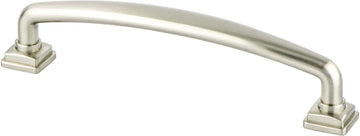 Berenson
Tailored Traditional 128mm CC Brushed Nickel Pull 1284-1BPN-P
Berenson
Tailored Traditional 128mm CC Brushed Nickel Pull 1284-1BPN-P
$10.93
$13.66 -
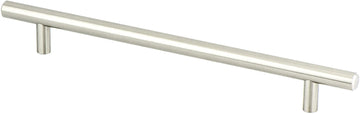 Berenson
Tempo 192mm CC Brushed Nickel Bar Pull 0806-2BPN-P
Berenson
Tempo 192mm CC Brushed Nickel Bar Pull 0806-2BPN-P
$11.53
$14.41 -
 Berenson
Bravo 56mm CC Brushed Nickel Edge Pull 1057-4BPN-P
Berenson
Bravo 56mm CC Brushed Nickel Edge Pull 1057-4BPN-P
$9.83
$12.28 -
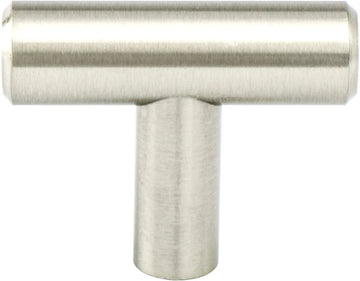 Berenson
Transitional Advantage Two Brushed Nickel T-Bar Knob 9435-2BPN-P
Berenson
Transitional Advantage Two Brushed Nickel T-Bar Knob 9435-2BPN-P
$2.80
$3.50 -
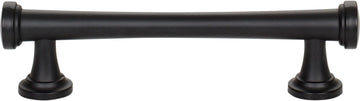 Atlas Homewares
Browning Pull 3 3/4'' ccMatte Black
Atlas Homewares
Browning Pull 3 3/4'' ccMatte Black
$14.50
$16.11 -
 Berenson
Folklore 3in. CC Brushed Nickel Cup Pull 8340-1BPN-P
Berenson
Folklore 3in. CC Brushed Nickel Cup Pull 8340-1BPN-P
$12.92
$16.15


Why finish selection is harder in a whole-home remodel
A single-room project lets you optimize in isolation. A whole-home remodel does not. The finish on your kitchen cabinet pulls will be visible from the living room. Your bathroom vanity hardware needs to echo — not clash with — the kitchen across the hall. And once tile is set and paint is dry, swapping 80 cabinet pulls because the finish reads differently under recessed lighting is a real cost.
The fix is a finish strategy, not a finish preference.
What you'll need
- A complete fixture inventory: faucets, light fixtures, appliance handles, and door hardware for every room
- Paint chips or confirmed cabinet colors for each space
- Finish samples from at least 2 candidate finishes (Knobs.co ships free samples)
- A simple room-by-room matrix (see Step 4)
- 15–20 minutes per room for visual mockup
Step 1: Audit your fixed finishes first
What it accomplishes: Identifies the finish constraints you cannot change, so you're building around reality, not a mood board.
Before touching any hardware catalog, walk every room and photograph every fixed metal element — plumbing fixtures, light fixtures, appliance handles, door hinges, and window hardware. These are your anchors.
Group what you find into warm tones (gold, brass, bronze, copper) and cool tones (chrome, nickel, stainless, gunmetal). If 80% of your fixed finishes are warm, a matte black cabinet hardware scheme will fight everything. If your appliances are stainless, brushed nickel or polished chrome will feel cohesive.
Common mistake: Skipping the lighting fixtures. A polished chrome faucet next to a brushed brass light sconce creates finish friction that no cabinet hardware can resolve. Note conflicts here and decide whether they get replaced — before you order a single pull.
Expected outcome: A clear warm/cool lean for the home, plus a list of any mixed-finish conflicts that need a decision.
Step 2: Choose one dominant finish for the kitchen
What it accomplishes: Sets the visual anchor for the entire home, since the kitchen is typically the highest-traffic and most-visible hardware zone.
The kitchen finish becomes your home's default. In 2026, the three finishes with the broadest design compatibility are:
- Brushed nickel — works across traditional, transitional, and contemporary cabinets; reads neutral under most lighting; pairs with both warm and cool tones
- Matte black — high contrast on white or light cabinetry; reads as a contemporary or farmhouse statement; requires consistent application to avoid feeling patchy
- Warm brass / unlacquered brass — pairs with white, navy, forest green, and natural wood cabinets; ages to a richer patina over time
Pick one. Apply it to every cabinet door and drawer in the kitchen — upper cabinets, base cabinets, and island. Do not mix finishes on the same cabinet run unless there is a clear architectural reason (an island in a contrasting color is a common exception).
For reference: the Holloway pull in brushed nickel is a clean bar pull that reads well in both transitional and contemporary kitchens, while the Alaire pull in matte black delivers a sharper, more minimal look on flat-front doors.
Common mistake: Choosing your finish from a phone screen. Order physical samples. Brushed nickel photographed indoors under warm lighting can appear almost gold. Matte black in a low-light kitchen can read as a dark gray. Your eyes on the actual sample under your kitchen's lighting are the only reliable test.
Expected outcome: One confirmed kitchen finish, verified against your cabinet color and lighting conditions.
Step 3: Map secondary rooms to the dominant finish
What it accomplishes: Creates a coherent home-wide finish story without forcing every room to be identical.
The goal is not uniformity — it is intentional variation. Here is a practical framework:
- Kitchen: Dominant finish (100% consistent)
- Primary bathroom: Match the dominant finish OR choose one step away (e.g., if kitchen is brushed nickel, primary bath can be polished nickel for a slightly more refined look)
- Secondary bathrooms and powder rooms: Permitted accent finish — one contrasting finish is acceptable here because visual bleed between rooms is minimal
- Laundry room, mudroom, pantry: Match the kitchen dominant finish; these are utilitarian spaces and consistency costs nothing extra
- Bedroom furniture hardware: Decorative hardware here is largely independent; no hard rule applies, but avoiding a third finish keeps things grounded
If you have open-plan living where kitchen and dining or living areas flow together, extend the dominant finish through any built-ins, bar cabinets, or entertainment units in those connected spaces.
Common mistake: Treating every bathroom as an independent design decision. A powder room off the front hallway is highly visible to guests and should reinforce your dominant finish, not introduce a third finish family.
Expected outcome: A room-by-room finish assignment with no more than 2 finishes active in any sight line.
Step 4: Build a room-by-room finish matrix
What it accomplishes: Turns your decisions into an ordering checklist and prevents mid-project drift.
Create a simple table — one row per room, four columns: room name, cabinet color, dominant finish assigned, accent finish (if any). Fill it in before placing a single order.
| Room | Cabinet color | Hardware finish | Notes |
|---|---|---|---|
| Kitchen | White shaker | Brushed nickel | Match faucet |
| Primary bath | White | Brushed nickel | Match kitchen |
| Powder room | Navy | Matte black | Accent finish |
| Secondary bath | Gray | Brushed nickel | Match kitchen |
| Laundry | White | Brushed nickel | Utilitarian match |
This matrix also catches mismatches before they become mistakes. If you notice three different finishes assigned across five rooms, that is a signal to reconsider — not to rationalize all three.
Common mistake: Skipping the matrix and ordering room by room. By the time you reach the third bathroom in 2026, the original finish you ordered may be on backorder, or you may have drifted toward a slightly different tone. A matrix keeps every order anchored to the same decision.
Expected outcome: A complete, written finish plan covering every hardware-bearing room in the home.
Step 5: Order samples before committing to quantity
What it accomplishes: Eliminates the single most common source of whole-home hardware regret — a finish that looked right in the catalog and wrong on the cabinets.
Knobs.co ships free samples. Use them. Order at least one knob and one pull in your dominant finish and photograph them against your actual cabinet doors under your installed lighting. Do this in the morning, at midday, and in the evening — finish appearance shifts significantly with light temperature.
For a typical whole-home remodel, you are looking at 60–120 pieces of hardware across all spaces. At that quantity, a finish mismatch is not a minor annoyance. It is a four-figure re-order. Three samples and two days of visual testing is the cheapest insurance available.
Also verify hole spacing at this stage. Most cabinet pulls use 3" (76mm) or 96mm center-to-center spacing, but custom cabinets sometimes deviate. Ordering 80 pulls with the wrong hole spacing is a 2026 problem you do not want.
Common mistake: Ordering samples of only the dominant finish and skipping the accent finish. If your powder room gets a matte black accent, that sample needs the same real-world test.
Expected outcome: Confirmed finish and SKU for every room before any bulk order is placed.
Step 6: Apply the finish to appliance and door hardware
What it accomplishes: Closes the last gap — the hardware people miss and then notice every single day.
Appliance pulls, door knobs, deadbolts, and cabinet hinges all carry finish weight. In 2026, most major appliance brands offer panel-ready or custom-handle configurations, making it possible to match your dominant cabinet hardware finish to your refrigerator and dishwasher door.
Door hardware — entry knobs, passage sets, and deadbolts — does not need to match cabinet hardware exactly, but it should fall within the same finish family. A brushed nickel dominant scheme tolerates satin nickel door hardware without conflict. It does not tolerate polished brass door hardware without looking like two different renovation projects collided.
Hinges are the most overlooked detail. Exposed cup hinges on inset cabinets carry significant visual weight. Match them to your dominant finish.
Common mistake: Specifying door hardware before cabinet hardware and then trying to work backward. Cabinet hardware touches every daily interaction in the kitchen and bathrooms. Door hardware is background. Set cabinet hardware first, then match door hardware to it.
Expected outcome: A complete finish specification that covers cabinets, appliances, and door hardware as a unified system.
Troubleshooting
The finish looks different on every cabinet door. Lighting direction is the cause in 90% of cases. Brushed finishes reflect directionally — they look different under overhead recessed lights versus under-cabinet lighting. Install your primary lighting before finalizing the finish, not after.
Two rooms share a sight line but have different finishes. Reassign the secondary room to the dominant finish. The visual interruption is not a design feature — it reads as an error.
The finish is discontinued between first and second orders. This is the real risk with custom or artisan finishes. Order all your hardware in one batch, or verify with the supplier that the finish carries a minimum 18-month production guarantee before committing.
The faucet and cabinet finish are close but not identical. "Matching" finishes from different manufacturers rarely match exactly under the same light. Slight variation within the same finish family (e.g., two different brushed nickels) is acceptable. Mixing brushed nickel with polished nickel is not — the contrast reads as a mistake, not an intention.
The hole spacing on existing cabinets does not match any standard pull. Fill the old holes, re-drill, and order new pulls. Trying to find a pull that spans a non-standard existing hole pattern will force you into a limited selection and you will compromise on finish to make it work.
Cabinet color changed after hardware was ordered. Return unopened hardware immediately. Most suppliers, including Knobs.co, have a structured return window. A paint color shift of even one shade can make a warm brass hardware choice look muddy against what reads as a cooler white.
Tools and resources
- Free hardware samples from Knobs.co — test finish and scale before ordering in quantity
- Finish matrix template — a simple spreadsheet covering room, cabinet color, assigned finish, and hole spacing
- How to mix brushed nickel hardware across rooms — a practical walkthrough for the most popular whole-home finish in 2026
- Lighting samples from your contractor — test finish under installed fixtures, not showroom lighting
What to do next
Once your finish matrix is complete and samples are confirmed, the next decision is hardware style — bar pulls versus cup pulls versus knobs, and how profile depth interacts with door overlay. Read how to choose cabinet hardware for shaker cabinets to work through profile and scale decisions for the most common cabinet door style in 2026 renovations.
FAQ
What is the most popular cabinet hardware finish for whole-home remodels in 2026? Brushed nickel is the most widely used finish in whole-home remodels in 2026 because it reads as neutral across both warm and cool design palettes and pairs cleanly with stainless appliances, white and gray cabinetry, and a wide range of faucet finishes.
Can I mix two different hardware finishes in one home? Yes, but the rule is one dominant finish and one accent finish maximum. The accent finish should appear in secondary spaces — a powder room, a laundry room — not in rooms that share a direct sight line with the dominant finish rooms.
How do I match cabinet hardware finish to faucets? Identify whether your faucet is warm-toned or cool-toned, then choose a cabinet hardware finish in the same family. Exact matching between brands is rarely possible; staying within the same finish family (e.g., brushed nickel cabinet hardware with a brushed nickel faucet from a different brand) reads as intentional.
Is matte black cabinet hardware hard to keep clean? Matte black hides water spots better than polished finishes but shows fingerprints on flat surfaces. On kitchen cabinets with heavy daily use, expect to wipe down matte black hardware every few days to maintain the intended look.
Should bathroom cabinet hardware match kitchen cabinet hardware in a whole-home remodel? The primary bathroom should match or be one step within the same finish family as the kitchen. Secondary bathrooms can carry an accent finish. Forcing every bathroom to match exactly is not necessary, but every bathroom visible from the kitchen should match.
How many hardware finishes are too many in one home? Three distinct finish families in a single home is almost always too many. Two — one dominant and one accent — is the functional ceiling for a cohesive result. Four or more finishes in a single renovation is a signal that no finish strategy was applied.
Does hardware finish affect resale value? Hardware finish affects buyer perception more than appraised value. Dated finishes — polished brass from the 1990s, for example — signal that a kitchen has not been updated, which affects perceived value even when the cabinets are sound. Neutral finishes like brushed nickel and matte black are the safest choices for resale-oriented renovations in 2026.
What finish works best on dark cabinet colors like navy or forest green? Matte black, unlacquered brass, and polished nickel all perform well on dark cabinets. Matte black creates a tonal blend; brass and polished nickel create high contrast. Brushed nickel on dark cabinets tends to read as flat rather than intentional.
One last thing
The most common whole-home hardware mistake is not choosing the wrong finish — it is ordering the right finish in the wrong scale. A 3-inch bar pull that looks proportionate on a 2x3 foot cabinet door disappears on a 36-inch wide pantry door. Before you finalize any order in 2026, hold your sample pull against the actual door, stand back 6 feet, and confirm the scale reads correctly. Scale errors cost as much to fix as finish errors, and they are even easier to miss until everything is installed.
Related guides
- How to mix brushed nickel hardware across rooms
- How to choose cabinet hardware for shaker cabinets
- How to pick cabinet hardware for dark cabinets
Shop Brushed Nickel Cabinet Hardware
-
 Bradbury Pull 6 5/16'' cc
$16.57
Bradbury Pull 6 5/16'' cc
$16.57
-
 Crystal Legacy Square Knob 1 5/16''
$41.36
Crystal Legacy Square Knob 1 5/16''
$41.36
-
 Dot Knob 1 1/4''
$10.23
Dot Knob 1 1/4''
$10.23
-
 Dot Knob 2''
$14.63
Dot Knob 2''
$14.63
-
 Malin Pull 3 3/4'' cc
$13.64
Malin Pull 3 3/4'' cc
$13.64
-
 Malin Pull 6 5/16'' cc
$19.71
Malin Pull 6 5/16'' cc
$19.71
-
 Malin Pull 7 9/16'' cc
$23.63
Malin Pull 7 9/16'' cc
$23.63
-
 Sweetbriar Lane Pull 5 1/16'' cc
$18.27
Sweetbriar Lane Pull 5 1/16'' cc
$18.27


Browse all 1076 in Brushed Nickel Cabinet Hardware → Cabinet knobs Cabinet pulls & handles