

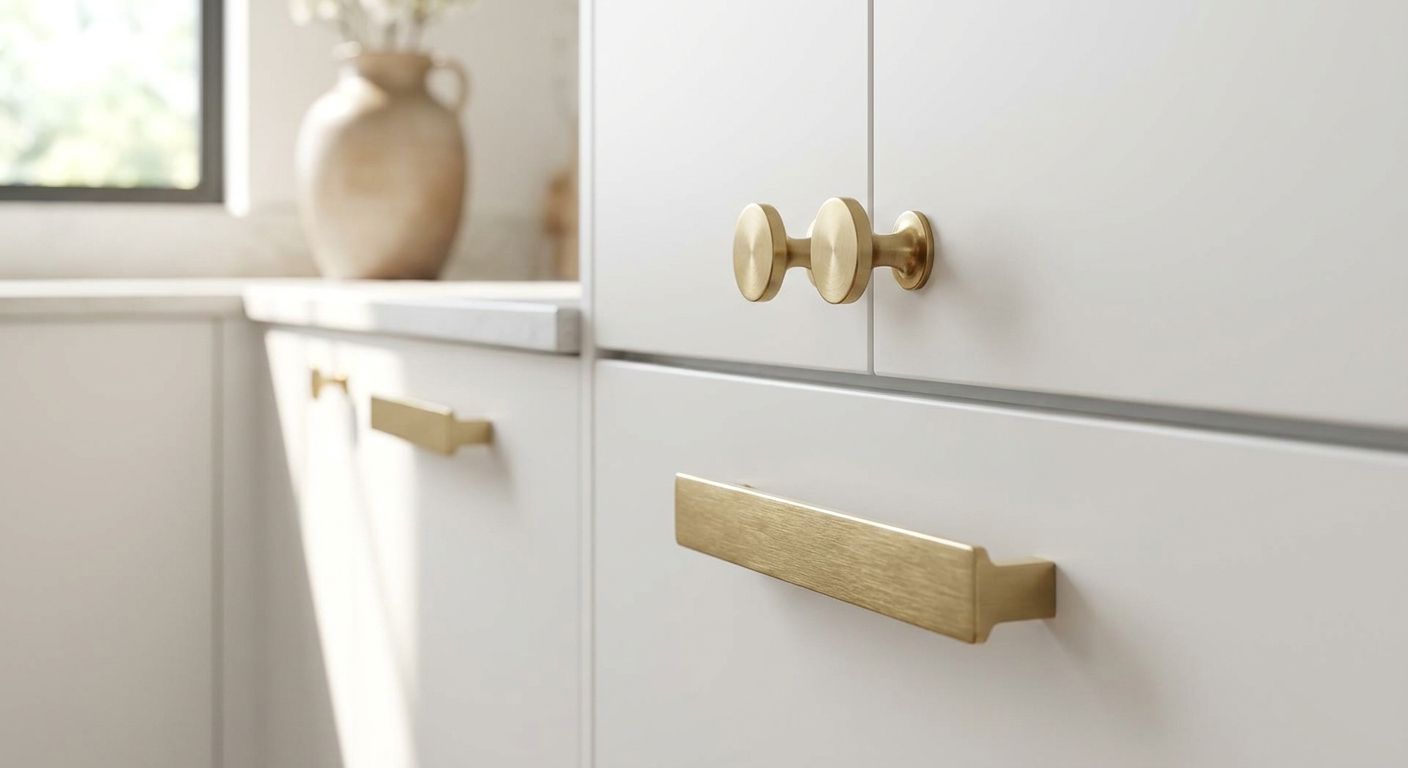
Thermofoil cabinet doors are vinyl-laminated MDF, not solid wood, and that single fact should decide which knobs, pulls, and screws end up in your drawer fronts. Get the hardware wrong and you crack the laminate at the drill point within the first year.
- Cabinet hardware for thermofoil cabinets needs lightweight pulls and pilot holes matched to a laminated MDF core, not solid wood.
- The Portobello Road Knob (Plain) is the safe buy for round profiles on thermofoil doors in 2026.
- The Berenson Advantage wire pull spreads load across two screw points instead of one — better for thin panels.
- Skip bar pulls over 24 inches on thermofoil unless the door is backed with a solid stile; the core cracks under uneven torque.
Why this matters
Thermofoil is a vinyl film heat-fused over an MDF substrate, and that substrate is softer and more brittle at the drill point than solid wood or even plywood. Cabinet hardware for thermofoil cabinets isn't a style question first — it's a mechanical one. A knob or pull that looks identical to a wood-cabinet version can pull loose, crack the vinyl skin, or telegraph stress lines around the mounting hole within months.
Most IKEA kitchens, a large share of RTA cabinet lines, and most builder-grade white kitchens installed in new construction over the last decade use thermofoil doors. If you're updating one of these in 2026, the hardware choice matters more than it would on a solid maple door.
Who this is for
This guide is for homeowners swapping hardware on an existing thermofoil kitchen, contractors doing a fast cosmetic update on rental or resale property, and anyone who bought a flat-front IKEA or RTA kitchen and now wants pulls that don't chip the laminate on install day. If your doors are solid wood or painted MDF with a paint film instead of vinyl, different rules apply — this one is specific to true thermofoil.
What to look for in cabinet hardware for thermofoil cabinets
Screw length and pilot hole size
Thermofoil MDF cores are typically around 5/8 inch (0.625") thick on cabinet doors, and a screw that's even 1/8 inch too long will punch through the back face and crack the vinyl on the front. Measure the door thickness before ordering, and drill a pilot hole sized to the screw shank, never the head — an oversized hole is the single most common cause of a wobbly knob on thermofoil.
Pull weight and mounting stress
A heavy cast-metal pull concentrates torque on two small mounting points, and MDF doesn't flex the way solid wood does — it fractures. Lighter pulls in aluminum or hollow-cast zinc put less strain on the core, and that matters more on thermofoil than on any other door material.
Edge clearance
Thermofoil chips most often within about 3/4 inch of a door's edge, where the vinyl wrap folds and glues down. Keep hardware centered well clear of that zone, and never let a backplate's corner sit closer to an edge than the door style allows.
Heat and humidity near appliances
Vinyl film can lift at the seams when it sits close to ovens, dishwashers, or steam sources for years. Hardware itself doesn't cause this, but it's worth knowing before you invest in premium finishes on doors flanking a range — the door, not the pull, will be the first thing to fail there.
Finish that matches a smooth or textured laminate face
Thermofoil comes in both smooth gloss and wood-grain textured finishes, and the two read very differently next to satin or brushed metal hardware. A textured wood-grain laminate cabinet generally pairs better with warmer, brushed tones than with high-polish chrome.
Existing hole spacing
Most factory thermofoil doors come pre-drilled at standard centers. If you're replacing hardware rather than adding it fresh, measure the existing screw centers before you shop — a backplate can hide a mismatch, but only up to a point.


A template like either of the ones above matters more on thermofoil than on solid wood, because a hand-marked hole that wanders even 1/16 inch off-center on a laminated panel tends to chip rather than just look slightly off.
Top picks for thermofoil cabinet hardware
The safe pick: Portobello Road Knob (Plain). A simple round knob, single screw mount, small footprint that concentrates minimal load on one point of the door. Its low profile means less leverage on the mounting screw than a long pull would generate. Buy for thermofoil doors where you want a clean, low-risk swap.
The wildcard: Berenson Advantage Wire Pull, 96mm center-to-center, satin aluminum. Wire pulls spread mounting stress across two screw points 96mm apart instead of loading a single center post, which suits a brittle MDF core better than a heavy cast pull of the same length. Satin aluminum keeps the piece light in hand as well as light in weight. Buy if you're outfitting drawer fronts across a full thermofoil kitchen.
The minimalist option: Top Knobs Lynwood Crestview Tab Pull, 6 inch. A slim tab profile that reads clean against smooth gloss thermofoil without demanding a large mounting footprint. Consider if your doors are the smooth, non-textured finish rather than wood-grain.
The one to think twice about: any 24-inch appliance-style bar pull mounted on a standard 5/8-inch thermofoil drawer front. These are built for solid panel goods and heavier substrates. On a thin thermofoil drawer face, the extended length multiplies torque at both mounting screws every time the drawer opens. Skip unless the manufacturer confirms the panel is backed or reinforced.
“If a pull needs more than two screws to feel secure on a thermofoil door, the door core is already telling you something.”
What to avoid
- Oversized bar and appliance pulls on unbacked thermofoil drawer fronts. They look proportionate in a photo and crack the laminate around the second screw within a season of daily use.
- Square-cornered backplates set too close to a door edge. Thermofoil's most fragile zone is that outer 3/4 inch where the vinyl wraps and glues — a sharp backplate corner there is a chip waiting to happen.
- Hand-marking and hand-drilling without a template. It saves ten minutes and costs you a replacement door when the bit wanders and blows out the vinyl face.
Verdict comparison
| Hardware | Mount points | Weight class | Best for | Verdict |
|---|---|---|---|---|
| Portobello Road Knob (Plain) | 1 screw | Light | General thermofoil knobs | Buy |
| Berenson Advantage Wire Pull, 96mm | 2 screws | Light aluminum | Drawer fronts, full kitchens | Buy |
| Top Knobs Lynwood Crestview Tab Pull, 6" | 2 screws | Light | Smooth gloss thermofoil | Consider |
| 24" appliance bar pull | 2 screws, long span | Heavy | Backed or solid panels only | Skip |
FAQ
What is the best cabinet hardware for thermofoil cabinets?
Lightweight knobs and pulls with screw mounts sized to the door's roughly 5/8-inch MDF core work best on thermofoil cabinets. Heavy cast pulls or oversized bar pulls put too much torque on a brittle laminated core over time.
Can you drill into thermofoil cabinets without cracking them?
Yes, with a drilling template and a pilot hole sized to the screw shank rather than the head. Hand-marking and freehand drilling are the most common causes of chipped laminate around new hardware.
What screw length works for thermofoil cabinet doors?
Measure the door's actual thickness first, since most thermofoil doors run about 5/8 inch, and choose a screw that stops just short of punching through the back face. A screw that's even 1/8 inch too long can crack the front vinyl skin.
Are heavy cabinet pulls bad for thermofoil doors?
Heavy pulls concentrate stress at the mounting screws, and thermofoil's MDF core doesn't flex like solid wood — it cracks instead. Lighter aluminum or hollow-cast pulls distribute less load and hold up better long term.
Is thermofoil cabinet hardware different from hardware for wood cabinets?
The hardware itself can be identical, but the drilling approach and weight tolerance need to change. Thermofoil's laminated core is more prone to chipping and cracking at the screw point than solid or engineered wood.
Can you use backplates on thermofoil cabinets?
Yes, backplates work well on thermofoil and are especially useful for covering old screw holes when swapping hardware styles. Keep backplate corners away from the outer 3/4 inch of the door edge where the laminate is most fragile.
Do IKEA and RTA cabinets use thermofoil doors?
Most flat-front IKEA kitchens and a large share of RTA cabinet lines use thermofoil doors over an MDF core. The same hardware-weight and drilling rules that apply to any thermofoil door apply to these kitchens.
How do you avoid chipping thermofoil when installing knobs?
Use a drilling template, keep the pilot hole matched to the screw shank, and stay clear of the outer edge of the door. Rushing the hole placement by hand is the most common way thermofoil chips during a hardware swap.
One last thing
Most thermofoil hardware failures people blame on a "cheap knob" actually trace back to the screw, not the knob — a screw a fraction too long, driven a fraction too tight, on a core that has no give left in it. Buy the right length before you buy the finish, and the finish choice stops mattering nearly as much as it felt like it did in the store.