

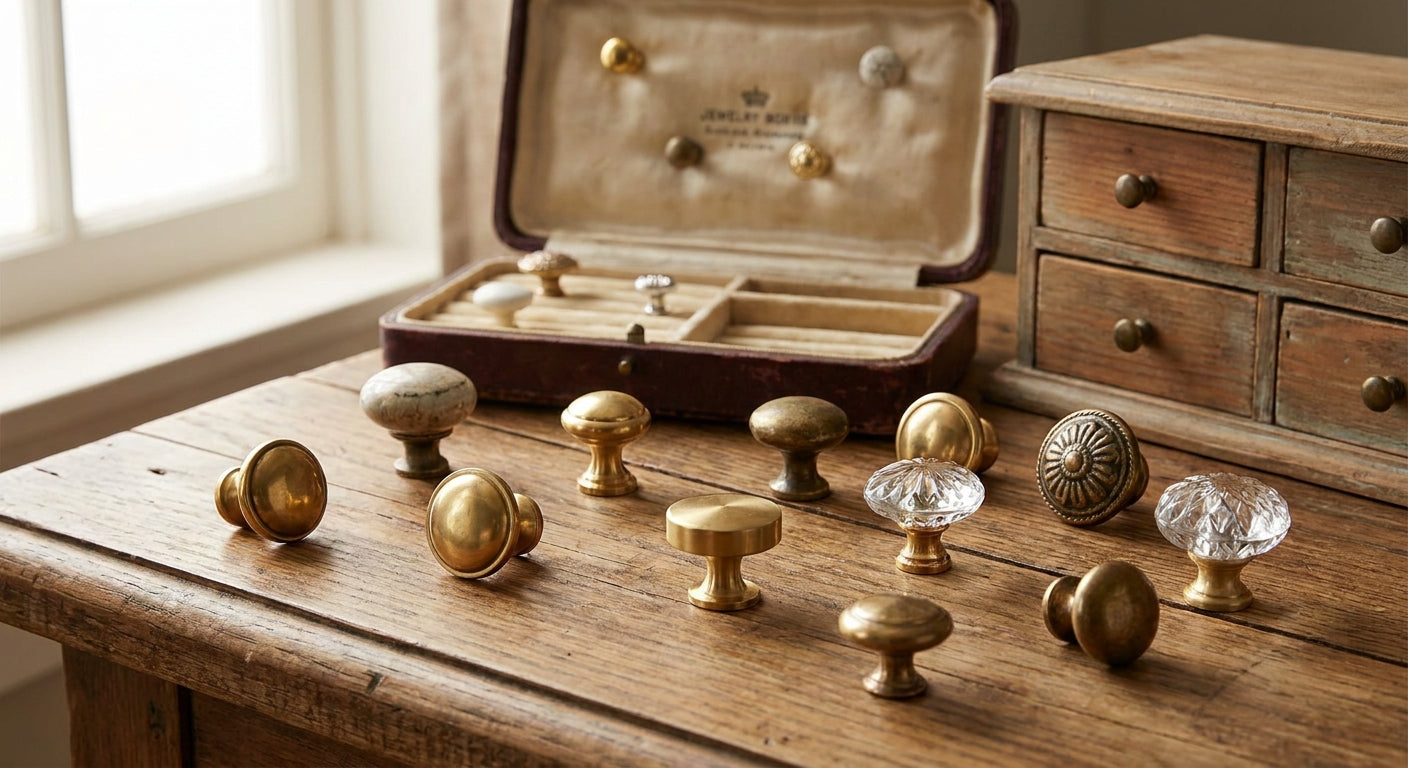
Cabinet knobs for jewelry boxes and small furniture answer a different question than kitchen hardware does. A drawer front on a jewelry chest is often 3/8 inch thick, the whole piece might be 8 inches wide, and a knob sized for a 36-inch kitchen island will look like a doorknob bolted to a shoebox.
- Cabinet knobs for jewelry boxes should run 3/4 to 1-1/8 inch in diameter — anything bigger overwhelms a small lid.
- Top Knobs TK320HB Chareau Reeded Knob at 1-1/8 inch is the safest small-furniture pick in 2026 — Buy.
- Britannia's Victoria Knob ships with its own backplate, solving thin-wood screw-through on antique jewelry boxes — Buy.
- Skip any knob over 1-1/2 inch diameter on boxes under 8 inches wide — proportion breaks first.
- Screw length matters more than finish: measure stock thickness before you order, not after.
Shop the picks from this guide
In stock at Knobs.co · Free shipping on hardware orders $99+ · 110% price match
-
 Alno
Alno A1032 1'' Brass Cabinet KnobPolished Brass
Alno
Alno A1032 1'' Brass Cabinet KnobPolished Brass
$13.46
$14.95 -
 Alno
Alno A726 Charlie's 3 1/2'' CC Cabinet PullAntique English / 3''
Alno
Alno A726 Charlie's 3 1/2'' CC Cabinet PullAntique English / 3''
$24.26
$26.95 -
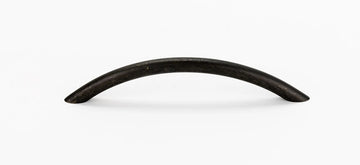 Alno
Alno A1298 128mm 5'' CC Brass Cabinet PullBarcelona
Alno
Alno A1298 128mm 5'' CC Brass Cabinet PullBarcelona
$19.76
$21.95 -
 Alno
Alno A1033 1 1/8'' Brass Cabinet KnobPolished Brass
Alno
Alno A1033 1 1/8'' Brass Cabinet KnobPolished Brass
$18.86
$20.95 -
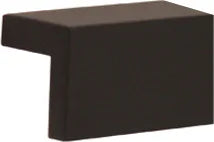 Alno
Alno A960 Tab 1 1/2'' CC Brass Cabinet PullBronze / 3/4''
Alno
Alno A960 Tab 1 1/2'' CC Brass Cabinet PullBronze / 3/4''
$16.16
$17.95 -
 Alno
Alno A1145 1 1/4'' Brass Cabinet KnobBarcelona
Alno
Alno A1145 1 1/4'' Brass Cabinet KnobBarcelona
$17.96
$19.95


Why this matters
Most cabinet hardware catalogs are built around 3/4-inch to 1-1/4-inch plywood cabinet doors. Jewelry boxes, small chests, and tabletop furniture run thinner stock, sometimes veneered over MDF, sometimes solid wood no thicker than a phone case. Order the wrong knob and you either strip the screw through the back panel or end up with a knob so oversized it makes a handmade box look like a discount kitchen sample.
The fix isn't complicated once you know how to choose the right cabinet knob size, but it does mean ignoring most of the "best cabinet knobs" advice written for full kitchens.
Who this is for
This guide is for furniture makers, hobby woodworkers finishing jewelry boxes and small chests, and anyone restoring an antique piece where the original hardware is gone. It's also for parents outfitting a kids' jewelry box or small dresser who want hardware that survives daily grabbing without looking like an afterthought. If you're shopping for a 42-drawer kitchen remodel, a different guide serves you better — this one is about pieces measured in inches, not linear feet.
What to look for in cabinet knobs for jewelry boxes
Diameter relative to the piece
A knob should read as roughly 8-10% of the drawer or lid width it sits on. On a jewelry box lid that's 7 inches wide, that puts you in the 3/4-inch to 1-inch range, not the 1-1/2-inch to 1-3/4-inch knobs standard in kitchens. Go bigger and the knob becomes the focal point instead of the box.
Screw length for thin stock
Standard cabinet knob screws run 1 inch, sized for doors and drawer fronts 3/4 inch thick. A jewelry box lid or a small drawer front might only be 3/8 inch to 1/2 inch thick, which means that stock screw punches straight through the inside surface. Measure your material before ordering and be ready to trim or swap the screw — this single step causes more return requests than any finish complaint.
Backplates for splitting-prone wood
Thin, aged, or veneered wood splits around a single screw hole faster than solid cabinet-grade plywood. A knob that mounts on its own backplate spreads the load across a wider footprint and reduces the risk of cracking an antique lid you can't replace. This matters more on restoration work than on new builds using fresh hardwood.
Finish weight and proportion
Heavy, deeply textured finishes that read as substantial on a 42-inch kitchen island can look clunky on a 6-inch box. Simpler, smoother knob profiles in polished nickel, polished brass, or pewter tend to scale down better than ornate reeded or hammered designs, though a single statement knob can work as the one decorative element on an otherwise plain box.
Material and heirloom feel
Jewelry boxes are often gifts or keepsakes meant to last decades, which is a different job than a rental kitchen update. Solid metal knobs in nickel, brass, or pewter hold up to handling and don't corrode the way cheap pot-metal alternatives do after a few years of oils and perfume exposure.
Top picks for jewelry boxes and small furniture
The safe pick: Top Knobs TK320HB Chareau Reeded Knob, 1-1/8 inch. The reeded texture reads as detail without dominating a small drawer front, and 1-1/8 inch is close to the sweet spot for boxes 7-10 inches wide. Buy — Top Knobs TK320HB Chareau Reeded Knob is the default choice when you're not sure what else to pick.
The heirloom pick: Britannia Victoria Knob, 1-1/4 inch, with M25 pewter antique backplate. The built-in backplate solves the thin-wood cracking problem before it starts, and the pewter antique finish suits restoration work on older pieces. Buy — Britannia Victoria Knob with backplate for any box where the wood is old, thin, or already showing hairline cracks around the original hardware holes.
The wildcard: Edgar Berebi 7705PG Glendale Knob, polished gold finish. This one is decorative first, functional second — the kind of knob that turns a plain wooden box into a piece that looks intentional rather than assembled. Consider it for a single statement box or a gift piece; it's not the pick for a set of six matching drawers.
The versatile pick: Schaub and Company 711-PN Traditional Round Knob, polished nickel, 1-1/4 inch. Slightly smaller than Schaub's 1-1/2-inch line, this size works on most small chests without needing a backplate. Named without a link here since its 704-series sibling covers the same territory — Consider it as a nickel alternative if you've already committed to a polished-nickel scheme elsewhere in the room.
The oversized pick: Schaub and Company 704-03 Traditional Round Knob, polished brass, 1-1/2 inch. This is a full kitchen-cabinet knob, and on anything smaller than a 10-inch-wide chest of drawers it will look out of scale. Skip it for jewelry boxes; save it for a larger jewelry armoire or a small dresser where the extra half-inch doesn't overwhelm the piece.
What to avoid
- Anything over 1-1/2 inch on boxes under 8 inches wide. The knob becomes the whole story instead of a detail, and it usually looks like a mismatch pulled from a kitchen remodel bin.
- Stock 1-inch screws on stock under 1/2 inch thick. You'll either strip through the interior surface or need to source a shorter screw separately — check this before you check out, not after the box arrives.
- Cheap pot-metal knobs with no plating spec. Jewelry boxes get handled constantly and sit near perfume and lotion; a knob that tarnishes or pits within a year isn't worth the few dollars saved.
If you're building these boxes to sell at craft fairs, the hardware line item feeds straight into your price tag — get that math wrong and you eat the margin instead of banking it, which is exactly why pricing handmade items at craft shows needs to account for every screw and knob before you set a table price, not after your first slow weekend.
Verdict comparison
| Pick | Diameter | Finish | Best For | Verdict |
|---|---|---|---|---|
| Top Knobs Chareau Reeded | 1-1/8 in | Honey bronze | General small furniture | Buy |
| Britannia Victoria + backplate | 1-1/4 in | Pewter antique | Antique or thin wood | Buy |
| Edgar Berebi Glendale | Not listed | Polished gold | One statement box | Consider |
| Schaub 711 Traditional | 1-1/4 in | Polished nickel | Matching nickel schemes | Consider |
| Schaub 704 Traditional | 1-1/2 in | Polished brass | Larger armoires only | Skip (for boxes) |
FAQ
What size cabinet knob works best for a jewelry box?
Most jewelry boxes look proportional with a knob between 3/4 inch and 1-1/8 inch in diameter. Anything above 1-1/2 inch tends to overwhelm a box narrower than 8 inches.
Do jewelry box knobs need a backplate?
A backplate isn't required but it helps on thin or aged wood because it spreads the mounting load and reduces splitting around the screw hole. Britannia's Victoria Knob ships with one built in, which makes it a strong pick for restoration work.
Can I use regular kitchen cabinet knobs on small furniture?
You can, but most kitchen knobs run 1-1/4 inch to 1-3/4 inch, which reads oversized on a piece narrower than 10 inches. Reserve full-size kitchen knobs for larger jewelry armoires or dressers, not small tabletop boxes.
What screw length do I need for a thin jewelry box lid?
Standard cabinet knob screws run 1 inch, sized for material 3/4 inch thick, which is too long for a lid or drawer front under 1/2 inch. Measure your stock first and trim the screw or source a shorter one before final assembly.
Is polished brass or polished nickel better for a jewelry box?
Both hold up well over decades of handling; the choice comes down to whether the piece sits in a warm-toned or cool-toned room. Polished brass reads warmer and traditional, polished nickel reads cooler and more contemporary.
How many knobs does a typical jewelry box need?
Most jewelry boxes need one knob per drawer or lid, so a 3-drawer chest needs three matching knobs. Order one extra when possible in case a screw hole needs redrilling.
Are decorative knobs like the Edgar Berebi Glendale practical for daily use?
Yes, decorative knobs hold up to daily handling as long as they're solid metal rather than plated pot metal. They work best as a single accent piece rather than across a full set of matching drawers.
One last thing
The detail most people miss is that a knob's proportion problem shows up before the finish problem does — a 1-1/2-inch brass knob on a 7-inch box looks wrong in a photo even in perfect lighting, while a slightly mismatched finish barely registers. Get the diameter right first in 2026, then worry about matching metals.


