

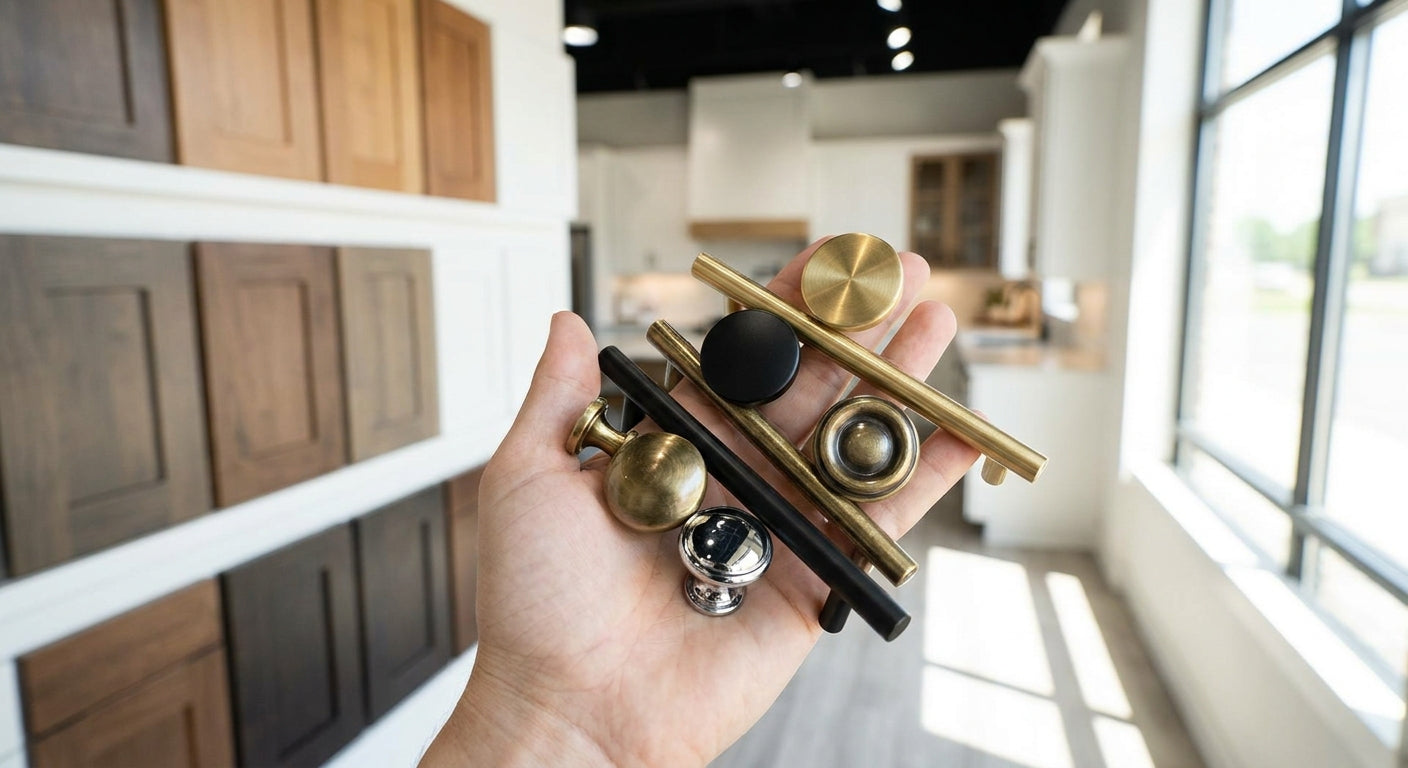
Picking a cabinet hardware finish is not about trend-chasing — it's about matching metal tone to cabinet color, planning for how much polishing you'll actually do, and locking in a decision before you drill 40 holes. This guide walks through the exact process, step by step, so you order once and get it right.
- Match cabinet color and wood tone to finish first; faucet and lighting fixtures come second in the decision.
- Warm tones — honey bronze, champagne bronze, unlacquered brass — dominate 2026 kitchens; matte black still holds strong.
- Order free samples from Knobs.co before buying; finish color shifts noticeably under kitchen lighting versus a screen.
- Mixing two finishes works at a 70/30 split with one metal clearly dominant, not a 50/50 free-for-all.
- Unlacquered brass patinas with use — buy it for that look, don't buy a lacquered finish expecting the same aging.
Why this matters
Cabinet hardware finish is the single most-touched detail in your kitchen or bath — hands hit it 20+ times a day — and it's also the fastest way to date a remodel if you guess wrong. A cabinet color that looks warm gray on a paint chip can read cool blue-gray under LED under-cabinet lighting, which throws off a brushed nickel pull that looked perfect in the store. Getting the finish decision right the first time in 2026 saves a second order, a second shipping wait, and a second round of drilling holes you didn't need.
Hardware pricing on most branded lines is set by the manufacturer, not the retailer, which means the finish you pick matters more for the final look than the seller you buy from. What does change retailer to retailer is whether you can test the finish at home before committing to 40 or 50 pulls — that's where samples do the real work.
What you'll need
- A paint chip or cabinet door sample in your actual cabinet color
- Your faucet, cabinet pull, and light fixture finish names (check the fixture spec sheets if you're unsure)
- 2-3 hardware samples ordered ahead of time, tested in your kitchen or bath at both day and night
- A tape measure to confirm your existing pull center-to-center spacing, since a finish swap on existing holes needs matching cc measurements
- 30 minutes with the cabinets in natural light and again with the lights on at night
The steps
1. Start with your cabinet color, not your inspiration photo
A finish that reads beautifully in a Pinterest kitchen with north-facing windows can look chalky or too cool in a kitchen with warm incandescent lighting. Hold a sample against your actual cabinet door, not a photo on a screen.
White and off-white cabinets pull warm finishes like champagne bronze and honey bronze well in 2026, while pure white with cool undertones leans toward polished nickel or chrome. Dark or black cabinets read strongest in matte black or warm brass for contrast. Common mistake: picking a finish off a rendering instead of a physical cabinet door — renderings shift color temperature more than people expect.
2. Match faucet and light fixture finish second
Once cabinet color narrows your options, cross-check against the faucet and any exposed light fixtures in the same room. You don't need an exact metal match — brushed nickel hardware next to a chrome faucet reads intentional if the undertones are both cool — but a warm brass pull against a stark chrome faucet clashes.
Designers commonly build a kitchen around one dominant warm or cool temperature and let one accent finish break it. That's a deliberate mixing metal finishes strategy, not an accident, and it's worth reading through before you assume everything has to match exactly.
3. Decide how much maintenance you're willing to do
Unlacquered brass, for example, is prized precisely because it develops a living patina — fingerprints, water spots, and a warm aged look over months of use. If that sounds like more character than you want, buy a lacquered or PVD-coated brass finish instead, which resists tarnish and stays consistent.
Matte black and oil-rubbed bronze hide fingerprints and water spots the best of any finish family, which is why they show up so often in busy households. Polished chrome and polished nickel show every smudge and need wiping down more often. Common mistake: buying unlacquered brass expecting it to stay bright and shiny — that finish is designed to change.
4. Test samples under your real kitchen lighting
This is the step people skip and regret. A honey bronze knob like the Top Knobs Chareau Reeded Knob photographs warm and rich online, but you need to see it against your actual cabinet door under the exact bulbs you use at 7 a.m. and 9 p.m. Buy it once your sample confirms the tone; don't order 40 units off a product photo alone.
Knobs.co ships free samples specifically so you can run this test at home before committing to a full order — a smart move given hardware pricing is set by the manufacturer regardless of where you buy, so the only variable you control is getting the finish right the first time.
5. Set a finish budget across knobs, pulls, and hinges
Price per piece varies by finish within the same collection — plated finishes often cost less than hand-applied or hammered finishes — and hinges, cup pulls, and appliance pulls all need to match. Price out a full room's worth (knobs, pulls, hinges, and any appliance pulls) before falling for a finish you can only afford for the drawers.
Common mistake: buying knobs in the finish you love, then discovering the matching hinges or appliance pulls cost significantly more and settling for a mismatched finish there instead.
6. Decide whether to mix finishes on purpose
Mixing two finishes across a kitchen works when one stays dominant — roughly 70% of visible hardware in one finish, 30% in an accent — rather than splitting evenly. A common 2026 pairing is warm brass pulls on perimeter cabinets with matte black hardware on the island, which reads as a design choice rather than leftover mismatched stock.
Verdict: mix intentionally or don't mix at all. A near-even split between two finishes with no clear logic is the fastest way to make a kitchen look unfinished.
7. Order full quantity only after the sample passes
Once your sample clears the lighting test and the maintenance conversation, order the full quantity in one batch from the same lot or run. Finish tone can shift slightly between production runs on some collections, so buying knobs now and pulls in six months risks a visible mismatch.
Expected outcome: a hardware order that looks identical from the first knob installed to the last appliance pull, with no return trip needed for a finish that didn't match after all.


Troubleshooting
The finish looked different at home than in the photo. Screens and store lighting shift color temperature; this is exactly why free samples exist — test the physical piece against your actual cabinet before ordering the full run.
Brass tarnished faster than expected. Check whether you bought unlacquered or lacquered brass — unlacquered brass is designed to patina and needs oil or wax to slow it, while lacquered brass should stay bright and, if it's tarnishing, may be a manufacturing defect worth a return.
Pulls look crooked across a run of drawers. The finish isn't the problem — the layout is. Getting consistent placement across a bank of drawers matters as much as finish selection, and kitchen fitting alignment follows the same logic as any renovation project: mark every door from one reference line and check level as you go, not door by door by eye.
Two rooms have hardware that doesn't quite match. If bathroom and kitchen hardware were bought years apart, tone can drift between production runs even within the same collection name; treat rooms as separate finish decisions rather than assuming an old receipt guarantees a match today.
Budget doesn't stretch to the finish you want everywhere. Use the premium finish on the island or a focal wall of cabinets and a more budget-friendly finish elsewhere in the same tone family — same look, lower total spend.
Tools and resources
- A cabinet door sample or paint chip, held against hardware samples in daylight and lamp light
- Free hardware samples ordered ahead of a full purchase, since color shifts under lighting more than people expect
- A guide on choosing the right knob size once finish is locked, since size and finish get decided in the wrong order more often than not
- A tape measure for confirming existing hole spacing before ordering replacement hardware in a new finish
- A 110% price match check once you've settled on a specific SKU, since the same finish and collection can vary in price across retailers
What to do next
Once your finish is locked, the next decision is quantity and placement — how many pulls per drawer bank, what size for an island run, and whether appliance pulls need to match. A step-by-step guide on ordering hardware samples before a remodel covers exactly how many samples to request and how long to test them before committing to a full 2026 order.
FAQ
What's the best cabinet hardware finish for 2026?
Warm finishes — honey bronze, champagne bronze, and unlacquered brass — lead 2026 kitchens, with matte black still a strong second choice. The right pick depends on your cabinet color and existing faucet finish more than any single trend.
Is matte black better than oil-rubbed bronze for cabinet hardware?
Matte black reads more modern and oil-rubbed bronze reads more traditional; both hide fingerprints and water spots better than polished finishes. Pick based on your kitchen's overall style, not maintenance, since both perform similarly there.
How much does cabinet hardware cost per finish?
Price is set by the manufacturer and varies by finish within the same collection, with plated finishes typically costing less than hand-applied or hammered options. Compare a full room's worth of knobs, pulls, and hinges before deciding a finish is affordable.
Should cabinet hardware match faucet finish exactly?
No — hardware and faucet finish need to share a warm or cool undertone, not match exactly. Brushed nickel hardware next to a chrome faucet works because both read cool; warm brass next to chrome usually clashes.
Can you mix two cabinet hardware finishes in one kitchen?
Yes, if one finish stays dominant at roughly 70% of visible hardware with the second finish as a clear accent, such as an island. An even 50/50 split with no logic tends to look unfinished rather than intentional.
Does unlacquered brass hardware tarnish?
Yes, by design — unlacquered brass develops a patina from handling and moisture over months of use. If you want a finish that stays bright and consistent, choose a lacquered or PVD-coated brass instead.
How do I know what finish my cabinet hardware is now?
Check the original product listing or receipt for the collection and finish name, since visually similar finishes like satin nickel and brushed nickel are often confused. If no record exists, a hardware sample held against the piece in daylight is the fastest way to confirm a match.
Should I order cabinet hardware samples before buying?
Yes — finish color shifts under real kitchen lighting compared to product photos, and samples catch that before you commit to a full order. Test samples at both day and night before ordering 40 or 50 pieces in one finish.
One last thing
The fastest way to waste money on cabinet hardware isn't picking the wrong style — it's skipping the sample step and ordering 48 pulls in a finish that looked different under your kitchen's actual light. Order 2-3 samples, live with them for a few days, and you'll save yourself a second shipment and a second round of drilling.