

How to Install Appliance Pulls on a Dishwasher (2026)
Install appliance pulls on a dishwasher in 20 minutes. Step-by-step 2026 guide covers measuring, drilling, and securing pulls to decorative panels without cracking.

Appliance pulls on a dishwasher give you a clean, furniture-grade look that matches your cabinet hardware — but the installation differs from a standard cabinet pull because you're working with a finished panel, not a face frame. This guide covers every step from measuring to final torque, with the exact specs that keep the pull flush and secure in 2026.
TL;DR: Installing an appliance pull on a dishwasher takes about 20 minutes and requires only a drill, a 3/16" or 5/32" bit, and a template. Measure the panel height to center the pull, drill from the front face, and fasten with the machine screws included in the pull's hardware pack. A 12" or 18" bar pull from Knobs.co's appliance pulls collection is the right starting point — most ship with M4 or #8-32 machine screws at the correct length for a 3/4"-thick panel.
Shop the picks from this guide
In stock at Knobs.co · Free shipping on hardware orders $99+ · 110% price match
-
 Alno
Charlie's Appliance Pull D726Antique English / 8''
Alno
Charlie's Appliance Pull D726Antique English / 8''
$130.46
$144.95 -
 Alno
Fiore Appliance Pull D1476Antique English Matte / 8''
Alno
Fiore Appliance Pull D1476Antique English Matte / 8''
$130.46
$144.95 -
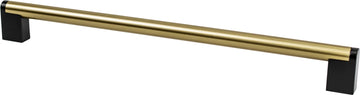 Berenson
Studio Remix 12 inch CC Modern Brushed Gold and Matte Black Appliance Pull 2201-9MDB55-P
Berenson
Studio Remix 12 inch CC Modern Brushed Gold and Matte Black Appliance Pull 2201-9MDB55-P
$95.21
$119.01 -
 Amerock
Blackrock 18'' cc Cabinet Appliance Pull BP55281Polished Chrome
Amerock
Blackrock 18'' cc Cabinet Appliance Pull BP55281Polished Chrome
$171.26
$201.48 -
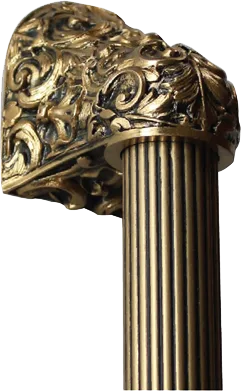 Notting Hill Hardware
Acanthus Appliance Pull Bar, 12 Inch Drill Center, 24K Satin Gold
Notting Hill Hardware
Acanthus Appliance Pull Bar, 12 Inch Drill Center, 24K Satin Gold
$291.60
$324.00 -
 Amerock
Mulholland 8'' cc Appliance Pull BP53531Satin Nickel
Amerock
Mulholland 8'' cc Appliance Pull BP53531Satin Nickel
$99.11
$116.59


Why This Matters
Dishwashers with decorative panels are common in 2026 kitchen renovations. The panel is typically 3/4" MDF or plywood clad to match your cabinetry, and the pull mounts directly through it. Unlike cabinet doors, a dishwasher panel has no face frame to hide a bad hole — mistakes show. Getting the spacing and drilling sequence right the first time prevents panel cracking and keeps the pull perfectly level.
What You'll Need
- Appliance pull with included machine screws (confirm screw length matches panel thickness + post depth)
- Power drill or drill press
- 3/16" twist bit (for #8-32 screws) or 5/32" bit (for M4 metric screws)
- Center punch or nail set
- Tape measure and pencil
- Level (4" or longer)
- Painter's tape (prevents drill tear-out on finished surfaces)
- Screwdriver or hex key for final tightening
- Optional: drilling template printed at 100% scale
Time: 20–30 minutes for a single pull.
The Steps
Step 1 — Remove the Dishwasher Panel (If Needed)
Most decorative dishwasher panels attach to the door with two or four screws inside the door frame. Open the dishwasher door, look along the inner edge of the door, and remove those screws to free the panel. Lay the panel face-down on a clean, padded surface. Working off the door gives you full access and eliminates any risk of drilling into the door's internal components. If your panel is glued or permanently mounted, leave it in place and work carefully in Step 4.
Step 2 — Find the Center of the Panel
Measure the panel width and mark the horizontal center with a pencil. For vertical centering, standard dishwasher appliance pulls mount 3" to 4" from the top edge of the panel — this places the pull in the visual "sweet spot" aligned with upper cabinet door pulls. Mark the center point clearly. Confirm the screw-hole spacing on your pull (common spacings: 8", 12", 18", 24" center-to-center). Measure out from the center mark in both directions — half the hole spacing each way — and mark both hole locations.
Step 3 — Apply Painter's Tape and Punch the Centers
Lay a strip of painter's tape over each hole mark. Tape prevents the drill bit from skating across the finished surface and reduces tear-out on MDF or painted wood. Re-mark the hole centers through the tape. Use a center punch or nail set and a light hammer tap to dimple each mark — even a small divot keeps the bit on target at the start of the cut. This 30-second step eliminates the most common mistake: a wandering bit that splits the finish.
Step 4 — Drill the Holes
Drill from the finished face toward the back. This is critical: any tear-out happens on the rear (hidden) side of the panel, not the face. Hold the drill perpendicular — use a drill guide or a square held alongside the bit if you're working freehand. Drill at moderate speed; high RPM on MDF generates heat and swells the fiber, which causes binding. Clear chips every few seconds. After drilling, remove the tape and check that both holes are clean on the face. Sand any fuzz lightly with 220-grit.
Step 5 — Test-Fit the Pull
Insert the machine screws through the pull's posts, then push them through the holes from the front. The pull should sit flush — no rocking, no gap along the bar. If the pull rocks, the hole spacing is off by more than 1/32"; fill and re-drill rather than forcing the pull flat. Check with your level: the pull must be perfectly horizontal before final tightening. A pull that's even 1° off shows visually on a flat panel.
Step 6 — Tighten to the Correct Torque
Thread on the included machine screws from the rear (or washers and nuts if your pull uses a through-bolt system). Hand-tighten first, confirm the pull is level, then snug with a screwdriver. Do not overtighten. On MDF panels, overtightening strips the material around the hole — stop when the screw head seats firmly against the back of the panel or mounting post. For solid wood panels, a firm seat with 1/4-turn past hand-tight is fine. The Top Knobs M2604 Amwell Bar Pull, for example, ships with cap nuts that thread onto the post end; tighten until the cap nut is flush with the post tip.
Step 7 — Reattach the Panel
If you removed the panel in Step 1, align it with the door and reinstall the mounting screws. Close the dishwasher door and check that the panel sits flush with adjacent cabinet doors. Check the pull one more time for level. Done.
Troubleshooting
Pull rocks or won't sit flush. Hole spacing is off. Do not force it. Fill the holes with wood filler rated for MDF, let cure 24 hours, re-mark, and re-drill.
Screws won't catch. The included screws may be too short for your panel thickness. Standard panels are 3/4" (19mm); if yours is thicker (some overlay panels run 7/8" to 1"), add 1/8" to the required screw length and order replacements in the same thread size.
Drill bit wandered and the hole is oblong. Fill with MDF filler, sand flush, and re-punch the center before re-drilling. Using a drill press eliminates this entirely on removed panels.
Finish chip at the drill entry. Light sanding with 220-grit followed by a matching touch-up paint or lacquer pen fixes small chips. On painted MDF, primed paint pens match most white or gray finishes closely enough.
Pull posts don't reach through the panel. The pull was spec'd for a thinner panel. Either route a shallow counterbore on the rear face to reduce effective thickness, or contact Knobs.co about a longer-post variant of the same pull.
Cap nuts spin freely and won't tighten. The post threads are stripped. Replace the pull — stripped posts cannot be repaired in the field.
Tools and Resources
- Drill bits: 3/16" for #8-32, 5/32" for M4. Buy a two-pack — one bit per job is plenty.
- Center punch: Any hardware store, under $8.
- Painter's tape: 3M ScotchBlue 1" width.
- Appliance pulls: Knobs.co stocks 100+ appliance pulls in every finish and center-to-center spacing at appliance pulls. Brushed nickel is the most-ordered finish for white and gray panel dishwashers; see the brushed nickel cabinet pulls for kitchen renovations guide for pairing ideas. If you're working on a matte black kitchen, the matte black cabinet pulls for white kitchens guide covers finish matching across appliances and cabinets.
FAQ
What size appliance pull fits a standard dishwasher panel? A 12" center-to-center pull fits most 24" wide dishwasher panels. For a more architectural look, an 18" pull works on panels 24" wide or wider — the ends stop roughly 3" from each side edge.
Do I need special screws for a dishwasher panel? No. The machine screws included with any quality appliance pull handle standard 3/4" MDF or plywood panels. If your panel is thicker than 7/8", you'll need longer screws in the same thread size (#8-32 or M4).
Can I install an appliance pull without removing the panel? Yes, but it's harder to keep the drill perpendicular and tears out more easily. If the panel is glued in place, use a drill guide, work slowly, and drill from the face.
How far from the top should an appliance pull be on a dishwasher? 3" to 4" from the top edge is the standard in 2026 kitchen installations. This aligns the pull visually with upper-cabinet door pulls and keeps it in a natural grip position.
What finish should I choose for a dishwasher pull? Match whatever finish you used on your cabinet door pulls. Brushed nickel is the most popular choice in 2026 because it reads neutral across white, gray, and wood-tone cabinetry. Matte black works well with dark cabinetry and white or sage cabinets.
Is an appliance pull stronger than a standard cabinet pull? Yes. Appliance pulls use thicker-diameter bars (typically 5/8" to 1" OD vs. 3/8" to 1/2" for cabinet pulls) and larger machine screws, rated for the heavier pull force on a loaded dishwasher door.
How long does this installation take? About 20 minutes if the panel is removed; 30–35 minutes working on the mounted panel.
Can the same pull go on my refrigerator and dishwasher? Often yes. Appliance pulls are typically sold by center-to-center spacing, not by appliance type. Confirm the screw length works for both panels — refrigerator panels vary more in thickness than dishwasher panels.
One Last Thing
In 2026, the most common installation mistake is not the drilling — it's choosing a pull with a center-to-center spacing that leaves less than 2" of panel on each side. On a 24" wide dishwasher, a 24" pull technically fits but leaves no visual margin and the end caps look cramped. Cap out at 18" for a 24" panel and the proportions look deliberate, not squeezed.
Related Guides
- Best appliance pulls for refrigerators
- Brushed nickel cabinet pulls for kitchen renovations
- Matte black cabinet pulls for white kitchens
Shop Appliance Pulls
-
 Belcastel 18'' cc Appliance Pull MO6373-18SIM-D
$189.18
Belcastel 18'' cc Appliance Pull MO6373-18SIM-D
$189.18
-
 Belcastel 18'' cc Appliance Pull MO6373-18ABM-D
$189.18
Belcastel 18'' cc Appliance Pull MO6373-18ABM-D
$189.18
-
 Select Rectangular Bar Smooth Appliance Pull 84170.RCBSCU.SM
$273.00
Select Rectangular Bar Smooth Appliance Pull 84170.RCBSCU.SM
$273.00
-
 Spindle Appliance Pull
$259.00
Spindle Appliance Pull
$259.00
-
 Elevate 320mm CC Brushed Nickel Appliance Pull 2093-4BPN-P
$29.43
Elevate 320mm CC Brushed Nickel Appliance Pull 2093-4BPN-P
$29.43
-
 Trinity Appliance Pull
$259.00
Trinity Appliance Pull
$259.00
-
 Tribeca Appliance Pull 87005
$259.00
Tribeca Appliance Pull 87005
$259.00
-
 Emerling 12in. CC Matte Black Appliance Pull 2462-1055-P
$107.71
Emerling 12in. CC Matte Black Appliance Pull 2462-1055-P
$107.71


Browse all 1299 in Appliance Pulls → Cabinet knobs Cabinet pulls & handles