

Matte Black Cabinet Pulls for White Kitchens 2026
Matte black cabinet pulls elevate white kitchens in 2026. Bar pulls with PVD finish are the top pick. Avoid thin stamped pulls. Full buying guide inside.

Matte black cabinet pulls are the fastest single upgrade for a white kitchen — one finish swap shifts the whole room from builder-grade to intentional. This guide is written for homeowners and trade professionals choosing matte black hardware for white cabinetry in 2026, covering what criteria actually matter, which pull styles earn a Buy, and what to skip.
TL;DR: For white kitchens in 2026, matte black cabinet pulls work because the contrast is high and the finish hides fingerprints better than polished black. Bar pulls in 3–5" centers are the most versatile pick across Shaker, slab, and inset doors. Avoid thin stamped pulls under 3mm thickness — they look cheap against white paint. Knobs.co carries 50,000+ SKUs including a dedicated matte black finish collection covering every profile and center-to-center size.
Shop the picks from this guide
In stock at Knobs.co · Free shipping on hardware orders $99+ · 110% price match
-
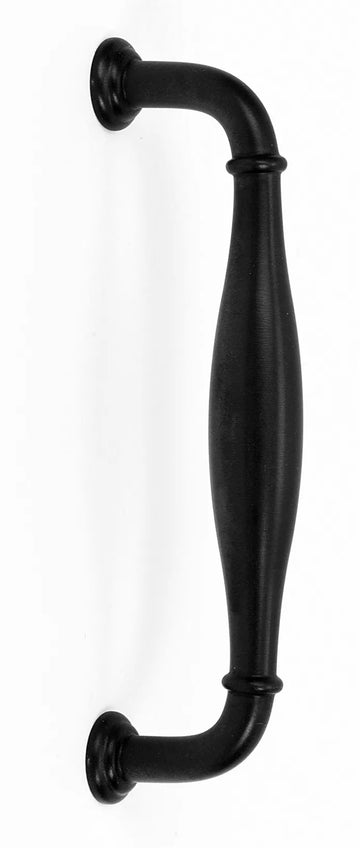 Alno
Alno A726 Charlie's 3 1/2'' CC Cabinet PullMatte Black / 3''
Alno
Alno A726 Charlie's 3 1/2'' CC Cabinet PullMatte Black / 3''
$24.26
$26.95 -
 Berenson
Advantage Wire Pulls 3'' CC Matte Black Steel Pull 6129-2055-P
Berenson
Advantage Wire Pulls 3'' CC Matte Black Steel Pull 6129-2055-P
$1.58
$1.97 -
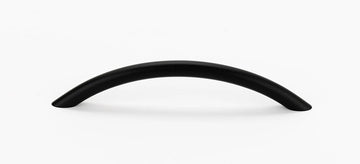 Alno
Alno A1298 128mm 5'' CC Brass Cabinet PullMatte Black
Alno
Alno A1298 128mm 5'' CC Brass Cabinet PullMatte Black
$19.76
$21.95 -
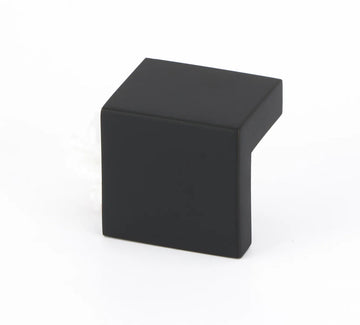 Alno
Alno A960 Tab 1 1/2'' CC Brass Cabinet PullMatte Black / 3/4''
Alno
Alno A960 Tab 1 1/2'' CC Brass Cabinet PullMatte Black / 3/4''
$16.16
$17.95 -
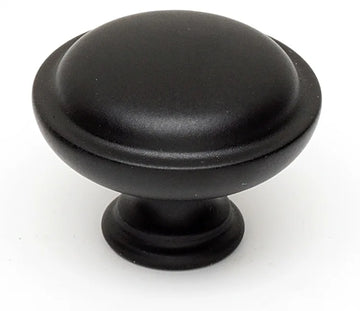 Alno
Alno A1145 1 1/4'' Brass Cabinet KnobMatte Black
Alno
Alno A1145 1 1/4'' Brass Cabinet KnobMatte Black
$17.96
$19.95 -
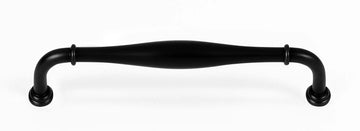 Alno
Charlie's 6'' Pull A726-6Matte Black
Alno
Charlie's 6'' Pull A726-6Matte Black
$62.96
$69.95

Why This Pairing Works in 2026
White cabinetry reflects light and reads as neutral — it needs contrast hardware to anchor the space visually. Matte black delivers maximum value contrast (near-zero lightness vs. bright white) without the mirror glare of polished chrome or satin nickel. The flat surface also diffuses light, so the pulls register as intentional design rather than accent bling.
The finish has been mainstream since roughly 2019 but reached saturation in new-construction in 2023. In 2026, the moves that feel current are mixing matte black pulls with a warm-toned faucet (unlacquered brass or oil-rubbed bronze) rather than matching every metal, and pairing the hardware with white oak open shelving.
Who This Guide Is For
This guide serves two buyers: the homeowner doing a weekend refresh on white painted Shaker cabinets who needs to pick 30–60 pulls on a $200–$400 budget, and the interior designer or contractor speccing a full kitchen build who needs to know which brands hold their finish over time and which profiles read well across different door styles. Both audiences will find their answer here.
What to Look for in Matte Black Pulls for White Kitchens
Finish Quality and Longevity
Matte black is a coating, not a base metal — and coatings vary wildly. A PVD (physical vapor deposition) matte black finish bonds to the substrate at a molecular level and typically lasts 10–15 years in kitchen conditions. Standard electroplating or painted black finishes show wear at edges within 2–3 years of daily use. Ask for PVD or "lifetime finish" callouts in the product spec before ordering.
Center-to-Center Sizing
Kitchen cabinet pulls are measured by the distance between the two screw holes (center-to-center, or c-c). Standard residential cabinets use 3", 3-3/4", or 5" c-c. Before ordering, measure your existing holes — retrofitting a mismatched pull requires wood filler and redrilling. If you are starting fresh, 3-3/4" is the safest universal size for 12"–18" wide doors; 5" works well on 24"+ wide doors and full-height pantry pulls.
Profile and Projection
Projection is how far the pull stands off the cabinet face. Low-projection pulls (under 1") are sleek but can pinch fingers on heavy doors. A 1"–1.5" projection is the practical range for daily kitchen use. Bar pulls and cup pulls both hit this window comfortably; bin pulls often project 2"+ and suit furniture-style lower cabinets better than upper.
Scale Relative to Door Size
A 3" pull on a 36" pantry door looks like a mistake. Scale the pull length to roughly 1/3 of the door width for a proportional look. White kitchens show hardware scale clearly because the pale field gives no visual camouflage — undersized hardware reads immediately as an afterthought.
Material and Weight
Die-cast zinc alloy is common at lower price points and acceptable for upper cabinets. Solid brass and solid stainless steel cost more but have no flex under load — important for lower pull-out drawers that take 20–30 lbs of force daily. For trade specs, solid brass with PVD black is the professional-grade standard.
Consistency Across a Full Kitchen Run
Buying 40+ pulls from a single SKU within a single dye lot matters because matte black coatings can shift slightly in batch. Order all pulls at once from the same supplier. Knobs.co's matte black finish collection consolidates inventory from major brands so you can match profiles across a single checkout.
Top Picks for White Kitchens in 2026
The Safe Pick — Classic Bar Pull
Profile: Straight bar, 3-3/4" or 5" c-c, 1" projection.
The straight bar pull is the default recommendation for white Shaker kitchens in 2026 for a specific reason: the rectangular shadow line it casts on a white door reinforces the cabinet's frame geometry rather than fighting it. A 5/8" diameter bar in matte black at 3-3/4" c-c handles everything from upper cabinets to shallow drawers.
The Top Knobs Amwell Bar Pull (M2604) is a concrete example: solid steel construction, PVD-equivalent finish durability, and a 1" projection that clears fingers on standard overlaid doors. Available in multiple c-c sizes from the same SKU family, so your uppers and lowers match.
Verdict: Buy.
The Elevated Pick — Fluted or Knurled Bar
Profile: Textured bar, 3-3/4"–5" c-c, 1"–1.25" projection.
Fluted and knurled bar pulls add tactile interest without changing the format's footprint. On white slab or flat-front cabinets — common in 2026 remodels — the texture breaks up the plainness of both the door and the hardware. The grip is also superior for wet or greasy hands vs. a smooth bar.
The tradeoff: textured matte black surfaces trap fine debris in the grooves. Wipe-down requires a soft brush rather than a damp cloth. For a high-use kitchen, that extra maintenance step matters.
Verdict: Buy if you have flat-front doors. Consider if you have Shaker — the detail can compete with the frame.
The Statement Pick — Appliance Pull
Profile: Elongated bar, 8"–18" c-c, designed for refrigerator and dishwasher panels.
If you are extending matte black hardware beyond cabinet doors to appliance panels, sizing up to an appliance pull creates visual continuity. A 12" matte black appliance pull on a panel-ready refrigerator alongside 5" pulls on upper cabinets reads as a considered system rather than an afterthought. Knobs.co's appliance pulls collection covers sizes from 8" to 24" c-c.
Verdict: Buy when panel-ready appliances are in the project. Skip if you are only doing cabinet hardware — oversized pulls on standard cabinet doors look wrong.
The Mixed-Metal Option — Brushed Nickel as Contrast
Profile: Brushed nickel bar or cup pull, used selectively alongside matte black.
Mixed-metal kitchens in 2026 use a 70/30 rule: 70% dominant finish (matte black on pulls) and 30% accent finish (brushed nickel on faucet, light fixture, or edge pulls on an island). This is not a mixed pull scenario — all pulls should be one finish. Brushed nickel enters as a secondary fixture finish, not on the cabinets themselves.
If your project leans toward the warm-neutral end of white (warm white, linen, or cream cabinets), brushed nickel pulls actually outperform matte black because the warmth reads better against silver-tone hardware. See the brushed nickel finish collection if your white is warm-toned.
Verdict: Consider for warm-white kitchens. Skip matte black if the cabinet color has a yellow or beige undertone — the cool-dark contrast will fight the warmth.
The Trade Spec Pick — Mid-Century Bar or Cup Pull
Profile: Tapered bar or semi-circular cup, 3"–4" c-c.
For designers speccing kitchens with MCM (mid-century modern) cabinetry in 2026 — thin rails, no frame overlay, often walnut veneer lower cabinets paired with white uppers — a tapered matte black bar pull or a half-moon cup pull locks the period reference. The mid-century modern collection filters specifically for this profile family.
Verdict: Buy for MCM or transitional projects. Hold if the kitchen is traditional or farmhouse — the profile will feel anachronistic.
What to Avoid
- Thin stamped pulls under 3mm wall thickness. On white cabinets the pull is always visible, and thin stamped metal flexes slightly under grip. It looks and feels like a $4 pull even when painted matte black.
- Matte black with a cool-gray or blue-tinted white. Colors like Sherwin-Williams Chantilly Lace (OC-17 equivalent) are neutral. But blue-white cabinets (e.g., Behr Ultra Pure White with cool toner) pair better with matte black only if the countertop is warm — otherwise the combination reads cold throughout. Always pull a matte black pull against a painted sample board before ordering 40 units.
- Mismatched c-c sizes across doors of the same width. A 3" pull on one upper and a 3-3/4" pull on the same-sized adjacent upper is the most common installer error. It is almost invisible individually but immediately obvious when the row of cabinets is viewed straight-on against white.
Comparison Table
| Pull Style | Best Door Type | Finish Durability | Projection | 2026 Verdict |
|---|---|---|---|---|
| Classic bar (smooth) | Shaker, inset | High (PVD) | 1" | Buy |
| Fluted/knurled bar | Flat-front, slab | High (PVD) | 1"–1.25" | Buy |
| Appliance pull | Panel-ready appliances | High (PVD) | 1.5"+ | Buy (appliances only) |
| Thin stamped pull | Any | Low | Variable | Skip |
| Cup pull | Furniture-style, MCM lower | Medium–High | 2"+ | Consider |
| Mid-century tapered bar | MCM, transitional | High | 1" | Buy (MCM only) |
FAQ
What's the best matte black cabinet pull for a white Shaker kitchen in 2026? A straight bar pull at 3-3/4" c-c with PVD matte black finish is the best choice. The rectangular form matches the Shaker frame geometry, the finish holds up to daily kitchen use, and the 3-3/4" c-c size fits most standard upper and lower cabinet doors without redrilling.
Do matte black pulls show fingerprints on white cabinets? Matte black shows fingerprints less than polished black or satin black because the flat surface diffuses light rather than reflecting it. High-touch pulls near the stove will show grease over time — wipe with a damp microfiber cloth weekly.
Is matte black hardware still in style for kitchens in 2026? Yes. Matte black is not trending as a novelty in 2026 — it has settled into standard specification alongside brushed nickel. The current move is mixing it with one warm metal accent rather than using it as the sole finish throughout.
How many cabinet pulls do I need for a standard kitchen? A standard 10x10 kitchen (the industry measurement baseline) uses approximately 36–44 pulls depending on door count and whether drawers get one or two pulls. Order 5–10% overage from the same SKU batch to cover replacements.
What center-to-center size fits most kitchen cabinet doors? 3-3/4" (96mm) is the most universal size and fits the widest range of standard residential cabinet doors. 3" (76mm) works for narrow upper cabinets; 5" (128mm) suits wider doors and full-height pantries.
Can I mix matte black cabinet pulls with brushed nickel fixtures? Yes. A 70/30 split — matte black on all cabinet pulls, brushed nickel on faucet and pendant light — is one of the most common professional kitchen specs in 2026. Avoid mixing finishes on the cabinet hardware itself; keep all pulls one finish.
What material should matte black cabinet pulls be made from? Solid brass or solid stainless steel with a PVD finish is the trade standard. Die-cast zinc is acceptable for upper cabinets. Avoid hollow or stamped pulls — they flex under load and the finish chips at edges faster.
Where can I buy matte black cabinet pulls in bulk for a full kitchen? Knobs.co stocks 50,000+ SKUs including dedicated matte black finish inventory across bar pulls, cup pulls, appliance pulls, and knobs — all available for single-order purchase to keep dye lots consistent.
One Last Thing
The single most overlooked spec in a matte black pull order is screw length. Standard machine screws shipped with pulls are sized for 3/4" cabinet door material. If your white cabinets are painted MDF at 7/8" or solid wood at 1", the included screws will either not reach or bottom out before pulling the hardware tight. Always verify door thickness before the install day — a $0.12 screw swap avoids a half-day callback.
Related Guides
- Best brushed nickel knobs for white cabinets
- Brushed nickel cabinet pulls for kitchen renovations
- How to mix brushed nickel hardware across rooms
Shop Matte Black Cabinet Hardware
-
 Sutton 96 mm cc Bar Pull 635-96MB-25
$304.20
Sutton 96 mm cc Bar Pull 635-96MB-25
$304.20
-
 Sutton 160 mm cc Bar Pull 635-160MB-10
$176.04
Sutton 160 mm cc Bar Pull 635-160MB-10
$176.04
-
 Sutton 128 mm cc Bar Pull 635-128MB-20
$291.24
Sutton 128 mm cc Bar Pull 635-128MB-20
$291.24
-
 Epoch Edge 128mm CC Matte Black Pull 1215-1055-P
$10.93
Epoch Edge 128mm CC Matte Black Pull 1215-1055-P
$10.93
-
 Galloway 128mm CC Matte Black Round Backplate 3100-1055-B
$10.61
Galloway 128mm CC Matte Black Round Backplate 3100-1055-B
$10.61
-
 Statler Matte Black Cutout Backplate 3118-1055-B
$5.66
Statler Matte Black Cutout Backplate 3118-1055-B
$5.66
-
 Galloway 96mm CC Matte Black Round Backplate 3099-1055-B
$7.67
Galloway 96mm CC Matte Black Round Backplate 3099-1055-B
$7.67
-
 Statler 224mm CC Matte Black Cutout Backplate 3117-1055-B
$11.19
Statler 224mm CC Matte Black Cutout Backplate 3117-1055-B
$11.19


Browse all 2293 in Matte Black Cabinet Hardware → Cabinet knobs Cabinet pulls & handles