

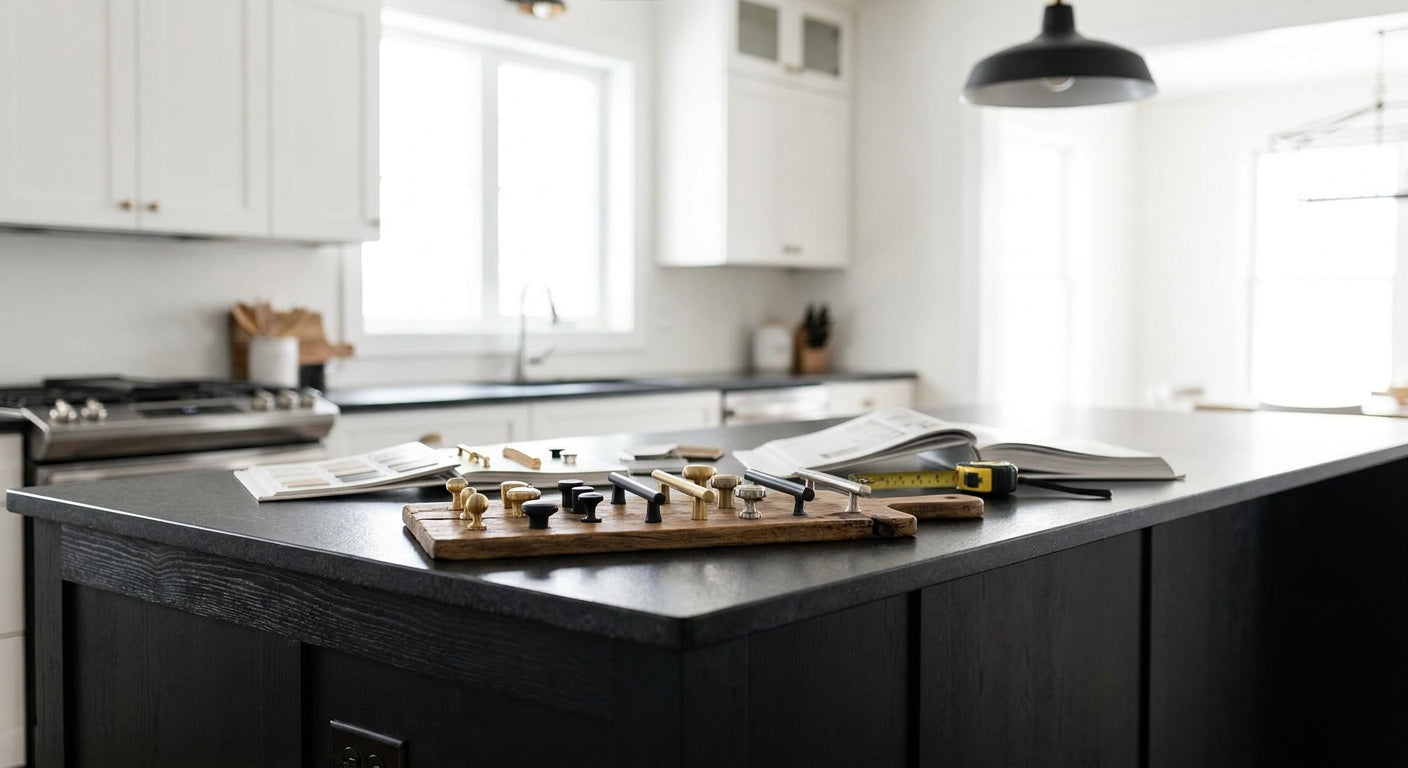
A black kitchen island changes the math on hardware. What reads as classic on a white perimeter cabinet can disappear or clash against a dark panel, so the finish, size, and shape decisions matter more on the island than anywhere else in the room. This guide walks through picking cabinet hardware for a black kitchen island step by step, from finish contrast to final installation, using 2026 hardware trends as the baseline.
- Warm brass and polished nickel read as intentional contrast on a black kitchen island in 2026, while matte black hardware creates a monochrome, blended look.
- Size pulls to at least half the drawer width; a short pull looks undersized on a 30-inch island drawer front.
- Schaub's 704-PN polished nickel knob and Berenson's Metro matte black pull cover both directions of the contrast-versus-blend decision. Buy either depending on the look you're after.
- Order 2 to 3 extra pieces beyond your exact count. Matching a discontinued finish six months later costs more than buying spares now.
Shop the picks from this guide
In stock at Knobs.co · Free shipping on hardware orders $99+ · 110% price match
-
 Amerock
Edona 1-1/4'' diam Cabinet Knob BP53005Matte Black
Amerock
Edona 1-1/4'' diam Cabinet Knob BP53005Matte Black
$3.21
$3.77 -
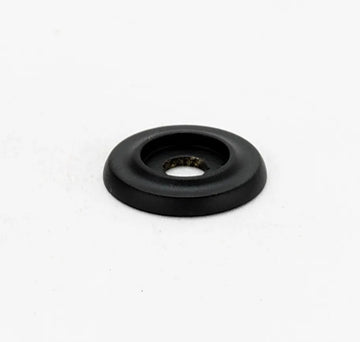 Alno
Alno A615 Brass Cabinet BackplateMatte Black / 1''
Alno
Alno A615 Brass Cabinet BackplateMatte Black / 1''
$8.06
$8.95 -
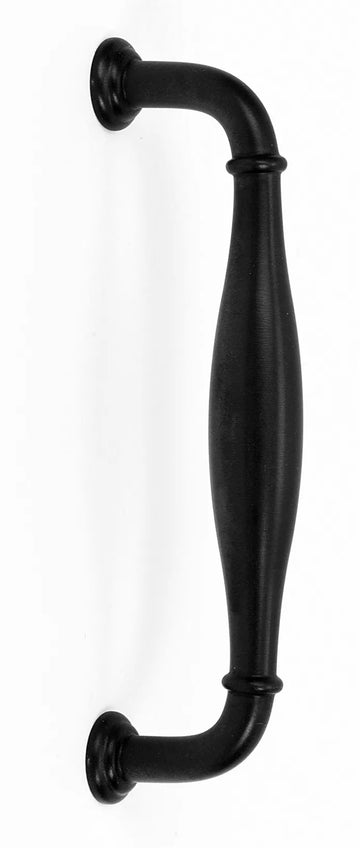 Alno
Alno A726 Charlie's 3 1/2'' CC Cabinet PullMatte Black / 3''
Alno
Alno A726 Charlie's 3 1/2'' CC Cabinet PullMatte Black / 3''
$24.26
$26.95 -
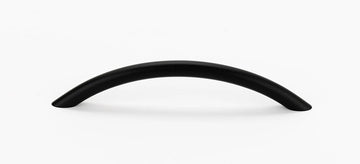 Alno
Alno A1298 128mm 5'' CC Brass Cabinet PullMatte Black
Alno
Alno A1298 128mm 5'' CC Brass Cabinet PullMatte Black
$19.76
$21.95 -
 Amerock
Functional Hardware 1/2'' Overlay Double Demountable Cabinet Hinge - 1 Pair BPR8704Matte Black
Amerock
Functional Hardware 1/2'' Overlay Double Demountable Cabinet Hinge - 1 Pair BPR8704Matte Black
$12.95
$15.23 -
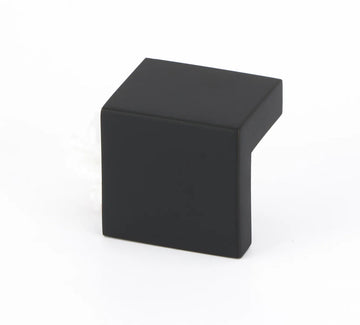 Alno
Alno A960 Tab 1 1/2'' CC Brass Cabinet PullMatte Black / 3/4''
Alno
Alno A960 Tab 1 1/2'' CC Brass Cabinet PullMatte Black / 3/4''
$16.16
$17.95


Why this matters
A black island is usually the visual anchor of the kitchen, which means the hardware on it gets more eye contact per square foot than any other cabinet run in the house. Get the finish wrong and the island either looks flat and unfinished or fights with the surrounding cabinetry. Get the size wrong and even a correct finish looks cheap next to solid black panels.
Most kitchens built or renovated in 2026 pair a black island with lighter perimeter cabinetry, which puts real pressure on the hardware to bridge the two tones without looking like an afterthought. Knobs.co sells cabinet hardware across more than 50,000 SKUs, and the pattern across black-island projects is consistent: buyers either go full contrast (warm brass, polished nickel, champagne bronze) or full blend (matte black on matte black), and the ones who mix finishes without a plan are the ones who end up reordering.
What you'll need
- A tape measure and a notepad with your exact drawer and door widths
- Painter's tape or a hardware placement jig for consistent spacing across the island
- A drill with a pilot bit sized to your screw diameter, plus a manual screwdriver as backup
- Actual hardware samples or finish chips held against the island panel in daylight, not just under kitchen lighting
- A finalized count of knobs versus pulls per drawer and door, based on a pull sizing guide for kitchen islands, plus 2-3 spare pieces
The steps
1. Decide: contrast or blend
This is the first fork in the road and it drives every choice after it. Contrast hardware — warm brass, polished nickel, champagne bronze — sits against a black island the way jewelry sits against a black dress: it reads as a deliberate design choice. Blend hardware, meaning matte black knobs and pulls on a matte black island, creates a quieter, monolithic look that photographs well but hides detail.
Common mistake: picking a finish you like in isolation without holding it against the actual island panel. Chrome and polished nickel look similar in a showroom but read very differently against true black — chrome can look cold and clinical, polished nickel warmer and more forgiving.
2. Match the finish to your faucet and lighting fixtures
Cabinet hardware for a black kitchen island should echo at least one other metal already committed to the room — usually the faucet or the pendant lights over the island. If your faucet is polished nickel, don't introduce a third unrelated finish on the island hardware; you'll end up with a kitchen that looks like three separate decisions instead of one.
Why it matters: kitchens with three or more unrelated metal finishes photograph as unfinished even when every individual piece is well chosen. Two finishes maximum, one dominant and one accent, is the safer 2026 rule of thumb.
3. Pick knob or pull based on the piece, not the whole kitchen
Drawers over roughly 24 inches wide read better with a pull; anything narrower, including most upper doors, works fine with a knob. On an island specifically, appliance drawers and wide utility drawers often run 30 to 36 inches, which pushes you toward pulls even if the rest of the kitchen leans knobs.
A polished nickel round knob like Schaub and Company's polished nickel round knob, 1-1/2 inches in diameter, works as a contrast accent on narrow island doors. Buy if you're going the contrast route and need a traditional silhouette that won't compete with a black panel.
4. Size pulls to the drawer, not to a standard
The rule that holds up across most kitchens: pull length should run roughly half to two-thirds of the drawer width. A 5-inch pull on a 12-inch drawer front looks proportional. That same 5-inch pull on a 30-inch island drawer looks lost.
For a matte black island where you want the blend look, Berenson's matte black bar pull runs 224mm center-to-center, which sits comfortably on wider island drawers without looking undersized. Buy for wide island drawer fronts in a monochrome black scheme.
5. Test the finish in real daylight before ordering the full set
Cabinet hardware finishes shift under different light temperatures far more than paint does. A warm brass that looks rich under 2700K under-cabinet lighting can look almost gold and slightly gaudy under daylight-balanced pendants. Hold the actual piece against the island in both morning light and under your installed fixtures before committing to a full order.
Common mistake: ordering based on a photo or a swatch on a screen. Finish photography is notoriously inconsistent across retailers.
6. Order 2 to 3 spares beyond your exact count
Hardware finishes get discontinued or reformulated more often than most homeowners expect. If you need 18 pulls for the island and perimeter combined, order 20 or 21. Replacing one damaged or lost piece two years later, in an exact finish match, is a real problem if the run has been discontinued.
7. Install with consistent spacing across every piece
Use a jig or a taped template rather than measuring each piece by eye, especially across a long island run where inconsistent spacing is far more visible than on separated upper cabinets. Off by even a quarter inch across six drawer fronts in a row reads as sloppy, even with the right hardware.
Common mistake: measuring from the top of each drawer instead of a fixed reference line, which compounds small errors across a long run.


Troubleshooting
- The hardware looks different once installed than it did on the shelf. Cabinet lighting almost always runs warmer than retail lighting. Reinstall a temporary sample under your actual under-cabinet lights before finalizing the order.
- Spacing looks uneven across the island run. Stop and remeasure from one fixed reference line rather than trusting each drawer's centerline; small errors compound fast over 6 or more drawer fronts.
- The finish looks patchy after a few months. Unlacquered or living finishes like brass will patina; if you wanted a consistent look long-term, that finish was the wrong pick, not a defect.
- Screws are too short or too long for the panel thickness. Cabinet hardware ships with standard screws that assume a typical 3/4-inch panel; thicker island panels need longer screws, sold separately.
- Pulls feel loose within the first year. This is almost always a stripped pilot hole rather than a bad pull. A slightly oversized screw or a repair plate under the panel fixes it without redrilling.
Tools and resources
Beyond the drill and jig already listed, a few resources make this decision easier before you order in bulk. Knobs.co's own catalog groups cabinet hardware by finish and by island-specific pull length, which shortens the sampling process considerably. If you're running a full remodel rather than a single island swap, the finish-contrast logic doesn't stop at hardware — custom kitchen cabinetry solutions get chosen alongside hardware finish from day one in most 2026 projects, not bolted on after the doors are already hung.
For finish pairing specifically, a guide on mixing metal finishes in a kitchen covers how many metals a single kitchen can carry before it looks unplanned. Most cabinet hardware for a black kitchen island benefits from picking one dominant finish and, at most, one accent — that single rule prevents most of the mismatches homeowners run into.
What to do next
Once you've settled on contrast or blend and picked a finish, the next decision is exact pull length for each drawer width on the island — undersizing pulls is the single most common mistake on wide island drawers, more common than picking the wrong finish. Measure every drawer and door on the island before placing a full order, not just the largest one.
FAQ
What's the best cabinet hardware finish for a black kitchen island?
Polished nickel, warm brass, and champagne bronze work as contrast finishes against a black island, while matte black hardware creates a blended, monochrome look. The right pick depends on whether you want the hardware to stand out or disappear into the panel.
Is matte black hardware better than brass for a black island?
Neither is objectively better; matte black blends the hardware into the panel for a quiet look, while brass or nickel creates visible contrast. Most 2026 kitchens pick based on whether the rest of the room already has a warm metal committed elsewhere.
How big should pulls be on a kitchen island?
Pull length should run roughly half to two-thirds of the drawer width. A 30-inch-wide island drawer needs a pull closer to 12 to 18 inches, not a standard 5-inch pull sized for narrow perimeter drawers.
Should island hardware match the rest of the kitchen exactly?
It should match in finish family but can differ in size and shape. Islands typically carry larger pulls than perimeter cabinets simply because island drawers run wider.
How much does cabinet hardware for an island cost?
Individual knobs and pulls for a black kitchen island generally run from under $25 to over $65 per piece depending on finish and collection, with unlacquered brass and designer collections at the higher end.
Can I mix knobs and pulls on the same island?
Yes, and it's common: knobs on narrow doors, pulls on wide drawers, within the same finish family. The mistake is mixing finishes, not mixing knob-versus-pull shapes.
Does the hardware finish need to match the faucet?
It should relate to the faucet or another already-committed metal in the room, though it doesn't need to be identical. Two coordinated finishes total, one dominant and one accent, is the safer approach for 2026 kitchens.
How many spare knobs or pulls should I order?
Order 2 to 3 pieces beyond your exact drawer and door count. Finishes get discontinued, and matching one replacement piece years later is far harder than buying spares upfront.
One last thing
The detail that trips up the most black-island projects isn't finish, it's spacing consistency: a single drawer front installed a quarter inch off from its neighbors is more visible on a long black island run than on any lighter cabinet run in the kitchen, because dark panels show shadow lines that white or painted panels hide. Template every hole before you drill the first one.


