

How to Mix Metal Finishes in a Kitchen (2026 Guide)
Learn how to mix metal finishes in a kitchen using the 60-20-10 rule. Match temperatures, pick a dominant finish, and shop 50,000+ SKUs at Knobs.co.

Mixing metal finishes in a kitchen is one of the fastest ways to make a space feel designed rather than default — but get it wrong and you end up with a room that just looks unfinished. This guide walks through the how to mix metal finishes kitchen decision step by step, with specific rules that prevent the common mistakes.
TL;DR: Choose one dominant finish (60–70% of all hardware), one secondary finish (20–30%), and one accent (10% or less). Warm metals pair naturally with warm metals; cool with cool. Two finishes in a kitchen always look intentional; three can work if one bridges the gap. Pick your cabinet hardware finish first — everything else follows. Knobs.co carries 50,000+ SKUs across finishes so you can find exact matches across every piece.
Shop the picks from this guide
In stock at Knobs.co · Free shipping on hardware orders $99+ · 110% price match
-
 Amerock
Edona 1-1/4'' diam Cabinet Knob BP53005Polished Chrome
Amerock
Edona 1-1/4'' diam Cabinet Knob BP53005Polished Chrome
$3.21
$3.77 -
 Alno
Alno A1032 1'' Brass Cabinet KnobPolished Brass
Alno
Alno A1032 1'' Brass Cabinet KnobPolished Brass
$13.46
$14.95 -
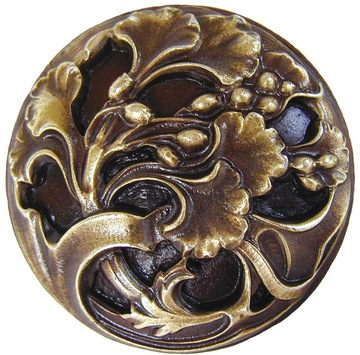 Notting Hill Hardware
 Florid Leaves Pewter Cabinet KnobAntique Brass
Notting Hill Hardware
Notting Hill Hardware Florid Leaves Pewter Cabinet KnobAntique Brass
$38.40
$48.00 -
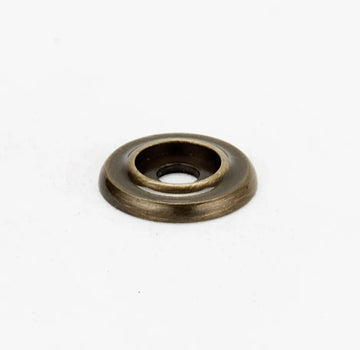 Alno
Alno A615 Brass Cabinet BackplateAntique English / 1''
Alno
Alno A615 Brass Cabinet BackplateAntique English / 1''
$8.06
$8.95 -
 Alno
Alno A726 Charlie's 3 1/2'' CC Cabinet PullAntique English / 3''
Alno
Alno A726 Charlie's 3 1/2'' CC Cabinet PullAntique English / 3''
$24.26
$26.95 -
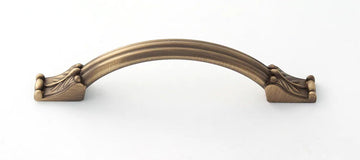 Alno
Alno A1476 Fiore 3 1/2'' CC Brass Cabinet PullAntique English Matte / 3''
Alno
Alno A1476 Fiore 3 1/2'' CC Brass Cabinet PullAntique English Matte / 3''
$24.26
$26.95


Why metal mixing matters in 2026
The "everything must match" rule died around 2018. In 2026, the design standard for kitchens is intentional contrast — a warm brass faucet against brushed nickel cabinet pulls, or matte black hardware with an unlacquered brass pendant. The problem is that accidental contrast looks different from deliberate contrast. This guide is about the difference between the two.
What you'll need
Before picking up a drill, gather:
- Swatches or finish samples of your faucet, range hood, and appliances
- A note on your cabinet color (warm undertone, cool undertone, or neutral)
- Your lighting type — warm incandescent reads differently than cool LED
- A clear count of how many knobs, pulls, and drawer slides you need
- A hardware jig for precise placement (saves re-drilling)
- A smartphone camera to photograph finish combinations in your actual kitchen lighting
Knobs.co ships free samples on most SKUs. Order 2–3 finish samples before committing to a full order — this single step prevents the most expensive mistakes.
Step 1: Identify your anchor finish
Pick the finish that already exists and cannot change.
Your anchor is the metal you cannot swap: the kitchen faucet bolted to the sink, a built-in range hood, or a pendant fixture that cost $800. Whatever that piece is, its finish sets the temperature of the whole room.
Warm anchors (brushed brass, champagne bronze, unlacquered brass, oil-rubbed bronze) pull toward gold on the spectrum. Cool anchors (brushed nickel, polished chrome, stainless, matte black) pull toward silver or neutral. This distinction drives every decision that follows.
Common mistake: Choosing cabinet hardware first, then realizing the faucet they already own conflicts. Always start with the fixed elements.
Expected outcome: You have a single anchor finish identified, with its temperature (warm or cool) noted.
Step 2: Assign the 60-20-10 split
Distribute your metals the same way a designer distributes color.
- 60% — dominant finish, used on all cabinet hardware (knobs and pulls throughout)
- 20% — secondary finish, used on plumbing fixtures, range hood, or lighting
- 10% — accent finish, used sparingly (one statement piece, edge pulls on an island, or a door bell)
For most kitchens, the dominant finish lands on cabinet hardware because there are simply more pieces — 20 to 40 knobs and pulls versus 1 faucet. This means cabinet hardware controls the visual weight of your metal scheme in 2026.
If your anchor finish is the faucet (secondary tier), your cabinet hardware choice becomes the dominant finish that must complement it — not match it.
Expected outcome: A written list assigning each metal element (faucet, cabinet pulls, cabinet knobs, lights, appliances) to dominant, secondary, or accent.
Step 3: Apply the temperature rule
Warm mixes with warm. Cool mixes with cool. One bridge metal is allowed.
This is the rule that separates intentional mixing from visual noise:
- Brushed brass + champagne bronze + oil-rubbed bronze = warm, cohesive
- Brushed nickel + polished chrome + stainless = cool, cohesive
- Brushed brass + matte black = works because matte black is neutral, acting as a bridge
- Brushed nickel + unlacquered brass = conflict — one warm, one cool, no bridge
Matte black is the most versatile bridge metal in 2026 kitchen design because it reads as neutral. It can sit alongside warm brass pulls or cool chrome fixtures without creating a temperature clash. That is why matte black hardware sees heavy use in two-tone kitchens.
Warm brass with cool polished chrome is the pairing that most often reads as a mistake rather than a choice. Avoid it unless a third finish bridges them.
Common mistake: Buying a trendy finish for cabinet hardware without checking whether it matches the temperature of existing plumbing. A $600 unlacquered brass faucet paired with cool brushed nickel cabinet pulls will look unresolved.
Expected outcome: Your dominant and secondary finishes are confirmed as temperature-compatible.
Step 4: Choose knobs vs. pulls, then match across cabinets
Mixing hardware styles (knobs + pulls) is standard. Mixing finishes randomly is not.
The 2026 convention on most kitchens:
- Knobs on doors, pulls on drawers — or pulls throughout
- The finish stays consistent across the dominant hardware category
- An island can carry a different finish from perimeter cabinets, but only if it reads as deliberate (contrast island color or material helps signal the intent)
If you want a Hammered Medallion Knob in aged bronze on upper cabinet doors and a Dickinson Pull in brushed nickel on drawers, that finish conflict undercuts both pieces. Stay in one temperature family across the dominant 60% allocation.
If you want a secondary metal to appear on hardware — say, matte black edge pulls on the island while brushed nickel handles the perimeter — that qualifies as an accent (the 10% tier) only if the island is truly a minority of your cabinet count.
Common mistake: Running two full finishes across equal amounts of hardware with no clear hierarchy. The result looks like the hardware was purchased in two separate trips without a plan.
Expected outcome: Every cabinet piece belongs to either the dominant or accent finish. No 50/50 splits.
Step 5: Extend the scheme to non-cabinet metals
Lighting, appliances, and plumbing must be accounted for, not ignored.
By 2026, panel-ready appliances and integrated handles have reduced the visual footprint of stainless steel in many kitchens. But if you have stainless appliances, that is a cool-temperature metal that must be assigned to your scheme — typically as a secondary finish if your dominant cabinet hardware is warm brass, or as an extension of the dominant if your scheme is cool.
Range hood finish is the most commonly overlooked element. A large brushed stainless hood over a sea of warm brass cabinet hardware breaks the temperature rule unless matte black appears somewhere as a bridge.
Light fixtures matter in 2026 more than they did in 2018 because open-plan kitchens and islands have multiplied the number of visible pendants. Assign pendant finish to your secondary or accent tier, not as a fourth independent finish.
Common mistake: Treating light fixtures as décor rather than metal, and ending up with four distinct finishes with no hierarchy.
Expected outcome: Every metal in the room — including lights and appliances — is assigned to dominant, secondary, or accent.
Step 6: Test in your actual lighting before ordering full quantities
Finish names are not finishes. Test physically.
Brushed nickel in a showroom under fluorescent light looks different from brushed nickel in your north-facing kitchen under warm LED strips. Champagne bronze photographs as gold but can read silver in certain lighting conditions. Aged bronze changes dramatically between natural and artificial light.
Order samples from Knobs.co before committing to a full quantity. Tape them to your cabinet doors. Photograph at 8am, noon, and with evening lighting on. If the finish reads correctly across all three, order the full set.
For kitchens with 30+ hardware pieces, this single step prevents a $400–$1,000 error.
Expected outcome: You have physically confirmed your dominant and secondary finish choices under your kitchen's actual lighting conditions.
Step 7: Order by function, not just finish
Map hardware type to location before adding to cart.
Before ordering, list:
- Number of door knobs needed (upper cabinets, lower cabinets)
- Number of drawer pulls needed — and center-to-center spacing for each size
- Whether you need appliance pulls for a dishwasher or refrigerator
- Any specialty hardware: edge pulls for flip-up doors, backplates for worn cabinet holes, or hinges if replacing those too
Knobs.co's 110% price match guarantee means you can verify pricing across competitors without losing your order. Free shipping removes the cost barrier for sampling multiple finish options.
Common mistake: Ordering all hardware in one size. Drawer widths vary — a 3-inch drawer takes a different pull than a 24-inch drawer. Measure every opening.
Expected outcome: A complete hardware list with finish, style, size, and quantity confirmed before ordering.
Troubleshooting
The room looks busy with three finishes. Reduce your accent finish to a single piece or eliminate it. Two finishes read cleaner than three in most kitchens under 200 square feet.
My faucet is brushed nickel but I want warm brass pulls. Add a matte black element — pendant light, edge pull, or range hood detail — to bridge the temperature gap. Without a bridge, the two finishes fight.
Polished chrome looks cold next to my white oak cabinets. Polished chrome conflicts with warm wood tones. Switch to brushed nickel (cooler warmth), champagne bronze, or satin brass, all of which work with warm wood.
The island hardware doesn't match the perimeter. That is intentional only if the island cabinet color or material also differs. If the island is the same color as perimeter cabinets, matching hardware is the right call.
My aged bronze hardware looks brown in photos. Aged bronze photographs warmer than it appears in person. If the photo result bothers you, switch to unlacquered brass (more gold) or oil-rubbed bronze (darker, more defined).
Two finishes from different brands don't match despite having the same name. Finish names are not standardized. "Brushed nickel" from one manufacturer can read silver; from another it reads almost pewter. Always test physical samples side by side, not just names.
Tools and resources
- Hardware jig — eliminates measurement error for consistent placement
- Painter's tape and pencil — mark hole locations before drilling
- Free finish samples from knobs.co — test before committing
- How to choose the right cabinet knob size — sizing reference before ordering
- How to mix brushed nickel hardware across rooms — if brushed nickel is your dominant finish, extend the guide room by room
What to do next
Once your finish scheme is locked, the next decision is sizing — the center-to-center spacing on pulls determines whether hardware looks proportional or awkward on your specific cabinets. Read how to measure cabinet pull hole spacing before placing your final order.
FAQ
What's the best way to mix metal finishes in a kitchen in 2026? Use the 60-20-10 rule: one dominant finish on cabinet hardware, one secondary on plumbing or lighting, one optional accent. Match temperatures — warm with warm, cool with cool — and use matte black as a bridge if you need to cross temperature zones.
Is it okay to mix brass and black hardware in a kitchen? Yes. Brass (warm) and matte black (neutral) is one of the most stable pairings in 2026 kitchen design. Matte black acts as a bridge between temperature zones, so it can accompany both warm and cool finishes without conflict.
How many metal finishes should a kitchen have? Two is safe and looks deliberate. Three works if one finish bridges the other two. Four or more with no clear hierarchy reads as unplanned.
Can I mix brushed nickel and stainless steel in a kitchen? Yes — both are cool-temperature metals. The undertone difference (stainless leans silver, brushed nickel can lean slightly warm depending on the brand) means you should test physical samples side by side before committing.
Should cabinet hardware match the faucet? Not necessarily. They should be temperature-compatible (both warm or both cool), but an exact finish match is not required and, in 2026, is often avoided in favor of intentional contrast.
How do I mix metals if I already have stainless steel appliances? Assign stainless to your secondary or dominant tier depending on its visual weight in the room. If appliances are panel-ready or integrated, stainless has minimal visual presence and can be treated as background. If appliances are exposed stainless, pair cool-temperature cabinet hardware (brushed nickel, chrome, matte black) to stay in the same temperature zone.
Does lighting finish need to match cabinet hardware? No exact match required. Assign light fixtures to your secondary or accent tier. If your dominant cabinet hardware is champagne bronze, a brushed brass pendant qualifies as secondary (same temperature, slightly different finish) — that reads as intentional layering.
What finish hides fingerprints best in a kitchen? Matte black and oil-rubbed bronze show the fewest fingerprints. Polished chrome and polished brass show the most. Brushed nickel and brushed brass fall in the middle — fingerprints visible but not as pronounced as polished finishes.
One last thing
The most durable metal mixing schemes share one trait: they were planned around a fixed element that already existed in the room, not around a trend. The kitchens that need a full hardware replacement two years after a remodel are almost always the ones where hardware was chosen first and the faucet was chosen second. Start with what you cannot change, assign every other metal element a tier, and the rest of the decisions follow a logical path. That is the actual system designers use — and it works the same way in 2026 as it did a decade ago.
Related guides
- How to style champagne bronze hardware in a kitchen
- Best cabinet hardware for two-tone kitchens
- How to pick hardware finish for a whole home remodel
Shop Brass Cabinet Hardware
-
 Belcastel 1-3/8'' diam Mushroom Knob MO6303ABM-D
$8.43
Belcastel 1-3/8'' diam Mushroom Knob MO6303ABM-D
$8.43
-
 Lafayette 96 mm cc Bar Pull 317-96ABSB
$17.90
Lafayette 96 mm cc Bar Pull 317-96ABSB
$17.90
-
 Lafayette 128 mm cc Bar Pull 317-128ABSB
$19.91
Lafayette 128 mm cc Bar Pull 317-128ABSB
$19.91
-
 Lafayette 1-3/8'' diam Mushroom Knob 218ABSB
$13.61
Lafayette 1-3/8'' diam Mushroom Knob 218ABSB
$13.61
-
 Milan 96 mm cc Bar Pull 1092AEM
$11.69
Milan 96 mm cc Bar Pull 1092AEM
$11.69
-
 Belcastel 18'' cc Appliance Pull MO6373-18ABM-D
$189.18
Belcastel 18'' cc Appliance Pull MO6373-18ABM-D
$189.18
-
 Belcastel 160 mm cc Bar Pull MO6373-160ABM-D
$16.67
Belcastel 160 mm cc Bar Pull MO6373-160ABM-D
$16.67
-
 Belcastel 128 mm cc Bar Pull MO6373-128ABM-D
$13.86
Belcastel 128 mm cc Bar Pull MO6373-128ABM-D
$13.86


Browse all 3349 in Brass Cabinet Hardware → Cabinet knobs Cabinet pulls & handles