

Update Kitchen Cabinets with Matte Black Hardware (2026)
Step-by-step guide to updating kitchen cabinets with matte black hardware in 2026: measure, drill, install, and avoid the most common mistakes.

Swapping out cabinet hardware is the fastest way to update kitchen cabinets with matte black hardware — no paint, no new doors, no contractor required. This guide walks you through every step: measuring, selecting, drilling, and installing, so your kitchen looks intentional rather than halfway done.
TL;DR: Matte black hardware works on white, gray, navy, wood-tone, and two-tone kitchen cabinets. In 2026, it remains the dominant finish choice for homeowners who want a sharp, high-contrast look without a full renovation. The full process takes 2–4 hours for an average kitchen (20–30 cabinet doors and drawers). Shop the full matte black collection to find pulls and knobs sized for your specific cabinet layout before you start.
Shop the picks from this guide
In stock at Knobs.co · Free shipping on hardware orders $99+ · 110% price match
-
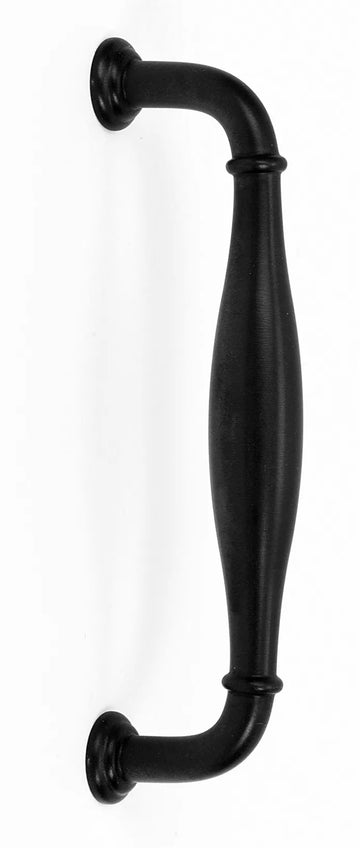 Alno
Alno A726 Charlie's 3 1/2'' CC Cabinet PullMatte Black / 3''
Alno
Alno A726 Charlie's 3 1/2'' CC Cabinet PullMatte Black / 3''
$24.26
$26.95 -
 Berenson
Advantage Wire Pulls 3'' CC Matte Black Steel Pull 6129-2055-P
Berenson
Advantage Wire Pulls 3'' CC Matte Black Steel Pull 6129-2055-P
$1.58
$1.97 -
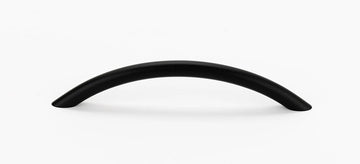 Alno
Alno A1298 128mm 5'' CC Brass Cabinet PullMatte Black
Alno
Alno A1298 128mm 5'' CC Brass Cabinet PullMatte Black
$19.76
$21.95 -
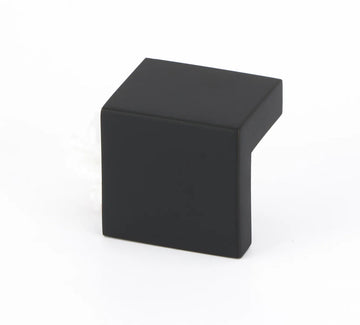 Alno
Alno A960 Tab 1 1/2'' CC Brass Cabinet PullMatte Black / 3/4''
Alno
Alno A960 Tab 1 1/2'' CC Brass Cabinet PullMatte Black / 3/4''
$16.16
$17.95 -
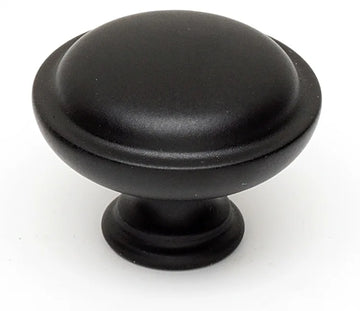 Alno
Alno A1145 1 1/4'' Brass Cabinet KnobMatte Black
Alno
Alno A1145 1 1/4'' Brass Cabinet KnobMatte Black
$17.96
$19.95 -
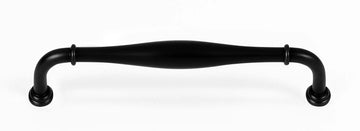 Alno
Charlie's 6'' Pull A726-6Matte Black
Alno
Charlie's 6'' Pull A726-6Matte Black
$62.96
$69.95

Why this matters
Cabinet hardware is the jewelry of a kitchen. Dated brass or worn chrome reads as neglect, even in an otherwise clean space. Matte black hardware costs $3–$15 per piece at most price points, meaning a full kitchen refresh runs $60–$300 in hardware alone — a fraction of the $5,000–$15,000 average cost of a full cabinet replacement in 2026. The finish also hides fingerprints better than polished finishes, which makes it a practical choice, not just a stylistic one.
What you'll need
- Cabinet hardware: matte black pulls, knobs, or both (sized to your doors and drawers)
- Tape measure and pencil
- Hardware template or cardboard jig
- Power drill with a 3/16" or 5mm bit for pulls; 1/4" bit for knobs with larger posts
- Phillips-head screwdriver
- Painter's tape (to protect cabinet finish while drilling)
- Screws (usually included with hardware; check thread length vs. cabinet door thickness)
- Optional: wood filler or toothpick + wood glue if covering old holes
Time required: 2–4 hours for 20–30 pieces. Add 30–60 minutes if you're patching and painting over old holes.
The Steps
Step 1: Measure your existing hardware holes
Before ordering anything, measure the center-to-center (CC) distance on your current pulls — the distance between the two screw holes. Standard sizes are 3", 3.75", 4", and 5". If you match the CC distance exactly, you skip drilling new holes entirely. For knobs, measure the hole diameter (typically 3/16" to 1/4"). Write these numbers down. Ordering the wrong size is the most common mistake in this project, and it forces unnecessary drilling.
Step 2: Choose the right hardware for your cabinet style
Pull length and knob diameter should be proportional to the cabinet face. A rule of thumb: drawer pulls should span roughly one-third of the drawer width. For an 18" drawer, that means a 5"–6" pull. For a 24" drawer, a 6.35"–8" pull fits better. Shaker, flat-front, and inset cabinets all pair well with matte black bar pulls and cup pulls; raised-panel doors often look better with a rounded knob or a bin pull. If your kitchen leans mid-century modern, mid-century modern style hardware includes tapered pulls and mushroom knobs that fit the aesthetic exactly.
Step 3: Fill old holes if you're changing size
If your new hardware CC distance differs from the old one, fill the existing holes first. Mix wood filler to the consistency of peanut butter, pack it into the hole flush, let it dry 2 hours, then sand smooth. For a cabinet interior (hidden side), a toothpick dipped in wood glue and snapped flush is faster and holds the new screw thread well. Let everything cure fully before drilling. Skipping this step leaves a gap next to your new hardware that shows on painted surfaces.
Step 4: Make a drilling template
Cut a piece of cardboard to match the height of a cabinet door or drawer face. Mark the exact drilling point(s) using your measurements. Most pulls on upper cabinet doors go centered left-to-right, 2.5"–3" from the bottom edge. Pulls on drawers go centered horizontally and vertically. Knobs on doors go in the upper or lower corner, 1"–2" from the edge. Tape your cardboard template to each door with painter's tape and mark through it with a pencil. A consistent template is what separates a professional result from a crooked one — even a 1/8" variance is visible at eye level.
Step 5: Drill the holes
Place painter's tape over each pencil mark on the cabinet face to prevent the finish from chipping when the bit exits. Drill slowly at low speed. For pulls, drill both holes perpendicular to the surface — any angle and the screw won't thread cleanly from the inside. For knobs, a single centered hole is all you need. After drilling, peel the tape immediately while the surface is still cool. Expected outcome: clean holes, no tear-out, finish intact.
Common mistake: Drilling without a backer board on the inside of the door causes blowout on the interior face. Hold a scrap piece of wood against the inside of the door as you drill through.
Step 6: Attach the hardware
Thread the machine screw from the inside of the cabinet door outward through the new hole. Align the pull or knob on the face, then hand-tighten. Check that the hardware sits flush and square before applying torque. Tighten with a screwdriver — not a drill — to avoid stripping the threads or cracking the screw boss on the hardware. Snug is enough; over-tightening warps the door on thinner cabinet stock. Repeat for every door and drawer.
Step 7: Do a final alignment check
Step back 6–8 feet and look at the full run of cabinets. Hardware that's 1/16" off on one door reads as sloppy at distance. If a piece is crooked, loosen it, realign, and re-tighten. For upper cabinets, use a long level to confirm all the pulls sit at the same height across adjacent doors. This step takes 10 minutes and is the difference between a DIY look and a result that reads as intentional.
Troubleshooting
Pull won't sit flush against the door: The screw is too short. Measure your door thickness (typically 3/4") and add the pull's post depth. Standard machine screws are 1" — if your door is thicker, buy 1.25" or 1.5" machine screws from any hardware store.
Screw spins but doesn't tighten: The hole is stripped. Remove the screw, pack the hole with a toothpick and wood glue, let it dry, then re-thread. This restores the bite in under 20 minutes.
Hardware finish is rubbing off: You bought a coated piece rather than a true PVD (physical vapor deposition) or powder-coated finish. True matte black hardware uses either PVD or electroplating with a powder coat top layer and won't chip under normal use. Knobs.co carries both — check the product detail for finish type before buying.
Old holes are slightly visible through the new hardware backplate: The new backplate is smaller than the old one. Order hardware with a wider backplate, or use a small dab of color-matched caulk around the edge and wipe smooth before it cures.
Doors are now slightly off-square after hardware install: The screw overtightened and pulled the stile. Loosen the screw a half turn and realign the door on its hinge.
Drill bit wandered during drilling: Use a center punch or an awl to create a starter divot at the pencil mark before drilling. This gives the bit a seat and eliminates drift.
Tools and resources
- Hardware template: a $5–$12 plastic jig from any home center works for standard CC distances
- Drill bits: 3/16" for standard pulls; 5mm for European-spec hardware
- Wood filler: DAP Plastic Wood or similar, available at any hardware store
- Top Knobs M2604 Amwell bar pull — an 8-13/16" bar pull that works on large drawers and appliance panels
- Appliance pulls — oversized matte black pulls for refrigerator panels and dishwasher fronts if you're matching across appliances
FAQ
What is the standard center-to-center size for cabinet pulls? The most common sizes in 2026 are 3", 3.75", and 5". If you match your existing CC distance, you skip new drilling entirely.
Is matte black hardware hard to keep clean? No — matte black hides fingerprints better than polished finishes. A damp cloth removes most residue. Avoid abrasive cleaners, which can dull the surface over time.
Can I put matte black hardware on white cabinets? Yes, and it's one of the sharpest combos available in 2026. The high contrast reads as intentional rather than mismatched. For specific inspiration, matte black cabinet pulls for white kitchens covers placement and sizing.
How long does a full kitchen hardware swap take? With a consistent template, 20–30 doors and drawers takes 2–4 hours. If you're filling old holes first, add 2–3 hours for curing time.
Do I need a professional to install cabinet hardware? No. The tools are a drill, a screwdriver, and a tape measure. The only time a professional is worth calling is if your cabinet doors are expensive inset panels and you've never drilled into a finished surface before.
What screw length do I need for standard cabinet doors? For 3/4" thick doors, a 1" machine screw is standard. For 1" thick doors, use 1.25". Always check the screw length included with your hardware against your actual door thickness before drilling.
Is matte black going out of style? No data in 2026 indicates a decline. It has been the top-selling finish category in the cabinet hardware market for three consecutive years, driven by its versatility across farmhouse, modern, transitional, and industrial kitchen styles.
Can I mix matte black with other finishes in the same kitchen? Yes, if you follow a rule: limit the palette to two finishes maximum. Matte black pairs well with unlacquered brass or brushed nickel as a secondary finish on light fixtures or faucets. Mixing three or more finishes reads as unplanned.
One last thing
The screw thread on most cabinet hardware sold in the US uses a #8-32 machine thread — which is also the thread on most light switch cover plates. If you ever need a spare screw mid-install, a hardware store's electrical aisle is a faster stop than the specialty fastener section.
Related guides
- Matte black knobs for shaker cabinets
- Matte black pulls for white kitchens
- Brushed nickel pulls for kitchen renovations
Shop Matte Black Cabinet Hardware
-
 Sutton 96 mm cc Bar Pull 635-96MB-25
$304.20
Sutton 96 mm cc Bar Pull 635-96MB-25
$304.20
-
 Sutton 160 mm cc Bar Pull 635-160MB-10
$176.04
Sutton 160 mm cc Bar Pull 635-160MB-10
$176.04
-
 Sutton 128 mm cc Bar Pull 635-128MB-20
$291.24
Sutton 128 mm cc Bar Pull 635-128MB-20
$291.24
-
 Epoch Edge 128mm CC Matte Black Pull 1215-1055-P
$10.93
Epoch Edge 128mm CC Matte Black Pull 1215-1055-P
$10.93
-
 Galloway 128mm CC Matte Black Round Backplate 3100-1055-B
$10.61
Galloway 128mm CC Matte Black Round Backplate 3100-1055-B
$10.61
-
 Statler Matte Black Cutout Backplate 3118-1055-B
$5.66
Statler Matte Black Cutout Backplate 3118-1055-B
$5.66
-
 Galloway 96mm CC Matte Black Round Backplate 3099-1055-B
$7.67
Galloway 96mm CC Matte Black Round Backplate 3099-1055-B
$7.67
-
 Statler 224mm CC Matte Black Cutout Backplate 3117-1055-B
$11.19
Statler 224mm CC Matte Black Cutout Backplate 3117-1055-B
$11.19


Browse all 2293 in Matte Black Cabinet Hardware → Cabinet knobs Cabinet pulls & handles