

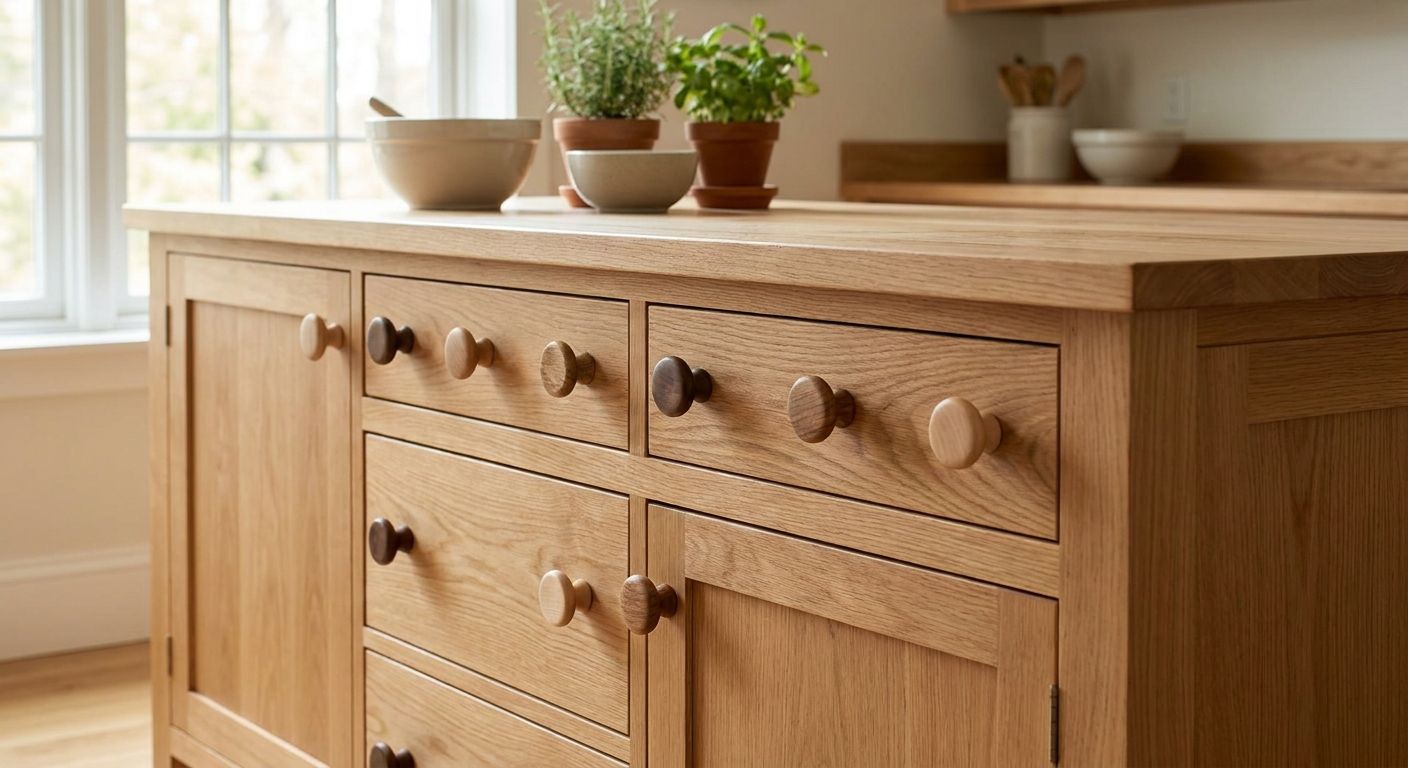
Wood cabinet knobs for natural wood kitchens are hardware picks chosen to work with existing grain and stain instead of fighting it, so the kitchen reads finished rather than mismatched. Homeowners with unpainted oak, walnut, hickory, or white oak cabinets have a narrower margin for error than painted-cabinet shoppers, because every knob sits against visible wood grain instead of a flat painted surface.
- Wood cabinet knobs in matte black or black nickel read as intentional against oak, walnut, or hickory in 2026.
- Unlacquered brass and weathered nickel blend into warm wood tones without disappearing entirely.
- Order samples in 2-3 finishes before buying in bulk since grain shifts how metal reads under kitchen lighting.
- Knobs.co stocks 50,000+ SKUs of cabinet hardware, including finishes built for natural wood kitchens.
- Skip polished chrome and bright silver on warm wood tones, the contrast reads cheap instead of clean.
Why wood cabinet knobs matter for natural wood kitchens
Painted cabinets let color absorb a lot of the visual work. Natural wood cabinets don't have that buffer, so the knob itself becomes one of the loudest design decisions in the room. A finish that looks neutral on a white shaker door can look flat or shiny-wrong against real grain.
The practical fallout: wood-kitchen owners ask a narrower, more specific set of questions than painted-cabinet shoppers, mostly centered on whether to match the wood tone or contrast against it. Knobs.co stocks finishes built for both approaches, from oil-rubbed bronze to unlacquered brass, which matters because a natural wood kitchen usually only gets hardware installed once every decade or two.
Wood tone also isn't one thing. Honey oak, cherry, and hickory run warm and reflect gold and copper finishes well. Walnut, white oak, and ash run cooler and neutral, which opens the door to nickel, pewter, and black finishes that would look harsh against cherry.
How to choose wood cabinet knobs for a natural wood kitchen
Identify your wood's undertone
Before picking a finish, look at the cabinet wood in daylight and under your kitchen's actual bulbs, since undertone shifts more than most homeowners expect.
- Hold a raw brass or copper sample against the door in daylight
- Check the same sample under your kitchen's evening lighting
- Note whether the wood leans orange/red (warm) or gray/brown (cool)
- Photograph the door next to a white sheet of paper to see true color cast
- Rule out undertone confusion caused by yellow LED bulbs
Decide contrast or blend
There are only two honest strategies for wood cabinet knobs: match the wood so hardware nearly disappears, or contrast so the knob reads as a deliberate accent. Both work in 2026 kitchens; picking neither is what looks unfinished.
- Contrast finishes: matte black, black nickel, dark bronze, pewter
- Blend finishes: unlacquered brass, weathered nickel, warm brass, aged brass
- Mixed approach: black pulls on drawers, brass knobs on doors
- Avoid finishes that split the difference, like dull chrome, which reads neither warm nor intentional
Order samples in your top two or three finishes
Skip guessing off a product photo. Wood grain and kitchen lighting change how metal reads more than any screen can show, and this is the step where ordering ahead of a full-kitchen purchase pays off.
- Request free samples in your shortlisted finishes before buying in bulk
- Hold each sample against multiple cabinet doors, not just one
- Check samples in both daylight and under-cabinet lighting
- Compare a contrast finish and a blend finish side by side before deciding
- Live with samples for at least a few days before ordering
Match knob size to door and drawer scale
A knob sized for a small drawer looks lost on a 30-inch pantry door, and an oversized knob overwhelms a narrow drawer front. Natural wood grain makes undersized hardware look even smaller because the eye already has more visual texture to process.
- Use 1-1/4 inch knobs on standard cabinet doors
- Step up to 1-1/2 inch or larger on oversized pantry and island doors
- Center knobs on narrow drawers under 12 inches wide
- Consider bar pulls instead of knobs on drawers over 24 inches wide
- Keep knob size consistent across all standard doors, saving size variation for statement pieces
Coordinate knobs with pulls and appliance hardware
Mixing a knob finish with drawer pulls and appliance pulls that don't relate to each other is one of the fastest ways to make a natural wood kitchen look unplanned.
- Use knobs on doors and matching-finish bar pulls on drawers
- Match appliance pull finish to cabinet hardware finish, not just style
- Keep faucet and cabinet finishes in the same family, even if not identical
- Reserve a second finish for one deliberate accent area, like an island
Install with consistent placement before finish detail gets noticed
Even the right finish looks off if placement is inconsistent door to door. This step is about execution, not selection, but it's where natural wood kitchens show sloppy installs fastest.
- Use a hardware jig to keep hole placement identical across all doors
- Measure from the same reference point (usually the door's outer corner) on every piece
- Double-check screw length against door thickness before drilling
- Mark and drill one test door before committing to the full kitchen
Finish options compared for natural wood cabinets
| Finish/Option | Best for | Key limitation |
|---|---|---|
| Unlacquered brass | Warm wood tones (oak, cherry, hickory), owners who want patina over time | Develops patina and tarnish, which some owners don't want |
| Oil-rubbed bronze | Traditional and farmhouse-style wood kitchens | Can look dated next to very modern slab doors |
| Matte black | Contrast on any wood tone, modern and transitional kitchens | High-contrast look isn't right for every buyer's taste |
| Weathered nickel/pewter | Cool wood tones (walnut, white oak, ash) | Less warmth than brass options on orange-toned wood |
| Plain, unadorned knobs (like a Portobello Road knob) | Kitchens that want the wood grain, not the hardware, to be the focal point | Limited decorative detail for buyers who want an ornate look |
“If you can't decide between contrast and blend, pick contrast. Matte black or black nickel reads as intentional against every wood tone from honey oak to espresso walnut.”
Common mistakes natural wood kitchen owners make
- Matching wood tone too literally. Buying a wood-toned or gold-heavy finish to "match" the cabinets often makes hardware disappear entirely instead of adding contrast.
- Ignoring lighting changes. A finish chosen under bright daylight can look completely different under warm evening kitchen lighting; test both before ordering.
- Mixing more than two finishes. Natural wood grain already adds visual texture; a third or fourth metal finish makes the kitchen look unplanned rather than layered.
- Skipping samples to save time. Full-kitchen hardware is a once-a-decade purchase for most homeowners, and guessing off a photo is the most common reason for a return.
- Undersizing hardware on large doors. Wood grain draws the eye, so a knob that's too small for a wide pantry or island door gets visually lost fast.
For a deeper look at finish selection specifically, see how to choose cabinet hardware finish or the dedicated guide to best cabinet knobs for wood cabinets.
FAQ
What's the best finish for wood cabinet knobs on natural wood cabinets?
Matte black or black nickel gives the strongest contrast against any wood tone, while unlacquered brass or weathered nickel blends into warm or cool wood without disappearing. The right choice depends on whether you want the hardware to stand out or recede.
Should cabinet knobs match or contrast with wood cabinets?
Contrast is the safer choice for most natural wood kitchens in 2026 because it reads as a deliberate design decision rather than an afterthought. Matching finishes work too, but they require closer attention to undertone to avoid a muddy look.
Is brass or black hardware better for oak cabinets?
Warm-toned oak generally pairs well with unlacquered or aged brass, while matte black creates a bolder, more modern contrast on the same wood. Both are common choices; the decision comes down to whether the kitchen leans traditional or transitional.
How do I know what size cabinet knobs to buy?
Standard cabinet doors take 1-1/4 inch knobs, while oversized pantry or island doors look better with 1-1/2 inch or larger hardware. Narrow drawers under 12 inches wide should stay with a single centered knob rather than a bar pull.
Can I mix knob finishes in one kitchen?
Yes, but limit it to two finishes total, such as black pulls on drawers with brass knobs on doors, to avoid a scattered look. Three or more finishes on natural wood cabinets tends to look unplanned rather than intentional.
How much do wood cabinet knobs cost?
Pricing varies by brand, material, and finish, so check current pricing on the product page before budgeting for a full kitchen. Ordering samples first helps confirm the finish before committing to a bulk order.
Do unlacquered brass knobs tarnish over time?
Yes, unlacquered brass is designed to develop a natural patina as it ages, which some owners want and others don't. If you prefer a consistent look year to year, a lacquered or plated brass finish holds its color longer.
What knob style works best with white oak cabinets?
White oak's cool, neutral undertone works well with weathered nickel, pewter, or matte black for contrast, or warm brass for a blend approach. Plain, unadorned knob shapes tend to let the wood grain stay the visual focus.
One last thing
The single biggest variable in how a wood cabinet knob looks isn't the finish, it's the lighting temperature in the kitchen. The same black nickel knob can read cool and modern under daylight-temperature LEDs and warm and vintage under 2700K bulbs, so test samples under the exact bulbs going into the room, not the bulbs in your living room or a showroom.


