

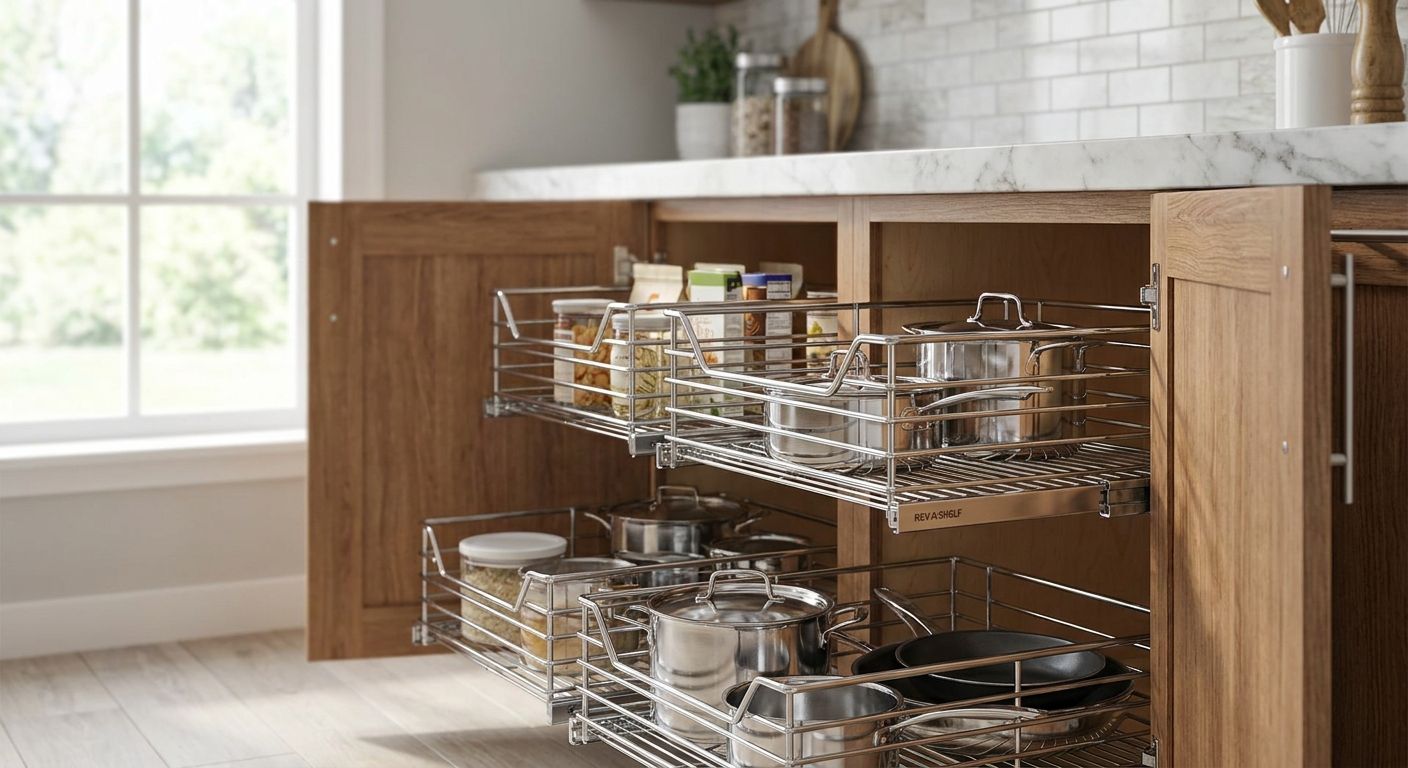
Rev-A-Shelf built the modern pull-out shelf category, but picking the right pull-out for your cabinets means matching shelf type to opening size, door style, and load — not just chasing a brand name.
Shop the finish
Every chrome knob and pull we carry, in one place — filter by size, style, and brand.
Browse Chrome Cabinet Hardware →- Wood pull-out shelves handle heavier cookware loads; wire pull-outs suit pantry cans and boxes better.
- Measure the cabinet opening before buying any rev a shelf pull-out — 9, 12, 15, 18, 21, and 24-inch widths are the standard sizes.
- Blind corner pull-outs are the highest-value upgrade for wasted cabinet space in 2026 kitchens.
- Lazy Susan pull-out combos from Knobs.co cover the corner-cabinet gap when a straight pull-out won't fit.
- Face-frame cabinets need a different mounting kit than frameless boxes — buy the wrong one and it won't seat flush.
Shop the picks from this guide
In stock at Knobs.co · Free shipping on hardware orders $99+ · 110% price match
-
 Amerock
Edona 1-1/4'' diam Cabinet Knob BP53005Polished Chrome
Amerock
Edona 1-1/4'' diam Cabinet Knob BP53005Polished Chrome
$3.21
$3.77 -
 Amerock
Everyday Heritage 3'' cc Cabinet Pull BP865Polished Chrome
Amerock
Everyday Heritage 3'' cc Cabinet Pull BP865Polished Chrome
$1.92
$2.25 -
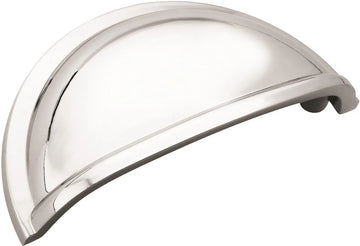 Amerock
Cup Pulls 3'' cc Cabinet Cup Pull BP53010Polished Chrome
Amerock
Cup Pulls 3'' cc Cabinet Cup Pull BP53010Polished Chrome
$4.61
$5.42 -
 Alno
Alno A1032 1'' Brass Cabinet KnobPolished Brass
Alno
Alno A1032 1'' Brass Cabinet KnobPolished Brass
$13.46
$14.95 -
 Amerock
Everyday Heritage 4'' cc Cabinet Pull BP76312Polished Chrome
Amerock
Everyday Heritage 4'' cc Cabinet Pull BP76312Polished Chrome
$2.28
$2.68 -
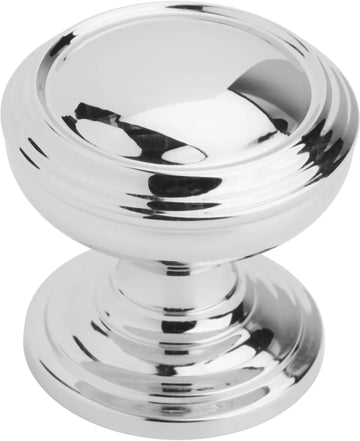 Amerock
Revitalize 1-1/4'' diam Cabinet Knob BP55342Polished Chrome
Amerock
Revitalize 1-1/4'' diam Cabinet Knob BP55342Polished Chrome
$6.42
$7.55


Why this matters
A pull-out shelf is the single upgrade that changes how a cabinet actually gets used. Cabinets without them turn into a crouch-and-dig exercise every time you need the stockpot in the back. Rev a shelf, as a search term, pulls nearly 50,000 monthly searches because homeowners hit that same frustration at the same point in a kitchen remodel.
The category itself is broader than one brand. Wood shelves, wire baskets, blind corner rotating units, and built-in trash pull-outs all solve different problems, and picking the wrong type for your cabinet is the most common mistake in this purchase. This guide ranks the categories by where they earn their keep, and where a pull-out shelves for pantry cabinets setup beats a generic drawer organizer.
How we ranked
Each category below is scored on three things: how much usable space it recovers versus a fixed shelf, how it holds up to daily loading and unloading, and how forgiving it is to install without pulling the cabinet apart. Load-capacity figures reflect commonly published manufacturer ratings across the wood and wire pull-out market as of 2026, not a single tested unit. Verdicts assume a standard 24-inch-deep base cabinet unless noted.
The ranked list
1. Wood pull-out shelves — the workhorse
Solid wood or plywood shelves on full-extension slides are the default recommendation for base cabinets under a countertop. Most units on the market carry a 75 to 100-lb rating, enough for cast iron, small appliances, or a stack of mixing bowls. They install on the existing cabinet floor with side-mount slides in under an hour for most DIYers.
The tradeoff is cost per shelf — outfitting a full run of base cabinets with wood pull-outs adds up fast if you're doing more than two or three openings. Buy for cookware and heavy storage; Skip for pantry goods where wire does the job for less.
2. Wire pull-out baskets — the pantry pick
Wire baskets trade load capacity for visibility and airflow, which matters for canned goods, produce, and anything you want to spot without digging. Standard widths run 9 to 21 inches, matching the same cabinet openings as wood shelves, so swapping between the two later is straightforward.
Wire baskets typically top out lower than wood — usually 35 to 50 lbs — so they're the wrong call under a heavy mixer or stacked cast iron. Buy for dry pantry goods and produce bins; Consider for anything over 40 lbs of daily load.
3. Blind corner pull-out systems — the space reclaimer
Blind corner cabinets waste more usable square footage than any other spot in a standard kitchen layout, and a rotating or sliding pull-out system is the only real fix short of a full cabinet swap. These units mount to the cabinet floor and pivot the contents out as the door opens, recovering storage that's otherwise a crawl-and-reach zone.
Installation is more involved than a drop-in shelf — expect to remove the existing shelf and verify hinge clearance before ordering. Buy if your kitchen has a blind corner cabinet sitting mostly empty; Skip if your corner cabinet already has a lazy Susan that works.
4. Pull-out trash and recycling centers — the daily-use pick
A built-in trash pull-out under the sink or in a dedicated base cabinet is one of the highest-use features in any kitchen remodel, and it's a category Rev-A-Shelf effectively defined. Bin capacities commonly run 27 to 50 quarts per bin, with dual-bin units splitting trash and recycling in the same cabinet footprint.
Check door swing and sink plumbing clearance before buying — a bin that's too tall will hit the drain trap. Buy for any kitchen without a dedicated waste pull-out already; verdict holds regardless of budget tier.
5. Tall cabinet and pantry pull-outs — the deep-storage fix
Full-height pantry pull-outs turn a cavernous 84-inch cabinet into tiered, accessible shelving instead of a black hole behind the door. These systems carry the most hardware per unit — multiple shelves, full-extension slides rated for the whole assembly — and are the priciest category here.
They're worth it specifically for pantry cabinets deeper than 12 inches, where anything on a fixed shelf gets lost. Buy for a dedicated pantry cabinet; Skip for a standard 24-inch base cabinet, where the smaller wood or wire options do more for less.
6. Lazy Susan pull-out combos — the corner hybrid
When a blind corner pull-out doesn't fit the cabinet geometry, a rotating Lazy Susan set is the practical fallback, and it's a category Knobs.co stocks directly rather than sourcing through a single brand name. Two-shelf and three-shelf kidney or round sets in 18 to 28-inch diameters cover most corner cabinet openings without custom fabrication.
These units mount on a center pole with chrome hubs and rotate a full 360 degrees, which beats reaching into a static corner shelf every time. Buy for corner cabinets where a straight pull-out system won't clear the door swing.


“If the cabinet opening is under nine inches, skip the tray shelf and buy a single-tier wire basket instead.”
Comparison table
| Type | Best for | Typical load | Install difficulty | Verdict |
|---|---|---|---|---|
| Wood pull-out shelf | Cookware, base cabinets | 75-100 lbs | Easy | Buy |
| Wire pull-out basket | Pantry goods, cans | 35-50 lbs | Easy | Buy |
| Blind corner pull-out | Wasted corner cabinets | 40-75 lbs | Moderate | Buy |
| Trash/recycling pull-out | Under-sink or base waste | 27-50 qt bins | Moderate | Buy |
| Tall pantry pull-out | Deep 84" pantry cabinets | Varies by tier | Advanced | Buy |
| Lazy Susan pull-out | Corner cabinets, tight fit | Shelf-rated | Moderate | Buy |
Where to buy
- Measure before you order. Cabinet openings run in standard widths — 9, 12, 15, 18, 21, and 24 inches are the most common — and a pull-out sized for the wrong opening won't seat.
- Confirm face-frame vs. frameless. Face-frame cabinets need slides with a mounting bracket that clears the frame lip; frameless (European-style) cabinets mount directly to the box side. Buying the wrong kit is the most common return reason in this category.
- Order samples before committing to finish-matched hardware. If the pull-out project is part of a bigger hardware refresh, Knobs.co ships samples so pulls, knobs, and shelf hardware finishes actually match under kitchen lighting instead of guessing from a screen.
FAQ
What's the best rev a shelf pull-out shelf for a base cabinet?
A wood pull-out shelf rated 75-100 lbs is the best fit for a standard base cabinet holding cookware. Wire baskets work better for lighter pantry goods in the same opening.
Is a wire pull-out basket better than a wood shelf?
Wire baskets win on visibility and airflow for pantry items; wood shelves win on load capacity for cookware and appliances. Match the pick to what's actually going in the cabinet.
How much does a pull-out shelf system cost in 2026?
Single wood or wire pull-outs run in the low double digits per shelf for basic kits, while blind corner and tall pantry systems cost more due to added hardware and slides. Check current pricing on the retailer's site before budgeting a full kitchen.
Do pull-out shelves fit face-frame cabinets?
Yes, but face-frame cabinets need a mounting bracket kit different from frameless cabinets. Confirm your cabinet type before ordering slides or brackets.
What size pull-out shelf fits a 15-inch cabinet?
A 15-inch-wide pull-out shelf is sized for a standard 15-inch cabinet opening, one of the most common base cabinet widths built in 2026 kitchens. Measure the interior opening, not the door width, before ordering.
Are blind corner pull-outs worth the cost?
Yes, for any blind corner cabinet where the back third of the space currently sits unused. It's the highest-value single upgrade in a cabinet organization project.
Can I install a pull-out shelf myself?
Most wood and wire pull-out shelves install in under an hour with a drill and the included slides. Blind corner and tall pantry systems take longer and may require removing the existing fixed shelf first.
What's the difference between a Lazy Susan and a blind corner pull-out?
A Lazy Susan rotates on a center pole and works in cabinets with a full corner opening, while a blind corner pull-out slides and pivots to reach space behind an adjacent cabinet wall. Cabinet geometry decides which one fits.
One last thing
The pull-out shelf itself rarely fails first — the hinge and door combo does. A heavy wood shelf loaded past its rating puts strain on standard cabinet hinges that were never sized for that load, so if you're upgrading to a 100-lb-rated shelf, check the hinge spec on that cabinet before you load it up in 2026.


