

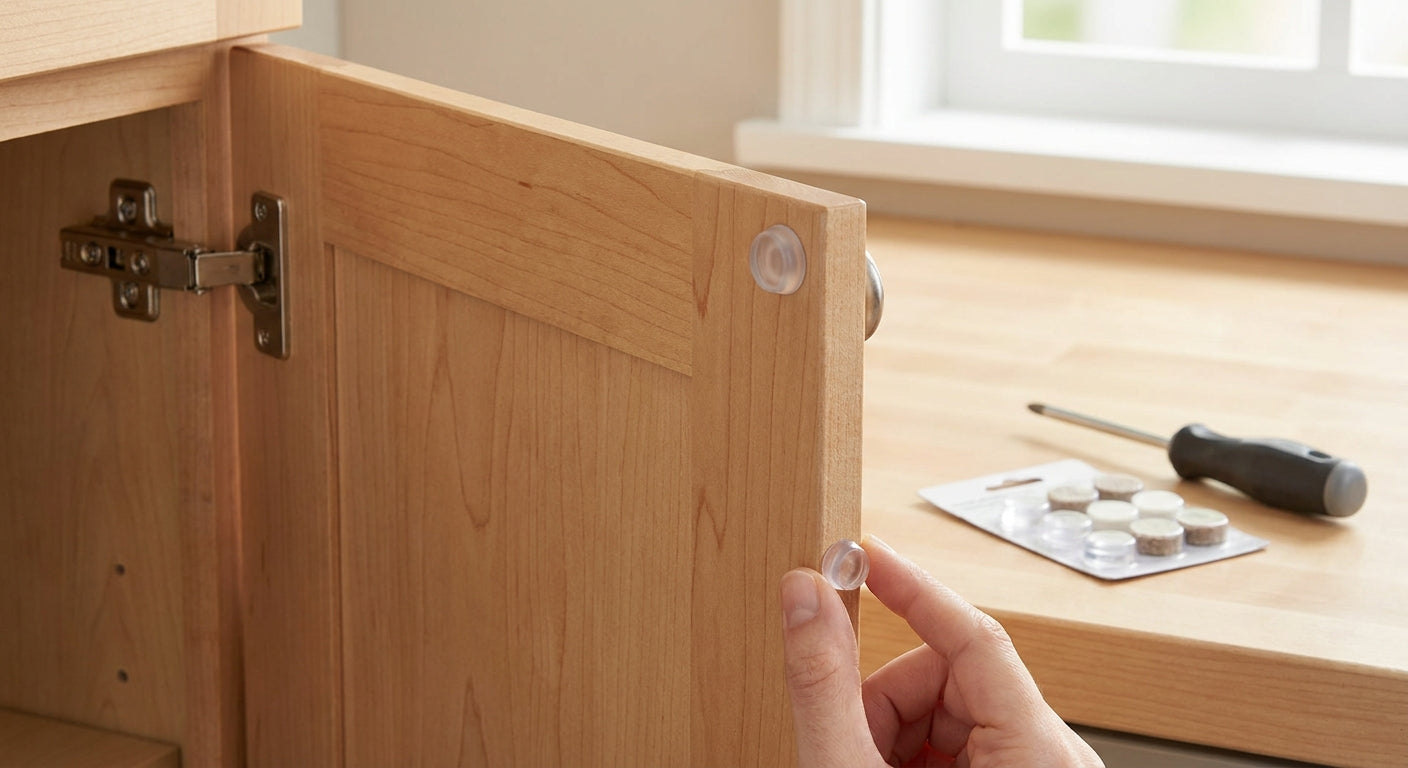
Cabinet doors that slam because there's no soft-close hinge underneath don't need a hinge swap to go quiet — a set of cabinet door bumpers fixes the noise in about ten minutes per door, no tools beyond a rag and patience.
Shop cabinet hinges
Every cabinet hinge we carry, in one place — filter by overlay, mount type, and brand.
Browse Cabinet Hinges →- Clear rubber bumpers at 3/8 inch diameter are the safe pick for most overlay doors in 2026 — Buy.
- Silicone door dampers cost more per pack but hold their compression twice as long as felt — Buy.
- Felt pads are the cheapest cabinet door bumpers on the shelf but flatten out inside 6 months — Consider only as a stopgap.
- Skip stick-on hydraulic dampers if you rent; they leave adhesive residue that fights your security deposit.
Shop the picks from this guide
In stock at Knobs.co · Free shipping on hardware orders $99+ · 110% price match
-
 Amerock
Functional Hardware 3/8'' Offset Non-Self Closing Face Mount Cabinet Hinge - 1 Pair BPR3406Antique Copper
Amerock
Functional Hardware 3/8'' Offset Non-Self Closing Face Mount Cabinet Hinge - 1 Pair BPR3406Antique Copper
$6.99
$8.22 -
 Amerock
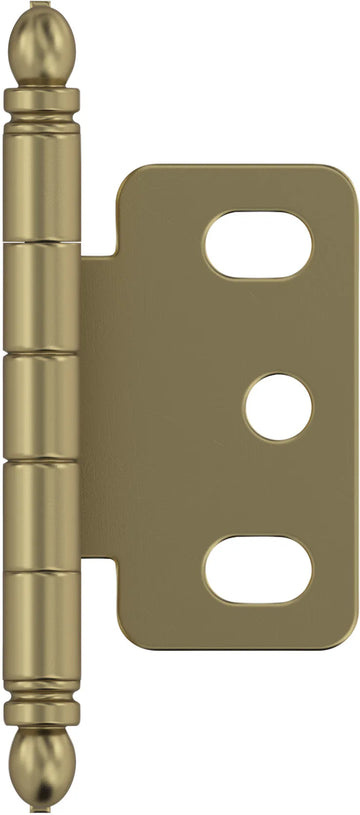
Functional Hardware 3/4'' Door Thickness Full Inset Partial Wrap Ball Tip Cabinet Hinge - Single Hinge PK3180Golden Champagne
Amerock
Functional Hardware 3/4'' Door Thickness Full Inset Partial Wrap Ball Tip Cabinet Hinge - Single Hinge PK3180Golden Champagne
$5.90
$6.93 -
 Amerock
Functional Hardware 1/2'' Overlay Double Demountable Cabinet Hinge - 1 Pair BPR8704Burnished Brass
Amerock
Functional Hardware 1/2'' Overlay Double Demountable Cabinet Hinge - 1 Pair BPR8704Burnished Brass
$12.95
$15.23 -
 Amerock
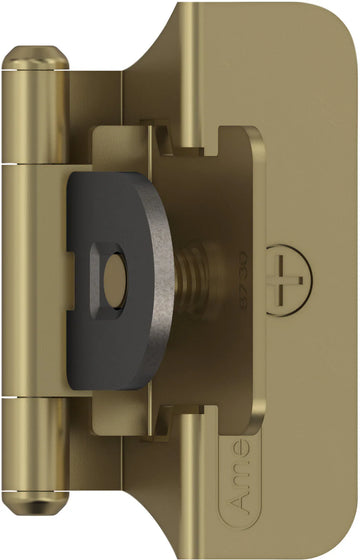
Functional Hardware 1/4'' Overlay Double Demountable Cabinet Hinge - 1 Pair BPR8701Golden Champagne
Amerock
Functional Hardware 1/4'' Overlay Double Demountable Cabinet Hinge - 1 Pair BPR8701Golden Champagne
$12.95
$15.23 -
 Amerock
Functional Hardware Variable Overlay Self Closing Face Mount Cabinet Hinge - 1 Pair BPR3429Polished Chrome
Amerock
Functional Hardware Variable Overlay Self Closing Face Mount Cabinet Hinge - 1 Pair BPR3429Polished Chrome
$5.32
$6.25 -
 Amerock
Functional Hardware 3/4'' Door Thickness Full Inset Full Wrap Ball Tip Cabinet Hinge - Single Hinge PK3175Antique Brass
Amerock
Functional Hardware 3/4'' Door Thickness Full Inset Full Wrap Ball Tip Cabinet Hinge - Single Hinge PK3175Antique Brass
$5.56
$6.54


Why this matters
A banging cabinet door isn't a hinge problem in most kitchens built before soft-close became standard around the mid-2010s — it's a missing-bumper problem. Builder-grade face-frame and overlay cabinets from that era were never fitted with anything to absorb the door's swing, so wood hits wood every single close. Cabinet door bumpers solve that for a few dollars a pack instead of the cost and labor of swapping every hinge in the kitchen. If you're weighing bumpers against a full hinge upgrade, Knobs.co stocks both the small hardware and the soft-close hinge lines side by side, so you can compare before committing to either fix.
Who this is for
This guide is for anyone with cabinets that lack soft-close hardware — renters who can't swap hinges, owners doing a budget refresh, or anyone who just wants the slamming to stop before a full remodel. If your cabinets are 2010 or older, or you bought a builder-grade kitchen new in the last few years without paying extra for soft-close upgrades, bumpers are almost certainly your fastest fix.
What to look for in cabinet door bumpers
Material: rubber, felt, or silicone
Rubber and silicone compress and rebound; felt just cushions. For a door that closes dozens of times a day, rubber and silicone hold their shock-absorbing shape longer than felt, which packs down and stops doing its job within months. If quiet matters more than budget, skip felt entirely.
Adhesive backing strength
A bumper that peels off after three weeks is worse than no bumper — it leaves a sticky ring and you're back to slamming. Look for 3M-grade acrylic adhesive backing rated for indoor cabinetry, not generic craft-foam tape.
Diameter and thickness match your door gap
Measure the gap between the door and the frame when it's fully closed. A bumper too thick keeps the door from latching flush; one too thin does nothing. Most overlay doors need a 3/8 inch to 1/2 inch bumper; inset doors often need something closer to 1/4 inch.
Color and visibility
Clear bumpers disappear against light and dark cabinets alike. White or black bumpers show up as small dots against unlacquered brass hardware or pale oak — fine for garages and workshops, less fine for a kitchen you're trying to sell.
Real-world sound dampening
Bumpers don't eliminate sound the way a soft-close hinge does — they reduce the sharp knock to a soft thud. If total silence is the goal, bumpers are a stopgap, not the endpoint. Pair them with a look at soft-close cabinet hinges if a thud still bothers you after a week.
The picks
Clear rubber bumpers — the safe pick
Standard 3/8 inch clear rubber dots are the default recommendation for cabinet door bumpers in 2026 because they work on almost every overlay door style without visual clutter. They compress about 1/16 inch on contact, enough to kill the knock without keeping the door from sitting flush. Buy — this is the pick for 90% of kitchens.
Silicone door dampers — the quiet upgrade
Silicone holds its shape roughly twice as long as standard rubber under daily compression, which matters if your cabinets get opened 40+ times a day in a busy kitchen. They cost slightly more per pack but need replacing less often. Buy if you want fewer re-applications over the next few years.
Felt pads — the budget filler
A 5/8 inch round felt pad costs pennies and installs in seconds, but felt flattens permanently under repeated compression, often inside 6 months in a high-traffic kitchen. Fine for a linen closet door that closes twice a day. Consider for low-traffic cabinets, Skip for the kitchen you use daily.
Adhesive foam bumpers — the invisible fix
Thin foam bumpers around 3mm thick work well on doors with a tight gap where rubber would prevent a flush close. They're less durable than rubber but nearly invisible once installed. Consider for inset doors with minimal clearance.
Hydraulic door dampers — the overkill option
These small stick-on units add an actual soft-close mechanism to the door without replacing the hinge — essentially retrofitting the soft-close feel for $8 to $15 a set. They work, but the adhesive mount isn't rental-friendly and installation is fussier than a simple bumper. Consider if you own the home and want hinge-level quiet without the labor of a hinge swap; Skip if you rent or need a five-minute fix.
If bumpers and dampers still leave a door that won't latch right, the issue is usually the hinge itself, not the bumper — how to choose the right cabinet hinge walks through when a hinge swap is the actual fix.
What to avoid
- Double-sided foam tape from a hardware aisle that isn't rated for repeated compression — it loses tack within weeks and the bumper falls off inside the cabinet.
- Colored bumpers on light cabinetry picked for cost alone — they're visible from across the room and read as an afterthought fix.
- Bumpers sized without measuring the door gap — a 1/2 inch bumper on a door with a 1/4 inch gap keeps the door from closing flush, which creates a new problem you didn't have before.
“If a bumper compresses under 1/16 inch when the door closes, it's already worn out and doing nothing.”
Verdict comparison
| Bumper type | Material | Typical diameter | Best for | Verdict |
|---|---|---|---|---|
| Clear rubber | Rubber | 3/8 in | Most overlay doors | Buy |
| Silicone damper | Silicone | 10mm | High-traffic kitchens | Buy |
| Felt pad | Felt | 5/8 in | Low-traffic closets | Consider |
| Adhesive foam | Foam | 3mm | Tight-gap inset doors | Consider |
| Hydraulic damper | Rubber + mechanism | Varies | Owners wanting soft-close feel | Consider |
FAQ
What are cabinet door bumpers?
Cabinet door bumpers are small adhesive pads made of rubber, felt, or silicone that stick to the inside of a cabinet frame to cushion the door when it closes. They're the fastest fix for slamming doors on cabinets built without soft-close hinges.
Do cabinet door bumpers work as well as soft-close hinges?
No — bumpers reduce a sharp slam to a soft thud, but they don't slow the door's swing the way a soft-close hinge mechanism does. For total silence, a hinge upgrade beats bumpers, though bumpers cost far less and install in minutes.
What size cabinet door bumpers should I buy?
Measure the gap between the closed door and the cabinet frame first. Most overlay doors need a 3/8 inch to 1/2 inch bumper, while inset doors with tighter clearance usually need something closer to 1/4 inch.
How long do adhesive door bumpers last?
Felt pads often flatten inside 6 months in a high-traffic kitchen, while rubber and silicone bumpers hold their compression noticeably longer under the same daily use. Replace any bumper once it no longer springs back after the door closes.
Can bumpers fix a loud cabinet door without replacing the hinges?
Yes, in most cases — bumpers address the noise from wood-on-wood contact, which is the main cause of slamming on cabinets without soft-close hardware. If the door still won't sit flush after adding a bumper, the hinge itself may need adjusting or replacing.
Should I put bumpers on drawers too, not just cabinet doors?
Drawers benefit from the same fix, especially bottom-mount drawers that lack a soft-close slide. A small bumper at each rear corner of the drawer box stops the same wood-on-wood knock.
How much do cabinet door bumpers cost?
A pack of a dozen or more rubber or felt bumpers typically runs a few dollars, making it one of the cheapest cabinet upgrades available in 2026. Hydraulic stick-on dampers cost more, usually $8 to $15 per set.
When should I upgrade to soft-close hinges instead of using bumpers?
If bumpers still leave an audible thud that bothers you, or you're already replacing hinges for another reason, soft-close hinges solve the noise at the source instead of cushioning the impact. Bumpers remain the better choice for a fast, low-cost fix on cabinets you don't plan to renovate soon.
One last thing
A bumper that's doing its job compresses visibly every time the door closes and springs back within a second — if it doesn't spring back, it's already dead and the slam is coming right back, so check yours every few months instead of assuming a one-time install lasts forever.


