

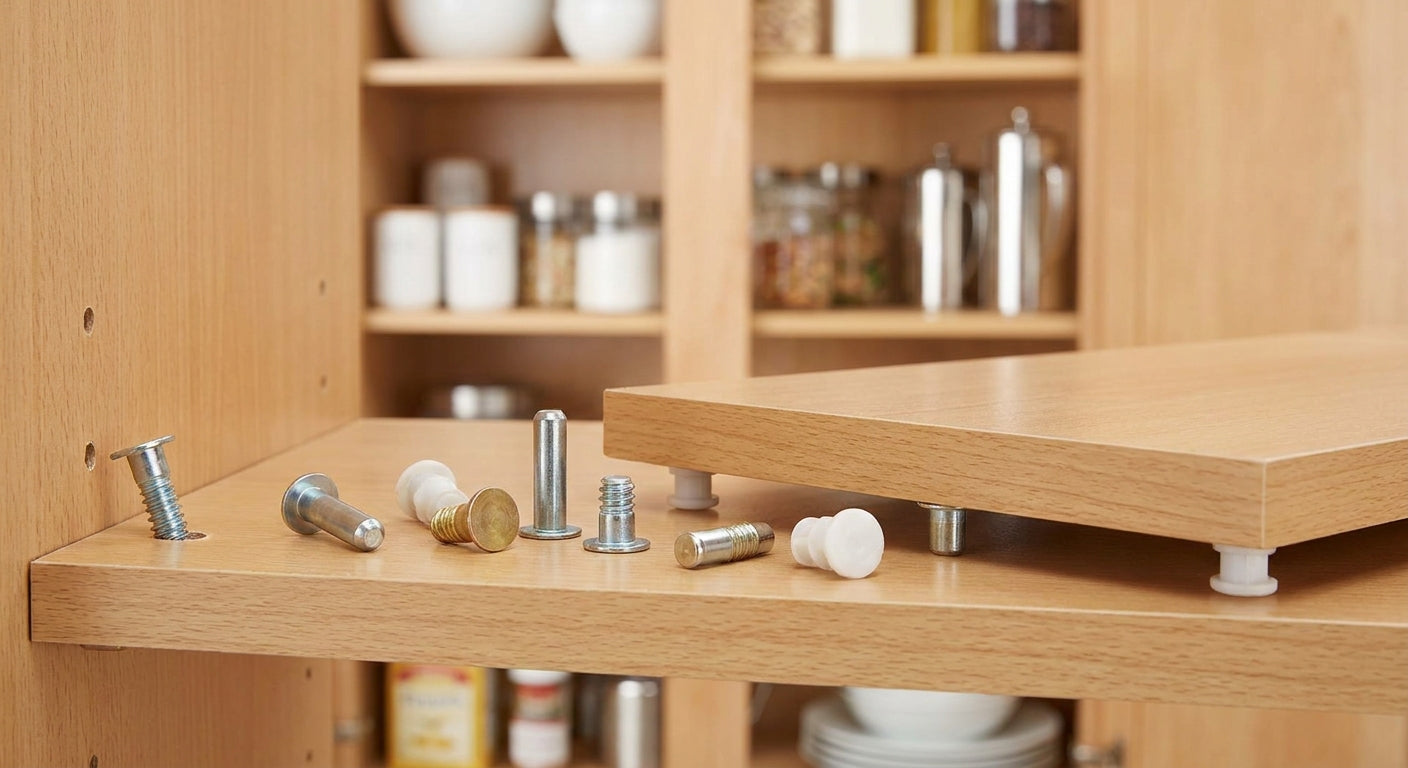
Adjustable cabinet shelving lives or dies on one small piece of hardware: the shelf pin. Get the diameter, load rating, and spacing wrong and shelves wobble, sag, or fall out of their holes the first time someone loads a stack of dinner plates.
- 5mm nickel-plated pins are the safe default for shelf pins for cabinets built after the 1990s — Buy.
- Spoon-style supports rated to 50 lbs win for glass shelves or pantry loads in 2026 remodels — Buy.
- Plastic sleeve pins run under 15 lbs of load rating — Skip them for anything load-bearing.
- Locking threaded pins stop shelf tilt on islands and open shelving — Consider, not mandatory.
Shop the picks from this guide
In stock at Knobs.co · Free shipping on hardware orders $99+ · 110% price match
-
 Berenson
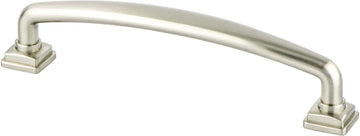
Tailored Traditional 128mm CC Brushed Nickel Pull 1284-1BPN-P
Berenson
Tailored Traditional 128mm CC Brushed Nickel Pull 1284-1BPN-P
$10.93
$13.66 -
 Berenson
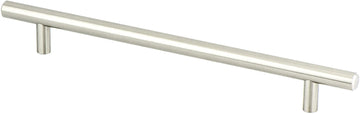
Tempo 192mm CC Brushed Nickel Bar Pull 0806-2BPN-P
Berenson
Tempo 192mm CC Brushed Nickel Bar Pull 0806-2BPN-P
$11.53
$14.41 -
 Berenson
Bravo 56mm CC Brushed Nickel Edge Pull 1057-4BPN-P
Berenson
Bravo 56mm CC Brushed Nickel Edge Pull 1057-4BPN-P
$9.83
$12.28 -
 Berenson
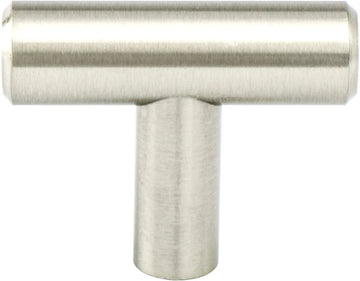
Transitional Advantage Two Brushed Nickel T-Bar Knob 9435-2BPN-P
Berenson
Transitional Advantage Two Brushed Nickel T-Bar Knob 9435-2BPN-P
$2.80
$3.50 -
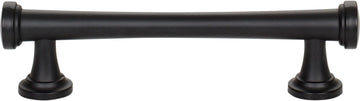 Atlas Homewares
Browning Pull 3 3/4'' ccMatte Black
Atlas Homewares
Browning Pull 3 3/4'' ccMatte Black
$14.50
$16.11 -
 Berenson
Folklore 3in. CC Brushed Nickel Cup Pull 8340-1BPN-P
Berenson
Folklore 3in. CC Brushed Nickel Cup Pull 8340-1BPN-P
$12.92
$16.15


Why this matters
Most cabinet boxes built since the 1990s use a factory-drilled hole pattern spaced 32mm on-center, a system carried over from European cabinet construction. That standardization is good news: it means the shelf pin you buy in 2026 almost certainly fits a cabinet built a decade ago.
The bad part is that pin diameter isn't universal. North American cabinets mix 5mm and 1/4-inch hole bores depending on the manufacturer, and a pin sized for the wrong bore either falls straight through or has to be forced in, which cracks the cabinet-grade particleboard around the hole. If you're drilling new holes rather than reusing factory ones, a cabinet hardware jig keeps every hole on the same line and at the same depth, which matters more for load rating than the pin itself.
Who this is for
This guide is for homeowners retrofitting kitchen or pantry cabinets with adjustable shelves, and for contractors and cabinetmakers who need a fast, correct spec sheet before ordering hardware for a multi-cabinet job. If you're installing knobs and pulls at the same time, coordinating finish across shelf pins and door hardware is part of the same decision, not a separate one.
What to look for in shelf pins for cabinets
Pin diameter and hole size match
Measure an existing hole with a caliper or a drill bit before ordering anything — 5mm and 1/4-inch (6.35mm) bores look nearly identical to the eye but are not interchangeable. A pin that's even 0.3mm undersized will sit loose and let the shelf rock.
Load rating for what actually sits on the shelf
A stack of dinner plates or a small appliance easily runs 25-40 lbs per shelf section. Standard steel pins rated to 35 lbs cover most kitchen use; anything heavier — cookbooks, canned goods in bulk, a stand mixer — pushes you toward a spoon-style support rated closer to 50 lbs.
Spacing system — 32mm factory holes vs custom drilling
If your cabinet already has factory-drilled holes on the 32mm system, buy pins to match that spacing and skip drilling entirely. Custom cabinetry or older boxes without pre-drilled columns need a jig to keep new holes level across the depth of the cabinet.
Material and finish consistency
A 2026 kitchen with brushed nickel pulls and hinges looks off with brass shelf pins peeking out on open shelving. Finish only matters visually on shelves you can see into — inside closed cabinets, plain steel is fine and usually cheaper.
Locking vs friction-fit design
Friction-fit pins rely on hole tightness alone to stay put. Locking or threaded pins physically engage the hole wall, which stops the tilt-and-slide that happens when a shelf gets bumped repeatedly, common on kitchen islands and garage cabinets.
Top picks by pin type
Nickel-plated steel pins, 5mm — the safe pick. This is the size and finish most North American cabinet manufacturers have used since the 1990s. Rated to roughly 35 lbs per shelf and sold in packs cheap enough to over-buy for future repairs. Buy for standard kitchen and bathroom cabinets.
Spoon-style shelf supports — the heavy-duty pick. The wider bearing surface distributes weight across more of the shelf's underside, pushing rated capacity to about 50 lbs — the difference matters on glass or stone shelves that concentrate stress at four small points. Buy for pantry, garage, or any shelf carrying more than 30 lbs.
Locking/threaded pins — the wobble-proof pick. These thread into the hole rather than friction-fitting, which stops the slow tilt that friction pins develop after a year of shelves being pulled in and out. Rated similarly to standard pins, around 35-40 lbs. Consider for islands, open shelving, or any cabinet that gets bumped often — not required for a closed pantry.
Plastic sleeve pins — the budget pick. These run under 15 lbs of rated load and get brittle in unheated garages or cold-climate mudrooms. Fine for holding up a single stack of towels in a linen closet. Skip for anything load-bearing or exposed to temperature swings.
Decorative finished pins (matte black, brushed nickel, polished brass) — the matched-finish pick. Functionally identical to plain steel pins, rated around 30 lbs, but finished to disappear against your existing cabinet organizers and hardware. Buy when the shelf is visible — open shelving, glass-front cabinet doors, or a display hutch.
What to avoid
- "Universal fit" pins claiming to work in both 5mm and 1/4-inch holes. They're loose in one size and jammed in the other — there's no pin that genuinely spans both bores without compromise.
- Pins with no lip or flange under glass shelves. Without a raised edge to stop lateral movement, a glass shelf can slide forward under load, especially on shallow cabinets under 12 inches deep.
- Shallow pilot holes. A pin sunk to only half its rated depth loses a meaningful share of its load capacity — the hole needs to match the pin's full insertion length, not just look deep enough.
Verdict comparison table
| Pin type | Diameter | Load rating | Finish options | Verdict |
|---|---|---|---|---|
| Nickel-plated steel | 5mm | ~35 lbs | Nickel, brass | Buy |
| Spoon-style support | 5mm | ~50 lbs | Nickel, matte black | Buy (heavy loads) |
| Locking/threaded | 5mm | ~35-40 lbs | Nickel, bronze | Consider |
| Plastic sleeve | 1/4" or 5mm | ~15 lbs | Clear, white | Skip (load-bearing) |
| Decorative finished | 5mm | ~30 lbs | Matte black, brass, bronze | Buy (visible shelving) |
FAQ
What size shelf pins do most cabinets use?
Most cabinets built since the 1990s use 5mm shelf pins on a 32mm hole spacing system. Older or custom cabinetry sometimes uses 1/4-inch bores, so measure an existing hole before ordering.
Is 5mm or 1/4-inch the right shelf pin size for my cabinets?
Check an existing hole with a caliper — 5mm and 1/4-inch (6.35mm) look almost identical but aren't interchangeable. A loose pin in the wrong bore will let the shelf rock or slide.
How much weight can a shelf pin hold?
Standard steel shelf pins are rated around 35 lbs per shelf, while spoon-style supports rise to roughly 50 lbs. Plastic sleeve pins typically max out near 15 lbs and aren't meant for load-bearing shelves.
Do shelf pins need to match my cabinet hardware finish?
Only on visible shelving — open shelves or glass-front cabinets show the pin, so matching finish to your knobs and pulls matters there. Inside closed cabinets, plain steel is fine and cheaper.
What's the difference between shelf pins and spoon shelf supports?
Standard pins are small cylinders that insert into a drilled hole, while spoon supports have a wider bearing surface that spreads weight across more of the shelf's underside. Spoon supports carry roughly 15 lbs more per shelf.
Can I use plastic shelf pins in a kitchen?
Plastic sleeve pins work for light, non-load-bearing shelves like a linen closet, but they're rated to about 15 lbs and get brittle in cold or humid spots. Steel pins hold up better for kitchen and pantry use.
How many shelf pins do I need per shelf?
Standard practice is four pins per shelf, one in each corner, for shelves up to 36 inches wide. Wider or deeper shelves benefit from a fifth center pin to reduce sag.
Are locking shelf pins worth it?
Locking or threaded pins are worth the small upcharge on cabinets that get bumped often, like kitchen islands or open shelving, because they resist the slow tilt friction-fit pins develop over time. For a closed pantry, standard friction-fit pins are usually enough.
One last thing
Measure one factory-drilled hole in your cabinet before you buy anything — the 32mm spacing standard means that single measurement tells you exactly where every other hole in the column sits, and it saves you from redrilling a box that was already set up correctly in 2026 by the manufacturer.


