

How to Choose Mid Century Modern Cabinet Hardware 2026
Learn how to choose mid century modern cabinet hardware in 2026: finish matching, pull sizing, placement rules, and top picks from 50,000+ SKUs at Knobs.co.

Mid-century modern cabinet hardware is one of the fastest ways to shift a kitchen or bathroom from generic to intentional — but the wrong pull can flatten the whole look. This guide walks you through exactly how to choose mid century modern cabinet hardware, from finish and profile to sizing and placement, so every decision is deliberate.
TL;DR: Mid-century modern cabinet hardware lives in a narrow zone — tapered bar pulls, geometric knobs, and elongated cup pulls in brass, matte black, or brushed nickel. In 2026, the strongest picks pair a warm-toned finish (satin brass, unlacquered brass) or high-contrast matte black with flat-front or slab cabinet doors. Knobs.co carries 50,000+ SKUs in this category. The mid century modern collection is the fastest starting point.
Shop the picks from this guide
In stock at Knobs.co · Free shipping on hardware orders $99+ · 110% price match
-
 Amerock
Edona 1-1/4'' diam Cabinet Knob BP53005Polished Chrome
Amerock
Edona 1-1/4'' diam Cabinet Knob BP53005Polished Chrome
$3.21
$3.77 -
 Alno
Alno A1032 1'' Brass Cabinet KnobPolished Brass
Alno
Alno A1032 1'' Brass Cabinet KnobPolished Brass
$13.46
$14.95 -
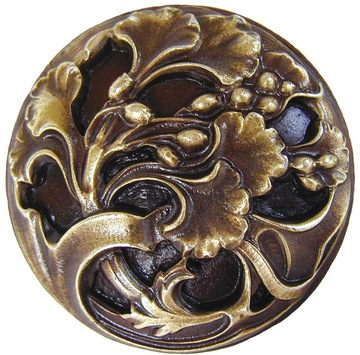 Notting Hill Hardware
 Florid Leaves Pewter Cabinet KnobAntique Brass
Notting Hill Hardware
Notting Hill Hardware Florid Leaves Pewter Cabinet KnobAntique Brass
$38.40
$48.00 -
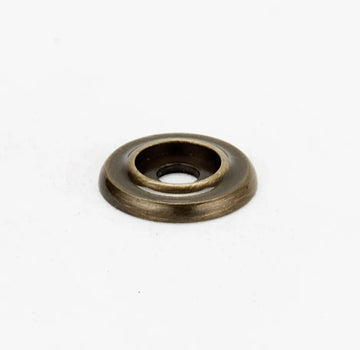 Alno
Alno A615 Brass Cabinet BackplateAntique English / 1''
Alno
Alno A615 Brass Cabinet BackplateAntique English / 1''
$8.06
$8.95 -
 Alno
Alno A726 Charlie's 3 1/2'' CC Cabinet PullAntique English / 3''
Alno
Alno A726 Charlie's 3 1/2'' CC Cabinet PullAntique English / 3''
$24.26
$26.95 -
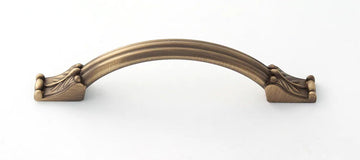 Alno
Alno A1476 Fiore 3 1/2'' CC Brass Cabinet PullAntique English Matte / 3''
Alno
Alno A1476 Fiore 3 1/2'' CC Brass Cabinet PullAntique English Matte / 3''
$24.26
$26.95


Why this matters in 2026
Mid-century modern design peaked as an aesthetic trend around 2018–2020, but hardware manufacturers responded with a surge of SKUs that now crowd the market. The result: dozens of pulls that look MCM in a product photo but read cheap or wrong once installed. Getting the hardware right means understanding the four decisions that actually drive the final look — finish, profile shape, size, and placement rhythm.
What you'll need
- Tape measure (metric or imperial)
- Cabinet door dimensions (width × height of each door and drawer front)
- Photos of your cabinets in natural light
- Existing finish inventory (appliances, faucets, light fixtures)
- A clear cabinet material note — wood species, paint color, or laminate type
- Budget per piece: MCM hardware ranges from $4 to $65+ per pull depending on brand and material
- 15–30 minutes to work through the steps below
Step 1: Lock your finish before anything else
Identify every fixed metal finish already in the room. Appliances, faucets, light fixtures, and exposed hinges all count. Write them down.
Mid-century modern design is not a single finish — it spans warm metallics (satin brass, antique brass, unlacquered brass), cool neutrals (brushed nickel, satin nickel), and high-contrast darks (matte black, oil-rubbed bronze). The MCM era itself used polished brass and chrome heavily, but 2026 market taste skews toward satin brass and matte black for authenticity without glare.
Rule: Match your new hardware finish to the dominant fixed finish in the room, or choose a single intentional contrast. Mixing three different metals across hardware, faucet, and appliances reads cluttered, not curated.
If your space is neutral — white or gray cabinets, stainless appliances — matte black delivers the sharpest MCM contrast. For wood-tone cabinets (walnut, teak, white oak), satin brass reads most period-accurate.
Step 2: Match the pull profile to your cabinet door style
MCM hardware has a specific vocabulary. The profiles that belong in this style are:
- Tapered bar pulls — cylindrical with a slight taper toward the ends; the most widely recognized MCM silhouette
- Elongated cup pulls — recessed oval or rectangular; common on MCM case pieces and dresser drawers
- Geometric flat knobs — circular or square with minimal projection; used on upper cabinet doors
- Thin bar pulls — diameter under 10mm; reads light and architectural
What does not belong: ornate backplates, bin pulls with curves, any pull with a floral or carved motif, and thick round knobs with decorative necking. These read traditional or transitional, not MCM.
Flat-front (slab) and shaker doors are the best matches. Raised-panel doors can work if the hardware is simple enough to counteract the ornate door profile, but it takes deliberate effort.
Step 3: Size the hardware to the cabinet opening
The most common sizing mistake is going too small. In 2026, the dominant MCM pull length for base cabinet drawers is 5 inches to 8 inches center-to-center (cc). Upper cabinet doors typically use a 3-inch to 5-inch pull or a 1.25-inch to 1.5-inch knob.
Here is a simple sizing guide by drawer/door width:
| Cabinet width | Recommended pull cc | Notes |
|---|---|---|
| Up to 12 in | 3–4 in | Single knob also works |
| 12–24 in | 4–6 in | Bar pull preferred |
| 24–36 in | 6–8 in | Go longer; 5 in reads small |
| 36 in + | 8–12 in or dual pulls | Large drawer fronts need weight |
| Appliance panels | 18–24 in | See appliance pull sizing below |
For appliance-panel pulls, sizing up to 18–24 inches is standard. Knobs.co's appliance pulls collection covers this range.
Expected outcome: A correctly sized pull looks proportional from 6 feet away. If you can't see the pull as a visual anchor at normal viewing distance, it's too small.
Common mistake: Buying pulls sized for European cabinets (96mm cc = 3.78 inches) when your US cabinets use 3-inch cc bore holes. Always verify hole spacing before ordering.
Step 4: Establish placement position and stick to it
Inconsistent placement kills the look more reliably than a wrong finish. Pick one rule and apply it to every door and every drawer in the same zone.
MCM-standard placement guidelines for 2026:
- Drawer fronts: Centered horizontally; vertically centered on the drawer face (not top-third).
- Upper cabinet doors: Centered on the door stile, 2.5 to 3 inches from the bottom corner on the pull side.
- Base cabinet doors: Same stile position, 2.5 to 3 inches from the top corner on the pull side.
- Tall pantry or oven cabinet doors: Centered horizontally and at comfortable grip height — 36 to 42 inches from the floor.
Common mistake: Placing upper-door pulls at the top corner ("European style") while using bottom-corner placement on lowers. It creates visual chaos. Choose one convention and apply it everywhere.
Step 5: Order a sample before committing the full run
Every finish photographs differently than it looks in real light. Brushed nickel under warm LED lighting can look almost golden. Matte black in a dark cabinet run can disappear entirely. Satin brass varies by brand — some are yellow-gold, others are warm champagne.
Order one or two pulls before placing a full cabinet run order. Install them on an actual door, photograph them in morning and evening light, and live with them for 48 hours. The cost of returning two pulls is far lower than the cost of returning 30.
Knobs.co's brushed nickel collection and matte black collection both offer individual SKU ordering, so sampling is practical regardless of project size.
Expected outcome: Confidence before the full order. A sample test eliminates the single most common source of hardware returns in 2026.
Step 6: Verify hole patterns and projection depth
Check three numbers before finalizing any pull: center-to-center hole spacing, projection (how far the bar sits off the cabinet face), and screw length.
- CC spacing must match existing bore holes unless you're drilling new ones. US standard spacings are 3 inches (76mm), 3.75 inches (96mm), and 5 inches (128mm).
- Projection matters on drawers near a corner or adjacent appliance. A 1.5-inch projection on a pull beside a refrigerator may block the door swing.
- Screw length is set by door thickness. Standard cabinet door thickness is 0.75 inch. If your overlay door plus drawer box equals more, you need longer screws — most pulls ship with one screw length and it's often wrong for thick doors.
The Amwell bar pull 8-13 by Top Knobs is a concrete example of a well-specified MCM bar pull: it lists cc spacing, projection, and compatible screw lengths in a single product page — the detail level you want from any pull you're considering.
Troubleshooting
The pull looks right in photos but wrong installed. Usually a finish mismatch under your specific lighting. Natural light in the morning is the most honest test. Pull the product and re-sample in two alternative finishes before assuming the profile is the problem.
Drawer pulls are too close to the cabinet frame when the drawer opens. Projection is too high for your cabinet configuration. Drop to a pull with less than 1.25-inch projection, or reposition to center placement.
New pulls don't line up with existing bore holes. You have two options: choose a pull with adjustable CC spacing (some bar pulls offer 3-inch and 3.75-inch in the same SKU) or fill the old holes with wood filler, let cure for 24 hours, and drill new bores.
The hardware looks right but the cabinet still reads "traditional." The issue is usually the door profile, not the hardware. Raised-panel doors with MCM pulls create a style conflict the hardware can't fix alone. Consider whether painting or refacing the doors is in scope.
Pulls feel loose after installation. Screw length is wrong or the door material is too thin to hold. Use nylon-insert locknuts on the inside of the door; they add less than $0.10 per pull and eliminate loosening permanently.
The finish tarnishes within 6 months. Lacquered finishes (common on budget brass) will chip and tarnish faster than PVD-coated or solid-brass options. Look for PVD or "lifetime finish" in the product spec before buying.
Tools and resources
- Tape measure (imperial markings for US cabinet standards)
- Drill with 5mm and 3/8-inch bits
- Level or self-centering punch (Jig It brand is widely used for pull placement)
- Blue tape for marking bore positions before drilling
- Mid-century modern cabinet hardware collection at Knobs.co — 50,000+ SKUs filtered to MCM profile and finish
- Mid-century modern cabinet pulls for kitchen remodels — room-specific guidance with finish-to-cabinet pairings
- Mid-century modern hardware for walnut cabinets — finish matching guide for wood-tone kitchens
What to do next
Once hardware is selected and installed, the next layer of the MCM look is finish consistency across the rest of the room — faucets, light switch plates, and exposed door hinges. The guide on how to mix brushed nickel hardware across rooms covers cross-room finish strategy in detail if brushed nickel is your chosen metal.
FAQ
What hardware finish is most authentic to mid-century modern design? Polished brass and chrome were the period-accurate choices from 1945–1969. In 2026, satin brass and matte black are the closest modern equivalents that read MCM without requiring active maintenance to stay presentable.
What's the best pull length for MCM kitchen cabinets? For base cabinet drawers, 5 to 8 inches center-to-center is the current standard. Going shorter than 4 inches on a drawer wider than 18 inches will look undersized in practice even if it looks proportional in a product photo.
Is brushed nickel a mid-century modern finish? Not historically — brushed nickel was not a standard MCM finish in the original era. It reads clean and contemporary and works in MCM-adjacent spaces, but satin brass or matte black is more period-accurate. Brushed nickel is a safe choice when you need hardware to recede rather than make a statement.
How many knobs vs. pulls should I use in a MCM kitchen? The conventional MCM rule is pulls on all drawer fronts and a mix of pulls or knobs on doors — never knobs on drawers. Using consistent pulls throughout (pulls on both doors and drawers) is a cleaner, more current reading of the style in 2026.
Can I use MCM hardware on shaker cabinets? Yes. Shaker doors are the most versatile cabinet style and accept MCM hardware cleanly. The flat center panel of a shaker door creates enough visual simplicity that an MCM bar pull reads intentional rather than mismatched.
What's the difference between a bar pull and a cup pull for MCM style? Bar pulls (cylindrical, two mounting points) are the dominant MCM silhouette. Cup pulls (recessed oval, single mounting plate) are more period-specific to case furniture and dresser-style lower cabinets. Bar pulls are more versatile across a full kitchen run.
How much should I budget for MCM cabinet hardware? Mid-tier MCM pulls from brands like Top Knobs or Amerock run $8 to $25 per pull. High-end solid-brass or designer pulls run $35 to $65 per pull. A typical 30-cabinet kitchen with a mix of doors and drawers uses 30 to 45 pieces, putting the total at $240 to $2,900 depending on the line you choose.
Do I need to hire someone to install cabinet pulls? No. With a self-centering drill jig, a drill, and 2 hours, a homeowner can install pulls on a full kitchen. The only case for professional installation is if you're drilling new bore holes into a painted finish that requires touch-up afterward.
One last thing
The single detail that separates a finished MCM look from an assembled one is screw exposure on the inside of the cabinet door. On most factory-built cabinets, the screw head from a pull installation is visible inside the cabinet box when the door swings open. Install a plastic screw cap cover — they cost less than $5 for a pack of 50 — and the hardware reads custom, not DIY. It's the step most guides skip.
Related guides
- Mid-century modern cabinet pulls for kitchen remodels
- Mid-century modern hardware for walnut cabinets
- Best mid-century modern knobs for flat front cabinets
Shop Brass Cabinet Hardware
-
 Belcastel 1-3/8'' diam Mushroom Knob MO6303ABM-D
$8.43
Belcastel 1-3/8'' diam Mushroom Knob MO6303ABM-D
$8.43
-
 Lafayette 96 mm cc Bar Pull 317-96ABSB
$17.90
Lafayette 96 mm cc Bar Pull 317-96ABSB
$17.90
-
 Lafayette 128 mm cc Bar Pull 317-128ABSB
$19.91
Lafayette 128 mm cc Bar Pull 317-128ABSB
$19.91
-
 Lafayette 1-3/8'' diam Mushroom Knob 218ABSB
$13.61
Lafayette 1-3/8'' diam Mushroom Knob 218ABSB
$13.61
-
 Milan 96 mm cc Bar Pull 1092AEM
$11.69
Milan 96 mm cc Bar Pull 1092AEM
$11.69
-
 Belcastel 18'' cc Appliance Pull MO6373-18ABM-D
$189.18
Belcastel 18'' cc Appliance Pull MO6373-18ABM-D
$189.18
-
 Belcastel 160 mm cc Bar Pull MO6373-160ABM-D
$16.67
Belcastel 160 mm cc Bar Pull MO6373-160ABM-D
$16.67
-
 Belcastel 128 mm cc Bar Pull MO6373-128ABM-D
$13.86
Belcastel 128 mm cc Bar Pull MO6373-128ABM-D
$13.86


Browse all 3349 in Brass Cabinet Hardware → Cabinet knobs Cabinet pulls & handles