

How to Match Appliance Pulls to Cabinet Hardware 2026
Match appliance pulls to cabinet hardware in 2026: lock finish by manufacturer spec, size pulls to 1/3–1/2 of door width, and install all appliances in one session.

Appliance pulls and cabinet hardware land in the same visual field every time someone stands at your kitchen island — get the pairing wrong and the mismatch reads instantly, even to people who can't name why. This guide covers every decision point: finish, scale, style, and the specific sequencing that makes the whole kitchen feel intentional.
TL;DR: To match appliance pulls to cabinet hardware in 2026, lock in your finish first (brushed nickel, matte black, and brushed brass are the three most forgiving choices), then match the profile style (bar, cup, bin), then size the appliance pull to the door width — not the cabinet pull center-to-center. Knobs.co carries 50,000+ SKUs across major brands, so you'll find exact matches rather than close-enough compromises. The single biggest mistake is buying appliance pulls last and forcing a match; buy them first or at the same time.
Shop the picks from this guide
In stock at Knobs.co · Free shipping on hardware orders $99+ · 110% price match
-
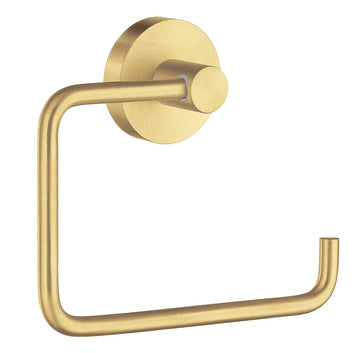 Smedbo
Home Toilet Roll Holder Brushed Brass HV341
Smedbo
Home Toilet Roll Holder Brushed Brass HV341
$126.00
$140.00 -
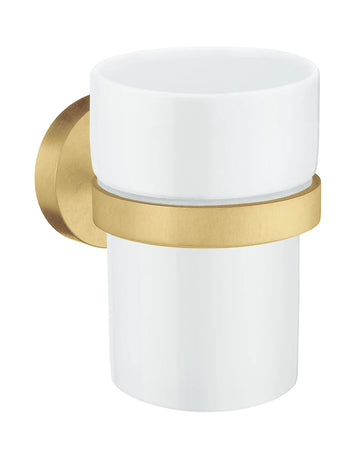 Smedbo
Home Holder With Tumbler Br Brass/Porcelain HV343P
Smedbo
Home Holder With Tumbler Br Brass/Porcelain HV343P
$153.00
$170.00 -
 Smedbo
Home Double Towel Rail Brushed Brass HV3364
Smedbo
Home Double Towel Rail Brushed Brass HV3364
$326.70
$363.00 -
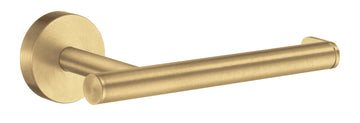 Smedbo
Home Toilet Roll Holder Brushed Brass HV3411
Smedbo
Home Toilet Roll Holder Brushed Brass HV3411
$142.21
$158.00 -
 Century Hardware
Kai 6-5/16 inches (160mm) cc Square Bar PullPolished Nickel
Century Hardware
Kai 6-5/16 inches (160mm) cc Square Bar PullPolished Nickel
$18.00
$20.00 -
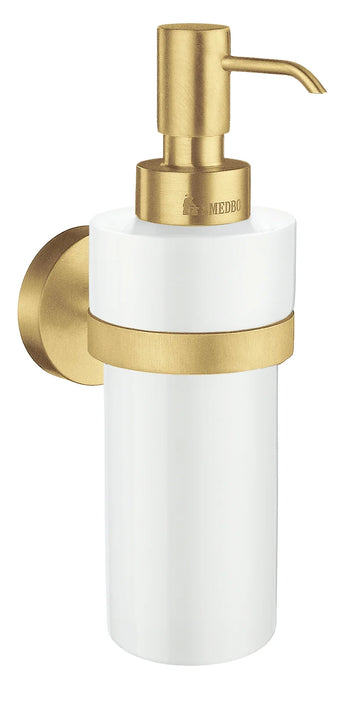 Smedbo
Home Soap Dispenser Br Brass/Porcelain HV369P
Smedbo
Home Soap Dispenser Br Brass/Porcelain HV369P
$307.80
$342.00

Why This Matters
Appliance pulls are longer, heavier, and mounted differently than cabinet pulls. A 12-inch appliance pull on a refrigerator panel sits at eye level; a 5-inch cabinet pull is hip height on a lower drawer. The eye connects them across 6 feet of kitchen. If the finish shifts from satin to polished, or the profile goes from squared to rounded, the kitchen feels assembled rather than designed. The fix costs nothing extra — it just requires a decision order.
What You'll Need
- Your cabinet hardware finish name (manufacturer spec, not a color chip description)
- The center-to-center measurement of your existing cabinet pulls
- Appliance door width for each appliance (refrigerator, dishwasher, range)
- A straightedge or level for installation
- A drill with the correct bit for your appliance door material
- M4 or M5 machine screws (most appliance pulls specify one; confirm before ordering)
- Blue painter's tape for marking drill points
- A full appliance pulls catalog filtered by finish before you finalize
Steps
Step 1: Identify Your Finish — by Manufacturer Spec, Not by Eye
Finish names are not standardized across brands. What one brand calls "brushed nickel" another calls "satin nickel" — and they look identical in a product photo but read differently under kitchen lighting. Pull the specification sheet or the original packaging from your cabinet hardware. Find the exact finish label: "Polished Chrome," "Matte Black," "Brushed Brass," "Unlacquered Brass," "Oil-Rubbed Bronze." Search for appliance pulls using that exact term. Matching within the same brand family (e.g., Top Knobs to Top Knobs, Amerock to Amerock) is the safest path because finish consistency is controlled at the factory level. The Top Knobs M2604 Amwell Bar Pull is one example of a bar-profile appliance pull available in multiple finishes — confirming the finish code at the SKU level is the right move before ordering.
Common mistake: Buying a "close enough" finish in a different metal base. Brushed nickel over brass and brushed nickel over zinc read the same in a photo; under warm kitchen lighting, one goes gold-warm, the other stays cool. The base metal matters.
Step 2: Match the Profile Style Before You Match the Size
Cabinet pulls come in three dominant profiles: bar/straight, cup/bin, and decorative (curved, arched, or ornate). Appliance pulls are almost always bar or straight because the ergonomics of a large door require a clean horizontal grip. Your job is to match the profile family.
- Bar cabinet pulls + bar appliance pulls: Direct match. The appliance pull is simply a longer version of what's already on the cabinets.
- Cup pulls on cabinets + bar appliance pull: Acceptable if the finish is identical and the bar profile is clean and minimal. The scale difference creates enough visual separation that the style difference reads as intentional.
- Decorative or ornate cabinet pulls + bar appliance pull: Works only if the appliance pull shares at least one detail — a matching end cap shape, a matching backplate profile. Otherwise it looks like a default choice.
Expected outcome: You can identify which of the 3 profile paths applies to your kitchen in under 2 minutes. Write it down before moving to sizing.
Step 3: Size the Appliance Pull to the Door, Not to the Cabinet Pull
The single most common sizing error is ordering an appliance pull at the same center-to-center as the cabinet pulls. Cabinet pull centers typically run 3 inches to 6.25 inches. Appliance pulls run 8 inches to 18 inches or more. The sizing logic is completely different.
For appliance pulls, the standard rule in 2026 is: the pull should span 1/3 to 1/2 of the door width. A 36-inch refrigerator panel takes a pull between 12 and 18 inches. A 24-inch dishwasher panel takes a pull between 8 and 12 inches. A 30-inch range door takes a pull between 10 and 15 inches.
Measure the door width at the widest point (not the handle cutout). Calculate 1/3 and 1/2. Order within that range, biasing toward the longer end for modern or transitional kitchens and the shorter end for traditional or ornate kitchens.
Common mistake: Ordering a 6-inch appliance pull because the cabinet pulls are on 5-inch centers. A 6-inch pull on a 36-inch refrigerator looks like a cabinet pull that got lost.
Step 4: Verify Screw Hole Spacing and Thread Spec Before Drilling
Appliance pulls mount through the door from inside the cabinet or appliance panel. The screw hole spacing on the pull must match the holes you drill — there is no adjustment after drilling. Most appliance pulls use one of three hole spacings: 4 inches, 5-1/16 inches (128 mm), or 6-5/16 inches (160 mm). Confirm the hole spacing on the pull spec sheet before ordering, then confirm your appliance door allows through-drilling (some stainless doors have insulation layers that require longer screws or a pilot hole sequence).
Thread spec is usually M4 or M5. If the pull ships with screws, use them. If not, match the diameter and thread pitch exactly — hardware-store screws in imperial sizing will strip metric threads.
Expected outcome: Two confirmed numbers (hole spacing, thread spec) written down before you touch a drill.
Step 5: Install with a Level, Not by Eye
Hold the pull against the door at the planned position. Tape the pull in place with blue painter's tape. Step back 6 feet — this is the actual viewing distance — and confirm the pull reads level and centered. Mark drill points through the mounting holes with a fine marker. Remove the pull and tape. Drill pilot holes at 60–70% of the final bit diameter first, then the full diameter. Feed screws from inside, hand-tighten first, then snug with a screwdriver (not a drill — torque strips the threads). Final check: pull the door open 3 times and confirm the pull doesn't shift.
Common mistake: Drilling at full diameter without a pilot hole on stainless steel. The bit walks, the hole lands off-center, and the error is permanent.
Step 6: Check the Finish Across All Appliances at the Same Time
Do not install appliance pulls one appliance at a time over several weeks. Install all of them in the same session, in the same light, and stand at the center of the kitchen. Finishes read differently in direct sunlight versus evening incandescent light. Check at both times of day. If one pull reads warmer than the others under evening light, it has a different base metal or a different topcoat — swap it before the job is "done" in your mind.
In 2026, the three finishes that photograph and read most consistently across brands are brushed nickel, matte black, and brushed brass. Polished chrome and polished nickel are unforgiving — tiny finish variation is visible at 10 feet.
Troubleshooting
The appliance pull finish looks warmer than the cabinet pulls in person. Different base metals under the same finish name. Return the appliance pull and reorder from the same brand family as the cabinet pulls. Cross-brand finish matching is a known failure mode.
The screw holes don't line up after drilling. The hole spacing spec on the pull was in millimeters; you read it as inches, or vice versa. 128 mm is 5.04 inches — if you drilled at exactly 5 inches, the holes are 1 mm off each side and the pull won't sit flat. Fill with a metal-epoxy filler rated for the door material, let cure 24 hours, re-drill.
The pull wobbles after installation. Screw threads are stripped, or the screw is too short and not engaging the full thread depth in the pull post. Replace with a longer screw at the same diameter and thread pitch.
The pull looks too small on the refrigerator door. You sized by center-to-center rather than by door width. A pull that spans less than 1/3 of the door always looks undersized. If returns are still open, exchange for the next size up in the same SKU family.
The bar profile looks wrong next to ornate cabinet hardware. You're in Step 2, Profile Style mismatch territory. The fix is either to replace the appliance pull with one that has a matching end-cap detail, or to swap the cabinet pulls to a simpler bar profile that the appliance pull anchors visually.
The dishwasher pull vibrates during the wash cycle. Screws are hand-tight only. Snug them with a screwdriver — firm pressure, not power-drill torque.
Tools and Resources
- Knobs.co appliance pulls collection — filterable by finish, style, and center-to-center spacing
- Manufacturer spec sheets (linked from each product page) — confirm hole spacing and thread spec before ordering
- A digital caliper for confirming center-to-center on existing pulls (analog rulers introduce enough error to cause misalignment)
- Blue painter's tape and a fine-point marker for drill marking
- Metal-epoxy filler rated for stainless steel (keep on hand for error correction)
- How to install appliance pulls on a dishwasher — step-by-step for the most common install scenario
What to Do Next
Once appliance pulls are matched and installed, the next decision is finish consistency across the rest of the kitchen — faucet, light fixture, and any exposed range hardware. The same finish-first logic applies: lock the finish name from a manufacturer spec, then shop. If you're working in brushed nickel across the kitchen, brushed nickel cabinet pulls for kitchen renovations covers the full decision tree for extending the finish to every cabinet run.
FAQ
What's the easiest way to match appliance pulls to existing cabinet hardware? Buy from the same brand family. Top Knobs to Top Knobs, Amerock to Amerock — factory finish consistency eliminates the most common mismatch. Filter the Knobs.co appliance pulls collection by finish name before looking at styles.
Can appliance pulls and cabinet pulls be different styles in 2026? Yes, if the finish is identical. A bar appliance pull next to cup-pull cabinets reads as intentional when the finish is exact. Mixed finishes with mixed styles read as unplanned.
How long should an appliance pull be for a 36-inch refrigerator? Between 12 and 18 inches. The pull should span 1/3 to 1/2 of the door width. For a 36-inch door, 14–16 inches is the most common sweet spot in 2026.
Is matte black a good finish for appliance pulls? Yes — matte black is one of the most forgiving finishes across brands because the topcoat variation that shows up in polished finishes is absorbed by the flat surface. It pairs cleanly with white, two-tone, and dark cabinetry.
Do appliance pulls require special screws? Most use M4 or M5 machine screws. If the pull ships with screws, use those. If not, confirm the thread pitch and diameter from the spec sheet — imperial screws will strip metric threads.
Can I put an appliance pull on a dishwasher with a built-in handle? Only if you remove the built-in handle first and the panel is drillable. Panel-ready dishwashers designed for custom panels are the right application; built-in-handle dishwashers require a panel kit before an aftermarket appliance pull fits correctly.
How do I know if my "brushed nickel" will match across brands? It won't always — base metal matters. Request finish samples or order one pull before ordering all of them. Knobs.co carries 50,000+ SKUs, so you can order a single sample SKU and compare in person under your kitchen lighting before committing.
What's the screw hole spacing for most appliance pulls? The three most common spacings are 4 inches, 128 mm (about 5.04 inches), and 160 mm (about 6.30 inches). Confirm the spec on the product page before drilling — this is the measurement you can't fix after the fact.
One Last Thing
Appliance pulls are the only piece of kitchen hardware people grip with two hands and their full body weight. Cabinet pulls get a finger-and-thumb pinch; a refrigerator pull gets a full-arm tug. That means the mounting screws on an appliance pull see 10–15x the load of a cabinet pull screw over a year of daily use. When you install in 2026, add a small drop of removable threadlocker (blue, not red) to each screw before final tightening. It takes 30 seconds and eliminates the most common service call in kitchen hardware installations.
Related Guides
- Best appliance pulls for refrigerators
- Unlacquered brass appliance pulls for panel-ready fridges
- Best matte black pulls for two-tone cabinets
- How to update kitchen cabinets with matte black hardware
- Best brushed nickel pulls for shaker cabinets
Shop Brushed Brass Cabinet Hardware
-
 Home Toilet Roll Holder Brushed Brass HV341
$126.00
Home Toilet Roll Holder Brushed Brass HV341
$126.00
-
 Home Holder With Tumbler Br Brass/Porcelain HV343P
$153.00
Home Holder With Tumbler Br Brass/Porcelain HV343P
$153.00
-
 Home Double Towel Rail Brushed Brass HV3364
$326.70
Home Double Towel Rail Brushed Brass HV3364
$326.70
-
 Home Toilet Roll Holder Brushed Brass HV3411
$142.21
Home Toilet Roll Holder Brushed Brass HV3411
$142.21
-
 Kai 6-5/16 inches (160mm) cc Square Bar Pull
$18.00
Kai 6-5/16 inches (160mm) cc Square Bar Pull
$18.00
-
 Home Soap Dispenser Br Brass/Porcelain HV369P
$307.80
Home Soap Dispenser Br Brass/Porcelain HV369P
$307.80
-
 Home Holder With Soap Dish Br Brass/Porcelain HV342P
$153.00
Home Holder With Soap Dish Br Brass/Porcelain HV342P
$153.00
-
 Kai 7-9/16 inches (192mm) cc Square Bar Pull
$21.60
Kai 7-9/16 inches (192mm) cc Square Bar Pull
$21.60


Browse all 23 in Brushed Brass Cabinet Hardware → Cabinet knobs Cabinet pulls & handles