

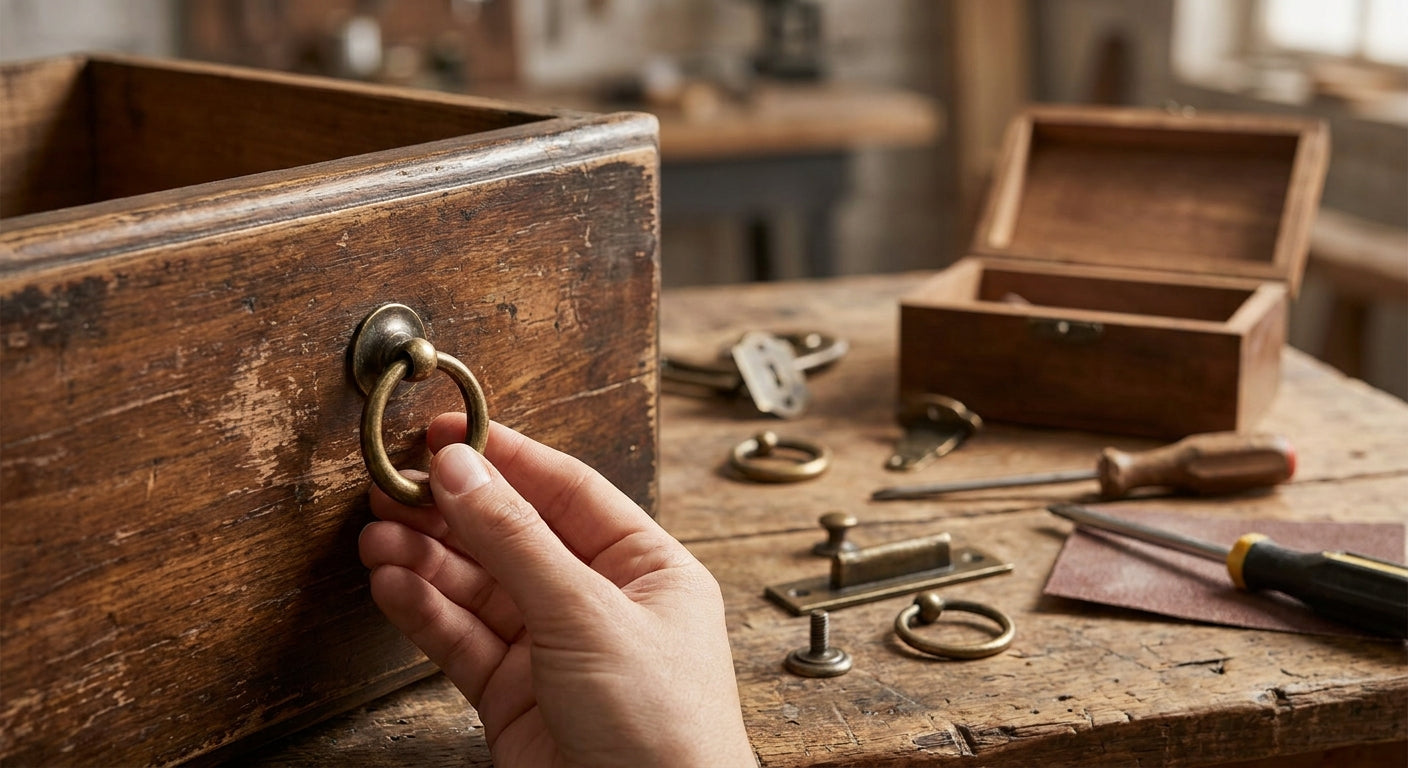
Ring pulls with a swinging bail are the hardware detail that makes a 1920s dresser or a campaign chest look right again — and picking the wrong finish or spacing undoes a restoration faster than any stripping mistake. This guide covers what to check before you buy and which styles hold up on real vintage casework in 2026.
Shop the finish
Every unlacquered brass knob and pull we carry, in one place — filter by size, style, and brand.
Browse Unlacquered Brass Cabinet Hardware →Shop the picks from this guide
In stock at Knobs.co · Free shipping on hardware orders $99+ · 110% price match
-
 Alno
Alno A1032 1'' Brass Cabinet KnobPolished Brass
Alno
Alno A1032 1'' Brass Cabinet KnobPolished Brass
$13.46
$14.95 -
 Alno
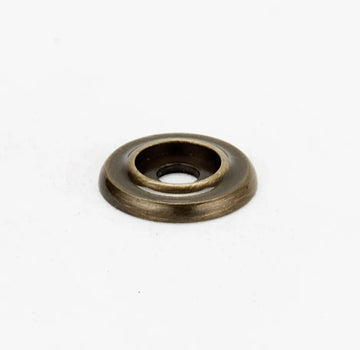
Alno A615 Brass Cabinet BackplateAntique English / 1''
Alno
Alno A615 Brass Cabinet BackplateAntique English / 1''
$8.06
$8.95 -
 Alno
Alno A726 Charlie's 3 1/2'' CC Cabinet PullAntique English / 3''
Alno
Alno A726 Charlie's 3 1/2'' CC Cabinet PullAntique English / 3''
$24.26
$26.95 -
 Alno
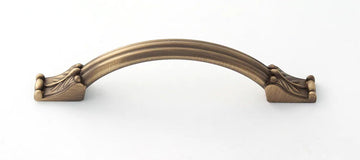
Alno A1476 Fiore 3 1/2'' CC Brass Cabinet PullAntique English Matte / 3''
Alno
Alno A1476 Fiore 3 1/2'' CC Brass Cabinet PullAntique English Matte / 3''
$24.26
$26.95 -
 Alno
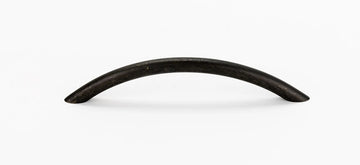
Alno A1298 128mm 5'' CC Brass Cabinet PullBarcelona
Alno
Alno A1298 128mm 5'' CC Brass Cabinet PullBarcelona
$19.76
$21.95 -
 Alno
Fiore 1 1/2'' Knob A1472Antique English Matte
Alno
Fiore 1 1/2'' Knob A1472Antique English Matte
$26.96
$29.95


TL;DR
For ring pulls for furniture restoration, prioritize solid cast construction, a bail that swings clear of the drawer face, and center-to-center spacing that matches your existing screw holes before you match finish. The Alno 3" Cup Pull is the Buy for most dresser and sideboard jobs in 2026 because of its true ring-and-post construction. Skip anything described as "antique finish" plated pot metal — it looks right in a photo and feels wrong in your hand within a year.
Why this matters
Original hardware on vintage furniture almost never survives a strip-and-refinish job intact — plating flakes, posts strip out, and half the pulls from a set of eight go missing somewhere between the shop and the spray booth. Ring pulls are also one of the few hardware styles that telegraph age on sight, so the wrong bail shape or a finish that's too bright reads as "new hardware on old wood" from across the room. Get the spacing wrong and you're drilling new holes into a piece that may already be a century old, which is the one mistake you can't sand away. In 2026, with reclaimed and antique furniture pricing holding steady at resale, hardware choice is often the difference between a piece that sells and one that sits.
Who this is for
This guide is for furniture restorers, antique dealers, and serious DIYers working on dressers, sideboards, campaign chests, and vanities built before roughly 1960 — pieces where the original hardware was a ring-style bail pull mounted through a rosette or backplate. If you're outfitting a flat-front modern kitchen instead, a bar pull or edge pull is the better call; ring pulls exist specifically to look period-correct, and forcing them onto contemporary cabinetry usually looks costume-y rather than intentional.
What to look for in ring pulls for furniture restoration
Bail swing clearance
A ring pull's whole function depends on the bail swinging flat against the drawer face when not in use and lifting cleanly when it is. Cheap castings have a bail that's too thick or a post that's too short, so the ring rests proud of the wood and catches on clothing or on the drawer above it. Measure the projection before you order — anything under 3/4" of clearance from the face is asking for trouble on deep antique drawers.
Center-to-center spacing match
Your existing screw holes dictate almost everything. Most vintage ring pulls run 2 1/2" to 3" center-to-center, but campaign furniture and some Federal-period pieces run wider. Measure the original holes before shopping rather than after — redrilling and filling holes on a 100-year-old drawer front is visible even under fresh paint.
Material weight and casting quality
Solid brass or zinc-alloy castings hold their shape and their screws for decades; thin stamped or pot-metal pulls warp, and the threads inside the post strip out within a few years of normal use. Pick a pull up before buying if you can, or check the listed weight — a genuine 3" ring pull should have real heft, not feel hollow.
Finish that ages the way the original did
Unlacquered brass and living finishes darken and patina with handling, which is exactly what happened to hardware original to a 1920s or 1930s piece. A lacquer-sealed "antique brass" finish will stay static and start looking artificial next to wood that's aged another 15 years. Decide up front whether you want the pull to keep aging or to freeze at delivery.
Post and screw compatibility
Old drawer fronts are often thicker than modern cabinet doors, and machine screws that fit a 3/4" modern panel can come up short on a 1 1/4" antique drawer front. Confirm screw length is adjustable or order extended screws separately rather than assuming standard hardware screws will reach.
Rosette vs. plain backplate
Some ring pulls mount through a decorative rosette that covers the original hole pattern if it's slightly off; others mount bare. If your existing holes are worn oval rather than round, a rosette backplate hides that far better than a bare post pull will.
Top picks for ring pulls for furniture restoration
The workhorse pick — Alno 3" Cup Pull. True ring-and-bail construction with a 3" center-to-center spacing that matches the majority of pre-1960 dresser hardware. Solid casting with real weight in hand, and the bail swings clear of the drawer face at rest. Buy — this is the default choice for most restoration jobs where original spacing is unknown or standard.
The decorative upgrade — Alno Charlie's 3" Pull. A more ornamented ring-and-post design that reads closer to Victorian or early-20th-century detailing than a plain cup pull. Best on pieces where the rest of the hardware set (hinges, escutcheons) already carries some ornamentation, so the pull doesn't look out of place next to it. Consider if your piece has decorative carving or trim elsewhere — Skip on plain Shaker-era casework where it will overpower the design.
The traditional knob pairing — Schaub and Company Traditional Round Knob, Polished Nickel. Not a ring pull itself, but the correct companion knob for top drawers or smaller drawers on a set where the main drawers get ring pulls and the top row gets a simple round knob — a common original pairing on 1930s-1940s dressers. 1 1/4" diameter keeps it proportional next to a 3" ring pull below it. Buy as a matched-set companion, not a standalone ring pull substitute.
What to avoid
- Stamped "antique-finish" pulls sold as sets of 20+ at a flat low price — the finish is usually a thin coating over cheap alloy that chips within a year of drawer use, and the bail hinge points wear loose fast.
- Modern bar pulls relabeled as "vintage style" — a straight bar with rounded ends is not a ring pull no matter what the listing title says, and it will not match original rosette holes.
- Oversized decorative pulls on delicate antique drawer fronts — a heavy 4"+ pull on a thin 1920s veneer drawer face puts stress the original wood was never built to carry, and veneer chips around the screw holes are difficult to repair invisibly.
Verdict comparison
| Pick | Style | Spacing | Best for | Verdict |
|---|---|---|---|---|
| Alno 3" Cup Pull | Ring/bail, plain | 3" CC | Default restoration, most dressers | Buy |
| Alno Charlie's 3" Pull | Ring/bail, ornamented | 3" CC | Pieces with existing ornamentation | Consider |
| Schaub Traditional Round Knob | Round knob (companion) | N/A, 1 1/4" dia | Top-drawer pairing with ring pulls below | Buy (paired use) |
FAQ
What's the best ring pull style for vintage furniture restoration? A solid cast cup-and-bail pull at 3" center-to-center covers the majority of pre-1960 American dressers and sideboards; the Alno 3" Cup Pull is a solid default when original spacing is unknown.
Is a bail pull the same as a ring pull? Yes — "ring pull" and "bail pull" describe the same hardware family: a swinging ring or half-loop mounted on posts through a backplate or rosette.
How do I know what spacing my original hardware used? Measure the distance between your existing screw holes center-to-center before shopping; 2 1/2" and 3" are the most common on vintage American furniture, though campaign and Federal pieces sometimes run wider.
Should I match the original finish exactly or pick something that will age similarly? Pick a living finish like unlacquered brass if the original hardware wasn't lacquered — it will darken over time the way the original piece did, rather than staying frozen next to wood that keeps aging.
Can I use ring pulls on a piece that originally had knobs? You can, but check drawer front thickness and screw hole diameter first — swapping styles usually means new holes, which is a visible change on an antique piece unless you're refinishing the whole front anyway.
Do ring pulls work on modern kitchen cabinets? Not usually as the primary hardware — ring pulls read as period-specific, so a bar pull or edge pull is the better fit for flat-front modern cabinetry.
How much clearance does a ring pull bail need? Aim for at least 3/4" of projection from the drawer face so the ring swings freely without catching on the drawer above it.
Are cheap ring pull sets worth it for a restoration project? Rarely — thin stamped or pot-metal construction loosens at the bail hinge and strips at the screw post within a year or two of regular drawer use, which means redoing the job you just finished.
One last thing
Buy one extra pull beyond your exact count when restoring a set — matched vintage-style ring pulls sometimes come from batch-cast runs, and a single pull ordered later to replace a lost or broken one can show a faint casting difference under close light. Ordering the spare with your original batch in 2026 avoids that mismatch entirely.


