

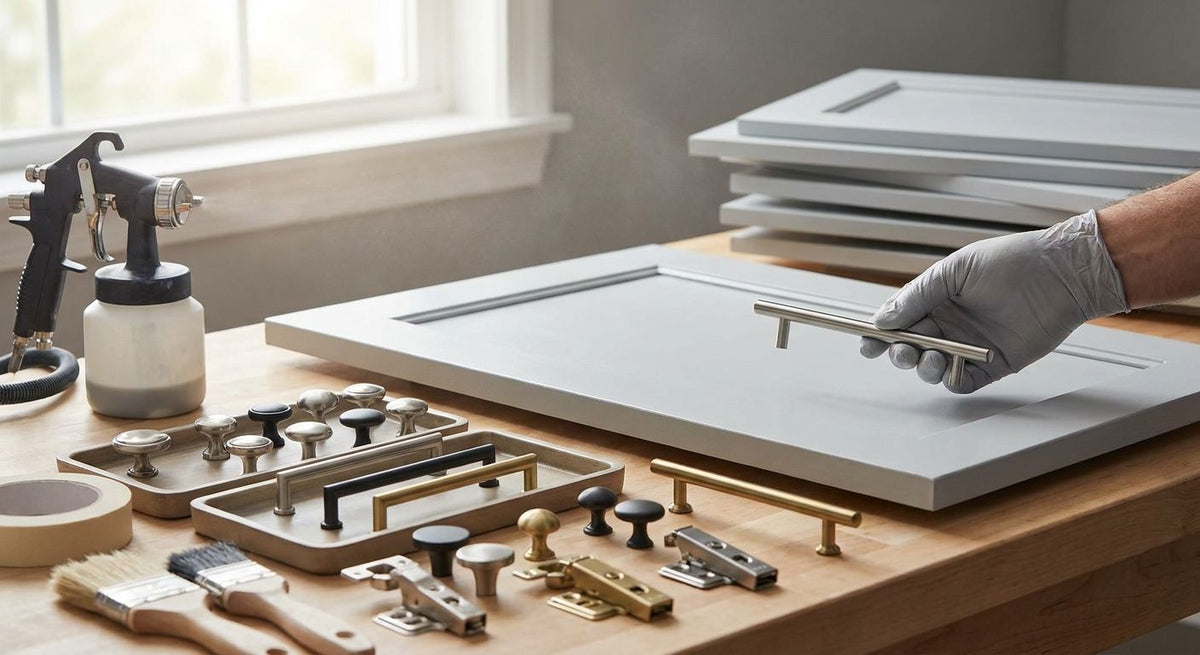
Cabinet hardware for cabinet painters is hardware chosen during a repaint or refinish job with the aim of matching new hole spacing, hiding handling marks on fresh paint, and shipping fast enough to keep a crew's schedule intact. A homeowner buying one set of knobs cares about looks first; a contractor running three or four jobs a month cares about hole templates, consistent lead times, and margin per job — because rework on hardware eats the same profit as rework on paint.
- Cabinet hardware for cabinet painters means matching hole spacing first, finish second — reversing that order causes most callbacks.
- Knobs.co stocks 50,000+ SKUs, which matters when a repaint client changes their mind on finish mid-job.
- Bar pulls and cup pulls with wider footprints can often reuse existing holes; check backplate coverage before ordering.
- A basic hardware drill template kit runs about $27, cheap insurance against crooked, inconsistent hole placement.
Why cabinet hardware matters for cabinet painting contractors
A repaint job almost always comes with a hardware swap — the client picked a new color and wants hardware that doesn't look dated next to it. That means the contractor is now sourcing hardware on a deadline set by the paint schedule, not the other way around.
The two failure points that show up most on repaint jobs: hole spacing that doesn't match what's already drilled, and finishes that show fingerprints within a week of the crew leaving. Both are avoidable with the right prep, and both cost real money to fix after the fact — filling and re-drilling a door front takes longer than measuring it once up front.
Bulk cabinet hardware for contractors and builders exists because painters ordering 30, 60, or 150 pulls at once need different pricing and shipping logic than a homeowner ordering eight knobs for one kitchen.
Update your hole-spacing check before you order
Measure before you pick a product, not after. Cup pulls, bar pulls, and knobs all carry different center-to-center spacing, and matching or intentionally changing that spacing is the single biggest variable on a repaint job.
- Measure existing hole spacing on 3-4 doors and drawers before quoting hardware
- Note whether the client wants to keep the same hole count or switch styles entirely
- Flag jobs that need new holes early — it changes labor time and the quote
- Confirm drawer front thickness against the pull's screw length before ordering
Choose finishes that survive fresh paint and daily hands
Matte black, brushed nickel, and satin brass all hide fingerprints and paint dust better than polished chrome or bright brass — polished finishes show every smudge within days of a repaint. This matters more on repaint jobs than new-build jobs because the client is comparing the new hardware against a freshly painted surface with zero wear yet.
- Matte black and oil-rubbed bronze hide handling marks best on light-colored repaints
- Brushed and satin finishes outperform polished/bright finishes for daily fingerprint resistance
- Avoid unlacquered brass on a repaint unless the client explicitly wants a living finish that patinas
- Pair appliance pulls to the cabinet pull finish so the kitchen reads as one job, not two
Order samples before you commit to a full order
A client picking hardware off a screen almost never matches what they picture in hand. Getting a sample in front of them before the full order ships protects the job from a change order mid-installation.
- Request samples in the top 2-3 finish candidates before finalizing the quote
- Hold samples against the actual painted door color, not a paint chip
- Confirm pull length and knob diameter against the door stile width in person
- Loop the client in on final approval before the full SKU count ships
Buy in bulk to protect job margins
Ordering hardware one door at a time on a repaint job burns time and shipping cost. Buying the full SKU count for the job in one order is faster to track and easier to reconcile against the invoice.
- Order the full door and drawer count in one line item, not staggered small orders
- Confirm lead time on the full quantity before locking the install date
- Ask about trade pricing programs before the job, not after the invoice
- Keep 2-3 spare units per SKU on hand for damaged-in-transit replacements
Trade pricing programs are built for exactly this — repeat contractor orders at volume, not one-off retail purchases.
Use a jig when hole spacing changes
Any time the new hardware doesn't match the existing hole pattern, a jig is faster and more accurate than measuring by hand on every door. This matters most on repaint jobs where doors vary slightly in size across a kitchen.
- Use a jig for any job with more than 10 doors or drawers to keep spacing consistent
- Match the jig's hole spacing to the pull or knob spec before drilling a single hole
- Test the jig on a scrap piece before running it across finished, painted doors
- Keep a second jig on hand for jobs that mix knobs and pulls in the same kitchen
For jobs where the new hardware footprint is wider than the old one, how to use a hardware jig covers the setup step by step.
Convert cup pulls to bar pulls without redrilling
Cup pulls and bar pulls almost never share the same hole spacing, which is the most common redrill situation on a repaint job. There are backplate and adapter options built specifically to avoid opening new holes in a freshly painted door.
- Check backplate coverage against the existing cup pull footprint before ordering a bar pull
- Confirm the adapter or backplate finish matches the new pull, not the old hardware
- Test fit on one door before ordering the full quantity
- Flag any door where the backplate won't fully cover the old holes — that door needs a redrill
Converting cup pulls to bar pulls without redrilling is worth reading before quoting any repaint job that's switching pull styles.
Match screw length to new door and drawer stock
Door thickness varies between manufacturers, and a screw that's too short or too long is a callback waiting to happen. This is a five-minute check that gets skipped constantly on repaint jobs because the door itself isn't changing — only the finish is.
- Measure actual door and drawer front thickness, not the original spec sheet
- Confirm screw length against both the door thickness and the pull's backplate depth
- Keep a mixed screw-length kit on the truck for jobs with inconsistent stock
- Test one full-length screw before cutting or ordering shorter replacements


“If the hole spacing doesn't match, you're drilling new holes and filling old ones on the same door -- budget for both before you quote the job.”
Comparing hardware types for repaint jobs
| Hardware type | Best for | Key limitation |
|---|---|---|
| Knobs | Single-hole doors, simple swaps on shaker fronts | Limited grip compared to pulls on taller drawer fronts |
| Bar pulls | Jobs switching from a dated cup pull to a modern look | Almost always requires new hole spacing |
| Cup pulls | Farmhouse and traditional repaint styles | Harder to convert to bar pulls without a backplate |
| Appliance pulls | Matching cabinet finish across panel-ready appliances | Longer lead times on wide drill-center spans |
Common mistakes cabinet painters make
- Quoting hardware before measuring hole spacing — the quote changes once the crew finds the doors need new holes, and that conversation should happen before the job starts, not during.
- Picking polished finishes for high-traffic kitchens — polished chrome and bright brass show fingerprints within days of a repaint, undoing the clean look the client just paid for.
- Skipping samples to save a week — a client who hasn't held the finish in hand is far more likely to request a change order mid-install.
- Ordering hardware in small batches — staggered orders cost more in shipping and make it harder to catch a damaged-in-transit unit before install day.
- Reusing the old screw length on new stock — door thickness varies by manufacturer, and a mismatched screw length is one of the most common post-install callbacks.
FAQ
What's the best cabinet hardware for a repaint job?
Matte black, brushed nickel, or satin brass pulls hide fingerprints and paint dust better than polished finishes on freshly painted doors. Match the pull's hole spacing to the existing holes first, then pick finish second.
Is it cheaper to buy hardware in bulk for a cabinet painting job?
Yes, ordering the full door and drawer count in one order cuts shipping cost per unit and reduces the risk of staggered shipments arriving late. Trade pricing programs exist specifically for contractors ordering repeat volume.
How do I know if new pulls will fit existing screw holes?
Measure the center-to-center hole spacing on 3-4 doors before ordering; bar pulls, cup pulls, and knobs each use different spacing. A backplate can sometimes cover a mismatch without redrilling.
What finish hides fingerprints best on painted cabinets?
Matte black and brushed nickel hide handling marks better than polished chrome or bright brass. This matters most in the first weeks after a repaint, when fingerprints show up fastest against fresh paint.
Can I convert cup pulls to bar pulls without redrilling?
Sometimes, if a backplate or adapter fully covers the old cup pull footprint. Test fit on one door before ordering the full quantity, since coverage varies by pull width.
How much does a basic hardware drill template cost?
A retail pack drill template with a drill bit included runs about $12.96, and a concealed hinge mounting template kit runs about $27.20 in 2026. Both are cheaper than fixing crooked, inconsistent hole placement after the fact.
Do cabinet painters need a hardware jig?
Yes, on any job over 10 doors or drawers, a jig keeps hole spacing consistent across varying door sizes. Hand-measuring every door on a large repaint job invites drift and callbacks.
What screw length do I need for painted cabinet doors?
Screw length depends on actual door and drawer front thickness, which varies by manufacturer even on doors that look identical. Measure the real stock thickness rather than relying on the original hardware spec.
One last thing
The repaint jobs that go smoothly in 2026 are the ones where hole spacing gets measured before a single SKU is ordered — everything else on this list is a hedge against that one step getting skipped. Knobs.co stocks 50,000+ SKUs across finishes built for exactly this kind of matching problem, and free samples mean a contractor doesn't have to guess how a finish reads against a client's actual paint color.


