

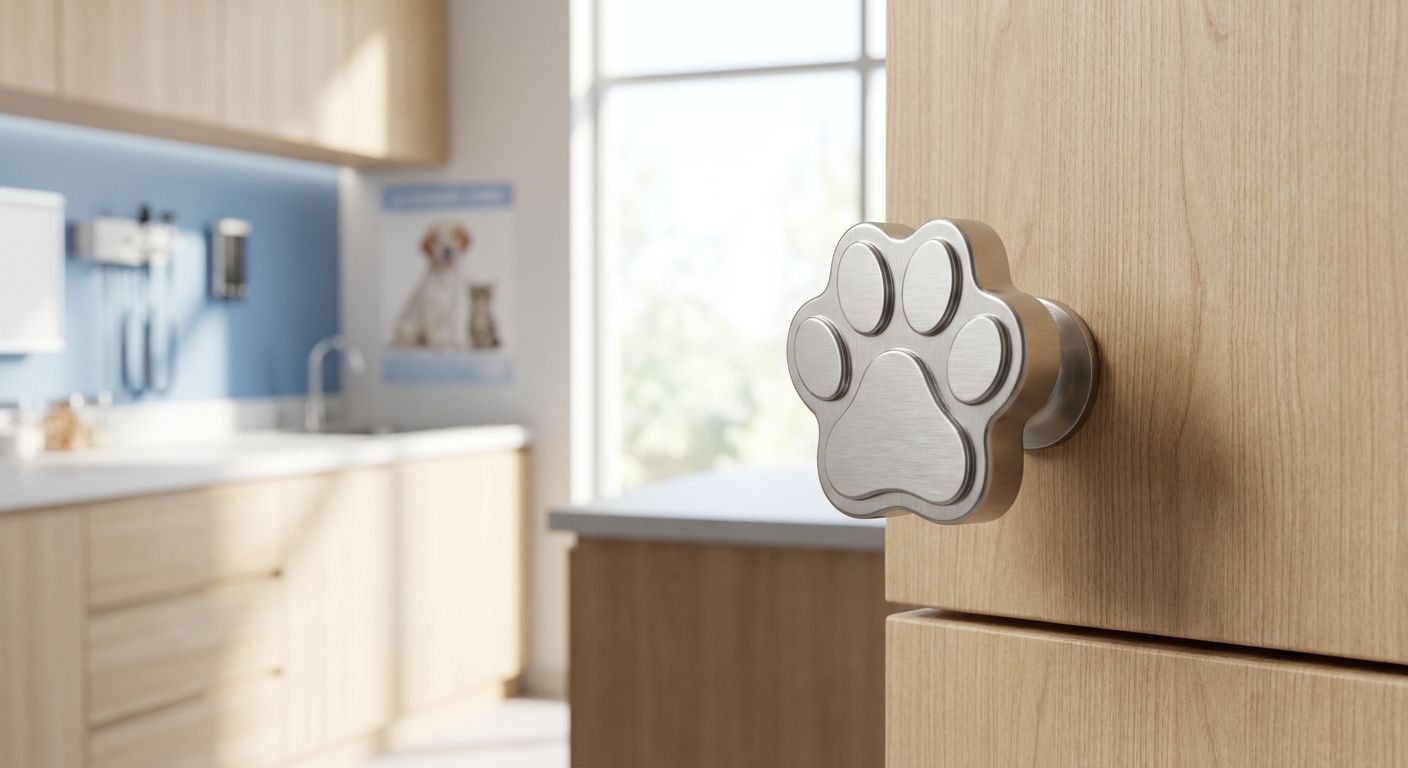
Cabinet knobs for veterinary clinic cabinetry have to survive wet gloves, animal hair, and disinfectant wipe-downs dozens of times a day — smooth, crevice-free pulls in stainless steel or satin nickel outperform textured or antiqued finishes in that environment. This guide covers what actually holds up under clinical traffic in 2026 versus what looks good on a showroom cabinet but wears out fast once a clinic puts it to work.
- Cabinet knobs for veterinary clinic cabinetry: stainless steel bar pulls and satin nickel wire pulls hold up best under daily disinfecting.
- Skip textured, oil-rubbed, or antiqued finishes — grooves trap fur, dander, and cleaning residue.
- Self-closing hinges matter more than knob style for controlled-substance and supply cabinets.
- Order free samples before specifying hardware across a multi-room clinic buildout.
- Knobs.co stocks 50,000+ SKUs with a 110% price match, useful for matching finish across a full remodel.
Why cabinet knobs matter for veterinary clinics
A veterinary clinic cabinet gets touched with wet gloves, animal hair, and disinfectant spray more times in a week than a home kitchen sees in a month. The finish and shape of the knob or pull decides whether that cabinet still looks clean in 2026 or starts showing grime in the grooves within weeks of opening.
Clinics share more with commercial kitchen cabinet hardware specs than with a residential remodel: high touch frequency, harsh cleaning chemicals, and staff who need to open a drawer one-handed while holding a patient. Decorative details that read as "designer" in a house — knurling, deep relief casting, heavy antiquing — are usually the first things to fail in a clinic because they hold onto whatever gets wiped across them.
A cabinet knob is a small part of a clinic build-out, but it's one of the few things every staff member touches every hour of every shift. Get the shape and finish wrong once and you're replacing hardware across every exam room, not just one drawer.
Building the right cabinet hardware spec for your clinic
Choose a finish that survives disinfectant wipe-downs
Satin and brushed finishes hide fingerprints and wipe-marks far better than high-polish or antiqued ones, and they don't show the residue buildup that quaternary disinfectants leave behind.
- Prioritize satin nickel, satin brass, or brushed stainless over polished chrome or antique bronze
- Avoid finishes with a distressed or hand-rubbed texture — the pitting holds cleaning residue
- Test a finish against your actual disinfectant, not just water, before ordering in bulk
- A stainless solid bar pull is a solid baseline choice for treatment room drawers because the finish is consistent all the way through, not plated
- Stick to one finish family across the whole clinic so replacement stock is simple to reorder
Pick shapes without crevices that trap fur and dander
A groove a fingernail can catch is a groove that biofilm and pet hair can hide in — smooth bar pulls and wire pulls clean in one wipe, ornate knobs don't.
- Favor bar pulls and wire pulls over knobs with carved or knurled detail
- Avoid deep-relief castings, even in a durable finish — the recesses trap debris
- Check that the pull sits far enough off the door face for a cloth to pass behind it
- The satin aluminum wire pull is a simple, low-crevice option that works across supply closets and exam room cabinetry alike
- Round-bar profiles wipe down faster than square or beveled bar pulls
Size hardware to match each room's traffic level
An 8-inch appliance pull on a narrow supply drawer is overkill; a 3-inch knob on a wide storage cabinet forces staff to grip awkwardly while holding a patient or a tray.
- Use longer bar pulls (8 to 12 inches) on wide drawers in treatment rooms and pharmacy storage
- Use shorter pulls or knobs on narrow drawers under 12 inches wide
- Match pull length to hand clearance needs, not just drawer width, in rooms where staff wear gloves
- Keep hardware placement consistent room to room so muscle memory carries across the building
Specify self-closing hinges for controlled-substance and supply cabinets
A knob or pull only controls how a door opens — the hinge controls whether it actually stays shut, which matters more in a room where a cabinet gets left ajar during a busy shift.
- Spec self-closing hinges on any cabinet storing controlled substances or sharps
- Confirm the hinge overlay type (full overlay, partial overlay, or inset) matches your existing cabinet doors before ordering
- Pair self-closing hinges with a pull, not a flush knob, so staff can open the door one-handed against the spring tension
- Order a single test pair before committing to a full run across multiple rooms
Order samples before buying across multiple exam rooms
A finish that looks warm under a showroom photo can read cooler or grayer under clinic fluorescent lighting — the only way to know for certain is to hold the actual piece against your cabinet door.
- Request free samples of your top two or three finish options before placing a bulk order
- Compare samples under the same lighting used in the rooms where hardware will be installed
- Check the sample against both wood-tone and painted cabinet doors if your clinic mixes cabinet types
- Confirm screw length compatibility with your door thickness before the full order ships
Plan lever-style or larger-grip pulls in patient-facing areas
Staff moving fast between rooms, sometimes with a patient in their arms, need hardware that doesn't require a pinch grip to operate.
- Use bar pulls over small knobs anywhere staff open cabinets one-handed or while holding an animal
- Choose pull diameters thick enough to grip through an exam glove
- Avoid low-profile flush pulls in any drawer opened under time pressure
- Consider consistent bar-pull sizing across reception, exam, and treatment areas so training is simple for new hires
Compare your cabinet hardware options for a vet clinic
| Option | Best for | Price | Key limitation |
|---|---|---|---|
| Stainless steel bar pulls | High-touch treatment room and reception drawers | Varies by length | Polished stainless shows fingerprints faster than satin |
| Satin aluminum wire pulls | Budget-conscious multi-room buildouts | Varies by length | Backplate seam can trap residue if not sealed tight to the door |
| Self-closing cabinet hinges | Controlled-substance and supply cabinet doors | $8.25 to $9.40 per pair | Doesn't replace a knob or pull — you still need hardware to open the door |
| Bar pulls sized 8 to 12 inches | Wide drawer fronts in pharmacy and storage rooms | Varies by length | Longer bars need reinforced backing on thin MDF fronts |
Verdict: stainless steel bar pulls and satin aluminum wire pulls are the two safest defaults for veterinary clinic cabinetry in 2026 — buy either depending on budget, and add self-closing hinges wherever controlled substances are stored.
“A crevice a fingernail can catch is a crevice biofilm can hide in.”
Common mistakes veterinary clinics make with cabinet hardware
- Matching the lobby's decorative finish to treatment room cabinets. An antique bronze or hand-rubbed knob that looks warm in reception is the wrong pick for a room getting wiped down with disinfectant between every patient.
- Choosing knurled or textured knobs because they photograph well. The same texture that reads as detail in a listing photo is what traps fur and dander in daily use.
- Leaving controlled-substance cabinets without self-closing hinges. Relying on staff to remember to shut a door fully during a busy shift is not a hardware plan.
- Ordering 40 exam room drawers off a single photo instead of a sample. Finish color reads differently under clinic fluorescent lighting than it does on a screen, and reordering after installation costs more than a sample would have.
- Underestimating pull length on wide, heavy drawer fronts. A pull that's too short forces an off-center grip that stresses the mounting screws over repeated daily use.


FAQ
What's the best cabinet knob finish for a veterinary clinic?
Satin nickel, satin brass, or brushed stainless steel are the best finishes for veterinary clinic cabinetry in 2026 because they hide fingerprints and disinfectant residue better than polished or antiqued finishes. Textured and hand-rubbed finishes should be avoided since the grooves trap fur and cleaning residue.
Is stainless steel better than nickel for cabinet hardware in a vet clinic?
Solid stainless steel bar pulls hold up well because the finish runs through the material rather than sitting as a plated layer, so scratches don't expose a different color underneath. Satin nickel is a close second and typically costs less across a full clinic buildout.
How much does self-closing cabinet hardware cost for a clinic buildout?
Self-closing hinges run roughly $8.25 to $9.40 per pair based on current stock pricing. A full clinic with a dozen controlled-substance or supply cabinets can spec these hinges without a major budget shift.
Do veterinary clinics need ADA-compliant cabinet pulls?
Bar-style pulls that don't require a pinch grip are easier to operate for any staff member with limited grip strength or while wearing exam gloves, and they're a practical standard for patient-facing cabinetry. Check current accessibility requirements for your specific building and jurisdiction before finalizing a spec.
Can I mix knobs and pulls across different rooms in a clinic?
Yes, but keep the finish consistent across rooms even if the hardware shape changes between exam rooms, reception, and storage. Mixing finishes makes future reordering and matching more difficult.
How do I keep clinic cabinet hardware from harboring bacteria?
Choose smooth bar pulls or wire pulls over knurled or deep-relief knobs, since crevices are what trap residue between cleanings. Wipe-down testing with your actual disinfectant before a bulk order confirms the finish holds up.
Should I order samples before a full clinic hardware order?
Yes — finish color reads differently under clinic fluorescent lighting than in a product photo, and free samples let you confirm the look against your actual cabinet doors before committing to a multi-room order.
What's the difference between a knob and a bar pull for high-traffic cabinets?
A knob is a single-point grip that works fine on narrow drawers, while a bar pull spreads the grip across several inches, which is easier to operate one-handed or through a glove. Most veterinary clinics do better standardizing on bar pulls for treatment and storage areas.
One last thing
The cheapest fix most clinics skip is the hinge, not the knob — a self-closing pair costs $8.25 to $9.40 while a single decorative pull can run several times that, yet the hinge is what actually keeps a controlled-substance cabinet shut between patients. Spec the hinge first in 2026, then pick the finish that matches it.


