

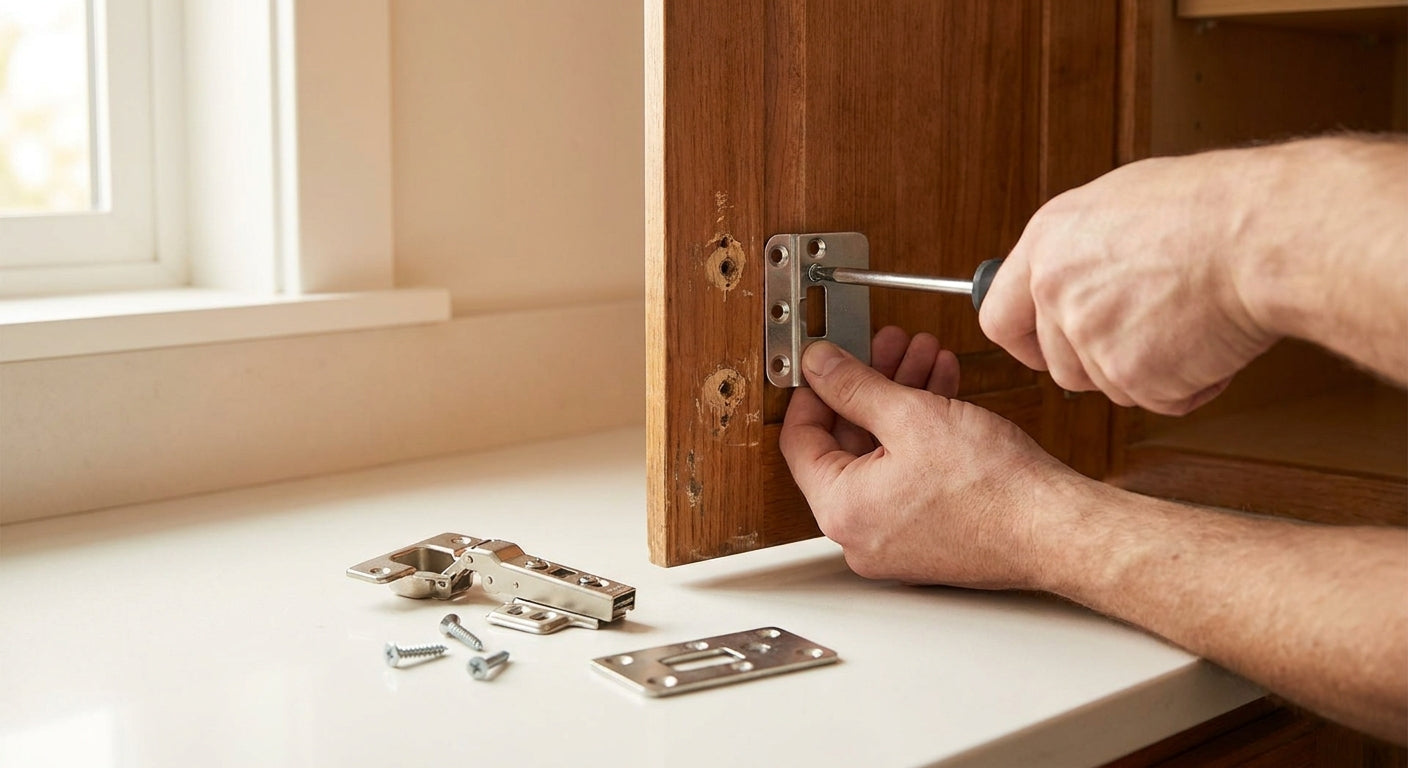
A stripped cabinet hinge screw hole doesn't mean a new door or a new cabinet box - a repair plate, a wood dowel, or the right threaded insert gets the hinge holding weight again in under 20 minutes.
Shop cabinet hinges
Every cabinet hinge we carry, in one place — filter by overlay, mount type, and brand.
Browse Cabinet Hinges →- Cabinet hinge repair plates in 0.062-inch steel or brass fix repeat-stripping on face-frame cabinets - buy for doors that sag more than once.
- A wood dowel and glue fixes one stripped hole in under 10 minutes using materials from any hardware store.
- Threaded inserts outlast repair plates on doors opened 20+ times a day - the permanent fix, not the fast one.
- Skip oversized self-tapping screws as a long-term repair; the same hole strips again within a year of daily use.
Shop the picks from this guide
In stock at Knobs.co · Free shipping on hardware orders $99+ · 110% price match
-
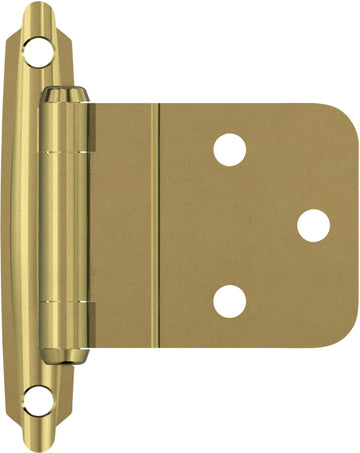 Amerock
Functional Hardware 3/8'' Inset Self Closing Face Mount Cabinet Hinge - 1 Pair BPR3428Polished Brass
Amerock
Functional Hardware 3/8'' Inset Self Closing Face Mount Cabinet Hinge - 1 Pair BPR3428Polished Brass
$5.32
$6.25 -
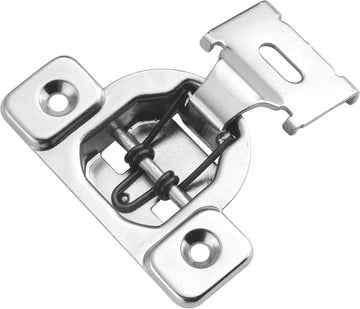 Hickory Hardware
Hinge Concealed 1/2'' Overlay Face Frame Self-Close Polished Nickel Finish P5125-14
Hickory Hardware
Hinge Concealed 1/2'' Overlay Face Frame Self-Close Polished Nickel Finish P5125-14
$10.40
$12.99 -
 Amerock
Functional Hardware Variable Overlay Self Closing Face Mount Cabinet Hinge - 1 Pair BPR3429Polished Chrome
Amerock
Functional Hardware Variable Overlay Self Closing Face Mount Cabinet Hinge - 1 Pair BPR3429Polished Chrome
$5.32
$6.25 -
 Amerock
Functional Hardware 3/8'' Inset Non-Self Closing Face Mount Cabinet Hinge - 1 Pair BPR3417Polished Chrome
Amerock
Functional Hardware 3/8'' Inset Non-Self Closing Face Mount Cabinet Hinge - 1 Pair BPR3417Polished Chrome
$5.32
$6.25


Why this matters
A hinge screw doesn't strip because the screw is bad - it strips because the wood fiber gripping the threads has been chewed up by over-driving, moisture, or a decade of door slams. Once that fiber is gone, the screw spins free and the door sags on its hinge side. That's a mechanical problem, not a cosmetic one, and it gets worse every time someone tightens the same hole.
Most stripped holes show up on face-frame cabinets where a single hinge carries the full weight of a door swinging open dozens of times a week. In 2026, replacement doors and full hinge retrofits both cost more than a five-minute repair, which is why repair plates, dowels, and inserts stay the standard fix for anyone patching one or two holes instead of rebuilding a box.
Who this is for
This is for a homeowner or contractor dealing with a sagging cabinet door where the hinge screw spins instead of biting - not someone replacing hinges across a whole kitchen. If you're swapping hinge types entirely instead of repairing the hole, Knobs.co carries replacement hinges such as the Amerock self-closing face-mount hinge pair and the Belwith concealed overlay hinge — start with choosing the right cabinet hinge first, since a repair plate only makes sense when the existing hinge and hole pattern are otherwise fine.
What to look for in cabinet hinge repair plates for stripped screw holes
Plate gauge and material
A repair plate under 0.05-inch thick flexes under hinge torque and strips again within months. Look for 0.062-inch steel or brass stock - thick enough to hold a new pilot hole without bending when the screw seats.
Hole pattern match to your hinge
The plate's screw spacing has to match your existing hinge leaf exactly, whether that's a face-frame hinge or a 32mm-system Euro hinge. A plate that's off by even 2mm forces the hinge leaf to sit crooked, which restrips the new holes faster than the old ones failed.
Mounting method
Surface-mount plates sit behind the hinge leaf and use their own screws into fresh wood; insert-style repairs (threaded inserts, dowels) rebuild the original hole itself. Surface plates are faster for a first repair. Inserts are the move once a hole has already failed twice.
Screw compatibility
Most hinge leafs use #6 or #8 pan-head screws. A repair plate with pre-drilled holes sized for a different screw gauge means re-drilling the plate itself, which defeats the purpose of buying one.
Finish and visibility
On overlay doors the plate sits fully hidden behind the hinge leaf. On inset or exposed-hinge cabinets, check whether the plate's edge shows past the hinge before you commit - swap to a same-finish plate if it does.
Top picks for fixing stripped hinge screw holes
Threaded insert - the permanent fix. A brass or steel threaded insert gets epoxied or screwed into the enlarged hole, giving the hinge screw fresh metal threads instead of chewed-up wood. This outlasts a surface repair plate on a high-traffic cabinet. Use if the same hole has already stripped more than once.
Wood dowel and glue - the five-minute fix. Drill out the stripped hole to 3/8 inch, glue in a hardwood dowel, let it cure, then re-drill a pilot hole through the new solid wood. Materials are inexpensive and available at any hardware store, and the repair holds as long as the surrounding wood is sound. Use for a single stripped hole on a door you're not rebuilding.
Surface-mount repair plate - the default fix. A 0.062-inch plate spans the stripped hole and gives the hinge screw new wood contact across a wider area than the original single point. Pair the repair with a hardware jig for perfect placement so the new pilot holes land square the first time. Use for face-frame cabinets with one or two failed holes.
Two-part epoxy putty fill - the gap filler. Epoxy putty packs into odd-shaped or oversized stripped holes and cures in 20 to 30 minutes to a wood-hard finish you can re-drill. It works where a dowel won't fit cleanly, and it doubles as the same method used to fill and refinish old cabinet hardware holes when relocating hinges entirely. Consider for irregular holes; skip it for holes under 1/4 inch where a dowel is simpler.
Oversized self-tapping screw - the lazy fix. Stepping up from a #6 to a #8 screw bites into slightly fresh wood around the stripped hole. It works for a week and sometimes a year, but the larger screw eventually chews the same channel wider. Skip as a long-term repair; use it only as a same-day stopgap before a proper fix.
Verdict comparison
| Fix | Time | Cost tier | Best for | Verdict |
|---|---|---|---|---|
| Threaded insert | 15-20 min | Low | Repeat failures, high-use doors | Use |
| Wood dowel + glue | 5-10 min | Low | Single stripped hole | Use |
| Surface repair plate | 10-15 min | Low-mid | Face-frame cabinets | Use |
| Epoxy putty fill | 20-30 min cure | Low | Odd-shaped or oversized holes | Consider |
| Oversized screw | 2 min | Low | Same-day stopgap only | Skip long-term |
What to avoid
- Wood putty or spackle alone - neither holds screw threads under load; both crumble the first time the door slams.
- Gluing the hinge leaf directly to the face frame without repairing the hole first - it holds until the glue bond fatigues, then the door drops with no screw to catch it.
- Reusing the exact same pilot hole diameter after a strip - drilling the identical size just re-strips the same worn wood fiber instead of reaching solid material.
“If the screw spins without biting, more torque is not the fix - more solid wood under the threads is.”
FAQ
What is a cabinet hinge repair plate?
A cabinet hinge repair plate is a thin metal plate, typically 0.062-inch steel or brass, that mounts behind a stripped hinge screw hole to give the screw fresh wood contact. It restores holding strength without replacing the door or the hinge.
How do you fix a stripped screw hole in a cabinet hinge?
Fill the stripped hole with a glued wood dowel or two-part epoxy putty, let it cure, then re-drill a fresh pilot hole through the solid material. For repeat failures, a threaded insert or surface-mount repair plate holds up longer under daily use.
Can you use wood glue and toothpicks on hinge screw holes?
Toothpicks and glue work as a same-day stopgap on lightly stripped holes but rarely hold under a hinge's daily swing. A hardwood dowel drilled to 3/8 inch and glued in place is the more durable version of the same fix.
Are hinge repair plates visible after installation?
On overlay cabinet doors, a repair plate sits fully hidden behind the hinge leaf once the door is closed. On inset or exposed-hinge styles, check the plate edge against the hinge leaf before installing since some plates extend slightly past it.
How much does it cost to fix a stripped cabinet hinge hole in 2026?
A wood dowel repair is the cheapest materials-only fix, and a repair plate or threaded insert costs a bit more per hinge. Either option costs far less than replacing a door or cabinet box.
Do I need to replace the whole hinge or just fix the hole?
If the hinge itself still opens and closes smoothly, fixing the stripped hole is enough - the hinge hardware isn't the problem. Replace the hinge only if the leaf is bent, the pivot is loose, or the screw pattern no longer matches available repair plates.
What size screws do European cabinet hinges use?
Most European 32mm-system cup hinges use #6 or #8 pan-head screws on a standard hole spacing. Confirm the spacing before buying a repair plate so the new holes line up with the existing hinge leaf.
Is epoxy putty stronger than wood filler for hinge holes?
Epoxy putty cures harder and holds screw threads better than standard wood filler, which is why it's the choice for oversized or irregular stripped holes. Wood filler works for cosmetic gaps but isn't rated to carry hinge screw load.
One last thing
A repair plate spreads holding force across roughly four times the wood-grain contact area of the original single screw hole - that's why it outperforms just driving a bigger screw into the same spot. If a hole has stripped twice already, the fix isn't a bigger screw in 2026 or any other year; it's fresh wood under the threads.


