

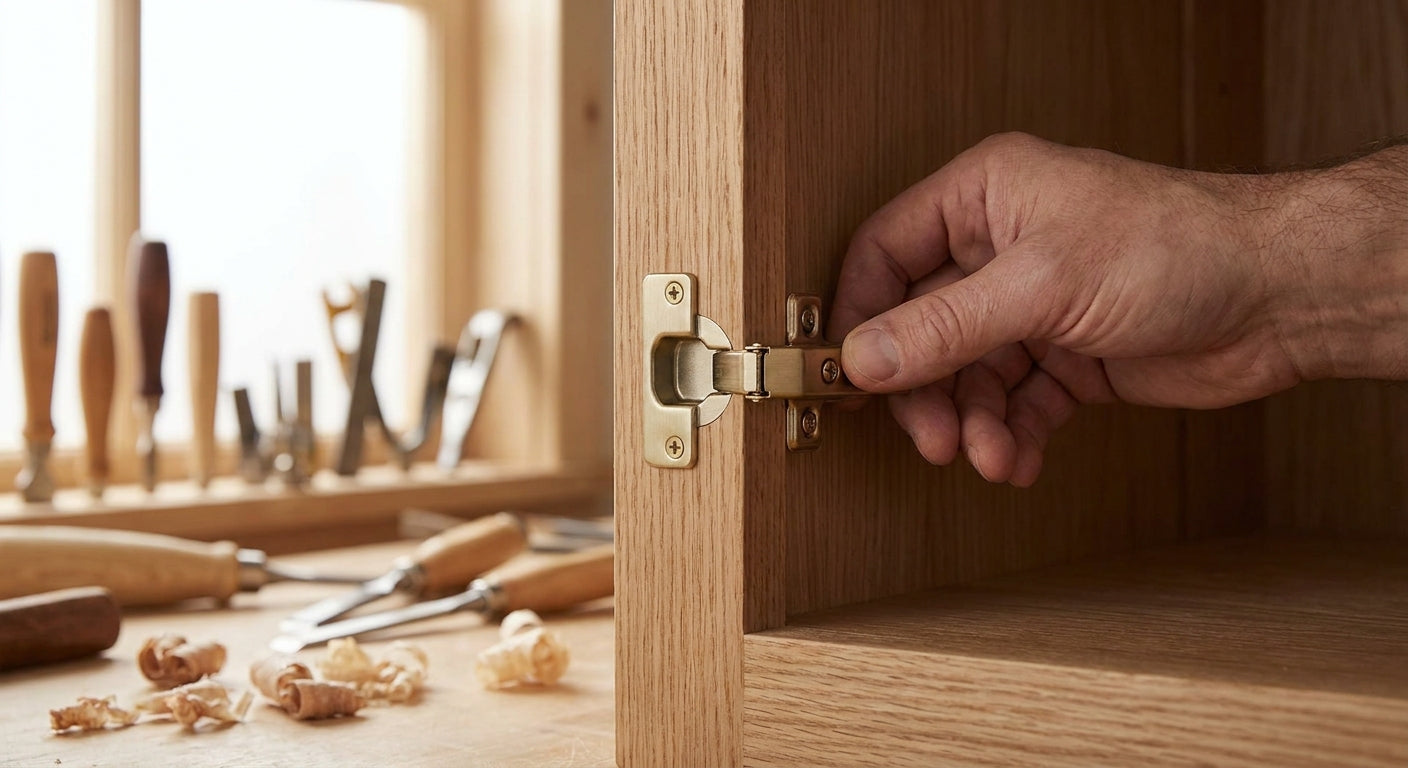
Inset cabinet doors sit flush inside the face frame, which means the hinge you pick has to work inside a 1/8-inch reveal instead of hiding behind an overlay. Get the wrong hinge and the door either binds against the frame or hangs crooked within a season.
Shop cabinet hinges
Every cabinet hinge we carry, in one place — filter by overlay, mount type, and brand.
Browse Cabinet Hinges →- Semi-concealed soft-close hinges are the safe buy for most inset door cabinet hinges projects in 2026 — three-way adjustment matters more than finish.
- Standard European concealed hinges are a Skip for true inset doors; they're built for overlay and frameless cabinets, not a flush face-frame fit.
- A 1/8-inch reveal is the industry standard for inset doors, and your hinge cup depth has to match that gap exactly.
- Knobs.co stocks hardware across 50,000+ SKUs, so matching hinge finish to pulls and knobs on the same order is straightforward.
Shop the picks from this guide
In stock at Knobs.co · Free shipping on hardware orders $99+ · 110% price match
-
 Amerock
Functional Hardware 3/8'' Offset Non-Self Closing Face Mount Cabinet Hinge - 1 Pair BPR3406Antique Copper
Amerock
Functional Hardware 3/8'' Offset Non-Self Closing Face Mount Cabinet Hinge - 1 Pair BPR3406Antique Copper
$6.99
$8.22 -
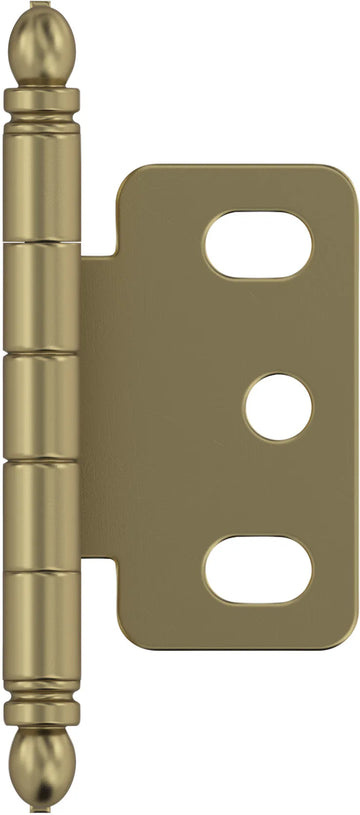 Amerock
Functional Hardware 3/4'' Door Thickness Full Inset Partial Wrap Ball Tip Cabinet Hinge - Single Hinge PK3180Golden Champagne
Amerock
Functional Hardware 3/4'' Door Thickness Full Inset Partial Wrap Ball Tip Cabinet Hinge - Single Hinge PK3180Golden Champagne
$5.90
$6.93 -
 Amerock
Functional Hardware 1/2'' Overlay Double Demountable Cabinet Hinge - 1 Pair BPR8704Burnished Brass
Amerock
Functional Hardware 1/2'' Overlay Double Demountable Cabinet Hinge - 1 Pair BPR8704Burnished Brass
$12.95
$15.23 -
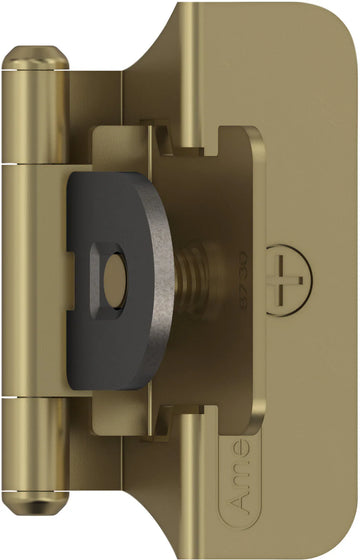 Amerock
Functional Hardware 1/4'' Overlay Double Demountable Cabinet Hinge - 1 Pair BPR8701Golden Champagne
Amerock
Functional Hardware 1/4'' Overlay Double Demountable Cabinet Hinge - 1 Pair BPR8701Golden Champagne
$12.95
$15.23 -
 Amerock
Functional Hardware Variable Overlay Self Closing Face Mount Cabinet Hinge - 1 Pair BPR3429Polished Chrome
Amerock
Functional Hardware Variable Overlay Self Closing Face Mount Cabinet Hinge - 1 Pair BPR3429Polished Chrome
$5.32
$6.25 -
 Amerock
Functional Hardware 3/4'' Door Thickness Full Inset Full Wrap Ball Tip Cabinet Hinge - Single Hinge PK3175Antique Brass
Amerock
Functional Hardware 3/4'' Door Thickness Full Inset Full Wrap Ball Tip Cabinet Hinge - Single Hinge PK3175Antique Brass
$5.56
$6.54


Why this matters
Inset construction shows every hinge. There's no overlay lip to hide a sloppy gap, so the hinge itself becomes part of the visual design, not just the mechanism. Homeowners searching for inset door cabinet hinges in 2026 are usually mid-renovation and already committed to the flush-door look, which raises the stakes on getting the hardware right the first time. Before you buy anything, run through how to choose the right cabinet hinge for your specific door thickness and frame type — most inset doors run 3/4-inch stock, and that measurement changes which hinge cup fits.
A hinge built for full overlay doors will not self-correct on an inset door. The screw pattern, the barrel placement, and the amount of visible metal are all different problems on a flush door.
Who this is for
This guide is for homeowners replacing hinges on existing inset cabinetry, kitchen remodelers specifying hardware for new face-frame builds, and contractors sourcing matched sets for a full kitchen. If your doors sit proud of the frame with a visible reveal all the way around — not tucked behind it — you have inset construction, and the hinge rules below apply to you directly.
What to look for in inset door cabinet hinges
Mounting style
Inset doors need hinges rated specifically for inset mounting, not standard overlay or frameless European hinges. A semi-concealed inset hinge shows a small barrel on the face frame side while the leaf inside stays hidden — that's the correct geometry for a flush door. Buying a frameless concealed hinge because it's cheaper is the single most common mistake on inset projects.
Reveal tolerance
Most inset installs run a 1/8-inch gap around the door on all four sides. Your hinge has to hold that gap consistently, which means the cup depth and mounting plate offset need to match your face frame thickness exactly. A hinge with the wrong offset either crushes the reveal shut or leaves a gap wide enough to see daylight.
Self-close vs soft-close action
Self-closing hinges use spring tension to snap the door shut — fine for a mudroom cabinet, loud for a kitchen you use daily. Soft-close inset hinges add a dampening mechanism so the door settles instead of slamming, which matters more on inset doors because the flush fit makes any slam noise more noticeable against the frame.
Adjustability
Three-way adjustment — up/down, left/right, in/out — lets you fine-tune the reveal after installation without redrilling. Two-way adjustable hinges are cheaper but leave you stuck if the frame settles or the door warps slightly over a year or two, which happens more often than people expect with solid wood inset doors.
Weight rating
Heavier inset doors, especially solid wood with a raised panel, need a hinge rated for the extra load per pair. A hinge that's undersized for the door will sag at the hinge side within months, and you'll see it as a widening gap at the top or bottom of the door.
Finish match
Inset cabinetry tends to show hardware finish more prominently than overlay doors because the hinge barrel is visible. Match the hinge finish to your pulls and knobs — Knobs.co's 50,000+ SKU catalog makes it realistic to source hinges and pulls in the same finish family from one order instead of guessing across brands.
Top picks for inset door cabinet hinges
The safe pick: semi-concealed soft-close hinges
The soft-close version of the semi-concealed inset hinge is the default recommendation for kitchens in 2026. The dampening mechanism eliminates slam noise, and the exposed barrel is small enough not to dominate a shaker or flat-panel inset door. Read the full breakdown in soft-close hinges for inset cabinet doors before ordering — reveal spec and screw pattern vary more than people assume across brands. Verdict: Buy.
The traditionalist: semi-concealed self-closing hinges
Standard self-closing semi-concealed hinges are the historical default on inset cabinetry and still show up in a lot of production kitchens because they're simpler mechanically and easier to source in bulk. They're louder than soft-close and slightly less forgiving on adjustment, but they're a proven fit for straightforward inset applications. The full rundown on sizing and mounting sits in semi-concealed inset cabinet hinges. Verdict: Consider if budget or bulk-order simplicity matters more than soft-close quiet.
The wildcard: full-mortise butt hinges
Butt hinges — the kind you'd see on an interior door — show up on high-end inset cabinetry for a more furniture-like, less hardware-store look. They require precise mortising into both the door and frame, which is a real skill gap for a DIY install, and they don't self-adjust the way a modern hinge does. Great for a custom cabinetmaker project, a poor choice for a weekend swap-out. Verdict: Consider only if you're working with a cabinetmaker who mortises hinges regularly; otherwise Skip.
What to avoid
- Standard European concealed (Euro) hinges built for overlay or frameless cabinets. They look modern and are everywhere online, but the cup depth and mounting plate geometry don't hold an inset reveal correctly — the door will sit crooked.
- Undersized hinges on heavy solid-wood doors. A hinge rated for a lightweight MDF panel will sag under a raised-panel oak door within a year, even if it looks identical on the shelf.
- Mismatched finish across the kitchen. Inset hinges show more metal than overlay hardware, so a bronze hinge next to satin nickel pulls reads as a mistake, not a design choice.
Verdict comparison
| Hinge type | Mounting style | Reveal handling | Noise level | Verdict |
|---|---|---|---|---|
| Semi-concealed soft-close | Inset-specific | Excellent, 3-way adjustable | Quiet | Buy |
| Semi-concealed self-closing | Inset-specific | Good, 2-3 way adjustable | Louder | Consider |
| Full-mortise butt hinge | Inset-specific, mortised | Fixed once installed | Quiet | Consider for pros, Skip for DIY |
| Standard European concealed | Overlay/frameless | Poor on inset | Quiet | Skip |
FAQ
What's the best hinge for inset cabinet doors?
Semi-concealed soft-close hinges are the best inset door cabinet hinges for most kitchens in 2026 because they hold a tight reveal and eliminate slam noise. Butt hinges are the alternative for a furniture-grade custom build.
Can I use European concealed hinges on inset doors?
No. Standard European concealed hinges are built for overlay and frameless cabinets, and their cup depth won't hold a proper inset reveal. Use a hinge specifically labeled for inset mounting instead.
How much reveal gap does an inset door need?
Most inset installs use a 1/8-inch reveal around all four sides of the door. Your hinge's mounting plate offset has to match your face frame thickness to hold that gap consistently.
Are soft-close hinges worth it for inset doors?
Yes, especially on inset doors, since the flush fit makes slam noise against the frame more noticeable than on overlay doors. Soft-close adds a dampening mechanism at a modest cost premium over standard self-closing hinges.
Do inset hinges need three-way adjustment?
Three-way adjustment is strongly recommended because it lets you correct the reveal after installation without redrilling. Solid wood inset doors shift slightly over time, and two-way hinges leave you stuck when that happens.
Can I install inset hinges myself?
Semi-concealed inset hinges are a reasonable DIY install with a template and a drill. Full-mortise butt hinges require chisel work into both the door and frame and are better left to a cabinetmaker or contractor.
How do I match hinge finish to my cabinet pulls?
Order hinges and pulls from the same finish family and, when possible, the same retailer to avoid subtle color mismatches between brands. Knobs.co carries matched finish options across its cabinet hardware catalog.
What happens if I use the wrong hinge on an inset door?
The door will either bind against the face frame or hang with an uneven, widening gap within months. Undersized hinges also sag under heavier solid-wood doors, which shows up first at the top or bottom corner.
One last thing
The detail that trips up most first-time inset installs isn't the hinge brand — it's skipping the reveal measurement before ordering. Measure your existing gap, or your target gap on a new build, before you pick a hinge, because the cup depth and mounting offset only work if that number is right.


