

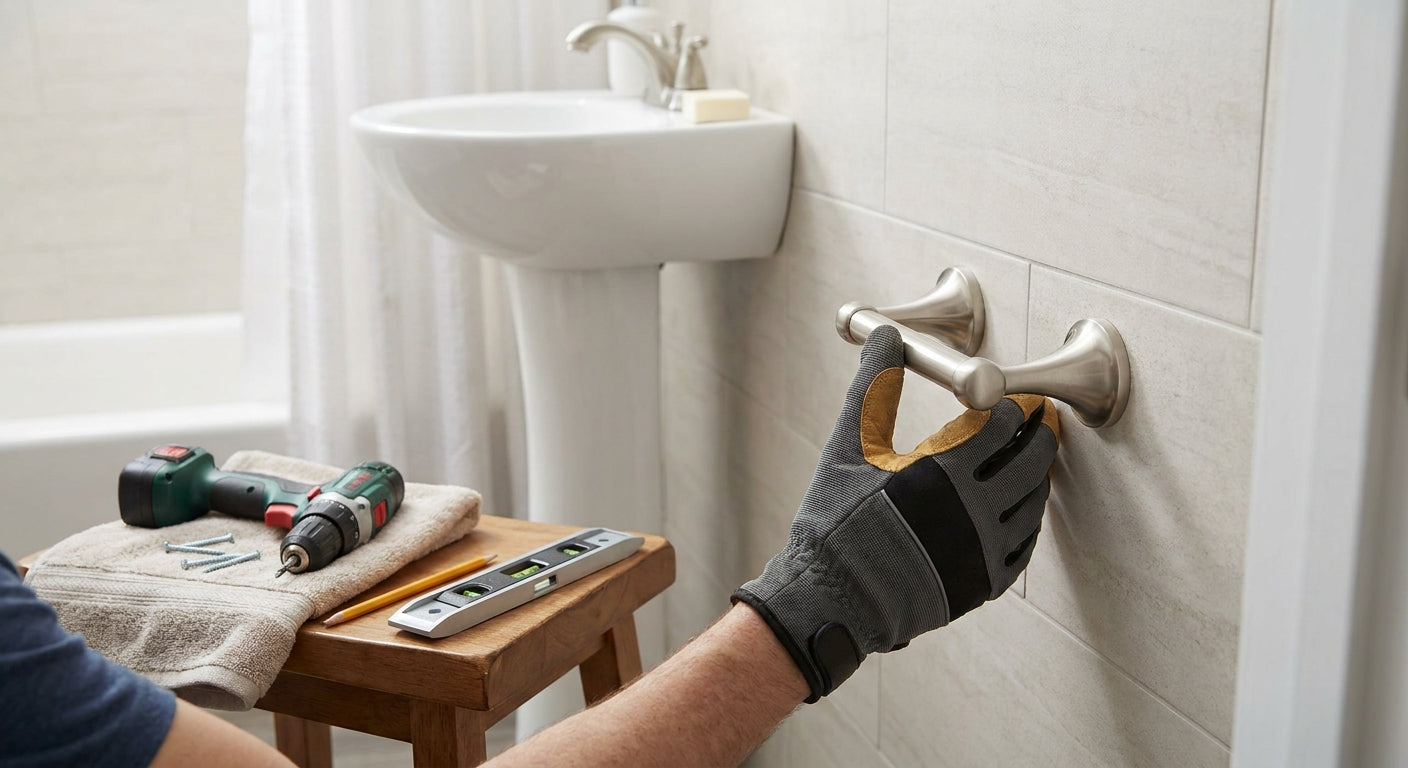
A toilet paper holder in a small bathroom lives or dies by two details: one solid anchor point and enough clearance that your elbow doesn't hit the wall mid-reach. Get those right and the whole install takes about 20 minutes with basic hand tools.
- How to install a toilet paper holder in 2026: find a stud or use a rated anchor, then level and drive the screws.
- Self-adhesive holders like the Smedbo Beslagsboden BA1127 skip drilling entirely in rental bathrooms.
- Mount at 26 inches from the finished floor, 8 to 12 inches from the toilet front - standard small-bathroom spacing.
- Use anchors rated for at least 20 lbs of pull-out weight; a loose holder is almost always an anchor problem.
- Skip toggle bolts on grout lines - they crack tile and never seat flush.
Why This Matters
Small bathrooms punish bad placement more than any other room in the house. A holder mounted too close to the toilet tank clips your knuckles every time; one mounted too far means you're leaning across the bowl. Get the toilet paper holders for small bathrooms sizing and reach right before you drill, because a second hole in tile or drywall is a repair job, not a redo.
Most failed installs in 2026 aren't a bad holder - they're a plastic wall anchor asked to carry a 6 lb ceramic tank arm in a wet, high-touch spot. Fix the anchor, and the holder outlasts the bathroom's next repaint.
What You'll Need
- Stud finder (electronic works better than magnetic in older plaster walls)
- 4-foot or torpedo level
- Drill with a 3/16-inch bit for pilot holes, or a Phillips bit for self-adhesive mounts
- Pencil and painter's tape (marks come off easier than pencil on tile)
- Toggle bolts or self-drilling drywall anchors rated for at least 20 lbs, unless you're hitting a stud
- The holder itself - a wall-mount post/roller style, a wall-mount single-post style, or a self-adhesive unit for tile or rental walls
- Caulk (silicone, paintable) if you're mounting through tile or near a tub surround


The Steps
1. Measure and mark the height
Measure 26 inches up from the finished floor to the center of the holder's mounting point - this is the standard height used across most 2026 bathroom remodels and matches ADA reach guidance closely enough for a residential install. Use painter's tape to mark the spot so you're not scoring pencil into tile. Common mistake: measuring from the subfloor instead of the finished floor, which throws the height off by half an inch or more once tile goes down.
2. Set the horizontal position
Position the mark 8 to 12 inches forward of the toilet's front edge, measured along the wall the holder will sit on. In a small bathroom, err toward 8 inches - anything past 12 forces a lean. Common mistake: centering the holder on the toilet tank instead of the seated reach line; the tank is rarely where your hand actually lands.
3. Find a stud, or plan your anchor
Run the stud finder across a 16-inch span at your marked height. If you land on a stud, you can skip anchors entirely and drive directly into wood. No stud within reach of your ideal spot? Use a toggle bolt or a self-drilling anchor rated for at least 20 lbs - standard drywall holds that easily for a single-post or roller holder. Common mistake: drilling first and checking for studs second; a wrong pilot hole in tile means a visible patch job.
4. Drill the pilot holes
For drywall, drill straight and level, using a bit sized to the anchor, not the screw. For tile, use painter's tape over the glaze first and start the bit at a low angle before bringing it perpendicular - this keeps the bit from skating across glazed tile. Common mistake: full-speed drilling into tile from a cold start; the bit slides and chips the glaze before it bites.
5. Set the anchors
Tap or screw the anchor flush with the wall surface - not proud, not sunk below it. A toggle bolt needs the wings fully through the drywall before you snug it down. Common mistake: over-tightening a plastic anchor until it spins freely in the hole, which strips the grip entirely.
6. Mount the bracket and check level
Screw the mounting plate to the wall, then set your level across the top edge before final tightening. A holder that's off by even 2 degrees reads as crooked at eye level in a small room where you're standing close to it. Common mistake: eyeballing level instead of using a tool - small bathrooms have less wall to hide the tilt.
7. Seat the roll and test the pull
Drop the roll onto the post, snap the cover or spring arm closed, and pull firmly at an angle, the way you would mid-use. If the bracket shifts or the wall flexes, back it out and re-anchor before you call it done - a self-adhesive toilet paper holders for small bathrooms mount needs 24 hours of cure time before you load the roll at all.
Troubleshooting
- Holder wobbles after a week: the anchor is likely stripped or was set into a hollow void. Pull it, fill the hole with a drywall plug, and reset with a heavier-rated toggle bolt.
- Screw won't bite in tile: you're likely hitting the glaze at the wrong angle. Back off, tape the spot, and restart the pilot hole at a shallow angle before going perpendicular.
- Self-adhesive holder falls off within days: the wall wasn't degreased before mounting. Wipe with rubbing alcohol, let it dry fully, and reapply - most adhesive failures trace back to residue, not the adhesive itself.
- Holder is too close to the toilet tank: this is a placement error, not a hardware problem. Re-measure at 8 to 12 inches forward and re-mount; patch the old holes with spackle.
- Bracket is level but the roll sits crooked: check that the arm or spring post is fully seated in its bracket - a half-seated post reads as tilted even on a level mount.
- Anchor spins in the hole: the hole is oversized for the anchor. Remove it, use a slightly larger toggle bolt, or shift the mount an inch to fresh drywall.
Tools and Resources
- Electronic stud finder (rated for both wood and metal studs in older homes)
- 3/16-inch and 1/4-inch drill bits, plus a masonry bit if the wall is tiled over concrete board
- Toggle bolts rated 20 lbs+ for drywall-only mounting
- A torpedo level for tight corners where a 4-foot level won't fit
- If you're also mounting a matching bar, check towel bar length guidance first so the two fixtures don't compete for the same wall space
What To Do Next
Once the holder is set, look at the rest of the wall run - grab bars, robe hooks, and towel bars all follow similar stud-and-clearance logic, just at different heights. If anyone in the household needs a firmer grip point near the toilet, read choosing a grab bar before you commit to a second round of drilling in the same wall.
FAQ
How do I install a toilet paper holder without drilling?
Use a self-adhesive holder like the Smedbo Beslagsboden BA1127 - clean the wall with rubbing alcohol, let it dry, then press and hold for the manufacturer's cure time, usually 24 hours before loading a roll.
What height should a toilet paper holder be mounted at?
Mount the center of the holder 26 inches from the finished floor. That height matches standard 2026 bathroom remodel practice and keeps the reach comfortable seated.
How far should a toilet paper holder be from the toilet?
Position it 8 to 12 inches forward of the toilet's front edge. In small bathrooms, stay closer to 8 inches so the reach doesn't force a lean.
Do I need to hit a stud to install a toilet paper holder?
No. A toggle bolt or self-drilling anchor rated for at least 20 lbs holds a standard holder in drywall without a stud. Studs are a bonus, not a requirement.
Can I install a toilet paper holder into tile?
Yes, but start the pilot hole at a shallow angle over painter's tape before bringing the bit perpendicular. Drilling straight into glazed tile from a cold start almost always causes chipping.
How long does installing a toilet paper holder take?
A drilled install takes about 20 minutes once you've found your mounting spot. A self-adhesive holder takes 5 minutes to place but needs 24 hours before it can hold a loaded roll.
Why does my toilet paper holder keep coming loose?
The anchor is undersized or was set into a hollow spot in the wall. Replace a plastic anchor with a toggle bolt rated for at least 20 lbs and re-mount into solid drywall.
What's the best toilet paper holder for a small bathroom?
A self-adhesive or single-post wall-mount style works best in small bathrooms since it avoids the swing-out clearance a spring-arm holder needs. Pick a finish that matches existing bathroom hardware for a finished look.
One Last Thing
The single most common repair call in 2026 isn't a broken holder - it's a stripped anchor from a holder that was mounted with the plastic clip that ships in the box instead of a rated toggle bolt. Swap that clip before you drill and you'll likely never touch this wall again.