

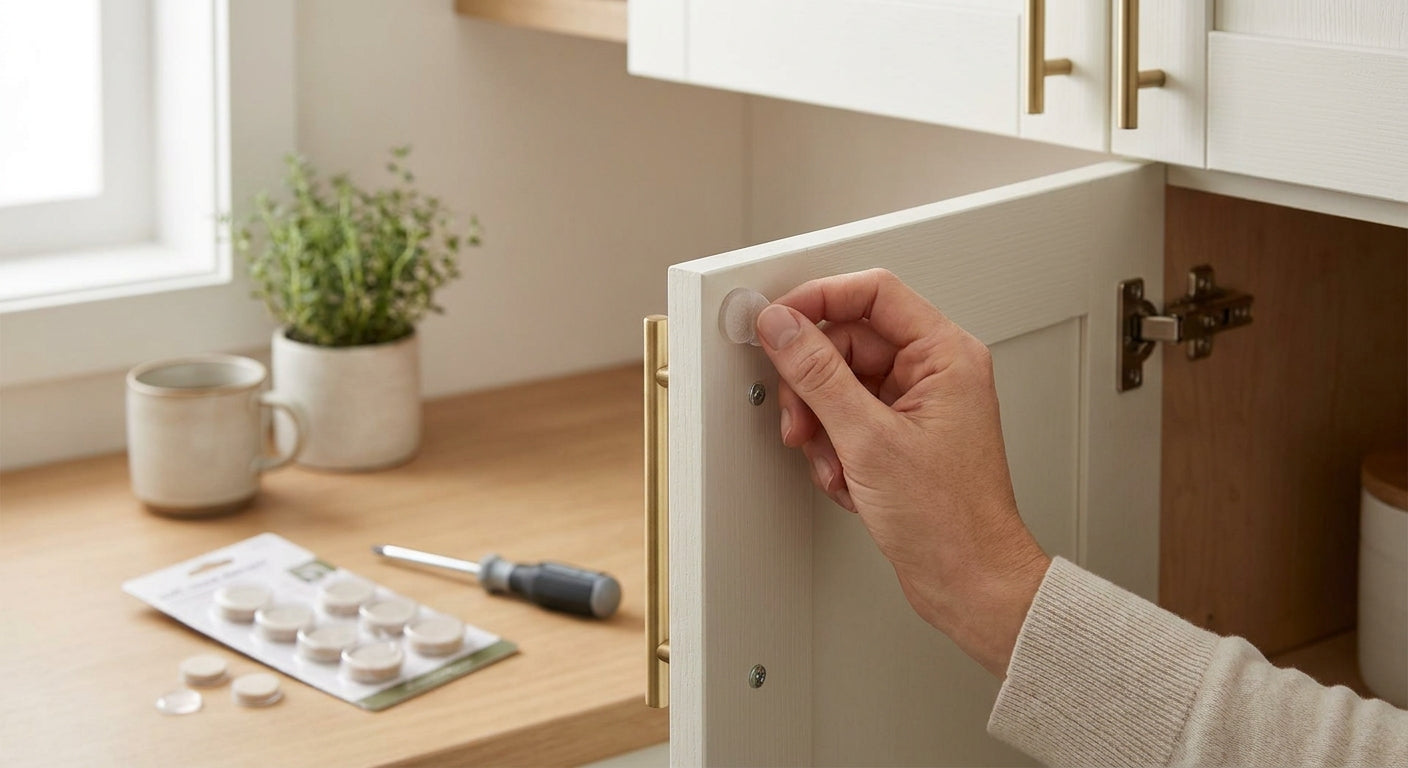
Cabinet doors that slam usually have one of two problems: no soft-close mechanism, or a hinge that's loosened enough to let the door swing past its stop point. Both are fixable in an afternoon without replacing the cabinet.
Shop the finish
Every polished brass knob and pull we carry, in one place — filter by size, style, and brand.
Browse Polished Brass Cabinet Hardware →- Self-adhesive bumpers stop cabinet doors from slamming for under $10 and take 15 minutes to install in 2026.
- Soft-close hinges replace the slam with a silent close and run roughly $8-15 per hinge in 2026.
- A loose hinge screw is the most common overlooked cause of slamming — tighten before you buy anything.
- Hickory Hardware hinge pin door stops add a controlled stop point without swapping the hinge itself.
Shop the picks from this guide
In stock at Knobs.co · Free shipping on hardware orders $99+ · 110% price match
-
 Amerock
Edona 1-1/4'' diam Cabinet Knob BP53005Polished Chrome
Amerock
Edona 1-1/4'' diam Cabinet Knob BP53005Polished Chrome
$3.21
$3.77 -
 Alno
Alno A1032 1'' Brass Cabinet KnobPolished Brass
Alno
Alno A1032 1'' Brass Cabinet KnobPolished Brass
$13.46
$14.95 -
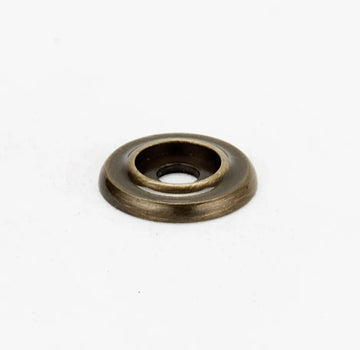 Alno
Alno A615 Brass Cabinet BackplateAntique English / 1''
Alno
Alno A615 Brass Cabinet BackplateAntique English / 1''
$8.06
$8.95 -
 Alno
Alno A726 Charlie's 3 1/2'' CC Cabinet PullAntique English / 3''
Alno
Alno A726 Charlie's 3 1/2'' CC Cabinet PullAntique English / 3''
$24.26
$26.95 -
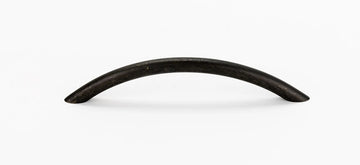 Alno
Alno A1298 128mm 5'' CC Brass Cabinet PullBarcelona
Alno
Alno A1298 128mm 5'' CC Brass Cabinet PullBarcelona
$19.76
$21.95 -
 Alno
Alno A1033 1 1/8'' Brass Cabinet KnobPolished Brass
Alno
Alno A1033 1 1/8'' Brass Cabinet KnobPolished Brass
$18.86
$20.95


Why this matters
A slamming cabinet door isn't just noise. Every slam stresses the hinge screws, chips paint at the door edge, and over 2026's typical five-to-ten-year cabinet lifespan, loosens the hinge enough that the door starts sagging. If you've got kids or pets in the house, the bang is also just annoying at 6am.
The fix scales with how many doors you're dealing with. One noisy door needs a $5 bumper. A whole kitchen of 20+ doors is a bigger project, and that's where soft-close hinges or a systematic door bumpers retrofit makes more sense than doing it door by door.
What you'll need
- A screwdriver (Phillips, most cabinet hinges)
- Adhesive door bumpers (clear or felt, 1/4" to 3/8" thick)
- Isopropyl alcohol and a rag, for surface prep
- Optional: replacement soft-close hinges if the current hinge has no dampening feature
- Optional: a hinge pin door stop if you want a hardware-level fix instead of an adhesive pad
- 15-30 minutes per door, longer if you're swapping hinges
The steps
1. Identify why the door is slamming
Open and close the door slowly and watch what happens in the last two inches of travel. If the door accelerates and hits the frame with a click, you're missing a soft-close feature. If it wobbles or the hinge feels loose to the touch, tighten the mounting screws first — a loose hinge often causes more slam than a missing bumper.
Common mistake: jumping straight to bumpers without checking hinge tightness. A bumper on a loose hinge still bangs, just quieter.
2. Clean the contact point
Wipe the spot where the door meets the cabinet frame with isopropyl alcohol and let it dry fully — about 60 seconds. Adhesive bumpers fail within weeks on greasy kitchen surfaces if you skip this step, which is the single most common reason DIY bumper installs don't last.
Common mistake: applying adhesive over old bumper residue. Scrape it off first with a plastic scraper, not a metal one that'll mark the finish.
3. Place the bumper at the right contact point
Close the door and note exactly where the inside edge touches the frame — usually the top and bottom corners for a full-overlay door. Peel and stick a small clear or felt bumper at each contact point, pressing firmly for 10 seconds.
Use 1/4" bumpers for a snug reveal, 3/8" if the door currently slams with real force. Too thick and the door won't sit flush; too thin and it still clicks.
4. Test and adjust
Close the door normally, not gently, to simulate how it'll actually get used. If it still clicks, add a second stacked bumper or move to a slightly thicker pad. If the door won't latch or sits proud of the frame, you've gone too thick — peel it off and step down in size.
Expected outcome: the door should stop with a soft thud, not a click, and sit flush with neighboring doors.
5. Upgrade to soft-close hinges for a permanent fix
Bumpers work but wear out — expect 12 to 24 months before they need replacing, depending on how hard the doors get used. A soft-close hinge builds the dampening into the hinge itself and doesn't degrade the same way.
Most face-frame cabinets take a direct hinge swap: remove the old hinge screws, mount the new soft-close cabinet hinges, and rehang the door. Frameless cabinets typically use European concealed hinges instead, which mount into a pre-bored 35mm cup hole rather than screwing to a face frame.
Common mistake: buying a soft-close hinge that doesn't match your existing mounting pattern. Measure the hole spacing and overlay type before ordering — a 1/2" overlay hinge won't work on an inset door.
6. Add hinge pin door stops for doors you don't want to rehinge
If pulling the hinge isn't practical — rented kitchen, matching hardware concerns, budget — a hinge pin door stop swaps in for the existing hinge pin and adds a physical stop point without touching the door itself. It's a five-minute job per hinge and doesn't change the door's appearance at all.
7. Check drawer slides while you're in there
Slamming drawers have the same fix logic as doors: a worn or loose slide lets the drawer travel further than it should before hitting the stop. If drawers in the same kitchen are also banging, it's worth addressing both in one pass rather than two separate projects.


Troubleshooting
- Bumper falls off within days: the surface wasn't degreased before applying. Remove, clean with alcohol, and reapply — don't reuse the same adhesive pad twice.
- Door still clicks after adding a bumper: you've undersized the pad. Step up from 1/4" to 3/8" or stack two thin bumpers.
- Door won't close flush anymore: the bumper is too thick. Drop down a size until the door sits level with its neighbors again.
- New soft-close hinge closes too slowly and doesn't latch: most soft-close hinges have an adjustment screw on the hinge arm — turn it to increase closing speed until the door latches reliably.
- Slamming came back after a few months: hinge screws work loose over time from repeated impact. Retighten before assuming the hinge itself has failed.
- Only one door in a matching set slams: that door likely has a different hinge or a worn bumper, not a design issue. Check it in isolation rather than replacing hardware across the whole run.
Tools and resources
- Screwdriver and a rag for cleanup
- Isopropyl alcohol for adhesive prep
- A tape measure, to confirm hinge hole spacing before ordering replacements
- Choosing the right cabinet hinge if you're not sure which hinge type your cabinets use
- Installing hinges on face-frame cabinets for a full hinge swap walkthrough
What to do next
If bumpers and a hinge tighten don't hold up, treat it as a hinge-replacement job rather than repeating the same patch every few months. Frameless kitchens should look at European concealed hinges specifically, since standard face-frame hinges won't mount the same way.
FAQ
How do I stop cabinet doors from slamming without replacing the hinges?
Adhesive bumper pads at the door's contact points stop cabinet doors from slamming without any hardware swap. They cost under $10 for a full kitchen and take about 15 minutes to install once the surface is degreased.
Are soft-close hinges worth it in 2026?
Soft-close hinges are worth it for kitchens getting daily heavy use, since the dampening is built into the hinge and doesn't wear out like an adhesive bumper does. Expect $8-15 per hinge depending on finish and overlay type.
Why does my cabinet door slam even with a soft-close hinge installed?
Most soft-close hinges have an adjustment screw on the hinge arm that controls closing speed, and it may be set too loose. Turn it in small increments until the door closes fully without banging.
Do door bumpers work on drawers too?
Yes, the same adhesive bumper logic applies to drawer fronts hitting the cabinet frame. Place the bumper at the exact contact point after cleaning the surface with alcohol.
How long do adhesive door bumpers last?
Adhesive bumpers typically last 12 to 24 months before the pad compresses or the adhesive fails, depending on how hard the doors get used. High-traffic kitchen doors wear through them faster than a rarely-used pantry door.
What causes a cabinet door to slam even though it used to close quietly?
A loosened hinge screw is the most common cause — the door swings past its normal stop point because the hinge no longer holds it in the original position. Tighten the mounting screws before assuming you need new hardware.
Can I use a hinge pin door stop instead of soft-close hinges?
A hinge pin door stop replaces the existing pin and adds a physical stop without changing the hinge type, which works well when you don't want to rehinge the door. It won't soften the close the way a true soft-close hinge does, but it stops the slam.
Is it cheaper to fix slamming doors or replace the hinges?
Bumpers are the cheaper first move at under $10 per door, and soft-close hinge replacement runs $8-15 per hinge plus install time. Start with bumpers on one or two doors before committing to a full hinge swap across the kitchen.
One last thing
The hinge screw check in step one solves more slamming problems than people expect — a lot of "needs new hardware" doors just need a quarter-turn on two screws. Try that before ordering anything in 2026, it's free and takes under a minute per door.


