

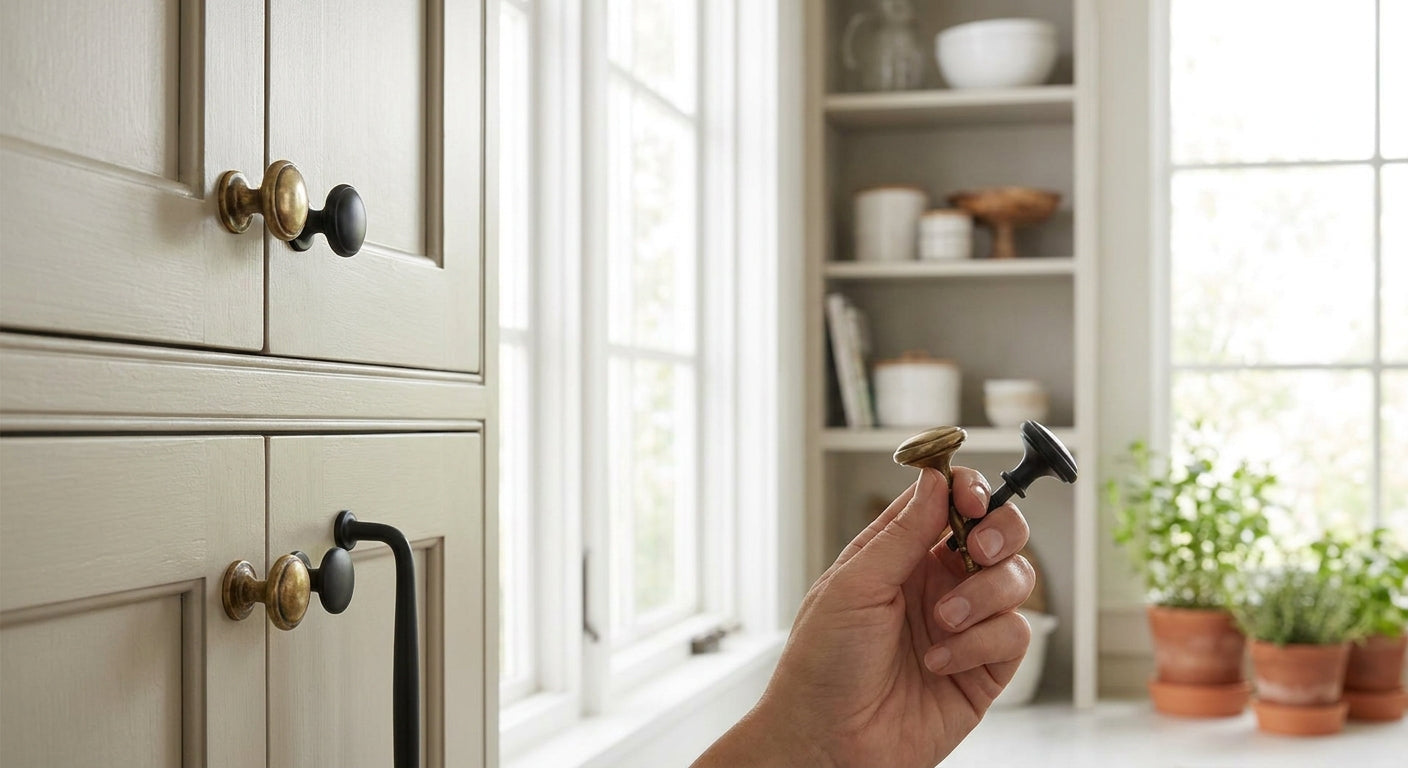
Two golden metals in the same kitchen photograph fine and look wrong the second you're standing at the sink. Mixing cabinet hardware finishes in 2026 comes down to one rule: pick a dominant metal, pick one accent, and build every other hardware decision around that pairing.
- Cap it at two finishes total: one dominant covering roughly 80% of pulls and knobs, one accent for the rest.
- Warm metals like honey bronze and champagne bronze mix cleanly; matte black next to chrome needs a bridge finish or it clashes.
- Split by zone, not by whim: perimeter cabinets in the dominant finish, the island in the accent.
- Order physical samples before buying 30+ pulls — screens misrepresent undertone almost every time.
Shop the picks from this guide
In stock at Knobs.co · Free shipping on hardware orders $99+ · 110% price match
-
 Alno
Alno A726 Charlie's 3 1/2'' CC Cabinet PullAntique English / 3''
Alno
Alno A726 Charlie's 3 1/2'' CC Cabinet PullAntique English / 3''
$24.26
$26.95 -
 Berenson
Advantage Wire Pulls 3'' CC Matte Black Steel Pull 6129-2055-P
Berenson
Advantage Wire Pulls 3'' CC Matte Black Steel Pull 6129-2055-P
$1.58
$1.97 -
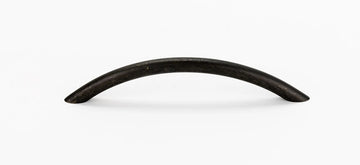 Alno
Alno A1298 128mm 5'' CC Brass Cabinet PullBarcelona
Alno
Alno A1298 128mm 5'' CC Brass Cabinet PullBarcelona
$19.76
$21.95 -
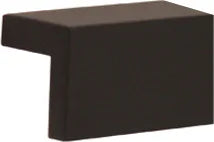 Alno
Alno A960 Tab 1 1/2'' CC Brass Cabinet PullBronze / 3/4''
Alno
Alno A960 Tab 1 1/2'' CC Brass Cabinet PullBronze / 3/4''
$16.16
$17.95 -
 Alno
Alno A1145 1 1/4'' Brass Cabinet KnobBarcelona
Alno
Alno A1145 1 1/4'' Brass Cabinet KnobBarcelona
$17.96
$19.95 -
 Alno
Charlie's 6'' Pull A726-6Antique English
Alno
Charlie's 6'' Pull A726-6Antique English
$62.96
$69.95


Why this matters
Kitchens photographed for 2026 renovation trends almost never run one finish anymore — two-tone islands and mixed-metal ranges are the norm, not the exception. But "mixed metal" and "mismatched metal" are two different outcomes, and the gap between them is usually a missed step, not a bad finish choice.
The failure pattern is predictable: someone buys knobs in one finish for the perimeter, falls for a pull online in a different finish for the island, and never checks how the two sit next to the sink faucet or the pendant lights already hanging overhead. The fix isn't more research — it's a sequence.
What you'll need
- A rough floor plan or photo marking which cabinets are perimeter vs. island
- The finish name of your faucet, cabinet pulls currently installed, and any pendant or hardware already fixed in place
- Physical hardware samples in at least two finishes — not photos, actual metal
- A tape measure, for keeping pull spacing consistent across finish zones
- Painter's tape, to mock up placement before anything gets drilled
The steps
1. Lock in your dominant finish first
Decide which finish will cover roughly 80% of your hardware before you shop for anything else. This is the finish on your largest run of cabinets — usually the perimeter — and it anchors every other decision that follows.
Skipping this step is the single biggest reason mixed-metal kitchens look accidental instead of intentional. If you're unsure where to start, choosing a cabinet hardware finish walks through matching a base finish to cabinet color and kitchen style before you touch a second metal.
Common mistake: picking the accent finish first because it's the prettier pull online, then building the whole kitchen backward from a minority choice.
2. Choose exactly one accent finish
One accent, not two. Three finishes in a single kitchen reads as unplanned in 2026 the same way it did a decade ago — the trend is intentional contrast, not variety for its own sake.
The accent should sit on a smaller, distinct run: the island, a baking cabinet, an appliance panel. It needs enough surface area to register as a choice, not so much that it competes with the dominant finish for attention.
Common mistake: treating "accent" as a third color family instead of a second finish on the same metal family or a clean contrast to it.
3. Split hardware by cabinet zone, not by whim
Draw a hard line at the island, a peninsula, or a single wall of cabinets, and keep the split consistent. A kitchen with 40 pulls split evenly “because it looked good in the cart” has no logic a visitor can read; a kitchen split cleanly by zone reads instantly.
A honey bronze pull like the Top Knobs Garrison pull on an island against black-painted perimeter cabinets in a matte black finish is the kind of pairing that photographs as deliberate because the split follows the room's actual architecture, not a 50/50 guess.
Common mistake: mixing finishes drawer-by-drawer instead of zone-by-zone, which erases the visual logic entirely.
4. Match undertones before you match colors
Every metal finish leans warm or cool, and mixing across that line without a bridge color is where most DIY mixes fail. Honey bronze, champagne bronze, and unlacquered brass are warm; chrome, brushed nickel, and polished nickel are cool. Matte black and pewter sit close to neutral and work as a bridge between the two camps.
For a deeper breakdown of which specific pairs work, mixing metal finishes in a kitchen covers combinations by undertone rather than by trend name.
Common mistake: pairing a warm bronze with a cool brushed nickel with nothing neutral between them — the two fight instead of complementing.
5. Coordinate hardware to plumbing and lighting metal
Your faucet and pendant lights are hardware whether you think of them that way or not. A kitchen with a champagne bronze faucet, matte black cabinet pulls, and brushed nickel pendants is running three finishes even if the cabinet hardware itself only uses two.
Treat the existing fixed metal in the room as one of your two allowed finishes whenever possible, then build cabinet hardware around it instead of around the cabinets alone.
Common mistake: shopping cabinet hardware in isolation and discovering the faucet doesn't belong to either finish family after installation.
6. Order samples and test them under your kitchen's actual light
Screens shift bronze toward brass and pewter toward nickel more often than not — order physical samples before committing to a full set of 30 or more pulls. Hold both finishes against the cabinet door in the exact spot they'll hang, under the light that's actually in the room, morning and evening.
North-facing kitchens read finishes cooler than the same metal photographed in a south-facing showroom. This single step catches most mismatches before a drill ever comes out.
Common mistake: trusting a laptop screen or a single overhead bulb to represent how a finish will look at 7 a.m. with the blinds open.
7. Keep hidden hardware finish-neutral
Hinges and drawer slides live behind the door and rarely need to match your visible pulls and knobs. Spend the finish budget where it's seen — the exception is exposed hinge cups on glass-front or open-shelf cabinets, where the hinge finish should match whichever zone it's mounted in.
Common mistake: over-specifying matched hinges throughout the kitchen when 90% of them are invisible once the doors are closed.
Troubleshooting
- The kitchen looks busy, not curated. You're probably running three-plus finishes. Cut back to two and reassign the extras to accessories like towel bars instead of cabinet hardware.
- The accent finish looks washed out next to the dominant one. Check undertone, not just color name — two "golds" from different brands can lean warm and cool respectively.
- Hardware looked right in the box, wrong on the door. Retest under the room's actual lighting at two different times of day before finalizing an order.
- Appliance pulls don't match cabinet pulls. This is a separate decision most people skip — matching appliance pulls to cabinet hardware covers how to keep a fridge or dishwasher pull in the same finish family as the rest of the kitchen.
- Budget balloons from buying small quantities in multiple finishes. Buy the dominant finish in bulk for the volume discount most brands offer, and keep the accent finish to the smaller zone only.
- The mix looks trendy now, dated in five years. Neutral pairings — matte black with pewter, brushed nickel with chrome — hold up longer than pairing two bright golds together.
“If you can't decide between two finishes, put one on the island and call it done.”
Tools and resources
- Physical hardware samples, ordered before any bulk purchase
- A tape measure and painter's tape for placement mockups
- A written or photographed record of your faucet and lighting finish names
- A cabinet hardware jig if you're drilling new holes for a finish change
- A pull-spacing plan that stays consistent across both finish zones
What to do next
Once your two finishes are locked, the next decision most people underestimate is appliance hardware — fridge, dishwasher, and range hood pulls each get bought separately and each needs to land in the same finish plan. Start with matching appliance pulls to cabinet hardware before placing your final order.
FAQ
How many cabinet hardware finishes should I mix in one kitchen?
Two finishes is the practical ceiling for 2026 kitchens — one dominant covering most cabinets, one accent on a smaller zone like the island. Three or more finishes reads as unplanned rather than intentional.
Is matte black or brushed nickel the better dominant finish?
Both work as a dominant finish depending on cabinet color — matte black suits darker or high-contrast cabinets, brushed nickel suits lighter, cooler-toned kitchens. The choice matters less than committing to one and building the accent around it.
Can I mix warm and cool metal finishes?
You can mix warm and cool finishes if you add a neutral bridge like matte black or pewter between them. Pairing a warm brass directly against a cool chrome with nothing neutral in between usually clashes.
Do cabinet hinges need to match the pulls and knobs?
Hinges rarely need to match since they sit hidden behind a closed door. Match hinge finish only where the hinge is visible, such as glass-front cabinets or exposed hinge cups.
Should the kitchen island hardware match the perimeter cabinets?
The island is the most common place to run your accent finish while the perimeter carries the dominant finish. This zone-based split is what separates an intentional mix from a random one.
How do I match cabinet hardware to my faucet finish?
Treat your faucet finish as one of your two allowed metals and choose cabinet hardware to complement it rather than shopping hardware in isolation. A champagne bronze faucet pairs cleanly with champagne bronze or matte black cabinet hardware.
Why does my hardware look different at home than it did online?
Screens shift undertone, often making bronze read closer to brass or pewter read closer to nickel. Order physical samples and check them against your cabinet doors under your kitchen's actual lighting before ordering in bulk.
Do appliance pulls need to match cabinet knobs exactly?
Appliance pulls should stay in the same finish family as your dominant or accent cabinet hardware, though the exact style can differ. A mismatched appliance pull is one of the most common finish errors in an otherwise coordinated kitchen.
One last thing
The kitchens that photograph best in 2026 renovation coverage rarely use an expensive third finish to stand out — they use the same two metals as everyone else, just split cleanly by zone with the undertones checked before the drill came out. The mix isn't the hard part; the sequence is.


