

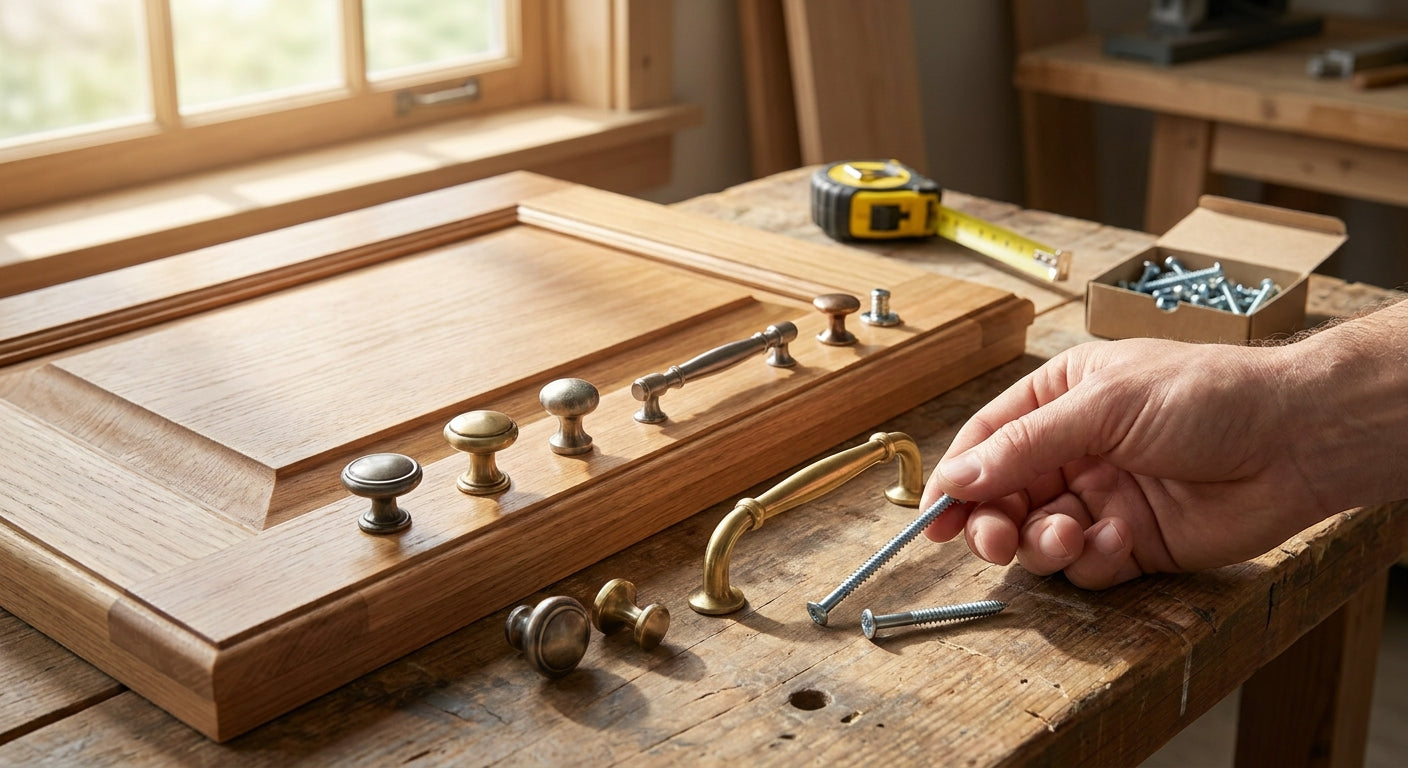
Grab the wrong screw and a $40 pull ends up loose in six months or punching through the inside of a drawer box. This guide breaks down exactly how to measure for cabinet hardware screw length so every knob, pull, and appliance handle sits flush and stays tight in 2026.
- Measure door or drawer thickness first: cabinet hardware screw length depends on it more than anything else.
- Standard 8-32 knob screws run 1 inch; most doors and drawers in 2026 need nothing longer.
- Backplates add 1/8 to 3/16 inch: size the screw for the plate, not just the door.
- Appliance pulls with 12 to 24 inch centers often need 2 inch screws for thick panel-ready doors.
- A stripped hole from an oversized screw calls for a repair plate, not a bigger drill bit.
Why this matters
Cabinet hardware screw length is the detail everyone skips until a pull wobbles or a screw tip dents the inside of a cabinet door. Doors and drawer fronts made in 2026 still range from 5/8 inch (thin overlay) to 1-1/4 inch (solid shaker), and the screw that came in the hardware box is sized for one thickness, not all of them.
Get the hole spacing right and the wrong screw length can still ruin the install: a screw that's too long bottoms out against a drawer box wall, and one that's too short leaves the knob spinning within a year.
What you'll need
- A tape measure or digital calipers (calipers get you within 1/32 inch, tape measures don't)
- The knob, pull, or appliance pull you're installing, with its included screws still in the package
- A cordless drill with a 3/16 inch bit for standard mounting holes
- A cabinet hardware jig if you're doing more than 4-6 pieces
- Extra 8-32 machine screws in 1 inch, 1-1/2 inch, and 2 inch lengths as backup
Action: Measure the door or drawer thickness
Open the door or pull the drawer and measure the panel thickness with calipers at the exact spot the screw will pass through. Most kitchen cabinet doors built since 2020 run 3/4 inch; older face-frame cabinets sometimes go up to 7/8 inch, and furniture-grade or custom millwork can hit 1-1/4 inch.
This single measurement decides everything downstream: get it wrong and the rest of the math doesn't matter. Skip a tape-measure guess and use calipers if you own them.
Action: Add for the backplate, if you're using one
A backplate sits between the door and the knob or pull, and it adds thickness the screw has to clear. Most backplates run 1/8 to 3/16 inch thick, so a 3/4 inch door with a backplate effectively becomes a 15/16 inch mounting surface.
Skip this step and the knob won't seat flush: you'll see a gap or the threads won't fully engage. Add the backplate thickness to your door measurement before picking a screw.
Action: Match the thread standard first
Almost all cabinet knobs and pulls sold in 2026 use an 8-32 machine screw thread, which is the number stamped on the screw shank, not a brand name. Confirm it before ordering replacement screws, because a mismatched thread pitch will cross-thread and strip the hole on the first turn.
European and some import hardware occasionally uses metric M4 threads instead. Check the fine print on the product page before you assume 8-32.
Action: Size the screw to the hardware type
Knobs, pulls, and appliance pulls each have different tolerances:
- Knobs ship with a 1 inch screw as the default, which covers doors up to about 7/8 inch thick.
- Cabinet pulls in the 3 to 6.5 inch center-to-center range usually need 1 to 1-1/2 inch screws depending on backplate use. The Chareau reeded pull from Top Knobs is a good example at 5 inches on center.
- Appliance pulls spanning 12 to 24 inches on center often ship with two screw options in the box, commonly 8-32 x 1 inch and 8-32 x 2 inch, to cover panel-ready refrigerator and dishwasher doors that run thicker than standard cabinetry.
Action: Dry-fit before you commit
Thread the screw through the hardware and into the door without glue, caulk, or final torque. If more than two full threads are exposed on the back side, the screw is too long and will hit the drawer box or shelf behind it.
A cabinet hardware jig holds the piece in position while you test-fit, which matters most when you're installing more than a handful of pulls in one afternoon.
Action: Order extra length only when the math calls for it
Don't round up screw length just in case. A screw that's 1/4 inch too long on a drawer front will hit the metal drawer box wall every time the drawer closes, and over a few months that contact wears a visible dent.
Buy the exact length the door-plus-backplate measurement calls for, and keep one spare set of 8-32 screws in 1, 1-1/2, and 2 inch lengths in a drawer for the next project.
Troubleshooting
- Screw pokes through the drawer box interior — the screw is longer than the drawer front plus backplate. Swap to the next size down.
- Knob or pull wobbles after a few weeks — the screw is too short and isn't fully engaging the threads inside the hardware base. Move up one screw length.
- Stripped screw hole — usually caused by over-tightening or a screw with the wrong thread pitch. A hinge repair plate for stripped screw holes fixes this without redrilling.
- Pull sits proud of a backplate — the screw wasn't sized for the added backplate thickness. Re-measure with the backplate in place, not the bare door.
- Appliance pull screws bottom out before the pull is snug — panel-ready appliance doors often run thicker than standard cabinetry; the 2 inch screw option that ships with most appliance pulls solves this.
- Old holes don't line up with new hardware — this is a hole-spacing problem, not a screw-length problem; filling and refinishing old hardware holes resets the surface before you drill new ones.


Tools and resources
- Calipers or a tape measure accurate to 1/32 inch
- A drill template or jig, especially past 4-6 pieces of hardware
- A spare set of 8-32 screws in 1, 1-1/2, and 2 inch lengths
- Knobs.co stocks 50,000+ SKUs across dozens of brands if you need to match a specific pull's screw spec before ordering
What to do next
Once screw length is settled, the next variable that trips up most installs is picking the wrong knob diameter or pull length for the door style. Read how to choose the right cabinet knob size before you finalize an order. It covers proportions relative to door width, which screw length alone won't fix.
FAQ
What's the standard screw length for cabinet knobs?
Most cabinet knobs ship with a 1 inch, 8-32 machine screw, which fits doors up to about 7/8 inch thick. Thicker doors or added backplates need a longer screw, commonly 1-1/2 inch.
How do I know what screw length my cabinet pull needs?
Measure the door or drawer front thickness, add any backplate thickness, and match that total to the closest 8-32 screw length. A 3/4 inch door with no backplate typically takes a 1 inch screw.
Is a longer screw always safer for cabinet hardware?
No. A screw that's too long will hit the inside of a drawer box or shelf behind the door, causing a dent or blocking full drawer travel. Size the screw to the exact panel thickness, not longer than needed.
What screw thread do cabinet knobs and pulls use?
Nearly all cabinet knobs and pulls sold in 2026 use an 8-32 machine screw thread. Some imported or European hardware uses metric M4 threads instead, so check the product listing before ordering replacements.
Do appliance pulls need different screws than cabinet pulls?
Yes. Appliance pulls spanning 12 to 24 inches on center often ship with two screw options, typically 1 inch and 2 inch, because panel-ready refrigerator and dishwasher doors run thicker than standard cabinetry.
What screw length works for a backplate under a knob?
Add the backplate's thickness, usually 1/8 to 3/16 inch, to your door measurement before selecting a screw. A 3/4 inch door with a 3/16 inch backplate needs roughly a 15/16 inch effective screw length, which usually rounds up to the next standard size.
Why is my new cabinet knob wobbling after installation?
A wobbly knob almost always means the screw is too short and isn't fully engaging the threads inside the hardware base. Move up to the next screw length and the wobble stops.
Can I reuse old screws when installing new cabinet hardware?
Only if the thread pitch matches and the length fits the new hardware's base. Most failures come from reusing a screw sized for a different knob or pull. When in doubt, use the screws that shipped with the new hardware.
One last thing
The screws that ship inside a knob or pull box are picked to fit the most common door thickness for that hardware line, not your specific cabinets. That's why a spare set of 8-32 screws in three lengths saves more return trips to the hardware store than any other $5 investment in a 2026 kitchen refresh.