

Cabinet doors that slam shut usually have one of two problems: worn-out hinges that lost their tension, or no soft-close mechanism at all. Both are fixable in an afternoon without replacing a single cabinet box.
- Adhesive door bumpers stop slamming in under 10 minutes for under $10 a cabinet.
- Soft-close cabinet hinges are the permanent fix and drop into most existing screw holes.
- European concealed hinges have adjustment screws that reduce spring tension without new hardware.
- Worn magnetic catches let doors swing too far before impact — replace the catch, not the door.
Why this matters
A slamming cabinet door isn't just noise. Repeated impact loosens hinge screws, cracks paint and MDF edges around the hinge cup, and eventually pulls the hinge plate right out of the cabinet frame. On a kitchen with 20-30 doors, that's a repair bill waiting to happen.
The fix depends on what's actually causing the slam. A door with standard butt hinges and no damping will always swing hard and closed on its own weight — that's physics, not a defect. A door that used to close gently and now bangs shut has a worn part, most often the hinge spring or the catch. Soft-close cabinet hinges solve the first problem permanently; a five-minute tension adjustment often solves the second.
What you'll need
- Phillips screwdriver (magnetic tip helps with drop screws)
- Rubbing alcohol and a clean cloth
- Self-adhesive door bumpers (clear felt or rubber, 1/8" to 3/16" thick)
- Replacement soft-close hinges if you're upgrading (match your current hinge overlay: full, half, or inset)
- A small flathead screwdriver for hinge tension adjustment
- 10-15 minutes per cabinet if replacing hinges, under 2 minutes per door for bumpers
The steps
1. Diagnose the hinge type first
Open the door and look at the hinge. Exposed butt hinges (visible metal knuckle) have zero built-in damping — the door will always swing shut under its own weight. Concealed European hinges (the round cup hidden inside the door) may or may not have a soft-close cartridge built in. Knowing which type you have determines whether you're adding a bumper, adjusting a screw, or swapping hardware entirely.
Common mistake: assuming every concealed hinge is soft-close. Most builder-grade cabinets from 2015-2020 shipped with standard clip-on hinges that close hard on purpose to keep doors shut without a catch.
2. Add adhesive bumpers for an instant fix
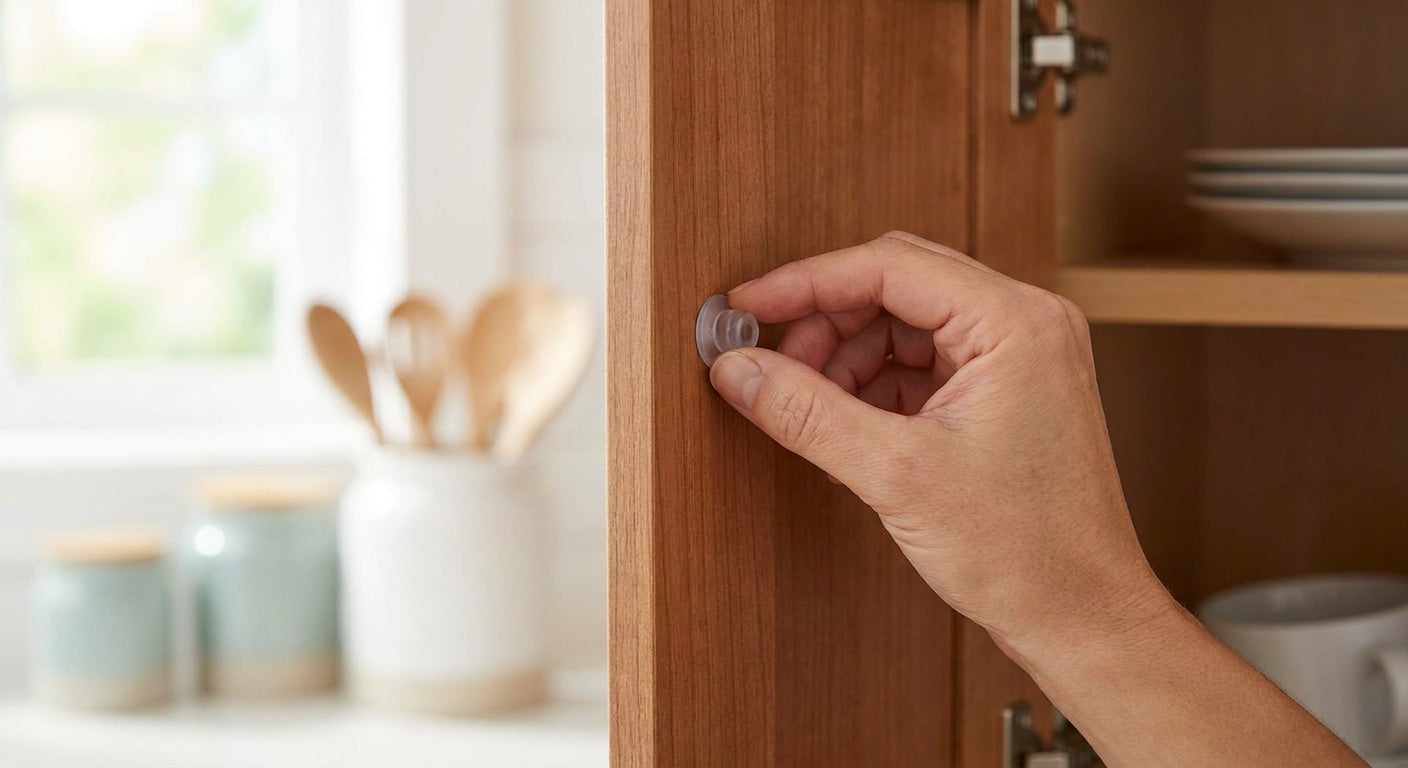
Clean the inside top corners of the door frame and the matching spot on the cabinet face with rubbing alcohol — adhesive won't hold on greasy or dusty MDF. Press one bumper per corner (two per door) and hold for 10 seconds. This absorbs impact even on non-soft-close hinges and typically cuts noise by more than half within 2026's standard cabinet-door thickness range of 3/4" to 7/8".
Common mistake: using a bumper that's too thin. A 1/16" bumper does almost nothing on a heavy solid-wood door — go with 3/16" minimum.
3. Adjust the hinge tension screw
Most European concealed hinges have a small screw near the hinge arm that controls spring tension — turning it clockwise a quarter turn at a time reduces the force pulling the door shut. Work both hinges on the door evenly, or the door will hang crooked. This is the fastest fix when a door used to close gently and now doesn't — it means the spring tension crept up, not that the hinge failed.
Common mistake: adjusting only one hinge on a two-hinge door. Uneven tension pulls the door out of square and makes the slam worse on one side.
4. Replace worn hinges with soft-close cartridges
If tension adjustment doesn't fix it, the damping cartridge inside the hinge has failed — this happens after roughly 40,000-60,000 open-close cycles, or 8-10 years of daily kitchen use. Swap the hinge for a soft-close version in the same overlay and finish; choosing the right cabinet hinge for your door overlay (full, half, or inset) matters more than brand at this stage. Most replacements reuse the existing screw holes, so there's no new drilling.
Common mistake: buying a hinge based on finish alone and ignoring overlay type — a full-overlay hinge won't sit right on a half-overlay door.
5. Check the magnetic or roller catch
On older cabinets without hinge-based closing, a magnetic catch controls how far the door travels before it stops. A weak or broken magnet lets the door swing past its resting point and slam the frame. Replace the catch — it's a two-screw job — before assuming the hinge is the problem.
6. Tighten loose hinge screws
A hinge with stripped or loose screws lets the whole door shift and gain extra momentum on the way shut. Remove the screw, pack the hole with a wood toothpick and wood glue, let it dry 20 minutes, then reinstall. This restores grip without redrilling.
Common mistake: driving a longer screw into a stripped hole without filling it first — it strips again within weeks.
7. Retrofit a standalone soft-close damper
For cabinets you don't want to rehinge, a clip-on soft-close damper mounts to the cabinet frame or door interior and slows the last few inches of travel without touching the existing hinge. It's the middle option between a bumper (cheap, partial fix) and a full hinge swap (permanent, full fix).
“If the door still slams after adding a bumper, the hinge is doing the swinging, not the door.”
Troubleshooting
- Bumper falls off within a week — surface wasn't degreased. Wipe with alcohol, let dry fully, then reapply.
- Soft-close hinge closes too slowly and won't latch — tension is set too soft; turn the adjustment screw counter-clockwise in small increments until it latches firmly.
- Door swings open on its own after the fix — spring tension is now too weak; this is the opposite problem and needs a slight tension increase.
- Inset door still slams after a standard hinge swap — inset doors need a different hinge geometry than overlay doors; standard soft-close overlay hinges won't seat correctly.
- One door on a pair slams harder than its partner — check for uneven tension between the two hinges on that specific door, not the whole run.
- New soft-close hinge feels stiff for the first week — normal break-in period for the damping cartridge; it loosens with regular use.
Tools and resources
- Soft-close cabinet hinges — the permanent fix for most kitchens
- Door bumpers for cabinets without soft-close hinges — the fastest, cheapest fix
- How to choose the right cabinet hinge for your cabinets — match overlay and finish before you buy
Knobs.co stocks self-closing cabinet hinges across major brands alongside the knobs and pulls it's known for, so you can match finish across the whole kitchen in one order instead of hunting three different suppliers.
What to do next
Once the slamming stops, check whether your hinges are original to the cabinets or a mismatched replacement from a prior repair — mismatched hinges are the most common reason a quick fix doesn't hold. For a full walkthrough of removing old hardware and mounting new hinges correctly, see installing European concealed hinges.
FAQ
What causes cabinet doors to slam shut?
Cabinet doors slam because the hinge has no damping mechanism, or a soft-close hinge's internal cartridge has worn out after years of use. A weak magnetic catch letting the door swing too far is the second most common cause.
Do self-closing hinges stop cabinet doors from slamming?
Yes, soft-close cabinet hinges use a hydraulic or spring-loaded cartridge that slows the last few inches of the door's swing before it latches. They're the permanent fix, unlike adhesive bumpers which only absorb impact.
How much do soft-close hinges cost in 2026?
Soft-close cabinet hinges typically run $8 to $15 per hinge in 2026, and most doors need two. A full kitchen of 20-30 doors runs $320-$900 in hardware, not counting labor if you hire it out.
Can you add soft-close to existing cabinet hinges?
Yes, clip-on soft-close dampers mount to the existing hinge or cabinet frame without replacing hardware. They're a middle-ground fix between adhesive bumpers and a full hinge swap.
What is the best bumper for cabinet doors?
A clear felt or rubber bumper 3/16 inch thick works best for most cabinet doors — thinner pads under 1/16 inch don't absorb enough impact on solid wood doors. Apply two per door, one at each top corner.
How long does it take to fix a slamming cabinet door?
Adding bumpers takes under 2 minutes per door. Replacing a hinge with a soft-close version takes 10-15 minutes per cabinet including screw removal and realignment.
Do soft-close hinges work on inset cabinet doors?
Inset doors need a soft-close hinge built specifically for inset overlay geometry — a standard full-overlay soft-close hinge won't seat correctly on an inset door frame.
Is it cheaper to replace hinges or add bumpers?
Bumpers cost under $10 per cabinet and fix the noise instantly, but they don't stop wear on the hinge itself. Soft-close hinges cost more upfront but eliminate slamming and the wall damage that comes with it.
One last thing
Most slamming complaints in 2026 kitchen renovations trace back to a hinge that was fine for the first 5-8 years and then wore out all at once — the damping cartridge doesn't degrade gradually, it fails. If one door in a run of ten suddenly starts slamming while the rest stay quiet, replace that one hinge before you assume the whole kitchen needs new hardware.