

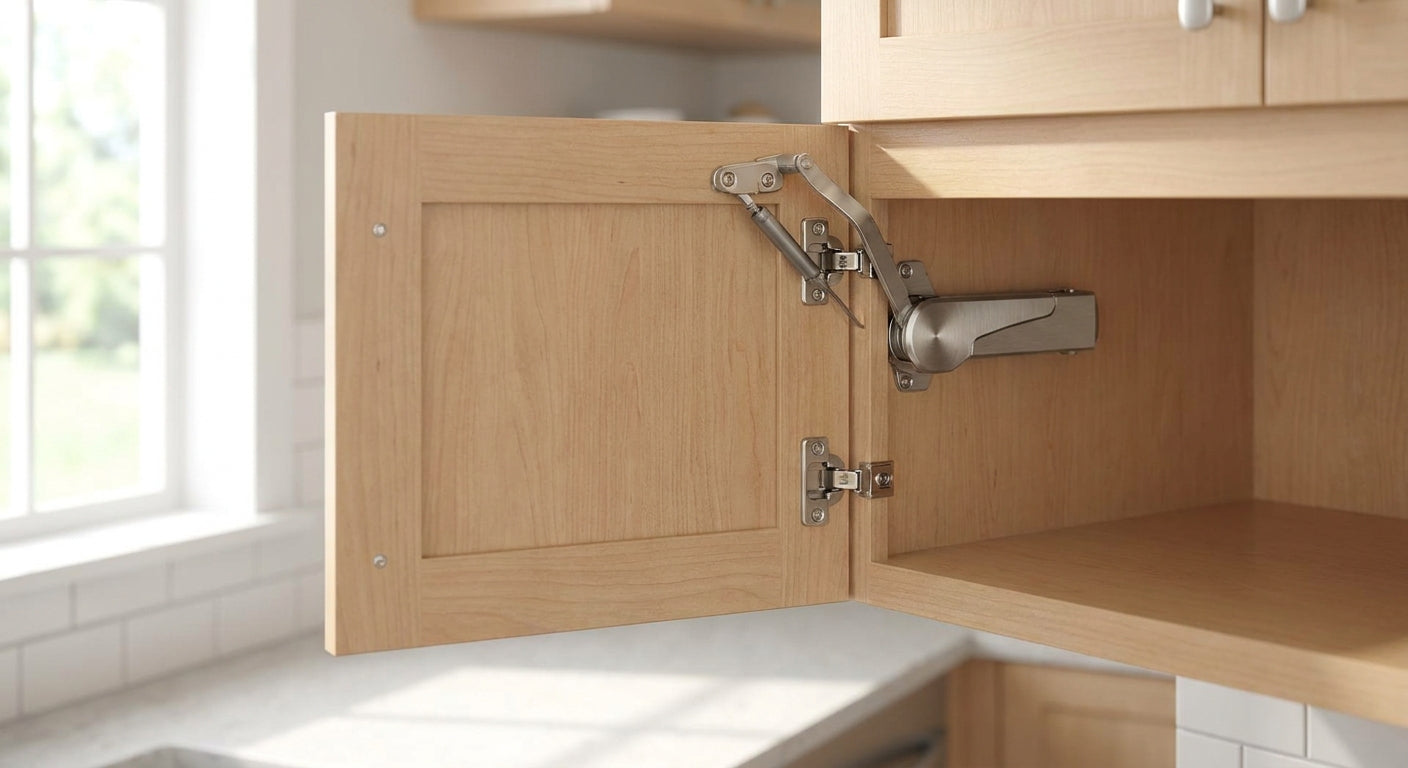
Soft close cabinet hinges quiet slamming doors and protect cabinet boxes from years of impact damage — this guide breaks down which hinge type fits face-frame, frameless, and inset cabinets so you buy the right one the first time.
Shop cabinet hinges
Every cabinet hinge we carry, in one place — filter by overlay, mount type, and brand.
Browse Cabinet Hinges →- Frameless (European) cabinets need a 35mm cup concealed hinge with a soft-close cam — full overlay is the most common fit in 2026 kitchens. Buy.
- Face-frame cabinets need a hinge sized to the frame reveal, not a frameless cup hinge forced into a shim. Buy the matched type.
- Inset doors need a specialized soft-close inset hinge with tighter tolerances — a standard concealed hinge will not sit flush. Consider only the inset-rated version.
- Skip no-name hinges with fixed (non-adjustable) mounting plates — you cannot correct door sag later. Skip.
- Retrofitting old cabinets is usually cheaper with add-on dampers than a full hinge swap if the existing hinges are structurally sound.
Shop the picks from this guide
In stock at Knobs.co · Free shipping on hardware orders $99+ · 110% price match
-
 Amerock
Functional Hardware 3/8'' Offset Non-Self Closing Face Mount Cabinet Hinge - 1 Pair BPR3406Antique Copper
Amerock
Functional Hardware 3/8'' Offset Non-Self Closing Face Mount Cabinet Hinge - 1 Pair BPR3406Antique Copper
$6.99
$8.22 -
 Amerock
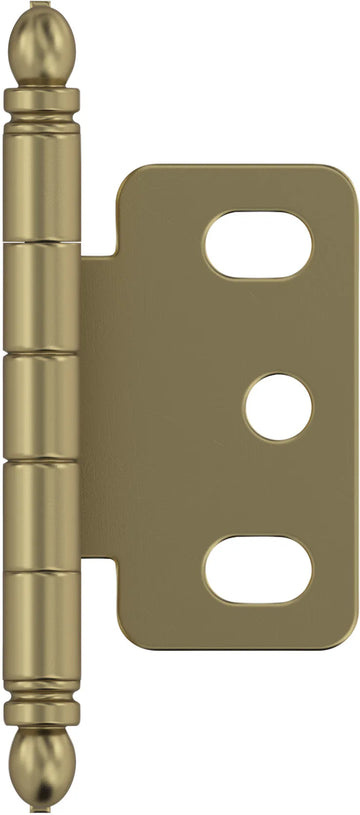
Functional Hardware 3/4'' Door Thickness Full Inset Partial Wrap Ball Tip Cabinet Hinge - Single Hinge PK3180Golden Champagne
Amerock
Functional Hardware 3/4'' Door Thickness Full Inset Partial Wrap Ball Tip Cabinet Hinge - Single Hinge PK3180Golden Champagne
$5.90
$6.93 -
 Amerock
Functional Hardware 1/2'' Overlay Double Demountable Cabinet Hinge - 1 Pair BPR8704Burnished Brass
Amerock
Functional Hardware 1/2'' Overlay Double Demountable Cabinet Hinge - 1 Pair BPR8704Burnished Brass
$12.95
$15.23 -
 Amerock
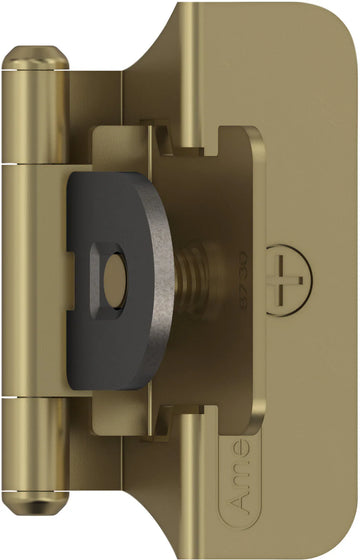
Functional Hardware 1/4'' Overlay Double Demountable Cabinet Hinge - 1 Pair BPR8701Golden Champagne
Amerock
Functional Hardware 1/4'' Overlay Double Demountable Cabinet Hinge - 1 Pair BPR8701Golden Champagne
$12.95
$15.23 -
 Amerock
Functional Hardware Variable Overlay Self Closing Face Mount Cabinet Hinge - 1 Pair BPR3429Polished Chrome
Amerock
Functional Hardware Variable Overlay Self Closing Face Mount Cabinet Hinge - 1 Pair BPR3429Polished Chrome
$5.32
$6.25 -
 Amerock
Functional Hardware 3/4'' Door Thickness Full Inset Full Wrap Ball Tip Cabinet Hinge - Single Hinge PK3175Antique Brass
Amerock
Functional Hardware 3/4'' Door Thickness Full Inset Full Wrap Ball Tip Cabinet Hinge - Single Hinge PK3175Antique Brass
$5.56
$6.54


Why this matters
A cabinet door that slams shut 20 times a day wears out its hinge screws inside two or three years — that's the whole reason soft close cabinet hinges exist. The damping cam inside the hinge takes over in the last 10-15 degrees of the swing and lets the door settle instead of banging the box.
The problem is that "soft close cabinet hinges" is not one product. Face-frame cabinets, frameless cabinets, and inset-door cabinets each need a different hinge geometry, and buying the wrong one means redrilling holes or living with a door that doesn't sit flush. Knobs.co stocks concealed, face-frame, and inset soft-close hinges across dozens of brands, and the fit question is almost always more important than the finish question.
Who this is for
This guide is for homeowners replacing loud, sagging cabinet hinges during a kitchen or bath refresh, and for contractors and designers speccing hardware for a full remodel where door type varies room to room. If you're staring at your existing cabinet door and trying to figure out whether you have a face-frame, frameless, or inset setup before you order anything, start here — the wrong hinge type is the single most common return reason in cabinet hardware.
What to look for in soft close cabinet hinges
Cabinet construction type
Face-frame cabinets have a solid wood frame across the front of the box; frameless (European-style) cabinets attach the door directly to the side panel with a 35mm cup hinge. Mixing these up is the number one mistake — a frameless cup hinge has nothing to bore into on a face-frame box without an adapter plate.
Overlay amount
Full overlay, half overlay, and inset are the three overlay styles, and each needs a hinge cut for that exact reveal. A half-overlay hinge on a full-overlay door leaves a visible gap or forces the door to bind against its neighbor.
Adjustability
A 3-way or 6-way adjustable mounting plate lets you correct door height, depth, and side-to-side alignment months after install as the cabinet settles. Fixed-plate hinges look identical on the shelf but give you zero room to fix sag later — this is worth paying more for in 2026 kitchens, where cabinet boxes are often lighter engineered wood.
Door weight and size
Heavier doors — tall pantry doors, oversized island doors — need a hinge rated for that weight or the soft-close cam wears out early and the door starts slamming again within a year. Standard 100mm cup hinges handle typical 3/4-inch overlay doors; oversized doors often need a second hinge added mid-height.
Finish match
Most soft-close hinges mount inside the cabinet and are never seen, so finish only matters on exposed inset hinges or decorative face-frame hinges. Don't overpay for a matched finish on a concealed hinge nobody will ever look at.
Soft close cabinet hinges by cabinet type
Face-frame cabinets — the classic pick
Face-frame construction is still the majority of American kitchen cabinetry built before 2015, and it needs a hinge designed for a wood frame reveal rather than a cup-and-plate frameless system. Look for a face-frame soft-close hinge with at least 3-way adjustability so overlay gaps stay even after a year of use.
Verdict: Buy if your cabinets have a visible wood frame around each opening — check the best soft close hinges for face frame cabinets guide before ordering to confirm reveal size.
Frameless / European cabinets — the modern standard
Frameless cabinets dominate new-construction kitchens in 2026, and the 35mm cup concealed hinge is the industry standard fit. A 6-way adjustable mounting plate is worth the few extra dollars here because frameless boxes shift slightly as the home settles, and you'll want to re-square doors without buying new hardware.
Verdict: Buy for any flat-front, no-frame cabinet box — see European concealed hinges for frameless cabinets for cup sizes and boring depth.
Inset cabinet doors — the precision pick
Inset doors sit flush inside the frame rather than overlapping it, which means the hinge tolerances are tighter — a standard concealed hinge will leave the door proud or recessed. Inset-rated soft-close hinges are built to that narrower margin and cost more because the manufacturing tolerance is tighter.
Verdict: Consider only the inset-specific hinge line — a general-purpose soft-close hinge will not sit flush and the door reveal will look uneven around all four sides.
Budget mixed-cabinet jobs
On a rental flip or multi-unit renovation where cabinet construction varies unit to unit, standardizing on one adjustable hinge family across face-frame and frameless boxes (using adapter plates where needed) saves ordering time versus stocking three separate hinge lines.
Verdict: Consider for contractors managing multiple units on a tight 2026 renovation schedule — confirm adapter plate compatibility before bulk ordering.
What to avoid
- Hinges labeled "soft close" with no adjustable mounting plate — they look identical to adjustable versions in photos but give you no way to fix a sagging door six months in.
- Frameless cup hinges bought for a face-frame cabinet — the cup has nothing solid to seat into without an adapter, and forcing it strips the frame wood.
- Undersized hinges on oversized doors — a standard-duty hinge on a 30-inch pantry door burns out the damping cam early and the door starts slamming again within a year.
Soft close cabinet hinges: verdict comparison
| Cabinet type | Hinge style | Adjustability needed | Best for | Verdict |
|---|---|---|---|---|
| Face-frame | Face-frame soft-close | 3-way minimum | Pre-2015 wood-frame kitchens | Buy |
| Frameless / Euro | 35mm cup concealed | 6-way preferred | New-construction, flat-panel cabinets | Buy |
| Inset doors | Inset-specific soft-close | 3-way, tight tolerance | Custom cabinetry, flush-fit doors | Consider |
| Mixed job sites | Adjustable + adapter plates | 6-way | Multi-unit renovation | Consider |
FAQ
What are soft close cabinet hinges?
Soft close cabinet hinges use a built-in damping cam that slows the door down in the last 10-15 degrees of its swing so it settles instead of slamming shut. They come in face-frame, frameless (35mm cup), and inset versions, and the type has to match your cabinet construction.
Are soft close hinges worth it in 2026?
Yes, for kitchens with daily-use cabinets — the damping mechanism cuts wear on both the door and the box compared to standard hinges that let doors slam. Replacement cost is usually recovered in reduced cabinet repair over a few years of heavy use.
Can I put soft close hinges on any cabinet?
Only if the hinge type matches your construction — face-frame hinges do not fit frameless boxes without an adapter plate, and standard hinges will not sit flush on inset doors. Measure your cabinet type before ordering.
How much does it cost to switch to soft close cabinet hinges?
Cost depends on door count and hinge type, with inset-rated hinges typically priced higher than standard frameless cup hinges. Most homeowners replace hinges per door rather than the whole kitchen at once to spread the cost.
Do soft close hinges fit existing hinge holes?
Frameless 35mm cup hinges usually reuse existing cup holes if the prior hinge was also a 35mm cup style. Face-frame and inset swaps sometimes need new screw holes if the mounting plate geometry differs from the original hinge.
What is the difference between face-frame and frameless soft close hinges?
Face-frame hinges mount to a solid wood frame around the cabinet opening, while frameless hinges use a 35mm cup bored directly into the door and a plate mounted to the cabinet side panel. Using the wrong type leaves the door misaligned or unable to mount at all.
Can I add soft close to cabinets without replacing the hinges?
Add-on soft-close dampers exist for cabinets with structurally sound standard hinges, avoiding a full hinge swap. This works best when the existing hinge and door alignment are already in good shape.
How do I know if my cabinets are inset or overlay?
Inset doors sit flush inside the frame opening with no overlap, while overlay doors sit on top of the frame and partially or fully cover it. Look at the door edge against the frame — flush means inset, overlapping means overlay.
One last thing
The most overlooked detail in a soft-close hinge order isn't the finish or the brand — it's the mounting plate adjustability, and skipping it is the reason so many DIY installs end up with a door that's slightly out of square by year two. Buy the adjustable version even if it costs a few dollars more per hinge; it's the difference between a five-minute fix and pulling the door off the box.


