

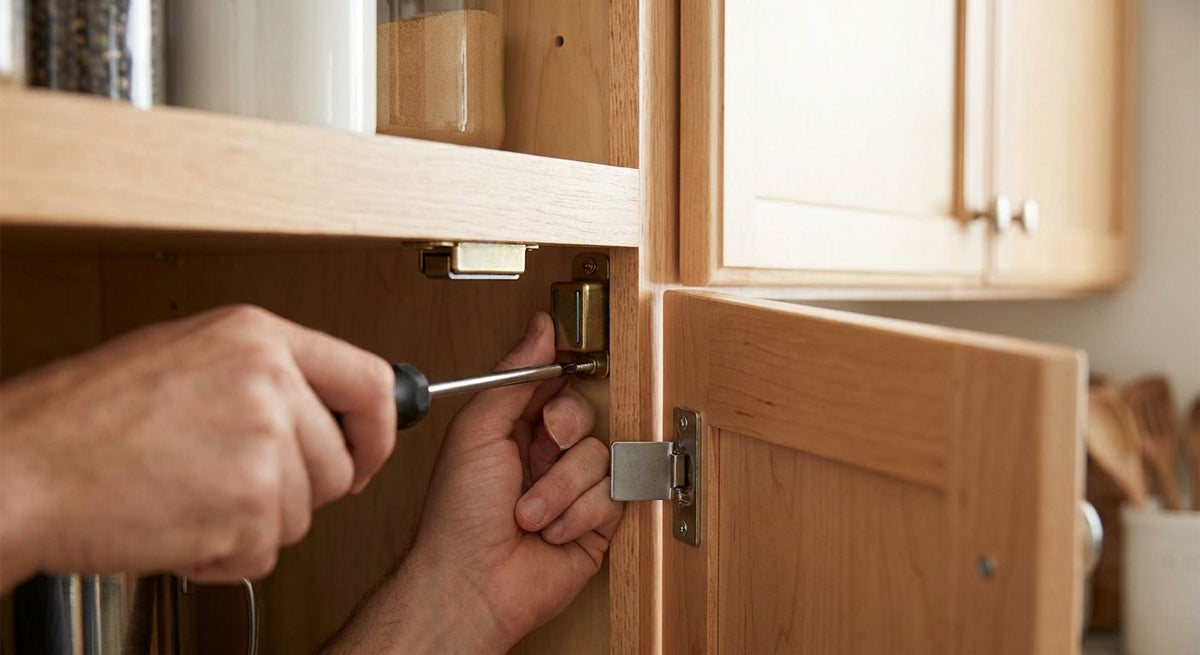
A magnetic cabinet door catch holds a cabinet door shut without a mechanical latch, and putting one in takes about 15 minutes per door once the magnet and strike plate line up correctly. This guide walks through the mounting, the gap spacing, and the fixes for the two problems that ruin most DIY installs.
- A magnetic cabinet door catch needs the magnet mounted on the cabinet frame and the strike plate on the door, spaced roughly 1/16 inch apart.
- Standard catches hold 5 to 10 pounds of pull force - plenty for most kitchen doors, too weak for tall pantry doors over 30 inches.
- Pilot-drill every screw hole before mounting; skipping this step is the top reason a magnetic catch splits thin cabinet laminate.
- A hardware jig keeps the strike plate square to the magnet - eyeballing this step is the most common installation mistake in 2026 remodels.
Why this matters
Magnetic catches replace the friction ball catches and roller catches that used to rattle loose after a few years of daily use. They're the standard choice for overlay cabinet doors that don't have soft-close hinges, and they're cheap insurance against a door that swings open in a bumped kitchen. If your cabinets use cabinet catches and latches for overlay doors instead of soft-close hardware, a magnetic catch is usually the fastest fix.
The job is simple mechanically: two parts, four to six screws, one alignment check. Where people go wrong is skipping the pilot holes or guessing at the gap between the magnet and the strike plate. Get those two details right and the catch will outlast the cabinet door.
What you'll need
- Magnetic catch set (magnet body + metal strike plate)
- Pencil and tape measure
- Drill with a 1/16 inch pilot bit
- Phillips screwdriver
- The screws included with the catch, or #6 x 5/8 inch wood screws as a backup
- A cabinet door already hung and swinging freely on its hinges
Knobs.co stocks cabinet hardware and fittings for this kind of small-hardware job alongside the knobs and pulls most customers come for, so if the included screws strip out or go missing, replacements are a quick add-on rather than a special order.
The steps
1. Close the door and mark the natural resting point
Swing the door shut without forcing it and mark where the inside face of the door meets the cabinet frame at the top corner opposite the hinges. This is where the catch will sit. Getting this mark right matters more than any other step - every later measurement references it.
2. Position the magnet body on the frame
Hold the magnet unit against the inside of the cabinet frame, roughly 3/4 inch back from the door's resting edge, and trace the screw holes with a pencil. Most magnetic catches mount to the frame, not the door, because the frame gives a flatter, thicker surface for the screws to bite into.
3. Drill pilot holes
Drill a 1/16 inch pilot hole at each marked point, going no deeper than the screw length. Skipping this step is the single most common reason a magnetic catch splits thin plywood or laminate cabinet sides - the screw wedges the material apart instead of threading into it cleanly.
4. Screw the magnet body into place
Drive the screws by hand or on a low drill setting until the magnet housing sits flush against the frame. Overtightening cracks plastic catch housings, so stop as soon as it stops moving.
5. Close the door against the magnet
Swing the door closed slowly so it touches the magnet face. Some magnets ship with a felt or foam spacer that sets the 1/16 inch working gap automatically - leave that spacer in place during this step if it's included.
6. Mark and mount the strike plate
With the door held shut against the magnet, mark the strike plate location on the inside of the door through the catch's contact point. Pilot-drill those holes the same way as step 3, then screw the metal strike plate to the door.
7. Test the swing and adjust
Open and close the door ten times. It should latch with a light push from about 2 inches away and release with a firm pull, not a yank. If the gap feels too loose or too tight, most catches have a slotted screw hole that lets you shift the strike plate a few millimeters without redrilling.
A hardware jig removes the guesswork from steps 1 through 6 by locking the drill bit to a fixed template, which matters most when you're installing the same catch across a full run of kitchen cabinets and can't afford the marks to drift door to door.
Troubleshooting
- Door pops open on its own. The magnet is too weak for the door's weight, or the gap is wider than 1/16 inch. Reposition the strike plate closer or upgrade to a catch rated for 8 to 10 pounds of pull.
- Door won't close flush. The strike plate is misaligned with the magnet face. Loosen the screws, hold the door shut, and re-mark the plate position before redrilling.
- Catch rattles when the door is closed. The mounting screws have backed out over time. Remove, add a drop of wood glue or a slightly longer screw, and reinstall.
- Magnet pulls the door off its latch line. This happens when the magnet sits too close to the hinge side. Move it toward the opposite corner where you marked the resting point in step 1.
- Door bounces open after slamming. A magnetic catch alone won't stop a hard-slammed door from bouncing. Pair it with door bumpers or check whether how to stop cabinet doors from slamming shut calls for a soft-close hinge upgrade instead.
Tools and resources
- Drill with a 1/16 inch bit for pilot holes
- Phillips screwdriver, manual or low-torque drill setting
- A hardware jig for multi-door runs
- The right fastener length - see screw length for cabinet hardware before you buy replacements, since the wrong length is what causes most stripped mounts in 2026 kitchen jobs
What to do next
If the door still slams or bounces after the catch is installed correctly, the fix isn't the catch - it's the hinge. Read how to stop cabinet doors from slamming shut for the difference between adding a magnetic catch and upgrading to soft-close hinges, since the two solve different problems and homeowners often install one when they need the other.
FAQ
What's the best magnetic cabinet door catch for kitchen cabinets?
A catch rated for 5 to 10 pounds of pull force covers most standard overlay kitchen doors in 2026. Heavier solid-wood doors or tall pantry doors need the higher end of that range.
How much pull force does a magnetic cabinet catch need?
Most kitchen cabinet doors need 5 to 10 pounds of holding force to stay shut without popping open. Wide or heavy doors over 24 inches should use a catch at the top of that range.
Is a magnetic catch better than a roller catch?
Magnetic catches hold more consistently over time because there's no spring or ball bearing to wear out. Roller catches loosen with use and often need replacement within a few years.
How much does a magnetic cabinet door catch cost in 2026?
Individual magnetic catches are one of the least expensive pieces of cabinet hardware available, typically a small add-on cost next to knobs, pulls, or hinges. Prices vary by brand and pull-force rating.
Can you install a magnetic catch without drilling into the door?
No - the strike plate needs to be screwed to the door for a secure hold. Adhesive-mount versions exist but hold far less weight and tend to fail within months on daily-use kitchen doors.
Why does my magnetic cabinet catch not hold the door shut?
The gap between the magnet and strike plate is likely too wide, or the catch is underrated for the door's weight. Reposition the strike plate to close the gap to about 1/16 inch first.
Do magnetic catches work on heavy pantry doors?
Standard 5 to 10 pound catches struggle on tall, heavy pantry doors over 30 inches. Use a higher-rated catch or add a second catch at the opposite corner for those doors.
How far apart should the magnet and strike plate be?
About 1/16 inch is the target working gap for most magnetic cabinet door catches. Too wide and the door won't latch; touching flush can cause the magnet to buzz or wear unevenly.
One last thing
The detail that trips up most first-time installers isn't the drilling - it's mounting the magnet before checking the door's resting point in step 1. Skip that check and the strike plate ends up chasing a moving target, which is why the slotted screw hole on most catches exists in the first place: it's there to fix a mistake, not to fine-tune a perfect install.